
AI’s appetite for electricity has become one of technology’s defining problems. Better algorithms help, but some of the biggest long-term gains could come from rethinking the materials inside chips. Engineers at Brown University reported on October 28, 2026 that they have solved a long-standing obstacle for one promising class of materials, multiferroics, which could someday enable memory and logic that run on a fraction of today’s power.
Why multiferroics are attractive
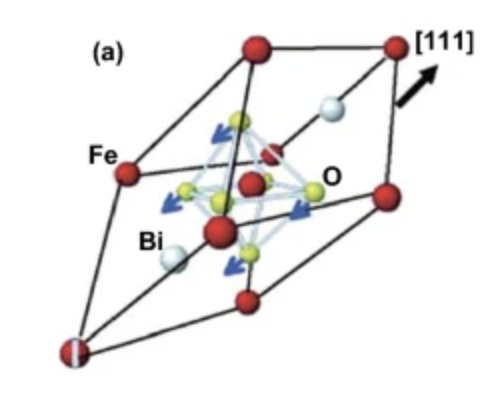
Multiferroics have electrical and magnetic properties that are linked. In a material like bismuth ferrite, each tiny unit of the crystal is electrically polarized, with positive and negative charges on opposite sides. That polarization can be flipped with a small voltage, which means it can store a binary one or zero. Because the magnetic state is coupled to the electrical one, the data can then be read out magnetically.
As Brown’s announcement explains, that combination points to “an ultra-low-power memory or logic device,” written with gentle voltage pulses instead of the larger currents many current technologies need.
The “dead layer” problem
The catch has always been thickness. To fit into a chip, these materials must be made extremely thin. But at small thicknesses two things go wrong: the atomic lattice loses the shape and chemistry it needs, and internal electric fields overpower the electrical polarization. Together, these failures wipe out both the ferroelectric and magnetic properties, leaving a so-called dead layer. Brown describes this as historically “a deal-breaker.”
How the Brown team solved it
The team, led by assistant professor of engineering Lucas Caretta, used two tricks at once:
- Strain: They grew bismuth ferrite on a substrate of dysprosium scandate, a rare-earth-derived crystal with a slightly narrower lattice. The mismatch squeezes the bismuth ferrite, helping it keep the atomic structure it needs.
- Screening: A second, metallic layer absorbs stray electric fields, so the polarization survives.
“We’ve established that we can get rid of the dead layer,” Caretta said. “We show that you can make this material basically as thin as you want, down to a few angstroms, and it’s still ferroelectric, and it’s still magnetic.” An angstrom is a ten-billionth of a meter, roughly the scale of a single atom.
A bonus: altermagnetism
The films did more than survive. The stacked structure turned the bismuth ferrite layer into an altermagnet, a recently recognized type of magnet that sits between familiar ferromagnets and antiferromagnets. Caretta explained why that is useful: ferromagnets give strong, easy-to-read signals but are relatively slow and produce stray fields that make dense packing hard, while antiferromagnets are fast and field-free but hard to read. “Altermagnets are kind of the best of both worlds,” he said. “They can be fast, densely integrated and still provide a strong electrical signal for readout.”
What it means for computing
This is fundamental materials research, not a chip on a roadmap. Moving from a lab-grown thin film to a manufacturable device will require work on fabrication at scale, integration with existing silicon processes and long-term reliability. But removing the dead-layer barrier reopens a path many had considered blocked. “We know the underlying properties are already there in the bulk materials,” Caretta said. “The trick is learning how to engineer them into a form that’s useful, and sometimes even better than what nature gives us.”
The research was supported by the National Science Foundation, the U.S. Department of Energy and the U.S. Army Research Office, according to Brown.
Practical takeaways
- For hardware strategists: Energy efficiency gains for AI may increasingly come from new materials, not just smaller transistors.
- For researchers: Combining strain engineering with electrostatic screening is a general recipe worth testing on other thin-film materials.
- For everyone: Treat timelines cautiously; the step from lab discovery to products in data centers is typically measured in years.
The bottom line
By keeping bismuth ferrite alive at near-atomic thickness, and discovering useful altermagnetic behavior along the way, Brown’s engineers have turned a long-standing roadblock into an opening. If multiferroic memory and logic eventually reach production, the payoff could be computers that think with far less power.