
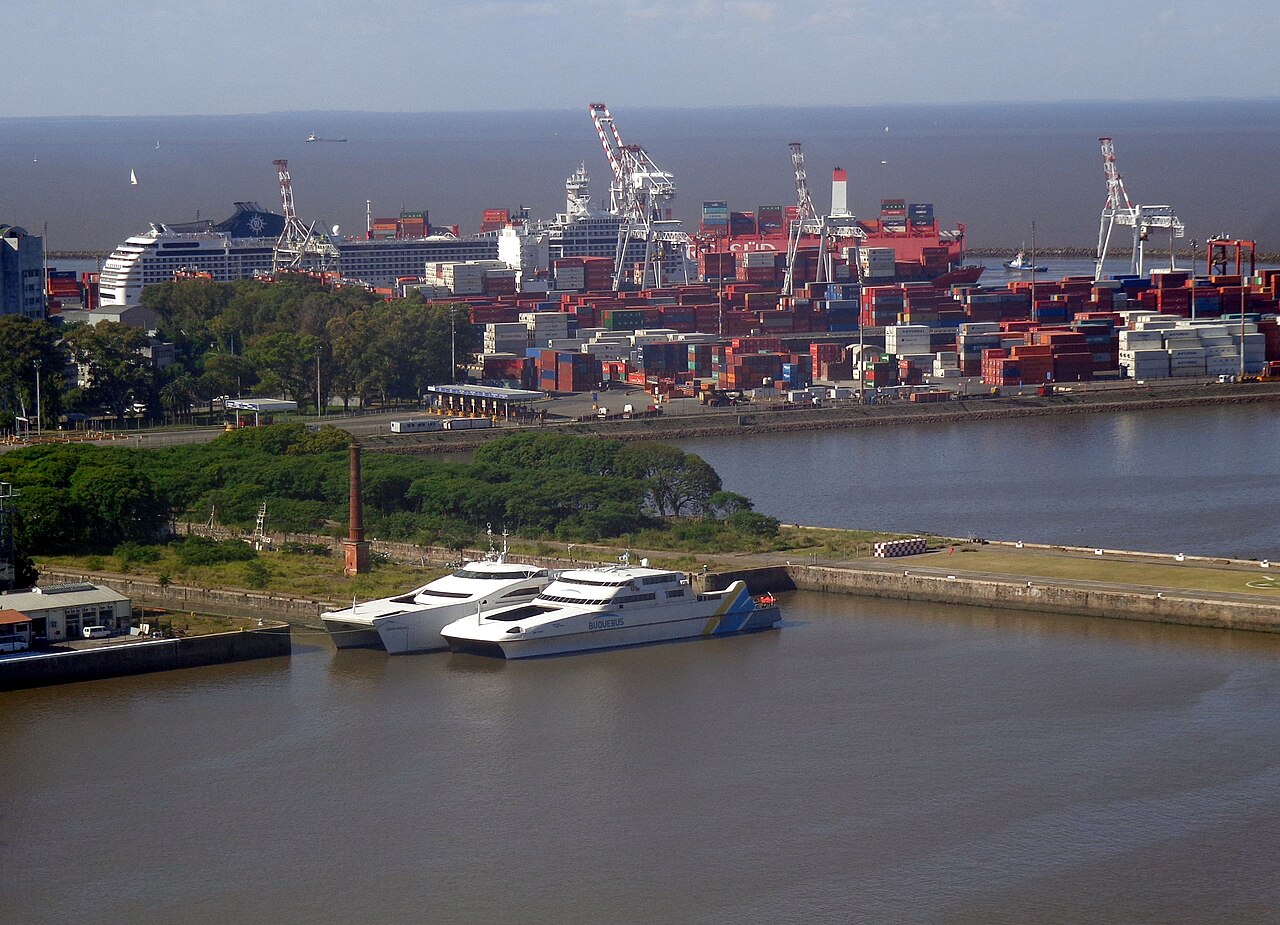
Electric ferries are not new; small ones have crossed Norwegian fjords for years. What changed this month is scale. China Zorrilla, a 130-meter catamaran built by Incat Tasmania for operator Buquebus, has entered commercial service between Buenos Aires, Argentina, and Colonia, Uruguay. It is the largest battery-electric ship ever built, and it carries up to 2,100 passengers and 225 vehicles on electric power alone.
A ship-sized battery
The numbers are striking. According to battery supplier Corvus Energy’s announcement on October 28, 2026, China Zorrilla carries more than 41 MWh of batteries, “the largest battery installation ever deployed onboard a ship,” and roughly four times larger than any previous battery system in commercial maritime service.
Shipbuilder Incat says the vessel carries more than 250 tonnes of batteries powering eight electrically driven waterjets. It also boasts an expansive passenger interior, including a duty-free retail area of about 2,300 square meters. The crossing of the Río de la Plata takes roughly 75 minutes, according to the Los Angeles Times.
From concept to daily service
The project began about three years ago, when Wärtsilä selected Corvus to supply batteries for what was then planned as the world’s largest fully electric high-speed ro-pax ferry. Built in Hobart, the ship was officially launched at a ceremony in Buenos Aires on October 21, 2026, before completing its maiden commercial voyage. Uruguay’s presidency marked the occasion, calling it the world’s first large-scale 100% electric ferry in an official statement.
“This project proves that battery-electric propulsion is no longer limited to smaller ferries or short routes,” said Ole Jacob Irgens, executive vice president at Corvus Energy. Incat chairman Robert Clifford called it “a truly historic day for Incat, for Tasmania and for the global maritime industry.”
What passengers notice
Beyond zero exhaust emissions, the most immediate difference is the ride. Incat managing director Craig Clifford, aboard for the first commercial voyage, said the familiar engine noise and vibration “simply aren’t there.” Quieter, smoother crossings could become a selling point for operators, not just a climate benefit.
Why it matters for shipping
Shipping is one of the hardest sectors to decarbonize, because vessels need dense energy for long voyages. Batteries are still far from replacing fuel on ocean routes, but short, high-frequency routes like the Río de la Plata crossing are an ideal fit: the ship can recharge in port between trips. Corvus says the project is a blueprint for future large electric ferries, cruise ships and offshore vessels, and notes it is South America’s first fully electric ship of its kind, evidence that maritime electrification is spreading beyond early adopters in Northern Europe.
The challenge now shifts to shore. Big batteries need big chargers and strong grid connections at ports, an issue that will shape how fast similar ships can follow. Incat is already building three 129-meter battery-electric ferries for Danish operator Molslinjen and two hybrid-electric vessels.
Practical takeaways
- Ferry operators: Routes of an hour or two with time to charge in port are now realistic candidates for full electrification at large scale.
- Ports and utilities: Grid capacity and high-power shore charging are becoming critical infrastructure.
- Travelers: Expect quieter, smoother crossings as electric vessels spread to busy short-sea routes.
The bottom line
China Zorrilla turns a long-promised idea into a working commercial service. By running a 2,100-passenger, 225-vehicle ship on batteries every day, it shows that electric propulsion has graduated from small harbor ferries to major routes, and sets a benchmark the rest of the industry will now chase.
Sources
- Corvus Energy (BW Group): The world’s largest marine battery system entered into operation (October 28, 2026)
- Incat Tasmania: Incat Hull 096 makes history again as it enters service (October 26, 2026)
- Los Angeles Times: How Australia built the world’s biggest battery-powered ferry (October 28, 2026)
- Presidencia de Uruguay: Comienza a operar ferry 100% eléctrico (October 2026)