
For over two decades, internet search has been dominated by keyword-based search engines that retrieve and rank web pages. Systems such as Google, Microsoft’s Bing, and Yahoo built massive infrastructures designed to index the web and return lists of relevant documents.
Today, search technology is undergoing a fundamental transformation. Instead of presenting users with links to information, modern AI systems increasingly provide direct answers synthesized from multiple sources. Tools like ChatGPT, Google Gemini, and Microsoft Copilot represent a new paradigm known as AI-based answer systems.
This shift is redefining how people interact with information, how knowledge is retrieved, and how digital ecosystems operate.
The shift from traditional search engines to AI-generated answers is only the first stage of a much larger transformation. The next major step in information retrieval is the emergence of autonomous AI research agents—systems that not only answer questions but can independently plan, search, analyze, and synthesize knowledge across multiple sources.
Instead of a user repeatedly querying search engines or AI chat systems, autonomous agents can perform complex research tasks end-to-end.
The transition from traditional search to AI-generated answers marks the beginning of a broader shift toward autonomous AI research agents. These systems combine large language models, retrieval systems, planning algorithms, and external tools to perform complex information tasks independently.
As these technologies mature, they will transform how individuals and organizations interact with knowledge—moving from simple information lookup to fully automated research and analysis.
Evolution of Information Retrieval
To understand the significance of AI agents, it is helpful to examine the progression of search technologies.
| Era | Technology | User Interaction |
|---|---|---|
| 1990s | Web directories | Manually browse categories |
| 2000s | Search engines | Enter keyword queries |
| 2010s | Semantic search | Natural language queries |
| 2020s | AI answer engines | Direct answers |
| Emerging | Autonomous AI agents | AI performs research tasks |
The transition represents a move from document retrieval to knowledge automation.
What Are Autonomous AI Research Agents?
An AI research agent is a system capable of performing complex information tasks with minimal user interaction.
Instead of simply answering a single query, the agent can:
- Understand the user’s goal
- Break the goal into sub-tasks
- Search across multiple information sources
- Evaluate credibility
- Synthesize a final report
This process resembles the work of a human researcher or analyst.
Architecture of an AI Research Agent
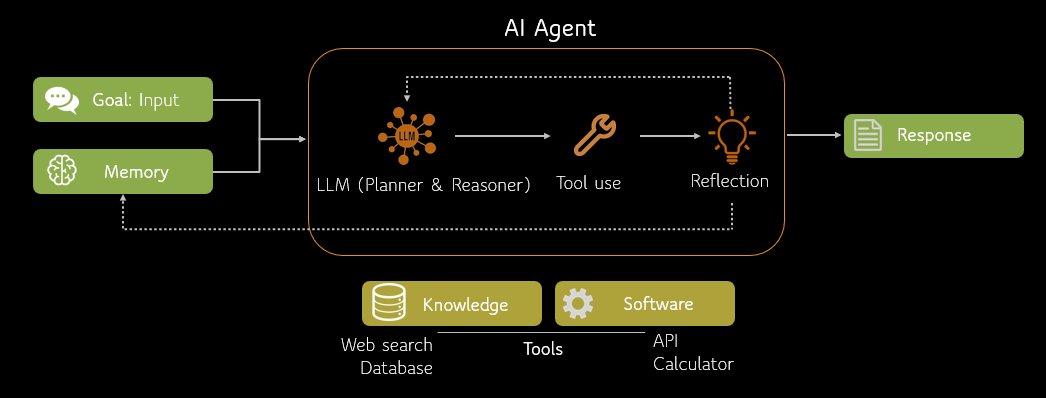
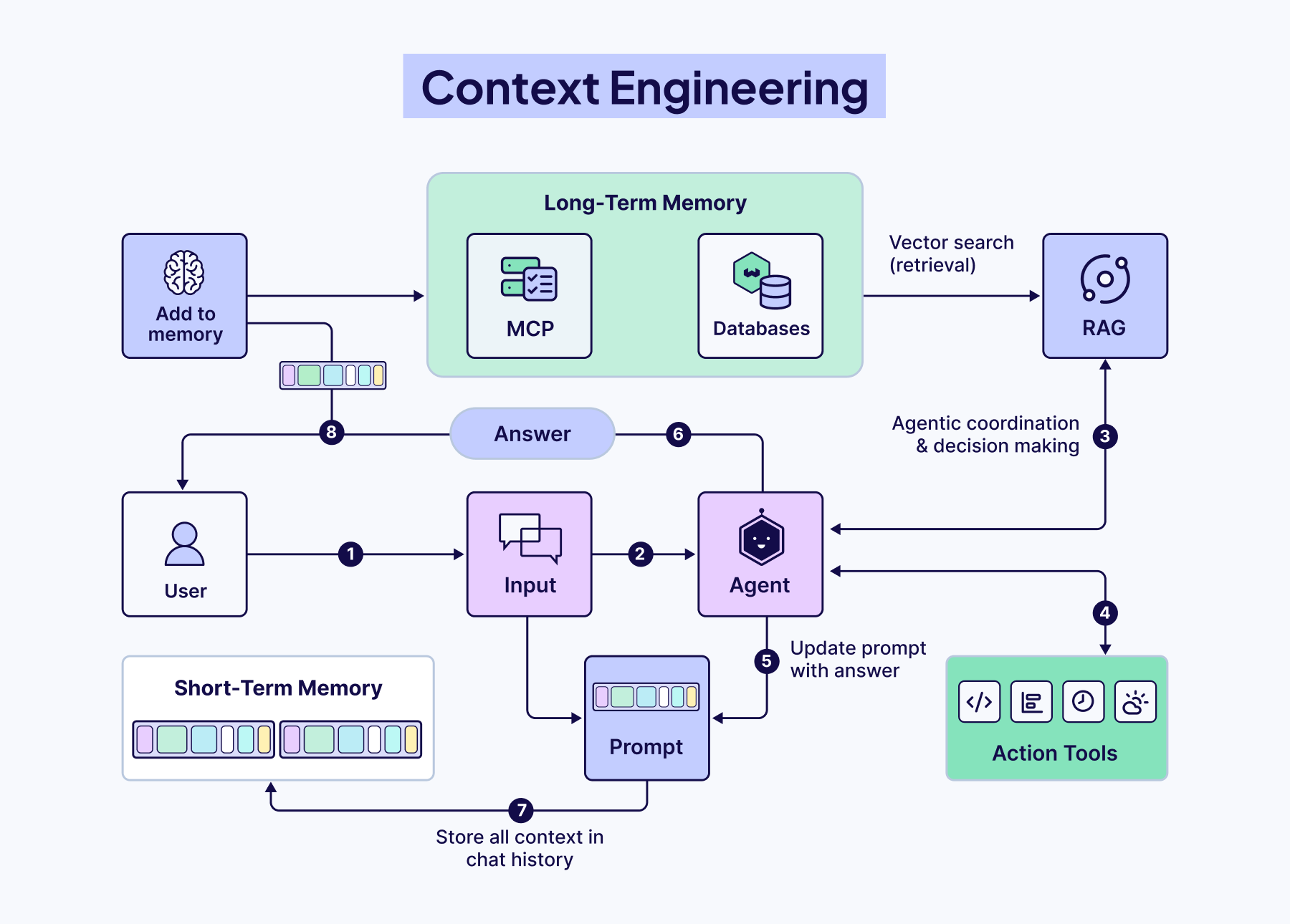
AI research agents typically combine several technologies.
4
Core components
| Component | Function |
|---|---|
| Large Language Model | reasoning and natural language understanding |
| Planning system | decomposes tasks into steps |
| Tool interface | connects to external tools |
| Retrieval system | gathers relevant information |
| Memory layer | stores context and knowledge |
This architecture allows agents to behave like digital analysts rather than simple chat interfaces.
How Autonomous AI Agents Work
A typical workflow looks like this:
User Goal
   ↓
Task Planning
   ↓
Information Retrieval
   ↓
Data Analysis
   ↓
Answer Generation
   ↓
Verification
   ↓
Final Report
Unlike standard AI answers, agents can perform multi-step reasoning and iterative research.
Example task:
“Analyze the top hydrogen production technologies and compare their scalability.”
An agent might:
- Search academic papers
- Retrieve technical reports
- Compare technologies
- Generate tables and summaries
- Provide a structured analysis
Tool-Using AI Agents
Modern AI agents can interact with external systems using tools.
Examples include:
- web search
- database queries
- code execution
- API calls
- document retrieval
Frameworks enabling tool-based agents include:
- LangChain
- LlamaIndex
- AutoGPT
These frameworks allow AI systems to orchestrate complex workflows automatically.
Memory and Knowledge Systems
Unlike traditional chat systems, AI agents often include persistent memory.
Memory layers may include:
Short-term memory
Stores the context of the current task.
Long-term memory
Stores previously learned information.
Knowledge bases
Access structured organizational knowledge.
These systems often rely on vector databases such as:
- Pinecone
- Weaviate
- Milvus
These databases enable semantic search across massive datasets.
Capabilities of Autonomous AI Agents
Autonomous agents can perform tasks far beyond simple search.
Research automation
Agents can:
- read hundreds of documents
- summarize key findings
- produce structured reports
Data analysis
Agents can analyze:
- datasets
- research papers
- financial reports
They can generate insights automatically.
Multi-step reasoning
Unlike traditional search, agents can handle complex multi-part problems.
Example:
“Compare atmospheric water harvesting technologies and estimate cost per liter.”
An AI agent could:
- gather research papers
- extract technical data
- perform calculations
- generate a comparative analysis.
Enterprise Applications
Autonomous AI agents are increasingly used inside organizations.
Enterprise knowledge assistants
Agents search across:
- internal documents
- knowledge bases
- code repositories
- enterprise databases
IT operations
Agents can:
- diagnose system issues
- analyze logs
- recommend fixes
Security operations
Agents assist with:
- threat intelligence
- vulnerability analysis
- incident response
Healthcare research
Agents analyze:
- clinical literature
- patient datasets
- drug interaction databases
Advantages Over Traditional Search
| Feature | Traditional Search | AI Agents |
|---|---|---|
| Query complexity | Simple questions | Complex goals |
| Output | Links | Structured analysis |
| Reasoning | Limited | Multi-step reasoning |
| Automation | None | Full task automation |
Agents shift the paradigm from information retrieval to knowledge work automation.
Challenges and Risks
Despite their promise, autonomous AI agents face several challenges.
Reliability
Agents may produce incorrect conclusions if source data is flawed.
Hallucinations
AI models sometimes generate incorrect information.
Verification mechanisms are critical.
Cost
Running complex AI agents requires significant computing resources.
Security risks
Agents connected to enterprise systems must be carefully controlled to avoid:
- data leaks
- unauthorized actions
Future: AI Agents as Personal Knowledge Workers
Experts believe that autonomous agents will eventually function as personal digital analysts.
Future capabilities may include:
- continuous monitoring of topics
- automated research reports
- strategic analysis
- business intelligence generation
Instead of searching manually, users may simply assign tasks such as:
“Monitor developments in hydrogen energy technologies and provide weekly reports.”
The AI agent would perform the research automatically.
The Long-Term Vision
The ultimate vision is an AI-driven knowledge ecosystem where intelligent agents collaborate with humans to explore information.
Possible future systems include:
- scientific discovery agents
- medical research assistants
- financial analysis agents
- engineering design assistants
In this model, search engines evolve into intelligent research platforms capable of understanding goals and executing complex knowledge tasks.