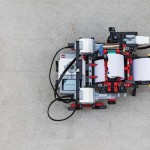
Legos Used to Create Most Affordable Braille Printer

Legos aren't just child's play. The world's most affordable Braille printer is made out of them and won one of 10 of Popular Science’s 2015 Invention Awards in the Category of Communication. Originally conceived by Shubham Banerjee at twelve years old, the printer was meant to be a cheaper alternative to Braille printers that costed over $1,800. The first prototype, called Braigo, was finished in February 2014 but was “limited to printing on narrow rolls of paper.” “In summer 2014, Banerje...
More

Brain stimulation device with the potential to replace habits

Thync (company) is developing a wearable brain stimulation device with the potential to replace habits. One of the primary technologies Thync is based on is transcranial direct current stimulation, or tDCS, which uses a weak electrical current to change the sensitivity of neurons in the brain. Neurons are cells in the brain that send electrical signals to each other, resulting in the release of chemicals that impact what a person is thinking or feeling. When targeted to the right area, the tD...
More
Posted in Uncategorized

NANO-ROBOTS THAT COMPUTE WITH DNA INSTALLED INTO LIVING COCKROACH

Scientists have inserted DNA-based nanobots into a living cockroach, which are able to perform logical operations. Researchers say the nanobots could eventually be able to carry out complex programs, to diagnose and treat disease. These DNA machines (or origami robots, so-called since they can unfold and deliver drugs stored within) carry fluorescent markers, allowing researchers to tell where in the roach's body they are traveling and what they are doing. Incredibly, the "accuracy of delivery ...
More
Posted in Uncategorized

Google-backed life-extension company, Calico to build research center to tackle aging

Google-backed life-extension company, Calico is working to tackling aging, one of life’s greatest mysteries. Calico (California Life Company) is a research and development company whose mission is to harness advanced technologies to increase our understanding of the biology that controls lifespan. Calico will use that knowledge to devise interventions that enable people to lead longer and healthier lives. Executing on this mission will require an unprecedented level of interdisciplinary ef...
More
Posted in Uncategorized

Prof Azim Surani used human stem cells to create artificial sperm and egg

Researchers, led by  scientist Prof Azim Surani , have for the first time used human embryonic stem cells to create primordial germ cells that give rise to egg and sperm. Although this had already been done using rodent stem cells, scientists at the University of Cambridge in UK and the Weizmann Institute in Israel are the first to achieve this feat using human stem cells. "The creation of primordial germ cells is one of the earliest events during early mammalian development," said Dr Naok...
More
Posted in Uncategorized

NASA’s ‘Iron Man’ Exoskeleton technology could help people walk again

NASA's Ironman-Like Exoskeleton Could Give Astronauts, Paraplegics Improved Mobility and Strength NASA's X1 robotic exoskeleton project is a latest robotic, space technology, spinoff derived from NASA's Robonaut 2 project, it may someday help astronauts stay healthier in space with the added benefit of assisting paraplegics in walking here on Earth. NASA and The Florida Institute for Human and Machine Cognition (IHMC) of Pensacola, Fla., with the help of engineers from Oceaneering Space Sy...
More
Posted in Uncategorized

MIT – Proteins drive cancer cells to change states

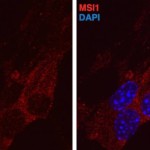
A new study from MIT implicates a family of RNA-binding proteins in the regulation of cancer, particularly in a subtype of breast cancer. These proteins, known as Musashi proteins, can force cells into a state associated with increased proliferation. Biologists have previously found that this kind of transformation, which often occurs in cancer cells as well as during embryonic development, is controlled by transcription factors — proteins that turn genes on and off. However, the new MIT rese...
More
Posted in Uncategorized

Mind-Controlled Robot

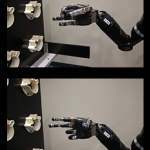
Brain-computer interface technology has the potential to improve the function and quality of life of those unable to use their own arms, a woman with quadriplegia shaped the almost human hand of a robot arm with just her thoughts to pick up big and small boxes, a ball, an oddly shaped rock, and fat and skinny tubes. The findings by researchers at the University of Pittsburgh School of Medicine, published online in the Journal of Neural Engineering, describe, for the first time, 10-degree brai...
More
Posted in Uncategorized

Lost memories might be able to be restored

New UCLA research indicates that lost memories can be restored. The findings offer some hope for patients in the early stages of Alzheimer’s disease. For decades, most neuroscientists have believed that memories are stored at the synapses — the connections between brain cells, or neurons — which are destroyed by Alzheimer’s disease. The new study provides evidence contradicting the idea that long-term memory is stored at synapses. “Long-term memory is not stored at the synapse,” said David...
More
Posted in Uncategorized

‘GPS’ for molecules -With which the whereabouts of metal ions in enzymes can be reliably determined.

In everyday life, the global positioning system (GPS) can be employed to reliably determine the momentary location of one en route to the desired destination. Scientists from the Institute of Physical and Theoretical Chemistry of the University of Bonn have now developed a molecular "GPS" with which the whereabouts of metal ions in enzymes can be reliably determined. Such ions play important roles in all corners of metabolism and synthesis for biological products. There would be no life on...
More
Posted in Uncategorized

Re-programmable cells to create new life forms, even grow human organs in lab

An international team of scientists has embarked on an ambitious research project to develop an in vivo biological cell that can be reprogrammed like a computer operating system. It could revolutionize synthetic biology, they say, and would pave the way for scientists to create completely new and useful forms of life. At NewCastle University a more longer term developments are being researched to include the use of bacteria programmed to target cancerous cells and reprogrammed human cells ...
More
Posted in Uncategorized