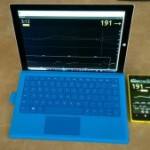
It’s All in Your Head: NASA Investigates Techniques for Measuring Intracranial Pressure

Do you ever turn your world upside down by standing on your head? After a few minutes you might feel some pressure in your face and around your skull. This is because headstands invert the body’s blood flow, pushing more blood toward your head. Astronauts in microgravity experience something similar. Without gravity pulling body fluids down toward their legs and feet, the fluids move toward the upper body. Scientists believe this causes fluid congestion in the head and increased pressure in t...
More


Indiana University – Purdue University Indianapolis Study finds adapted yoga feasible, beneficial for adults with traumatic brain injury

A research team, led by an IU School of Health and Rehabilitation faculty member at Indiana University-Purdue University Indianapolis, has determined that adapted yoga is both feasible and beneficial for adults with stroke or traumatic brain injury. Subjects in a recently published study of adults with traumatic brain injury demonstrated improved balance, flexibility, strength, endurance and walking speed after participation in adapted yoga. The study underscores the belief that adapted yoga m...
More

University Of Washington research shows encounters with nearby nature helps our wellbeing

Encounters with nearby nature help alleviate mental fatigue by relaxing and restoring the mind. Within built environments parks and green spaces are settings for cognitive respite, as they encourage social interaction and de-stressing through exercise or conversation, and provide calming settings. Having quality landscaping and vegetation in and around the places where people work and study is a good investment. Both visual access and being within green space helps to restore the mind’s ability ...
More

Cold Spring Harbor Lab. – Brain circuit that controls fear identified by scientists

Cold Spring Harbor, NY – Some people have no fear, like that 17-year-old kid who drives like a maniac. But for the nearly 40 million adults who suffer from anxiety disorders, an overabundance of fear rules their lives. Debilitating anxiety prevents them from participating in life’s most mundane moments, from driving a car to riding in an elevator. Team of researchers at Cold Spring Harbor Laboratory (CSHL) describes a new pathway that controls fear memories and behavior in the mouse brain, offer...
More

Johns Hopkins University found – Infants learn more about surprising objects and they want to understand them

Infants have innate knowledge about the world, and when their expectations are defied, they learn best, researchers at Johns Hopkins University found. In a paper that will be published Friday in the journal Science, cognitive psychologists Aimee E. Stahl and Lisa Feigenson demonstrate for the first time that babies learn new things by leveraging the core information with which they are born. When something surprises a baby, like an object not behaving the way she expects it to, she not only f...
More

FDA Approved ‘CyPass® Micro-Stent’ which is designed to control eye pressure for glaucoma patients

Alcon, the global leader in eye care and a division of Novartis, announced today that it has achieved FDA approval for the CyPass® Micro-Stent, a micro invasive glaucoma surgical (MIGS) device to treat patients with mild to moderate primary open-angle glaucoma in conjunction with cataract surgery. CyPass Micro-Stent is the latest addition to Alcon's surgical portfolio providing an additional option to meet the needs of millions of glaucoma patients. The FDA approval is based on the landmark C...
More

Dream Memory

A dream is successions of images, ideas, emotions, and sensations that usually occurs involuntarily in the mind during certain stages of sleep. The content and purpose of dreams are not definitively understood, though they have been a topic of scientific speculation, as well as a subject of philosophical and religious interest, throughout recorded history. The scientific study of dreams is called oneirology. One aim of neuroscience is to map the brain loci of thoughts and mental experiences. ...
More

Ultraviolet blood irradiation (UBI or UVB)

Blood irradiation therapy is a procedure in which the blood is exposed to low level red light (often laser light) for therapeutic reasons. Most research on blood irradiation therapy has been conducted in Germany, Russia and China, while smaller-scale research has been performed in other countries such as Britain. Blood irradiation therapy can be administered through a catheter in a vein, through the blood vessels inside the nose or applied externally through the skin. It is not related to the pr...
More

Detecting low-quality antimalarial drugs with a lab-on-paper

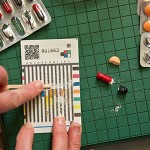
Marya Lieberman of the Department of Chemistry and Biochemistry at the University of Notre Dame and Abigail Weaver, a postdoctoral associate in the University’s Department of Civil and Environmental Engineering and Earth Sciences, took up the challenge of how people in developing countries could detect low-quality antimalarial drugs without expensive equipment and without handling dangerous chemicals. The solution they developed involves using paper cards, embedded with reagents, that carry o...
More

Saliva-based detection of metabolic changes simpler and less invasive .

Testing for health conditions usually involves needles, X-rays and other invasive or uncomfortable measures. To make diagnostics less burdensome for patients, scientists are developing alternatives, looking for disease markers in urine—and even spit. Now a study, appearing in ACS' Journal of Proteome Research, demonstrates for the first time that individuals may have saliva "fingerprints." The finding suggests that identifying changes in these baseline fingerprints could someday be a reliable wa...
More

FDA Compliance Boot Camp 2016

Imagine getting inside the head of a working FDA inspector ... receiving the same training the inspector gets ... knowing which problems face the most scrutiny ... all before your next inspection. Here's how. Are you confident you'll sail through your next inspection? You can be when you have the same training the FDA gives its own inspectors. Know what to expect when the next inspector walks through your door -- from what the agency trains its investigators to look for ... to which pr...
More

Masimo’s Disposable Acoustic Respiration

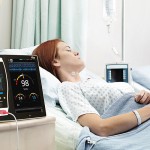
European regulators have given Masimo CE mark approval for its RAS-45, a single-use acoustic respiration sensor intended for use with the company's rainbow Acoustic Monitoring of respiration rate. The adhesive sensor, which comes with an integrated acoustic transducer and is designed to be stuck on the neck, can be used for patients weighing over 22 pounds. Masimo is an American Irvine, California-based manufacturer of noninvasive patient monitoring technologies. The company is best known for...
More

SONON is world’s first wireless portable ultrasound equipment.

SONON is world's first wireless portable ultrasound equipment. It supports iOS and Android mobile phone or tablet. It seems like you can do anything with your smartphone these days. How about using it as a portable ultrasound scanner? South Korean start-up Healcerion wants to make that a reality with Sonon, a portable ultrasound system that runs on Android or iOS mobile devices. Currently targeted for ob/gyn applications, the Sonon linear probe wirelessly sends image data to an app running...
More

University of California – New Injectable Hydrogel Encourages Regeneration and Improves Functionality After a Heart Attack

University of California, San Diego bioengineers have demonstrated in a study in pigs that a new injectable hydrogel can repair damage from heart attacks, help the heart grow new tissue and blood vessels, and get the heart moving closer to how a healthy heart should. The results of the study were published Feb. 20 in Science Translational Medicine and clear the way for clinical trials to begin this year in Europe. The gel is injected through a catheter without requiring surgery or general anesth...
More

Harvard University – The first autonomous, entirely soft robot

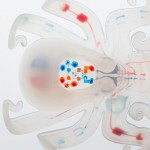
A team of Harvard University researchers with expertise in 3D printing, mechanical engineering, and microfluidics has demonstrated the first autonomous, untethered, entirely soft robot. This small, 3D-printed robot — nicknamed the octobot — could pave the way for a new generation of completely soft, autonomous machines. In this video, see the octobot in action. It is the first entirely soft, autonomous robot, made by a combination of embedded 3D printing, modeling, and soft lithography. Credit:...
More

UCLA scientists jump-start a man’s brain after coma

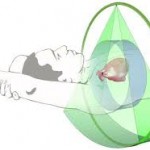
At the University of California, Los Angeles clinical researchers have successfully used focused ultrasound to “jump-start” the brain of a man coming out of a coma. The 25-year-old patient was barely conscious once he woke up from the coma, but soon after the initiation of treatment his condition improved measurably. A 25-year-old man recovering from a coma has made remarkable progress following a treatment at UCLA to jump-start his brain using ultrasound. The technique uses sonic stimulation...
More

Allergy Amulet brings food allergy sufferers a fast and portable allergen detection device

Allergy Amulet is a rapid, portable, point-of-consumption allergen detection device. Users will wear the device as a necklace, bracelet, or carry it in their pocket or purse. The first Amulet will detect peanut allergens; future Amulets will detect other common food allergens and ingredients. Amulet uses a molecularly imprinted polymer that can capture the presence of an allergen in seconds. The polymer has synthetic cavities that match specific allergens in shape, charge, and other molec...
More

MIT Optical Brush

Researchers at the MIT Media Lab have developed a new imaging device that consists of a loose bundle of optical fibers, with no need for lenses or a protective housing. The fibers are connected to an array of photosensors at one end; the other ends can be left to wave free, so they could pass individually through micrometer-scale gaps in a porous membrane, to image whatever is on the other side. Bundles of the fibers could be fed through pipes and immersed in fluids, to image oil fields, a...
More

FDA Approves Sapien XT and Sapien 3 transcatheter heart valves for patients with aortic valve stenosis

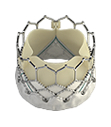
The U.S. Food and Drug Administration today approved an expanded indication for the Sapien XT and Sapien 3 transcatheter heart valves for patients with aortic valve stenosis who are at intermediate risk for death or complications associated with open-heart surgery. These devices were previously approved only in patients at high or greater risk for death or complications during surgery. Edwards Lifesciences is an American medical equipment company specializing in artificial heart valves and he...
More

Arineta’s New Innovative CT Scan using full beam intensity

Arineta provides innovative imaging solutions for improved cardiac care. They are have developed a unique CT scanner for cardiovascular imaging. Clinical In-hospital Evaluation of the Usefulness of a New Multi-detector Computed Tomography Scanner. Israel-based imaging equipment manufacturer Arineta said it has received U.S. Food and Drug Administration (FDA) clearance for its SpotLight CT cardiovascular scanner. The proprietary design of the dedicated cardiovascular scanner is very diff...
More

Microsoft will host large, open Genomics data sets and is asisting with Molecular Informatics

Molecular Informatics and Next Generation Sequencing (NGS) A fundamental big data challenge Microsoft is working on is related to Next-generation sequencing (NGS) technologies, which generate data at a rate much faster than that of the growth of compute and storage capacity. Researchers predict that the amount of genomic data will exceed that of YouTube, and genomic computations will exceed 5 million compute days per year by 2020. By the end of 2016, Microsoft will host large, open Genomic...
More

Berkeley Lab Research rechargeable for batteries that last longer and charge more quickly

There’s a new tool in the push to engineer rechargeable batteries that last longer and charge more quickly. An X-ray microscopy technique recently developed at the Department of Energy’s Lawrence Berkeley National Laboratory (Berkeley Lab) has given scientists the ability to image nanoscale changes inside lithium-ion battery particles as they charge and discharge. The real-time images provide a new way to learn how batteries work, and how to improve them. The method was developed at Berkeley ...
More

The world’s first non-contact sleep sensor

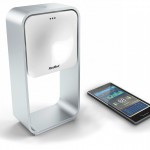
S+, the non-contact sleep sensor that helps you sleep better from the very first night. S+ combines a bedside sleep monitor, smartphone app and web-based app to help you track and better understand your sleeping patterns, and then creates personalized feedback and suggestions to help improve your sleep. Using advanced bio-motion technology and rigorous sleep science, S+: Measures your breathing and body movements throughout the night Analyzes light, noise and temperature levels in y...
More

IKEA launches indoor garden

IKEA is introducing an indoor gardening series that lets you grow your own tasty lettuce and herbs in water. Developed in collaboration with agricultural scientists in Sweden, KRYDDA/VÄXER series includes everything you need to get sprouting and keep your garden growing - even in the winter! How it works? Just keep an eye on the water level. Hydroponics simply means growing plants in water without soil. With added nutrients and the right light, it allows you to garden in any small space all y...
More

BioRing Wearable Brings A Personal Trainer To Your Fingers

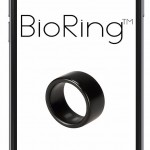
Smart ring claims to measure calorie and protein intake and a whole lot ... bio-impedance sensor and optical heart rate sensor to capture data The BioRing utilizes three sensors - 3-axis accelerometer, bio-impedance and optical HR sensor give you an unique insight into your body and diet. When you eat, your food consists of primarily carbohydrates, fats and proteins. Carbs are broken down into glucose, which is transported into your cells with the help of insulin. When glucose enters yo...
More

3D Printed Jaw

Media Arts and Science faculty member Zebulun Wood and his student researcher, 2016 graduate Cade B.T. Jacobs, created a prosthetic mandible utilizing digital scanning and 3-D sculpture and printing technology—revolutionizing a field that has long relied on more cumbersome materials and techniques. The subject for the project is a retired maintenance worker named Shirley Anderson, who had recurring tongue cancer. Radiation treatments resulted in osteoradionecrosis, also known as “bone death.”...
More

GABA (gamma amino butyric acid) is the main inhibitory neurotransmitter in the central nervous system

GABA (gamma amino butyric acid) is considered the main inhibitory neurotransmitter in the central nervous system. It regulates neuronal excitability and muscle tone.1 GABA is synthesized from glutamate (using vitamin B6 as a cofactor). GABA is Interestingly, while glutamate is the brain’s main excitatory neurotransmitter,2 GABA “puts the brakes” on in the brain, helping to control overstimulation. gamma-Aminobutyric acid (γ-Aminobutyric acid) /ˈɡæmə əˈmiːnoʊbjuːˈtɪrᵻk ˈæsᵻd/ (also called G...
More

Artificial wombs: The coming era of motherless births?

Researchers are currently working on replicating the conditions inside a mother’s uterus in an artificial one. Benefits to an artificial womb could include allowing premature babies a better chance at survival, enabling women with fertility issues to have children, and making it much easier for transgendered people and gay couples to have children. However, artificial uteruses could lead to overpopulation, as well as missed bonding between mother and child during pregnancy, and they could ent...
More

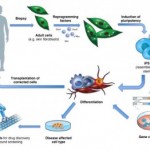
UCI Stem-Cell Pioneer Poised to Launch Clinical Trial for Retinitis Pigmentosa (RP) Patients

Henry Klassen, M.D., Ph.D., is only about a year from launching a clinical trial for a stem cell treatment to rescue vision in people with retinitis pigmentosa (RP) and, potentially, other retinal diseases. At the Foundation’s recent Orange County Innovation Symposium, the University of California (UC), Irvine clinician-researcher reported that he and his colleagues are in the midst of final lab studies with patient-grade cells. Once finished, they’ll request authorization from the U.S. Food and...
More

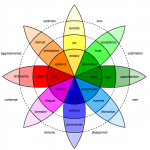
Harvard Study on – ‘The biology of emotion—and what it may teach us about helping people to live longer’

The Grant Study is part of the Study of Adult Development at Harvard Medical School. It is a 75-year longitudinal study of 268 physically- and mentally-healthy Harvard college sophomores from the classes of 1939–1944. It has run in tandem with a study called "The Glueck Study," which included a second cohort of 456 disadvantaged nondelinquent inner-city youths who grew up in Boston neighborhoods between 1940 and 1945. The subjects were all male and of American nationality. The men continue to be...
More