


Smart Bed for kids with a “monster detector.”

Smart bed for kids monitors their snoozing cycles and determines if diet, stress and other daily activities are impacting the quality of their sleep. The bed, which is equipped with tiny hidden sensors, uses digital-signal capture within the mattress and processing techniques to pick up on motion and pressure. It tracks a child's breathing and heart-rate throughout the night too, and blends that data with other factors to determine a SleepIQ score in the morning. The higher the number (based fro...
More
Posted in Uncategorized

A whale of a tale.

Scientists led by Peter Girguis, professor of organismic and evolutionary biology at Harvard, have found that the gut microbiome of right whales and other baleen species shares characteristics with those of both cows and meat-eating predators. The dual microbial communities allow whales to extract the most nutrition possible from their diet, digesting not only the copepods they eat, but their chitin-rich shells as well. The great whales are carnivores, feeding on tiny, shrimp-like animals such a...
More
Posted in Uncategorized

Microbiomes could hold keys to improving life.

Microbial life forms including viruses, bacteria, and fungi are the most diverse and abundant organisms on earth. They have shaped our evolutionary origins for billions of years and continue to have widespread impact. The UMIC foresees the microbiomes being leveraged through genetic engineering for applications within 10 years. “Microbes are everywhere. Therefore understanding microbiomes, whether they be the ones that live in and on our bodies or the ones in the environment, is essential to ...
More
Posted in Uncategorized

Blood Pressure Study

A new study finds that at least 16.8 million Americans could potentially benefit from lowering their systolic blood pressure (SBP) to 120 mmHg, much lower than current guidelines of 140 or 150 mmHg. The scientists calculated the potential impact of preliminary results from the Systolic Blood Pressure Intervention Trial (SPRINT) that will be presented in full at the American Heart Association meeting and published online in the New England Journal of Medicine. The initial analysis of SPRINT, r...
More
Posted in Uncategorized

Flying pixels create self-levitating displays

A team of researchers at Queen's University's Human Media Lab have unveiled a system of flying 'BitDrones' that let users explore virtual information by interacting with levitating voxels. The system, called BitDrones, allows users to explore virtual 3D information by interacting with physical self-levitating building blocks. BitDrones is the first step towards creating interactive self-levitating programmable matter, materials capable of changing their 3D shape in a programmable fashion using s...
More
Posted in Uncategorized

11,000 years of isolation: Remote village has unusual Gut Bacteria.

A medical checkup of people living in remote villages deep in the Amazon rainforest in Venezuela has uncovered striking details about these villagers' microbiomes and the bacteria living on and in their bodies. The villagers appear to have the highest levels of bacterial diversity ever reported in a human group, the researchers found. Their microbiomes include bacteria that have genes that could make them resistant to treatment with antibiotics. Some of these genes could even make these bacteria...
More
Posted in Uncategorized

New flu tracker uses Google search data better than Google.

A team of Harvard statisticians has come up with a new way to track the flu virus using Internet search data. The system uses a method that has been used before, tracking searchers for key words and phrases, but has coupled it with additional data to improve its accuracy. The new model, ARGO (AutoRegression with Google search data), was published in the Proceedings of the National Academy of Sciences and was built on Google Flu Trends, which was Google’s flu tracking model that emerged in 200...
More
Posted in Uncategorized

Nanotechnology advances could pave way for implantable artificial kidney

A surgically implantable, artificial kidney could be a promising alternative to kidney transplantation or dialysis for people with end stage renal disease (ESRD). Currently, more than 20 million Americans have kidney diseases, and more than 600,000 patients are receiving treatment for ESRD. U.S. government statistics indicate kidney care costs the U.S. health care system $40 billion annually, accounting for more than 6 percent of Medicare spending. “We aim to conduct clinical trials on an implan...
More
Posted in Uncategorized

ORNL’s hybrid device combines microscopy and mass spectrometry

Researchers from the Department of Energy’s (DOE's) Oak Ridge National Laboratory (ORNL) have created a hybrid optical microscope/mass spectrometry-based imaging system capable of observing and analyzing specimens simultaneously. They have created a hybrid optical microscope, which also features a mass spectrometry-based imaging system. This new device paves the way for advance developments in the areas of chemical and pharmaceutical sciencesThe new device does not require any type of pretreatme...
More
Posted in Uncategorized

Power Claw Gloves allow you to feel heat and cold in virtual reality apps.

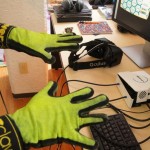
Can you imagine burning your fingertips or feel that ice freezes your hand as you interact with a program of virtual reality? The Mexican company Vivoxie created Power Claw, a pair of gloves with an interface that stimulates the skin and allows the sense of touch in cyber worlds.The device generate the sensation of heat, cold, vibration and roughness of objects that are part of a virtual reality. The gloves are complemented with Oculus Rift glasses. Designed to work with the Oculus Rift virtu...
More
Posted in Uncategorized

Stroke & Working Overtime.

A recent analysis indicates that women who work 55 hours or more per week have a 30% higher risk of having a stroke than those working standard hours, making them just as likely to have a stroke as their male counterparts. The analysis was conducted by European public health re-searchers. It involved data from over 600,000 women and men enrolled in long-term observational studies in Europe and the United States. It was the first such analysis of the relationship between working long hours and st...
More
Posted in Uncategorized

Contacts could help treat Glaucoma

A McMaster PhD candidate has harnessed a component naturally found in tears to develop a contact lens-based drug delivery system for glaucoma patients. Chemical engineer Myrto Korogiannaki has used hyaluronic acid to help get drugs to the eye from a lens in a controlled way. Patients with front-of-the-eye diseases, such as glaucoma, traditionally use medicated eye drops twice a day to treat their ailment. But those drops are incredibly inefficient as only about five per cent of the drug they car...
More
Posted in Uncategorized

MARTY, Stanford’s self-driving, electric, drifting DeLorean

MARTY was built in collaboration with Renovo Motors, an automotive start-up based in Silicon Valley that specializes in building advanced electric vehicle technology. Working closely together gave the Stanford team early access to a brand new platform derived from Renovo's electric supercar that delivers 4,000 pound-feet from on-motor gearboxes to the rear wheels in a fraction of a second, allowing precise control of the forces required to drift. "Stanford is a world leader in autonomous vehi...
More
Posted in Uncategorized

Samsung Flexible Smartphone

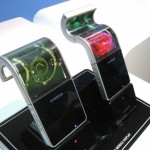
Samsung promises that flexible and foldable screens are coming to devices soon. The company’s latest patent, which was spotted by Patently Mobile, is for a flexible phone that morphs into a smart bangle you can strap onto your wrist. It’s an entirely bizarre and futuristic idea that certainly puts more focus on accessibility than style, but it sure sounds awesome. The patent features a flexible OLED screen that’s so flexible you can curl it into a bracelet and wear it on your wrist as a smart...
More
Posted in Uncategorized

New “tricorder” technology might be able to “hear” tumors growing.

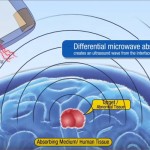
A team of scientists from Stanford University is testing a new “tricorder” technology able to remotely detect abnormal matter, such as buried plastic explosives or even early stage cancers in humans, by manipulating microwaves and ultrasound. The new “radio frequency (RF)/ultrasound hybrid imaging system,” the brainchild of Assistant Professor Amin Arbabian and Research Professor Pierre Khuri-Yakub, was designed for remote detection of embedded objects in a number of different kinds of matter, i...
More
Posted in Uncategorized

Eye drops with new chemical could clear up cataracts

Scientists have discovered a new chemical that could reverse cataracts, one of the leading causes of blindness. This new substance could be used in eye drops, greatly simplifying the treatment and making it accessible to the general population at a low price and without intrusive procedures. A cataract is a clouding of the lens in the eye leading to a decrease in vision. It can affect one or both eyes, generally evolves slowly, and causes about 50% of all the blindness cases in the world. Catara...
More
Posted in Uncategorized

The surprising trick jellyfish and lampreys use to swim.

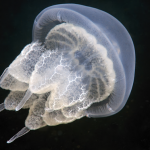
Jellyfish and lampreys have among the most energy-efficient swimming motions of any animal. From a long time, researchers have assumed that in order to move forward, fly or swim, humans and animals exert pressure on surface, air or water around them. But a new study published in the journal Nature Communications has revealed that two sea animals do not follow the general theory. Jellyfish and lampreys pull their way through the water, as per the study. A Stanford led team shows how these anci...
More
Posted in Uncategorized

An inside look at the Big Bang.

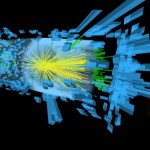
The Large Hadron Collider began its second run of experiments in June after a two-year hiatus from being the world’s largest particle accelerator. And the results are promising, achieving the highest energy ever achieved in a laboratory by colliding subatomic particles at 13 teraelectronvolts (TeV), physicists hope that these high-energy collisions may produce entirely new particles and simulate conditions seen in the early universe, according to an MIT statement.Soon to be published in Physics ...
More
Posted in Uncategorized

MRI shows heart ages differently in women than in men.

The analysis of MRI scans of the ageing hearts of nearly 3,000 adults was led by investigators at Johns Hopkins.' Our results are a striking demonstration of the concept that heart disease may have different pathophysiology in men and women and of the need for tailored treatments that address such important biologic differences,' said João Lima of the Johns Hopkins University School of Medicine, who led the research. Published in the journal Radiology, this is believed to be the first long-term ...
More
Posted in Uncategorized

Australian-designed suit worn on Space Station.

The brainchild of aerospace engineer, RMIT alumnus and senior research associate Dr James Waldie, the SkinSuit has been worn by an astronaut inside the International Space Station (ISS) for the first time. Denmark’s first astronaut, Andreas Mogensen, spent 10 days in the ISS last month and pulled on the SkinSuit to test its effectiveness in the weightless conditions. Inspired by the striking bodysuit worn by Cathy Freeman at the 2000 Sydney Olympics, Waldie and his collaborators have spent more ...
More
Posted in Uncategorized

To infinity and beyond.

Researchers at the Harvard John A. Paulson School of Engineering and Applied Sciences (SEAS) have designed the first on-chip metamaterial with a refractive index of zero, meaning that the phase of light can travel infinitely fast.,This new metamaterial was developed in the lab of Eric Mazur, the Balkanski Professor of Physics and Applied Physics and Area Dean for Applied Physics at SEAS, and is described in the journal Nature Photonics. “Light doesn’t typically like to be squeezed or manipula...
More
Posted in Uncategorized

Tellspec : Predictive intelligence about food.

Tellspec Food Sensor is the world’s first consumer handled device able to scan food at a molecular level. It provides you with the most relevant and useful information about what is in your food so you can make an informed decision that better matches your health needs. The technology includes a three-part system ,a pocket-sized sensor, a cloud-based analysis engine, and a mobile app that work together to scan foods, identify calories, macronutrients, allergens, fiber, sugars, and also provide r...
More
Posted in Uncategorized

More than 11 moles on your arm could indicate higher risk of melanoma.

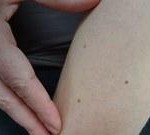
People who have more than 11 moles on their right arm could have a higher risk of skin cancer. Researchers at King’s College London have investigated a new method that could be used by GPs to quickly determine the number of moles on the entire body by counting the number found on a smaller ‘proxy’ body area, such as an arm. Naevus (mole) count is one of the most important markers of risk for skin cancer despite only 20 to 40 per cent of melanoma arising from pre-existing moles. The risk is thoug...
More
Posted in Uncategorized

Battery-free pacemaker powered by the heart itself

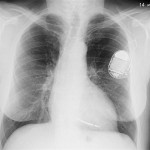
Scientists are developing next-generation battery-free implantable pacemakers that may be powered by an unlikely source, the heart itself. The advancement is based upon a piezoelectric system that converts vibrational energy, created inside the chest by each heartbeat, into electricity to power the pacemaker. "Essentially, we're creating technology that will allow pacemakers to be powered by the very heart that they are regulating," said M Amin Karami, assistant professor of mechanical engineeri...
More
Posted in Uncategorized

3D printed objects may be toxic

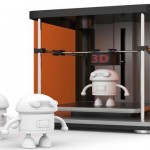
Parts produced by some commercial 3D printers may be toxic, according to a new study that raises concerns about how to dispose of parts and waste materials from the devices which are becoming increasingly popular. Researchers at the University of California, Riverside studied two common types of 3D printers, one that melts plastic to build a part, and another that uses light to turn a liquid into a solid part. They found that parts from both types of printers were measurably toxic to zebrafish e...
More
Posted in Uncategorized

Tanvas allows you to feel what you see.

Tanvas’ surface haptics technology allows you, for the first time, to feel what you see on a touchscreen, the edges of keys, the snap of a toggle switch, the swipe of a turned page or the direction and magnitude of impacts in a game. The company is poised to change the way people interact with touchscreens across essentially every industry, from automotive to education, from retail to medical, from consumer electronics to industrial applications. The technology sends ultrasonic sound waves th...
More
Posted in Uncategorized

Oxygen found on Comet

For the first time ever, molecular oxygen has been found on a comet. Comet 67P/Churyumov–Gerasimenko, currently being orbited by the European Space Agency's Rosetta spacecraft, is the subject of a study published in Nature. According to ESA researchers, the oxygen present in the comet's surrounding gasses has likely been there since the formation of the comet. "It is the most surprising discovery we have made so far, because oxygen was not among the molecules expected in a cometary coma," the Un...
More
Posted in Uncategorized

One night of poor sleep equals six months on a high-fat diet

New research finds that one night of sleep deprivation and six months on a high-fat diet could both impair insulin sensitivity to a similar degree, demonstrating the importance of a good night’s sleep on health. This study, conducted by Josiane Broussard, PhD, and colleagues from Cedars-Sinai Medical Center in Los Angeles, CA, used a canine model to examine whether sleep deprivation and a high-fat diet affect insulin sensitivity in similar ways. When the body becomes less sensitive to insulin (i...
More
Posted in Uncategorized

2015 Nobel Prize In Chemistry awarded for mapping how cells repair damaged DNA.

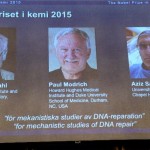
The Nobel Prize in Chemistry 2015 has been awarded to Tomas Lindahl, Paul Modrich and Aziz Sancar “for mechanistic studies of DNA repair.” The three scientists outlined chemical pathways that cells in living things, including human beings, use to repair damaged DNA. "Their work has provided fundamental knowledge of how a living cell functions and is, for instance, used for the development of new cancer treatments," the academy said. The organization tweeted graphics explaining the scientists'...
More
Posted in Uncategorized

Mars Solar Storms.

NASA’s Mars Atmosphere and Volatile Evolution (MAVEN) mission has identified the process that appears to have played a key role in the transition of the Martian climate from an early, warm and wet environment that might have supported surface life to the cold, arid planet Mars is today. Scientists studying Mars’ atmosphere say solar storms probably played a big role in transforming the Red Planet from the warm, hospitable place it was billions of years ago to the cold world it is today. The miss...
More
Posted in Uncategorized