Harvard Scientists Train Computer to Distinguish Scents

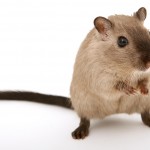
A team of Harvard scientists led by Venkatesh Murthy, professor of molecular and cellular biology, tackled a seemingly complex phenomenon in their investigation: how mice can distinguish scents from one another. Using a machine-learning algorithm, Murthy and his colleagues “trained” a computer to recognize the neural patterns linked to various scents, and to identify specific odors in a mixture of smells. The study, published in the journal Neuron, focused on creating an algorithm for a compu...
More
Washington University Medical School detailed brain map unveiled

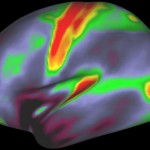
For years, doctors have had reliable charts of the body and its organs -- blood circulation, digestive system, nerves and the like -- but always with one frustrating grey zone: the brain. On Wednesday, a team of neuroscientists, computer specialists and engineers said they had compiled what "could be the most accurate map yet" of the mysterious expanse between our ears. In the process, they discovered nearly 100 previously unreported regions of the organ's wrinkly outer layer -- called the...
More

Hyper-fast. Super-simple. Brilliant WiFi.

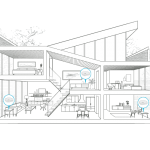
Relying on a single router is like asking a loud speaker in your living room to provide great sound throughout your home. It’s simple physics: WiFi waves don’t go through walls well and have an even harder time climbing stairs. Ever tried to stream a show from your bedroom when your router’s in the office downstairs? It’s a buffering nightmare. To solve this, you need multiple access points — devices that broadcast WiFi — distributed throughout your home. That’s what you’ll find in office bui...
More

Berkeley Lab and University of Colorado-Boulder team develop new way to reveal crystal features in functional materials.

Detailing the molecular makeup of materials—from solar cells to organic light-emitting diodes (LEDs) and transistors, and medically important proteins—is not always a crystal-clear process. To understand how materials work at these microscopic scales, and to better design materials to improve their function, it is necessary to not only know all about their composition but also their molecular arrangement and microscopic imperfections. Now, a team of researchers working at the Department of...
More

iRBeacon the smarter remote for a smarter home

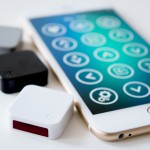
The iRBeacon is the one, simple solution that will rid you of the cluster of remotes - and it is capable of much more. The iRBeacon is the first step towards an intelligent home. It is a smart, elegant and tiny device which combines the infrared technology with the latest Bluetooth Low Energy (very energy efficient, more than a year working time with a single CR2032 coin battery), so the iRBeacon accompanied with the app (iOS, Android) can smart up your devices and replace your remotes in jus...
More

Meural Canvas, is a Wi-Fi-enabled digital canvas built to showcase artwork.

Meural Canvas, is a Wi-Fi-enabled digital canvas built to showcase artwork. Each frame gives you instant access to 20,000+ works of art and photography, and it’s easy to upload your own. Meural's proprietary technology renders each image as lifelike and textured as a real painting. Desktop digital picture frames have largely faded away, a side effect of the ubiquity of smartphones. Now the next thing to go digital is the artwork on your wall, such as the latest connected-art canvas from New Yor...
More

Blackbirds switch abruptly to fly-by-night behaviour at migration time

The normally diurnal birds don't need time to adjust their circadian clocks before departing for their winter habitats Each year, billions of songbirds set out on autumn evenings to fly to their wintering grounds, necessitating a change of daily rhythm for the usually diurnal animals. Scientists had always assumed that the birds gradually adjusted their rhythm, but new technology has now enabled researchers at the Max Planck Institute for Ornithology in Radolfzell, with international partners...
More

NASA Glenn Offers First Commercial Startup License to AirFlare

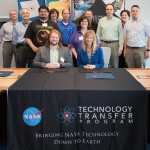
NASA’s Glenn Research Center in Cleveland has signed its first commercial Startup licensing agreement with AirFlare LLC in Nashville, Tennessee to productize the Glenn-patented Portable Unit for Metabolic Analysis, or PUMA. This agreement makes AirFlare the go-to source for the public to access NASA technology in the fitness market. Startup NASA is a new opportunity offered by NASA’s Technology Transfer Program. Startup companies can apply to license patented NASA technology with no up-front pa...
More

NASA – Electroactive Material for Wound Healing

This technology is a device that uses electrical activity to facilitate the wound healing process while protecting the wound. The bandage is made of an electroactive material (pictured above) that is stimulated by the heat of the body and the pressure of cell growth, thus no external power source is required. NASA has developed a high-tech electroactive bandage that creates an electric charge to help promote the healing process of wounds. Electroactive material is so sensitive that a push ...
More

SLEEP DRIVE AND YOUR BODY CLOCK

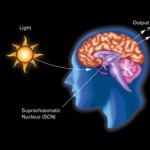
Most people notice that they naturally experience different levels of sleepiness and alertness throughout the day, but what causes these patterns? Sleep is regulated by two body systems: sleep/wake homeostasis and the circadian biological clock . When we have been awake for a long period of time, sleep/wake homeostasis tells us that a need for sleep is accumulating and that it is time to sleep. It also helps us maintain enough sleep throughout the night to make up for the hours of being awake...
More

Smart kitchen gizmo that lets you cook like a pro.

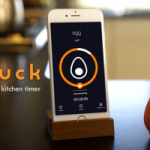
Smart kitchen gizmo that lets you cook like a pro. Cluck is a smart temperature sensor and kitchen timer. It works with the pots and pans you have. Just bring your smartphone to monitor your foods more conveniently. Despite all of the technical advances in the kitchen, cooking remains an activity which requires time and a good degree supervision. As a result, people are often unable to easily monitor certain cooking activities while moving about in the home. Often, home cooks must leave an ac...
More

Mice Studies in Space Offer Clues on Bone Loss

Astronauts know their bodies will be tested during time spent on the International Space Station, from the 15 daily sunrises and sunsets wreaking havoc on their circadian rhythms to the lack of gravity that weakens bone density and muscle. NASA is working to counteract these otherworldly challenges to enable long-term human exploration of space. For example, special lighting helps with sleep, and rigorous exercise helps keep astronauts’ bodies strong. But, frustratingly, bone loss continue...
More

Turn Your Smartphone into Any Kind of Sensor

Turn Your Smartphone into Any Kind of Sensor It started when NASA answered a call for a tool to detect dangerous gases and chemicals with a smartphone. The result became a smartphone-linked device that can do, well, just about anything someone can build a sensor for. The NODE+ platform can be outfitted with an array of different sensor modules for detecting light, gases, temperature, motion and more. It can store data or transmit it to a smart device using Bluetooth wireles...
More

Nasa’s ‘LifeWrap’ saving life on earth

NASA Ames Research Center received an unusual call for help: a local woman was still bleeding weeks after giving birth, despite every attempt to halt it — including nine surgeries. Her condition, known as postpartum hemorrhage, can result from a number of different complications during childbirth. Left untreated, it can prove fatal. Ames researchers and engineers proposed applying pressure to the woman’s entire lower body using an inflated anti-gravity suit, or G-suit — like tightly wrapping ...
More

Nanoparticles known as Cornell dots, or C dots, have shown great promise as a therapeutic tool in the detection and treatment of cancer.

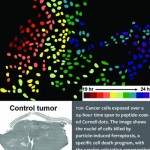
Nanoparticles known as Cornell dots, or C dots, have shown great promise as a therapeutic tool in the detection and treatment of cancer. Now, the ultrasmall particles – developed more than a dozen years ago by Ulrich Wiesner, the Spencer T. Olin Professor of Engineering – have shown they can do something even better: kill cancer cells without attaching a cytotoxic drug. A study led by Michelle Bradbury, director of intraoperative imaging at Memorial Sloan Kettering Cancer Center and associ...
More

Culprit found in breast cancer resistance to tamoxifen

Researchers have discovered that a protein found naturally in cells that provides some protection from viruses is responsible for creating mutations that drive resistance to tamoxifen treatment in breast cancer. Because the protein, known as APOBEC3B, is found in elevated quantities in other kinds of cancer cells, the finding explains differential responses to treatment and opens the door to boosting the effectiveness of tamoxifen and related breast cancer therapies that inhibit the ability of e...
More

White House’s precision medicine initiative

Far too many diseases do not have a proven means of prevention or effective treatments. We must gain better insights into the biological, environmental, and behavioral influences on these diseases to make a difference for the millions of Americans who suffer from them. Precision medicine is an emerging approach for disease treatment and prevention that takes into account individual variability in genes, environment, and lifestyle for each person. While some advances in precision medicine have be...
More

Photoswitch Biosciences forms the basis for new platform for identifying and testing novel drug candidates

Photoswitches are a family of small-molecules designed to photo-modulate the activity of specific signaling proteins: One color turns the protein ‘on’; a different color turns it ‘off’. Photoswitches were conceived at the Nanomedicine Development Center for the Optical Control of Biological Function at UC Berkeley Light-sensitive proteins are changing the way scientists study how new drug candidates affect critical properties of heart and nerve cells. The proteins, discovered by Max Planck re...
More

POZE- The Ultimate Posture Coach

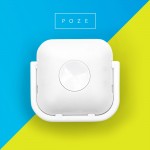
Poze is the most user-friendly and affordable way to improve your posture. They have cut the noise and focused on a real problem: how to avoid bad habits. Poze is a wearable device that has no app, no charging, and no diagrams. The certified technology calculates the angle of your back’s posture. If you slouch for 1 minute, Poze silently buzzes reminding you to straighten back up. In 3 weeks your muscles will feel normal when sitting or standing tall. Attach Poze with a self-adhesive hypo-all...
More

Xiaomi Mi Flora Monitor

Original Xiaomi Mi Plant Flowers Tester is a perfect tool to test the soil conditions (moisture / light / pH / humidity / temperature) of fruits, flowers, vegetables, shrubs, etc.. Ideal and necessary monitor for gardeners, vegetable and fruit growers, and all those who plant trees and grass. When connected with Xiaomi Smart Home, you can control the plants conditions on your phone. With high accuracy and easy operation. You can take good care of your plants. Flowers and Plants Monitor is...
More

SIEMENS – Data-Driven Rail Systems

When was the last time you experienced inconvenient train delays? Do you wish that railway companies could do a better job of predicting when breakdowns will occur? Whereas in the past, maintenance traditionally consisted of checking rail vehicles at designated operating centers on a regular basis to resolve obvious problems and maintain machines, digital technologies are opening the door to a new level of service. Siemens' Allach locomotive plant on the outskirts of Munich is a high-tech ...
More

Kenkodo tracks lifestyle effects inside your body

What happens inside your body when you start a fitness routine? How does a change in your diet affect your biochemistry? What can you do to get the best out of your body? In order to provide answers to these questions,Metabolomic Discoveries GmbH has developed Kenkodo, a personalized metabolomics testing service to help you know your body better. Kenkodo connects a person’s lifestyle to the biochemical state of the body. Metabolomics is at the cutting edge of biotechnology. For the first time...
More

Nanoscale chemical mapping by local infrared fingerprint spectroscopy

Nanoscale secondary ion mass spectrometry (nanoSIMS or nano secondary ion mass spectrometry) is a nanoscopic scale resolution chemical imaging mass spectrometer based on secondary ion mass spectrometry. It works based on a coaxial optical design of the ion gun and the secondary ion extraction, and on an original magnetic sector mass spectrometer with multicollection. NanoSIMS not only refers to the technique used, but also the mass spectrometer specialized for this method. There are currently...
More

Lucy Is a Smart Mirror that Redirects Sunlight

Natural light has all kinds of health benefits: improving sleep, mood, metabolism, and even workplace performance. But every room has its dark spaces, and sometimes you can’t avoid turning the lights on when it’s sunny out—wasteful as it seems. Sit the globe-like smart mirror in a sunny spot, orient its “pointer” toward where you want more light, and it will do the rest. The solar-powered Lucy, equipped with photo sensors and photovoltaic cells, will tilt its mirror to follow the sun, ensurin...
More

‘Glowstone’ heated smart mug that keeps your coffee hot at all times.

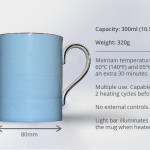
The way we drink our tea and coffee has changed. The many distractions of modern life mean we often leave our hot drink to become lukewarm, or worse, cold. So all that time and effort in preparing it goes down the drain. It was clear that the household mug needed to be brought up to date. For tea or coffee to taste its best, it has to be hot - ideally 60°C (140°F) to 65°C (150°F). When you make a hot drink in a standard mug, it will only remain in the perfect temperature range for a couple of...
More

‘TiBe Connect’ a Smart Keyfob

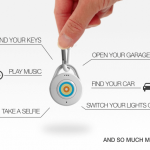
TiBe Connect is a Smart Keyfob Two-in-One ! 1 . A tracking device to never lose your stuff again. 2. A smart button to make your daily life easier. Send a text message with your GPS location to a friend Order your favorite Pizza Find your Car : stick TiBe on your dashboard, the App’ will remember where your parked it ! Switch off the lights from someplace else, if you forgotten to do it ! https://youtu.be/BU3VB_IjdbE   You can customize each TiBe according to the things...
More

Berkeley Labs researchers have shown that when parts of a genome known as enhancers are missing, the heart works abnormally

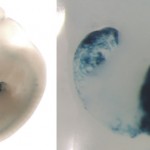
Researchers have shown that when parts of a genome known as enhancers are missing, the heart works abnormally, a finding that bolsters the importance of DNA segments once considered “junk” because they do not code for specific proteins. On the left, a mouse embryo showing enhancer activity (blue staining) in the developing heart. On the right, a closeup of this heart, showing that the enhancer is active in the left ventricle, left atrium, and right atrium of the heart. (Credit: Mammalian Func...
More

Eating high-glycemic load diet could increase depression and fatigue

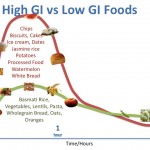
A high-glycemic load diet is linked to higher depression symptoms, fatigue and mood disturbance compared to a low-glycemic load diet, a new study finds. The glycemic load (GL) helps people assess how food portions affect blood sugar levels, and can be useful for people with diabetes who may be unsure about how a meal could affect their management. Foods with a high GL are those with a high carbohydrate value that influence blood glucose levels quickly. Bread, rice and many breakfast cereal...
More

Northwest University Researcher Guillermo Ameer Has Developed Regenerative Bandage That Heals Diabetic Wounds Faster

At some point in their lives, 15 percent of people with diabetes will develop a painful and hard-to-treat foot ulcer. Twenty-four percent of those affected will require a lower-leg amputation because of it. And, in some instances, what seems like a harmless sore might even lead to death. A Northwestern Engineering team has developed a new treatment for this severe and potentially deadly complication of diabetes. Called a “regenerative bandage,” the novel material heals diabetic wounds four ti...
More

China may beat the competition to space tourism

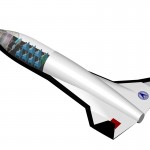
A Chinese government-backed company intends to fly up to 20 passengers to the edge of space, more than any other commercial space travel firm is currently planning. The China Academy of Launch Vehicle Technology has designed a winged rocket that takes off under its own power (it doesn’t need to be carried to a high altitude by another aircraft, as is the case with many of the other proposed space tourism projects). “The vehicle will take off vertically like a rocket and land on the runway aut...
More