
Few AI products have had a run as short and as dramatic as Sora. In the space of about 18 months, OpenAI's text-to-video model went from a jaw-dropping research preview to a viral social app, a billion-dollar Hollywood partnership, and then a full shutdown. As of late October 2026, there is no Sora you can use: the consumer app closed in April and the developer API followed in September. For anyone tracking where generative AI is heading, the story of Sora is less about one model and more about...
More
Text-to-Video
Clay Mathematics Institute has offered a prize of US$1,000,000 to the one who provides scientific explanation from a mathematical point of view Navier–Stokes Equation

Waves follow our boat as we meander across the lake, and turbulent air currents follow our flight in a modern jet. Mathematicians and physicists believe that an explanation for and the prediction of both the breeze and the turbulence can be found through an understanding of solutions to the Navier-Stokes equations.
Although these equations were written down in the 19th Century, our understanding of them remains minimal. The challenge is to make substantial progress toward a mathematical theor...
More
Citizen science is the involvement of the public in scientific research – whether community-driven research or global investigations
Citizen science is the involvement of the public in scientific research – whether community-driven research or global investigations. The Citizen Science Association unites expertise from educators, scientists, data managers, and others to power citizen science. Join us, and help speed innovation by sharing insights across disciplines.
https://youtu.be/UVuEsuk9Dgc
Whether through grassroots action or technology-mediated crowdsourcing, there has been a rapid increase in public par...
More
BrainHQ is an online brain-training system that helps sharpen brain. BrainHQ has 29 online exercises that work out attention, brain speed, memory, people skills, navigation, and intelligence.

BrainHQ is an online brain-training system that helps sharpe brain. BrainHQ has 29 online exercises that work out attention, brain speed, memory, people skills, navigation, and intelligence.
It was designed by an international team of neuroscientists, led by Michael Merzenich—a professor emeritus in neurophysiology, member of the National Academy of Sciences, co-inventor of the cochlear implant, and Kavli Prize laureate.
Changing your brain takes some work—so while the BrainHQ exercises ar...
More
Harvard Scientists Train Computer to Distinguish Scents

A team of Harvard scientists led by Venkatesh Murthy, professor of molecular and cellular biology, tackled a seemingly complex phenomenon in their investigation: how mice can distinguish scents from one another. Using a machine-learning algorithm, Murthy and his colleagues “trained” a computer to recognize the neural patterns linked to various scents, and to identify specific odors in a mixture of smells.
The study, published in the journal Neuron, focused on creating an algorithm for a compu...
More
Reprogramming Cancer Cells to Undergo Cellular Death
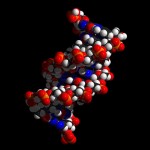
Colorectal cancer is the second most common cancer. New treatments tend to be in high demand because current treatment options offer limited efficacy and can be ineffective in up to 70% of patients, in part due to genetic variation, rendering personalized medicine to be increasingly important.
Argonaut Therapeutics plans to reboot the cancer cell so that it undergoes the body’s natural cell death process, known as apoptosis. Essentially, their therapies will target a “switch” that p...
More
NASA Aims to Sequence DNA in Space
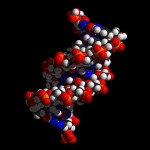
NASA is conducting a lot of research in space, but interestingly enough, now they’re focusing on sequencing an integral biological molecule: DNA.
Ever since the first strands of DNA were sequenced in the 1970s, researchers understood the profound significance of analyzing genetics for a wide range of medical and biological research. DNA sequencing at large can be used to identify forms of life, study organism evolution and relation, pinpoint genetic diseases in individuals and assist in crim...
More
Smart Contact Lenses Developed at the University of Washington

University of Washington scientists have developed a way to link your smartphones to your contact lenses using a new technology called the "interscatter communication.”
Using this technology, medical aid such as contact lenses and brain implants can send signals to smartphones.
The "interscatter communication" works by converting Bluetooth signals into Wi-Fi signals. (Elaborate more here on the technology.) This technology will create Wi-Fi by using Bluetooth transmissions from nearby mobi...
More
Researchers Discover a Link Between Microbes in Airways and Lung Disease

Although it is widely believed that infants’ airways are sterile before birth, University of Alabama at Birmingham researchers have discovered microbes (or bacterial DNA) have already colonized when a baby is born, even as early as 24 weeks gestation.
Researchers have not yet identified how the bacteria come into the airway or what benefits are derived from the pre-birth colonization. It is suspected that the transmission of bacteria or bacterial DNA to the in-utero infant could be via blood ...
More
New Discovery Reveals DNA Naturally Fluoresces

A team of researchers at Northwestern University’s Engineering school came across an unprecedented phenomenon: “blinking” or fluorescing DNA.
School textbooks emphasize that macromolecules like DNA and RNA do not naturally fluoresce, and therefore require special fluorescent dyes to be viewed and imaged. This new breakthrough may potentially enable researchers to forgo these often toxic dyes and harness the newly discovered natural fluorescent processes to image DNA.
The toxicity of dy...
More
Innovative MRI Study Demonstrates Water’s Impact on the Stomach & Brain
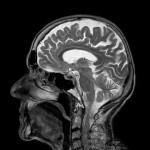
A study from Wageningen University in the Netherlands demonstrates real-time data of the brain, the stomach, and individual’s emotions simultaneously; not only is the research's approach novel, but the results showed that a simple change, drinking water, can change messages sent from the stomach that are interpreted as fullness by the brain.
Stomach MRI images were combined with functional, fMRI, images of the brain. The research team used data from 19 participants in tw...
More
Intestinal Bacteria Can Predict Susceptibility to Rheumatoid Arthritis

The bacteria in your gut don’t just break down food. According to Dr. Veena Taneja, an immunologist at Mayo Clinic’s Center for Individualized Medicine, they can also can predict susceptibility for rheumatoid arthritis.
Over 1.5 million Americans have rheumatoid arthritis, an autoimmune disorder in which the body mistakenly attacks itself. The body breaks down tissues around joints, causing painful swelling in the joints. At present, scientists have a limited understanding of the processe...
More
Bacterial windfarm could be a new source of energy

Tiny bacteria could potentially charge your cell phone, according to a recent study conducted by Oxford University researchers. A group of scientists from Oxford University collaborated on a project demonstrating how the bacterial movement could be harnessed to assemble and power microscopic 'windfarms'.
Published in the journal Science Advances, the study utilizes computer simulations to show how the chaotic swarming effect of bacteria, a type of dense active matter can provide a reliabl...
More
NU Scientists Advance Efforts in the Early Detection of Alzheimer’s
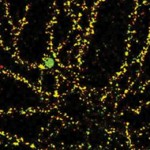
One minute. The Alzheimer’s Association estimates that in just that small period of time, almost every minute, a person in the United States will develop one of the top-10 killers in America: Alzheimer’s.
2015 was the first year in which Alzheimer scientists were able to see some real, substantial success in clinical trials.
Bill Klein, in neurobiology and neurology at Northwestern, and his team have turned their focus away from what was once considered the cause of Alzheimer’s, plaques an...
More
Study Reveals Autism Could Be Reversible
Researchers at the Massachusetts Institute of Technology have shown that it may be possible to reverse autism.
Autism is a genetically-linked condition and there is still much uncertainty as to what all the different genetic causes of the condition are. One genetic cause for example, affecting 1% of the those with autism, is the lack of a Shank3, which has responsibilities related to brain development. Those missing the gene experience autism symptoms such as avoiding social activities/interact...
More
Boeing Creates a Self-Cleaning Airplane Lavatory

Many passengers are reluctant to use airplane lavatories given that so many individuals use them on a single flight, leaving it a potential “germ-zone.”
But what if the lavatory could clean itself after every use?
To make airplane lavatories more hygienic, Boeing engineers and designers have created a self-cleaning prototype bathroom that uses ultraviolet (UV) light and non-touch technology to kill 99% of germs, all in less than three seconds.
The prototype lavatory consists of touc...
More
Solar Balloon” Farms Could be the Future of Energy

Imagine if your home was powered by solar balloons that sat above the clouds. Scientists at the Japanese-French Laboratory for Next Generation Photovolatic Cells (NextPV) are aiming to do just that.
Solar cells’ efficiency relies on the proximity of the cells to sunlight. Even if the cells are put directly in the path of sunlight, their efficiency is affected significantly by clouds or terrible weather. On a cloudy day, solar panels can produce less than 30% of the electricity they are design...
More
Illness & Climate Change
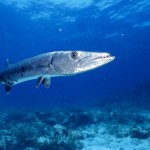
A new NOAA study, published in the journal Ecological Modeling, forecasts an increase in ciguatera fish poisoning in the Gulf of Mexico and the U.S. Southeast Atlantic coast with predicted rising global ocean temperatures due to climate change. People can be affected by ciguatera, the most common form of algal-induced seafood poisoning, by eating contaminated tropical marine reef fish such as grouper, snapper and barracuda. Scientists are now predicting that global climate change will ciguatera,...
More
Hydrogel Baits Offer Novel Way to Manage Invasive Ants
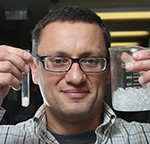
Water-storing crystals known as hydrogels can effectively deliver pesticide bait to invasive Argentine ants, quickly decimating a colony, a Purdue University study finds. Pesticide sprays and baits are common tactics for managing pest ants. But sprays can have little long-term impact and carry environmental costs such as chemical contamination of soil and water sources. Baits also present challenges. Ants prefer liquid food to solids, rendering granular baits less appetizing. But liquid baits ca...
More
Penguin Anti-Ice.
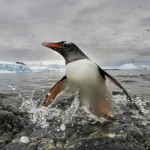
Scientists studying penguins’ feathers have revealed how the birds stay ice free when hopping in and out of below zero waters in the Antarctic. Penguins living in the Antarctic are highly evolved to cope with harsh conditions, their short outer feathers overlap to make a thick protective layer over fluffier feathers which keep them warm. Under their skin, a thick layer of fat keeps them insulated. The flightless birds spend a lot of time in the sea and are extremely agile and graceful swimmers, ...
More
Research Suggests Some Commercial 3D Printers are Toxic
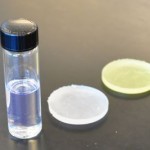
Parts produced by some commercial 3D printers may be toxic according to a new study that raises concerns about how to dispose of parts and waste materials from the devices which are becoming increasingly popular. Researchers at the University of California, Riverside studied two common types of 3D printers, one that melts plastic to build a part, and another that uses light to turn a liquid into a solid part. They found that parts from both types of printers were measurably toxic to zebrafish em...
More
Fishy feeling
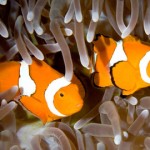
A new study has found that fish have emotions. The study, published in Proceedings of the Royal Society B, found that zebrafish responded to stress by an increase in body temperature, or what it known as an “emotional fever.” It’s been suggested that such a thing only exists in mammals, birds and reptiles, but the new research proves otherwise.
Scientists placed six zebrafish groups in tanks divided by plexiglass into six chambers, each containing water of a different temperature. Each tank w...
More
Genetically Modified Fruit Fly may solve pest problems.
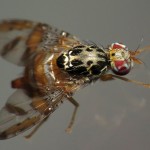
The Mediterranean fruit fly, or medfly, is an invasive species that is now endemic to Western Australia. The female medfly “stings” fresh fruit and then lays her eggs in the puncture site. The hatching larvae then feast on the decomposing fruit. A British bioengineering firm called Oxitec has created genetically modified medflies that, when released into the environment, could mate with wild fruit flies and pass on a gene that would prevent their female offspring from reaching adulthood which wo...
More
Genetically Engineered Mosquitoes can no longer spread Malaria
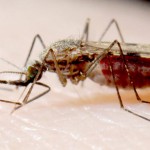
US scientists have bred a genetically modified mosquito that is incapable of spreading malaria to humans, according to reports. A gene editing technique called Crispr was used to alter the genetic makeup of the insect, making it resistant to Plasmodium falciparum, one of the parasites that causes malaria in humans. Crucially, the GM mosquitoes passed on their anti-malarial DNA strain to 99.5% of their offspring, raising the prospect of the altered species being released in the wild one day to co...
More
New Colonoscopy Study
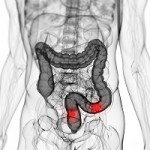
According to a study published in the journal Clinical Gastroenterology and Hepatology, a team of researchers led by Bas Oldenburg, MD, PhD, University Medical Center Utrecht, analyzed data on 1,273 IBD patients (34% Crohn’s disease, 63% ulcerative colitis, and 3% unclassified) who had experienced a total of 4,327 surveillance colonoscopies between January 1, 2000 and January 1, 2014.
Surveillance is recommended for patients with long-term inflammatory bowel disease because they have an incre...
More
The ‘Miracle’ Berry that could replace sugar

This miracle berry that grows in West Africa contains Miraculin, a glycoprotein which was first extracted back in 1968. The local population knew the effects for much longer and chewed the fruit pulp to make sour maize bread tastier. The surface of our tongue is covered by a multitude of different receptors to detect tastes from sweet to umami. Just like sugar and artificial sweeteners like aspartame, the miraculin in the berry binds to your sweet taste receptors, but far more strongly. The acid...
More
Mild Traumatic Brain Injury

Traumatic brain injury (TBI) is the chief cause of death and disability among children and adults from 1 to 44 years of age in the United States, leading to more than two million emergency department visits annually. A brain protein is thought to be the source of long-term cognitive impairments in those who have had seemingly mild, concussion-type head injuries, and a blood test may one day be available to predict such damage. Researchers from the Perelman School of Medicine at the University of...
More
Prenatal smoking shows up in little kids’ blood

This was the finding of a study led by Johns Hopkins Bloomberg School of Public Health in Baltimore, MD, and published in the journal Environmental Research. Previous research has already established that the DNA of cord blood from newborns is altered if the mother smokes during pregnancy. The difference is not in the genetic code itself but in the presence of "epigenetic" marks left on the DNA at 26 locations of the genome. Epigenetic markers are molecules that attach to genes and influence the...
More
Tiny sea creatures feature transparent optical systems as tough as their shells.
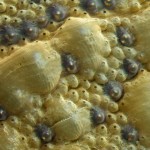
Sea-dwelling mollusks called chitons have armor-plated eyes embedded in their shells, and this incredible feature could provide a model for protective armor that could be used by the army and workers exposed to dangerous conditions. The chitons, or Acanthopleura granulates, have hundreds of these armored eyes on the surface of their shells, MIT reported. Unlike most eyes in the biological world that are made primarily of protein, these eyes are made of the mineral aragonite, but can still form f...
More
New method developed to predict response to nanotherapeutics
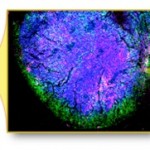
Many nanotherapeutics are currently being tested in clinical trials and several have already been clinically approved to treat cancers. But the ability to predict which patients will be most responsive to these treatments has remained elusive. Now, a collaboration between investigators at Massachusetts General Hospital (MGH) and Brigham and Women's Hospital (BWH) has led to a new approach that uses an FDA-approved, magnetic nanoparticle and magnetic resonance imaging (MRI) to identify tumors mos...
More