Innovative Coffee Makers

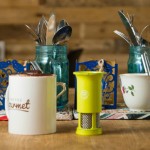
The Talking Coffee Maker. This is the first voice-interactive coffee maker that asks, "Would you like to set the clock or set the coffee brewing time?" and operates in response to your verbal commands. Simply saying, "Set the coffee brewing time," or "Set the clock," will prompt the machine to reply, "Please say the time, including AM or PM." It uses an advanced voice recognition system to identify any time of day you speak, eliminating the hassle of fussing with buttons. The included reusable,...
More
Lung cancer screening app using NASA’s sensor technology for early detection

The U.S. National Aeronautics and Space Administration (NASA) has entered into an exclusive license agreement with an mHealth company to commercialize mobile healthcare products derived from NASA's patented technology. The agreement with NASA, annnounced by Vantage Health, licenses the use of multiple patents relating to inventions in the fields of nanotechnology, chemical sensing, carbon nanotubes, medical diagnoses, environmental sensing and cell phone applications. "Nanobeak and Vantage He...
More

Technology to make your lives better

The Sensoria Smart Socks for runners are made from high-tech running friendly fabric, an electronic anklet magnetically attaches to the sock and an app monitors and guides you through real-time audio cues while you run. Working along with your smartphone, it lets you know the speed, altitude, cadence, foot landing and more. The Beddit is flat, and can be placed under the bed sheet; it measures sleep cycles and quality of it by measuring various other factors. This non-wearable smart devi...
More

Innovative products

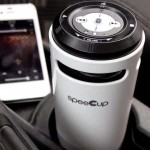
speeCup Portable Bluetooth Speaker: The speeCup is a Siri/S voice activated portable Bluetooth speaker. This portable 8" tall speaker connects via Bluetooth, has a range up to 30 feet and can also be connected using auxiliary cable directly to your car or home stereo system. It also features gesture control and plays music and functions as a handsfree speakerphone in your car. urv Guitar: This stringless digital guitar lets you to learn and play songs using touch, gestures and more. The d...
More

Innovative Wearable Gadgets

Everykey: Everykey is a stylish wristband that replaces keys and passwords; it utilizes AES 128-bit encryption to grant access to key and password enabled devices. This Bluetooth enabled band gives immediate access to your password-protected gadgets, physically locked items including doors, car doors, bike locks, and more. It works with Windows, Mac OS, Linux, Android, and iOS. Nudge: Nudge is the nifty notification wristband that notifies you about important work email, or a phone call tha...
More

Foot Drop Management, Post Stroke

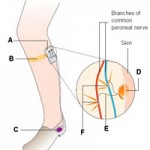
Foot Drop Management, Post Stroke The STIMuSTEP system is a highly recommended treatment that helps correct dropped foot in chronic stroke patients. Since the product was entered into the market in 2004, many patients worldwide (mainly within Europe) are benefiting from it. The use of FES to treat Foot Drop is N.I.C.E (National Institute for Health and Clinical Excellence) recognised, following the Interventional Proce...
More

Smart medical devices for patients

Smart medical devices for patients   Cue IoT Advantage: self-diagnosis Benefit: Enables preventive care Cue’s multi-use wand and corresponding cartridge increase the ways that patients can track their own health. With this smart medical device, patients can take their health into their own hands—testing their nasal fluids, saliva and blood. Quell IoT Advantage: pain relief Benefit: Improves quality of care Quell Relief is worn below the knee like any brace—but its embedded sens...
More

Implants to assist you with body functions

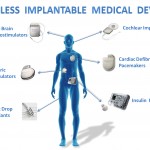
Cochlear Implant A cochlear implant is an electronic medical device that replaces the function of the damaged inner ear. Unlike hearing aids, which make sounds louder, cochlear implants do the work of damaged parts of the inner ear (cochlea) to provide sound signals to the brain.   Deep brain neurostimulator Deep brain stimulation (DBS) is a neurosurgical procedure involving the implantation of a medical device called a neurostimulator (sometimes referred to as a 'brain pace...
More

PositiveID Health and Seurity Identification

PositiveID develops biological detection systems for America’s homeland defense industry as well as rapid medical testing. PositiveID is focused on the development of microfluidic systems for the automated preparation of and performance of biological assays in order to detect threats at high-value locations, as well as analyze samples in medical environments. PositiveID’s microfluidic technology alleviates all existing problems by replacing robotics with integrated microfluidics, reducing cos...
More

Device allows paralyzed man to swipe credit card, perform other movements.

NeuroLife, was invented at Battelle, which teamed with physicians and neuroscientists from The Ohio State University Wexner Medical Center to develop the research approach and perform the clinical study. Ohio State doctors identified the study participant and implanted a tiny computer chip into his brain. Device allows paralyzed man to swipe credit card, perform other movements. That pioneering participant, Ian Burkhart, is a 24-year-old quadriplegic from Dublin, Ohio, and the first person...
More

New light-activated nanoparticles kill over 90% of antibiotic-resistant bacteria

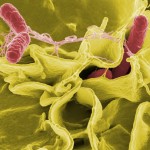
Nanoparticle treatment developed by researchers at the University of Colorado Boulder could provide an effective means of fighting antibiotic-resistant bacteria including Salmonella, E. Coli, and Staphylococcus, based on results in a laboratory environment. In testing with a lab-grown culture, the nanoparticles killed 92 percent of drug-resistant bacterial cells while leaving the other cells intact. The treatment consists of light-activated therapeutic nanoparticles called "'quantum dots". Th...
More

University of Washington has developed a new handheld, pen-sized microscope

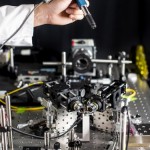
Handheld, miniature microscope being developed by University of Washington mechanical engineers could allow surgeons to “see” at a cellular level in the operating room and determine where to stop cutting. The new technology, developed in collaboration with Memorial Sloan Kettering Cancer Center, Stanford University and the Barrow Neurological Institute, is outlined in a paper published in January in the journal Biomedical Optics Express. The handheld microscope, roughly the size of a pen, ...
More

SKULLY smart helmet

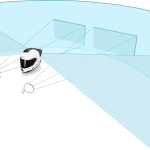
Skully AR-1 is a technologically advanced motorcycle helmet with integrated 180degree camera. It's sharp, stealthy-looking black helmet read like specs off the navigation system of a fighter plane: heads-up display, rearview camera, and GPS navigation, all tied together by a high-speed microprocessor. And this helmet isn't all work and no play; it also connects to wireless devices via Bluetooth, streams music, makes hands-free calls, and can even connect to the internet via Wi-Fi. It even has a ...
More

New drug-delivery capsule may replace injections

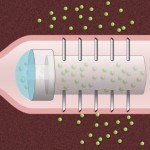
Pill coated with tiny needles can deliver drugs directly into the lining of the digestive tract. Given a choice, most patients would prefer to take a drug orally instead of getting an injection. Unfortunately, many drugs, especially those made from large proteins, cannot be given as a pill because they get broken down in the stomach before they can be absorbed. To help overcome that obstacle, researchers at MIT and Massachusetts General Hospital (MGH) have devised a novel drug capsule coat...
More

NASA’s Lunar Laser communication

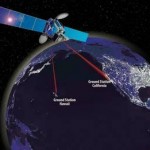
Lunar Laser Communications Demonstration (LLCD) Space Communications and Navigation (SCaN) recently developed and tested optical communication technology using lasers, which transferred data at much higher rates than Radio Frequency (RF) communications systems. SCaN demonstrated the technology with the Lunar Laser Communications Demonstration (LLCD) from October 2013 through April 2014 during the Lunar Atmosphere and Dust Environment Explorer (LADEE) mission. The LLCD demonstration consisted...
More
Posted in Uncategorized Tagged

University of Tokyo’s 6th sense headband

University of Tokyo is developing a wearable and modular device allowing users to perceive and respond to spatial information using haptic cues in an intuitive and unobtrusive way. The system is composed of an array of "optical-hair modules", each of which senses range information and transduces it as an appropriate vibro-tactile cue on the skin directly beneath it (the module can be embedded on clothes or strapped to body parts as in the figures below). An analogy for our artificial sensory sys...
More

‘e-skin'(electronic skin) – University of Tokyo

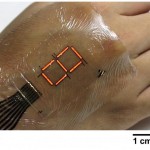
University of Tokyo researchers have developed an ultrathin, ultraflexible, protective layer and demonstrated its use by creating an air-stable, organic light-emitting diode (OLED) display. This technology will enable creation of electronic skin (e-skin) displays of blood oxygen level, e-skin heart rate sensors for athletes and many other applications. Integrating electronic devices with the human body to enhance or restore body function for biomedical applications is the goal of researchers ...
More

NASA’s New Technology Research- High-Power Solar Electric Propulsion

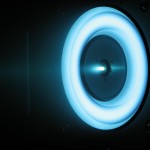
A prototype 13-kilowatt Hall thruster is tested at NASA's Glenn Research Center in Cleveland. This prototype demonstrated the technology readiness needed for industry to continue the development of high-power solar electric propulsion into a flight-qualified system. On Tuesday, April 19, 2016, NASA awarded a contract to Aerojet Rocketdyne, Inc. to design and develop an advanced electric propulsion system that will significantly advance the nation's commercial space capabilities, and enable de...
More
Posted in Uncategorized Tagged

ASCII – Computer alphabets

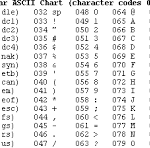
ASCII abbreviated from American Standard Code for Information Interchange, is a character-encoding scheme (the IANA prefers the name US-ASCII). ASCII codes represent text in computers, communications equipment, and other devices that use text. Most modern character-encoding schemes are based on ASCII, though they support many additional characters. ASCII was the most common character encoding on the World Wide Web until December 2007, when it was surpassed by UTF-8, which is fully backward compa...
More

NASA – 3D Printing in space

The 3D Printing In Zero-G Technology Demonstration serves as a proof-of-concept test of the properties of melt deposition modeling additive manufacturing in the microgravity environment of the International Space Station (ISS). The lessons learned from this technology demonstration can be applied in the next generation of melt deposition modeling in the permanent NanoRacks Additive Manufacturing Facility (AMF), as well as for any future additive manufacturing technology. This includes any future...
More

Inductive Monitoring System – Machines That Tell You When They’re Sick

Machines That Tell You When They're Sick During a test launch of the Orion Crew Vehicle in December 2014, the Inductive Monitoring System (IMS) that CEMSol later licensed was used to monitor electrical systems on the space capsule. Credits: NASA In the future, machines will monitor their own health and request help, themselves, when something’s wrong, predicts David Cirulli, engineering vice president and cofounder of CEMSol LLC. “There’s going to be an integrated s...
More

Micro Phone Lens Turns a Phone into a Microscope

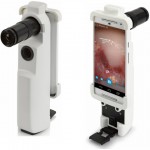
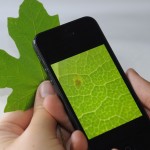
Turn your smartphone into a microscope. The Micro Phone Lens allows you to take images at a magnification of 150X using just a smartphone or tablet. The lens attaches to these devices using an adhesive backing and in combination with the slides and sufficient, quality lighting, it allows users to take pictures at a fraction of the cost of a regular microscope. Simply press down the lens on to the camera lens, focus the device, and capture a picture or video. Its features include: 1. O...
More

Boeing Creates a Self-Cleaning Airplane Lavatory

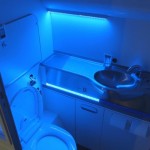
Many passengers are reluctant to use airplane lavatories given that so many individuals use them on a single flight, leaving it a potential “germ-zone.” But what if the lavatory could clean itself after every use? To make airplane lavatories more hygienic, Boeing engineers and designers have created a self-cleaning prototype bathroom that uses ultraviolet (UV) light and non-touch technology to kill 99% of germs, all in less than three seconds. The prototype lavatory consists of touc...
More

Updated Earthquake Detection System Provides Data in Minutes

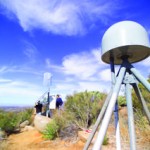
NASA and Scripps Institute of Oceanography have developed an earthquake detection system that provides more accurate data about an earthquake within minutes. When an earthquake strikes, the most valuable information (that is needed immediately) includes its location, depth, and magnitude. The quality of the information and how fast it can be obtained affects the number of lives that can be potentially saved. Currently, seismic sensors on the ground are used to measure how much the eart...
More

Solar Balloon” Farms Could be the Future of Energy

Imagine if your home was powered by solar balloons that sat above the clouds. Scientists at the Japanese-French Laboratory for Next Generation Photovolatic Cells (NextPV) are aiming to do just that. Solar cells’ efficiency relies on the proximity of the cells to sunlight. Even if the cells are put directly in the path of sunlight, their efficiency is affected significantly by clouds or terrible weather. On a cloudy day, solar panels can produce less than 30% of the electricity they are design...
More

Space Garden setup on International Space Station

Space Garden setup on International Space Station NASA and international community have worked together and setup space garden. VEGGIE is a deployable plant growth unit setup on the Space Station to demonstrate the feasibility of a space garden. The experiment facility provides lighting and nutrient supply and is capable of supporting a variety of plant species that can be cultivated for educational outreach, fresh food and even recreation for crewmembers on long-duration missions. Thermal ...
More

Inkjet Hologram Printing Now Possible

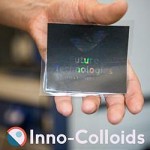
Vivid holographic images and text can now be produced by means of an ordinary inkjet printer. This new method, developed by a team of scientists from ITMO University, is expected to significantly reduce the cost and time needed to create the so-called rainbow holograms, commonly used for security purposes, to protect valuable items, such as credit cards and paper currency, from piracy and falsification. The results of the study were published in Advanced Functional Materials scientific journal o...
More

GelenK

GelenK is based on a complex and dense future city. This design will display merit in a region where there are a number of cars and narrow intersections regardless of a planned city or not. It will solve a problem that existing trucks couldn’t comprehend downtown and the outside at one time. Existing large trucks could not perform their function well in a complex city and small trucks transporting in the city were not proper for long-distance driving. However, this design can satisfy both functi...
More

Thermogloves

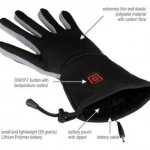
This winter, you should do your hands a favour. Even on the coldest winter days, keep your hands warm with the Thermo Gloves, the first wireless and rechargeable heated gloves worldwide that even fit underneath your other gloves. Thermo Gloves provide your hands with pleasant warmth and thus offer ideal comfort for the winter. Wear the Thermo Gloves as outer gloves, or pull on your own gloves over them. No matter whether these are mittens for taking a walk, or skiing gloves, or rubber gloves for...
More

Adidas created a shoe that is literally made out of Trash.

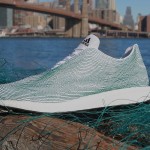
German apparel giant Adidas has created a prototype for a sustainable new shoe made almost entirely from recycled garbage pulled from the ocean, the company announced on Monday. The upper shoe is made entirely of yarns and filaments reclaimed from illegal deep-sea gillnets and other ocean waste, while the base is made from sustainable cushioning material. To call ocean pollution a big problem is an understatement. According to the United Nations Educational, Scientific and Cultural Organization,...
More