ANAMORPHIC ILLUSIONS a form of an optical illusion

ANAMORPHIC ILLUSIONS Creating and Printing Your Own Anamorphic Illusions ANAMORPHIC ILLUSIONS a form of an optical illusion. If you’re looking for something fun and creative to do and want to spend some quality time with your printer, anamorphic illusions are just the thing for you. An anamorphic illusion is an optical illusion whose effect is based on the viewing angle; in other words what seems like a perfectly normal, two-dimensional printed image becomes a stunning, three-dimensional imag...
More
Posted in Uncategorized Tagged

The ‘magic’ hi-tech window

Researcher have revealed the ultimate window one that can block out sound, but let fresh air in. It could be the answer to any city dweller's dreams. The double glazed windows have holes designed to let air in but block the most annoying frequencies. That tends to be the range of artificial sounds, leaving the natural sounds in the 0-500 Hz range largely undisturbed. After sending sound waves of 80 decibels, which is louder than a vacuum cleaner, through both windows, the pair discovered that th...
More

Earth not due for a geomagnetic flip in the near future.

Over the past couple of hundred years, the strength of the Earth’s geomagnetic field has been waning, leading scientists to wonder if our planet’s polarity is on the verge of flipping. A new study suggests this won’t happen in the near future and that the intensity of today’s field is uncharacteristically strong. Predicting a geomagnetic flip is important for two primary reasons, one biological, one technological. The Earth’s magnetic field deflects solar wind and cosmic rays, so with a weakened...
More

Using jeans to purify the air.

There are more jeans in the world than people. That sparked an idea in the mind of University of Sheffield chemist Tony Ryan. Why not use people’s penchant for wearing denim to help purify the air? With thoughts of reducing pollutants such as the nitrogen oxides and volatile organic compounds emitted by vehicles, power plants, residential heating, cooking and various consumer products, Ryan, in partnership with former fashion designer Helen Storey, came up with the concept of “Catalytic Clothing...
More

Army Ants

Ants are well-known for building with their bodies, but a new study has shown that army ants can optimize traffic flow using bridges that move. Army ants are a predatory nomadic species, they raid other insect colonies and are always on the move, without a permanent nest. In this lifestyle, finding the shortest foraging path with sufficient workforce left over is crucial. The new research shows they adjust their bridges to find that balance. A gap in an ant’s path might be a daunting obstacle fo...
More

Global warming will be faster than expected.

Scientists suggest that global warming could progress faster than was previously believed because increased temperatures influence natural greenhouse gas emissions. Numerous studies from the Swedish research team over the past two years have determined that natural greenhouse gas emissions will increase when the climate gets warmer, Linköping University reported.  Now, their most recent study has backed up these findings. "Everything indicates that global warming caused by humans leads to increa...
More

Xerox printed memory labels aim to curb counterfeiting.

Xerox on Wednesday announced a pair of printed packaging labels with embedded memory designed to help curb counterfeiting. Also known as printed memory, the labels are equipped with up to 36 bits of rewritable memory. That may not sound like much in a world that deals largely in gigabytes and terabytes but according to Xerox, it’s enough to store up to 68 billion points of data. The product line-up is made up of the aforementioned Xerox Printed Memory and the second offering is the same except t...
More

Miniaturizable magnetic resonance

A garnet crystal only one micrometre in diameter was instrumental in a University of Alberta team of physicists creating a route to “lab-on-a-chip” technology for magnetic resonance, a tool to simplify advanced magnetic analysis for device development and interdisciplinary science. “To most, a gem so tiny would be worthless, but to us, it’s priceless,” says Mark Freeman, University of Alberta physics professor and Canada Research Chair in condensed matter physics. “It was the perfect testbed for...
More

Porous Liquid.

Researchers in the School of Chemistry and Chemical Engineering at Queen’s, along with colleagues at the University of Liverpool, UK, and other, international partners, have invented the new liquid and found that it can dissolve unusually large amounts of gas, which are absorbed into the ‘holes’ in the liquid. Porous materials, as their name would suggest, are materials with holes. These are materials that look totally solid to the naked eye, but on a molecular level, contain lots of empty space...
More

X-Ray Vision, RF Capture and Emerald

A team of researchers at MIT’s Computer Science and Artificial Intelligence Lab (CSAIL) has long believed that wireless signals like WiFi can be used to see things that are invisible to the naked eye. Since 2013, CSAIL researchers have been developing technologies that use wireless signals to track human motion. The team has shown that it can detect gestures and body movements as subtle as the rise and fall of a person’s chest from the other side of a house, allowing a mother to monitor a baby’s...
More

Chronos – Make any watch smart

San Francisco startup Chronos is aiming its new device for people who prefer pretty analog watches to be the things on their wrists but would really like them to have the most basic features of a fitness tracker and a smart device. “We have developed a small, tiny disc that gives you all the very best of today’s wearable tech, but let’s you keep the watch you already wear,” Chronos founder and CEO Mark Nichol said. The metal Chronos disc is designed to resemble watch casing, so that it largely d...
More

Cyborg Rose: Researchers implant electronic circuits inside plants.

A team of Swedish researchers, by using living roses, has created analogue and digital electronic circuits inside living plants, calling them "electronic plants". The experiment demonstrates wires, digital logic and displays elements fabricated inside the plants that could develop new applications for organic electronics and new tools in plant science. The group at Linkoping University in Sweden, under the leadership of professor Magnus Berggren, used the vascular system of living roses to build...
More

Speedy Microscopic Submarines powered by Light

A team from Rice University has developed single-molecule nanosubmarines that could eventually be used to deliver medicines directly inside the body. Back in 2006, this same group developed nanocars, a single-molecule vehicle with four wheels, axles, and independent suspensions that could be “driven” across a terrestrial surface. Unfortunately, many of the nano-scale devices developed since then either required or emitted toxic chemicals. Several years ago, however, a new motor developed by a gr...
More

Moox Bike, the first-of-its kind bike and scooter hybrid.

With Moox Bike, you can pedal like a traditional bicycle or use the patented platform design to glide and scoot. The Moox Bike begs to be noticed. Its innovative design and striking colors not only make it fun to ride and glide, but turns heads along the way. Its design, construction and architecture provide an extremely comfortable and fluid ride. The Moox Bike is structurally sound with no-fuss. It will last for years with minimal maintenance. Each Moox Bike is individually tested and adheres ...
More

Hydrogel superglue is 90 percent water.

Nature has developed innovative ways to solve a sticky challenge. Mussels and barnacles stubbornly glue themselves to cliff faces, ship hulls, and even the skin of whales. Likewise, tendons and cartilage stick to bone with incredible robustness, giving animals flexibility and agility. The natural adhesive in all these cases is hydrogel, a sticky mix of water and gummy material that creates a tough and durable bond. Engineers at MIT have developed a method to make synthetic, sticky hydrogel th...
More

Navy seeks secret of invisibility from fish.

A study released Thursday says that two ocean fish the big-eyed scad and the lookdown have fine-tuned a method of avoiding predators by hiding in light. Elements in their silvery skin render them nearly impossible to see. The Navy funded the study as part of an effort understand how fish do this, and how it could be used to the Navy's advantage. Although the study focused mostly on just two types of fish, the scad and lookdown are members of a family called the Carangidae, a bountiful clan that ...
More

Robo-Kitttens to combat loneliness felt by the elderly.

The Joy For All cats are sold under the slogan, ‘Why should kids have all the fun?’, and are marketed as a relaxation device, designed to make users feel happier and less alone upon hearing the mewing of the cat’s response to their touch. Created by the producers of My Little Pony and Transformers, the cat toys do not requiring feeding or bathroom breaks, and react to affection. “Joy for All” pets are robotic cats that “look, feel, and sound like real cats,” Hasbro claims on its website, whic...
More

Lully helps prevent a child’s night terrors.

The Lully Sleep Guardian is a Bluetooth-enabled pod that pairs with an iPhone app, to prevent a child from entering an "unhealthy state of sleep," when night terrors typically occur. The pod uses gentle, timed vibrations. A good night's sleep for a child typically means the same for a parent. But night terrors can make middle-of-the-night wakings more frequent and can leave parents feeling helpless. This new device wants to fend off night terrors by rousing a child into a lighter sleep stage. ...
More

A whale of a tale.

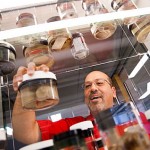
Scientists led by Peter Girguis, professor of organismic and evolutionary biology at Harvard, have found that the gut microbiome of right whales and other baleen species shares characteristics with those of both cows and meat-eating predators. The dual microbial communities allow whales to extract the most nutrition possible from their diet, digesting not only the copepods they eat, but their chitin-rich shells as well. The great whales are carnivores, feeding on tiny, shrimp-like animals such a...
More

Flying pixels create self-levitating displays

A team of researchers at Queen's University's Human Media Lab have unveiled a system of flying 'BitDrones' that let users explore virtual information by interacting with levitating voxels. The system, called BitDrones, allows users to explore virtual 3D information by interacting with physical self-levitating building blocks. BitDrones is the first step towards creating interactive self-levitating programmable matter, materials capable of changing their 3D shape in a programmable fashion using s...
More

Samsung Flexible Smartphone

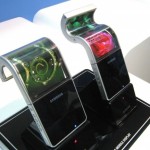
Samsung promises that flexible and foldable screens are coming to devices soon. The company’s latest patent, which was spotted by Patently Mobile, is for a flexible phone that morphs into a smart bangle you can strap onto your wrist. It’s an entirely bizarre and futuristic idea that certainly puts more focus on accessibility than style, but it sure sounds awesome. The patent features a flexible OLED screen that’s so flexible you can curl it into a bracelet and wear it on your wrist as a smart...
More

The surprising trick jellyfish and lampreys use to swim.

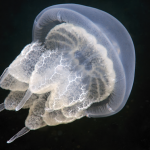
Jellyfish and lampreys have among the most energy-efficient swimming motions of any animal. From a long time, researchers have assumed that in order to move forward, fly or swim, humans and animals exert pressure on surface, air or water around them. But a new study published in the journal Nature Communications has revealed that two sea animals do not follow the general theory. Jellyfish and lampreys pull their way through the water, as per the study. A Stanford led team shows how these anci...
More

3D printed objects may be toxic

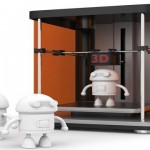
Parts produced by some commercial 3D printers may be toxic, according to a new study that raises concerns about how to dispose of parts and waste materials from the devices which are becoming increasingly popular. Researchers at the University of California, Riverside studied two common types of 3D printers, one that melts plastic to build a part, and another that uses light to turn a liquid into a solid part. They found that parts from both types of printers were measurably toxic to zebrafish e...
More

Big Data

Massachusetts Institute of Technology (MIT) researchers at the Computer Science and Artificial Intelligence Laboratory (CSAIL) are looking to take human intuition out of big data analysis by letting computers choose the feature set used to identify predictive patterns in the data. This effort is called “Data Science Machine”. Big Data represents a huge, complex ecosystem that brings together innovative processes from across the spectrum of data analysis, storage, networking, curation, search,...
More

New graphene based inks for high-speed manufacturing of printed electronics.

Developed by researchers at the University of Cambridge in collaboration with Cambridge-based Technology Company Novalia, the method allows graphene and other electrically conducting materials to be added to conventional water-based inks and printed using typical commercial equipment. This is the first time that graphene has been used for printing on a large-scale commercial printing press at high speed. A low-cost, high-speed method for printing graphene inks using a conventional roll-to-roll p...
More

RoboBee : The tiny flying submarine

A Harvard University lab has developed the first insect-size robots capable of flight and swimming. Researchers at the Harvard Paulson School have demonstrated a flying, swimming, insectlike robot, easing the way to create future aerial-aquatic robotic vehicles. Coming from the Harvard Microrobotics Lab, this discovery can only mean one thing, swimming RoboBees. The biggest challenge involved the conflicting design requirements. Aerial vehicles require large airfoils such as wings or sails to...
More

Smart design learning from nature

You've probably seen ads for IBM's SmarterCity initiative, a program that uses the company's information technology to help municipal governments create healthier, more intelligent urban environments for their residents. Using their ability to collect and analyze data, IBM is able to provide information about elements of daily city life ranging from weather and traffic to water usage and air quality. But what they've done with that data has largely been used to make policy and economic decisions...
More
Posted in Uncategorized Tagged

Latest Intuos Tablets Make Creative Dreams Come True

Wacom®, the world leader in pen-based creative tablets, introduced its next generation Intuos® product family to empower and inspire creative enthusiasts. The new range of Intuos Pen & Touch tablets consists of four models: Intuos Art, (for beginners with a passion for creativity), Intuos Comic, (more advanced painting and artistic skill) Intuos Photo (for photo editors who want to try new creative techniques) and Intuos Draw. (For comic and manga enthusiasts). Each model includes free...
More

Lifetime of atoms extended using a mirror

Researchers at Chalmers University of Technology have succeeded in an experiment where they get an artificial atom to survive ten times longer than normal by positioning the atom in front of a mirror. The findings were recently published in the journal Nature Physics. The artificial atom consists of a superconducting circuit on a silicon chip. The interaction between the atom and its mirror image modifies the vacuum fluctuations seen by the atom and thus its lifetime. The microwaves that mediate...
More

Glueballs: Particles purely made of nuclear force

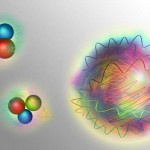
For decades, scientists have been looking for so-called “glueballs." Now it seems they have been found at last. A glueball is an exotic particle, made up entirely of gluons, the “sticky” particles that keep nuclear particles together. Glueballs are unstable and can only be detected indirectly, by analyzing their decay. This decay process, however, is not yet fully understood. Professor Anton Rebhan and Frederic Brünner from TU Wien (Vienna) have now employed a new theoretical approach to calcula...
More