Disappearing Carbon Circuits on Graphene

Georgia Tech researchers have deposited carbon atoms onto graphene using a focused electron beam process to create patterns that evolve over time on the graphene. The patterns could be used to make reconfigurable electronic circuits, which evolve over a period of hours before ultimately disappearing into a new electronic state of the graphene. Graphene is also made up of carbon atoms, but in a highly-ordered form. Beyond allowing fabrication of disappearing circuits, the technology could be u...
More

Squeezie turns any tube of toothpaste into a functional toothbrush.

Made at Quirky, the Squeezie is a kid-designed toothbrush that makes brushing teeth a mess-free chore. The small toothbrush, measuring just 3.1 inches long is designed with one end to screw onto the opening of conventional toothpaste tubes. Just like other caps, the Squeezie can screw onto the mouth of your favorite toothpaste’s tube, keeping it covered and sealed up whenever it’s not in use. It attaches an actual toothbrush onto the top of the tube, with an integrated facility that automatic...
More

Robo Washer: The All-In-One Sink, Faucet, Soap Dispenser and Hand Dryer

Amazing self-cleaning invention that replaces sink, faucet, soap dispenser and hand dryer all in one, has been just launched on Kickstarter. This gadget may fix one of the worst things about using public bathrooms. In addition to waiting on long lines, one of the worst things about public bathrooms is having to use the same sink faucets and hand dryers that dozens before you have touched. Robo-Washer Revolution cleans and dries hands, then recycles its water after each use. The Robo-Washer is...
More

Enhancing movement with computational models.

MIT’s David Hill, a PhD student in media arts and sciences, builds computational models of human locomotion, which are the basis for designing ever-better prosthetics and his advisor, Hugh Herr, an associate professor of media arts and sciences, is a double amputee. Hill says living in the world of theoretical models can be somewhat insular, so having a real-life example of someone who can benefit from and pilot some of the work he does is part of what helps him stay focused. Human movement i...
More

Big range of behaviors for tiny graphene pores

Researchers at MIT have created tiny pores in single sheets of graphene that have an array of preferences and characteristics similar to those of ion channels in living cells. The surface of a single cell contains hundreds of tiny pores, or ion channels, each of which is a portal for specific ions. Ion channels are typically about 1 nanometer wide. By maintaining the right balance of ions, they keep cells healthy and stable. Like biological channels, graphene pores are selective for certain type...
More

IBM announces carbon nanotube research breakthrough

IBM (NYSE:IBM) announced a research breakthrough that could soon permit replacing silicon transistors with carbon nanotubes in future high-performance electronic chips. Carbon nanotubes consist of single atomic sheets of carbon rolled up into a tube. The carbon nanotubes form the core of a transistor device whose superior electrical properties promise several generations of technology scaling beyond the physical limits of silicon. The IBM researchers developed a fabrication process that permi...
More

Cicret wristband turns your arm into a touch screen

The new revolutionary bracelet, Cicret projects emails, videos and games and turns your arm into a touchscreen using a tiny built-in projector. Wearers of the of the Cicret bracelet will be able to check an email or watch a film that’s projected onto their forearm, and control the picture by using their skin like a touchscreen. It will also be possible for users to pair it with an existing smartphone, answer incoming phone calls and activate the speakerphone functionality on their smartphone. ...
More

Google wants your glasses to stay on while you run, with self-adjusting specs.

The latest invention from Google are the new self-adjusting specs that could change the lives of the active and near-sighted .Wearing spectacles and keeping them in place, especially while doing physical work such as running, would be much easier now. The patent outlines a system built into a wearable device like Google Glass that uses motors and motion detectors to automatically tighten or loosen the spectacles' arms depending on what the wearer is doing. It relies on a simple input, adjustm...
More

Miniature invisibility cloak that can conceal 3-D objects by refracting light waves.

Scientists at the Berkeley Lab and UC Berkeley have created an invisibility cloak made from a thin material covered with millions of gold-plated antennae which wraps around an object and uses the antennae to divert light waves from its surface, rendering it undetectable to the human eye. Light reflects off the cloak as if it were reflecting off a flat mirror. Unlike the fictional character, the ultrathin cloak is real, and it successfully concealed microscopic 3D objects from detection in vis...
More

Stretchy, origami battery powers Samsung smartwatch

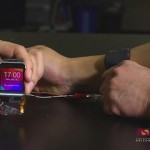
Stretchy batteries inspired by origami could power smartwatches and other wearable electronics. Newly introduced, stretchy origami-style batteries could power the wearable devices of the future, say researchers who have managed to power a Samsung Galaxy Gear 2 with a battery of their own invention. The lithium-ion batteries developed by a team from Arizona State University are capable of stretching to 150 percent of their natural size and of powering existing smartwatches. Scientists wo...
More

Sugru: First ever Moldable Glue that Turns into Rubber

Sugru is a moldable putty made out of silicone rubber and can be used to repair electronics along with its many other uses. Designer-inventor Jane Ni Dhulchaointigh’s unique silicone technology, Sugru feels like play-dough, and it's that easy to use too. Sugru is a moldable putty made out of silicone rubber and can be used to repair electronics along with its many other uses. The product adheres to many surfaces, fills in gaps better than most glues and sets in 30 minutes giving you tim...
More

Scaling up production of 2D electronic materials

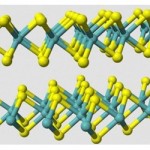
An MIT-led group of researchers has claimed to have determined a way to make large sheets of molybdenum telluride. Sheets of graphene and other materials that are virtually two-dimensional hold great promise for electronic, optical, and other high-tech applications but the biggest limitation in unleashing this potential has been figuring out how to make these materials in the form of anything larger than tiny flakes. Now researchers at MIT and elsewhere may have found a way to do so. The g...
More

Nightlight Simplified With Touch

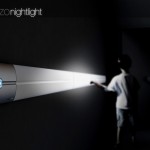
The Senzo Nightlight is an innovative lamp designed to provide a soft light that follows you in the dark at the very touch of your fingertips. With this kind of design, there isn't any more stumbling and fumbling in the night. Designed by Soledad Clavell and Marcos Madia, and inspired by the notion of ‘fingertips skimming the walls until you reach the door’, this tubular Senzo Nightlight is fitted on the wall approximately 80 cm above the floor for maximum convenience. At night if you don’...
More

PalmSecure For Individual Vein Pattern Recognition

An innovative biometric identification and security device works without any contact to scanner. The latest technology from PalmSecure™ is a leading-edge authentication system using biometric technology that uses vein pattern recognition. As organizations search for more secure authentication methods for data access, physical access and general security, many are turning to biometrics. Biometrics is gaining attention as a reliable, highly accurate and efficient method of confirming a pe...
More

The Floating Mug – a coaster and cup in one

Say no to separate coasters with the latest invention of the porcelain Floating Mug. A new mug with a built-in coaster was invented. Hot beverages produces heat and slight moisture that can be damaging to your furniture. Sipping from the same area on the lip of a cup causes moisture to drip down that side thus causing stains. The Floating Mug is a novel white porcelain mug which is perfect for coffee or tea. This mug has a handle designed and balanced to function also as a coaster so when ...
More

Eatsa: The San Francisco Eatery with a Virtual Cashier

The founders of Eatsa, a new fast food eatery in San Francisco, aimed to be different. The eatery provides an unprecedented, personalized ordering experience—with a “virtual cashier.”   “‘eatsa is reinventing fast food by combining the speed and affordability of fast food with the delicious flavors and nutritious ingredients of premium fast casual," said Tim Young, co-founder of eatsa.  ‘By developing new technology to automate every aspect of the food experience, we are able to d...
More

T-Ray Goggles that can see through the wall

New research at the University of Maryland could lead to a generation of light detectors that can see below the surface of bodies, walls, and other objects. Using the special properties of graphene, a two-dimensional form of carbon that is only one atom thick, a prototype detector is able to see an extraordinarily broad band of wavelengths. Included in this range is a band of light wavelengths that have exciting potential applications but are notoriously difficult to detect: terahertz waves, ...
More
Posted in Uncategorized Tagged

Augmented modeling tool that lets you design 3D printed wearables directly on your body

Tactum is an augmented modeling tool that lets you design 3D printed wearables directly on your body. It uses depth sensing and projection mapping to detect and display touch gestures on the skin. A person can simply touch, poke, rub, or pinch the geometry projected onto their arm to customize ready-to-print, ready-to-wear forms. Tactum extracts features from the user's body to generate the interactive digital geometry that is projected onto the skin. This embeds a level of ergonomic intellig...
More
Posted in Uncategorized Tagged

Legos Used to Create Most Affordable Braille Printer

Legos aren't just child's play. The world's most affordable Braille printer is made out of them and won one of 10 of Popular Science’s 2015 Invention Awards in the Category of Communication. Originally conceived by Shubham Banerjee at twelve years old, the printer was meant to be a cheaper alternative to Braille printers that costed over $1,800. The first prototype, called Braigo, was finished in February 2014 but was “limited to printing on narrow rolls of paper.” “In summer 2014, Banerje...
More

Data-storage for eternity in the form of DNA

ETH researchers have found a way to store information in the form of DNA, preserving it for nearly an eternity. Scrolls thousands of years old provide us with a glimpse into long-forgotten cultures and the knowledge of our ancestors. In this digital era, in contrast, a large part of our knowledge is located on servers and hard drives. It will be a challenge for this data to survive 50 years, let alone thousands of years. Researchers are therefore searching for new ways to store large volumes ...
More
Posted in Uncategorized Tagged

New concept of Tangible User Interface (TUI) that is based on physical embodiment of digital information & computation

Concept of Tangible User Interface (TUI) that is based on physical embodiment of digital information & computation, in order to go beyond the current dominant paradigm of “Painted Bits” or Graphical User Interface (GUI). Humans have evolved a heightened ability to sense and manipulate the physical world, yet the GUI based on intangible pixels takes little advantage of this capacity. The TUI builds upon our dexterity by embodying digital information in physical space. TUIs expand the affor...
More
Posted in Uncategorized Tagged

New metal surface that is super water repellent

Scientists at the University of Rochester have created new metal surfaces that are super water repellent, using short intense laser blasts. Because these surfaces don't accumulate water, they are self-cleaning and resistant to both corrosion and ice, making them good candidates for solar panels, aerofoils, and even toilets. The researchers published their findings yesterday in the Journal of Applied Physics. Two scientists at the University of Rochester, Chunlei Guo and Anatoliy Vorobyev, wer...
More
Posted in Uncategorized Tagged

3D Printing Pens

Many people have doodled before. Pens, pencils, and other writing utensils are staples of our everyday life. However they can only do so much. You can not make a solid 3d shape. To solve this, now there are multiple 3d printing pens. One such pen is the 3Doodler. The gadget bills itself as the “world’s first 3D printing pen.” It first exploded in popularity on Kickstarter, and the fundraiser started by its maker, WobbleWorks, smashed its $30,000 goal a few hours after it was launched in Febru...
More

Creating your own Motion Controlled Robotic Hand

Did you know that you can create your own robotic hand? You only need a few parts, all of which are simple to find. All you need is to use servos, an Arduino microprocessor, a gyroscope and multiple bend sensors. Using a glove, you can control the robotic hand, as it does exactly what your hand does. This is because the glove contains the gyroscope and bend sensors. These sense the motion of the user's hand, and relay that information to the servos. The robotic arm can move in anyway a human arm...
More

Scientists create an energy dense battery out of sugar

A Virginia Tech research team has developed a battery that runs on sugar and has an unmatched energy density, a development that could replace conventional batteries with ones that are cheaper, refillable, and biodegradable. The findings from Y.H. Percival Zhang, an associate professor of biological systems engineering in the College of Agriculture and Life Sciences and the College of Engineering, were published today in the journal Nature Communications. While other sugar batteries ha...
More

How Researchers are Taking Computers out of Computing

Computers are really cool and helpful, but when we're on the computer, we can't connect with each other;  computers can't really interact with humans. "So the challenge and opportunity that lies ahead is how to get the computers out of computing," said Mark Rolston, the chief creative officer at frog.  Essentially, Rolston wants to personalize the experience of interacting with a computer, but also give more flexibility to a "computer user." Rolston came up with an innovative technology to...
More

Turn your smartphone or tablet into hologram projector

Holho is a device that projects hologram from your smartphone or tablet. Holho turns every mobile device into a holographic projector. The collection of Holho Pyramids offers three or four faces or tools with a single face reflecting as Holho Zed. Design objects are designed to be easily used in any situation and context. Phones and tablets become the holographic projectors. Simply place Holho on the device and project one of the many videos of Holho Video Collection .   https:/...
More

Chairless Chair, an invisible chair that you can wear.

It's like a chair that isn't there, but magically appears whenever you need it. It's called the Chairless Chair and you wear it on your legs like an exoskeleton: when it's not activated, you can walk normally or even run. And then, at the touch of a button, it locks into place and you can sit down on it. Like a chair that is now there. noonee® offers wearable mechatronic technology based on research from the Bio-Inspired Robotics laboratory at ETH Zurich. noonee’s pending patent, Chairless Ch...
More
Posted in Uncategorized Tagged

Bionic contacts – Live data that streams directly before your eyes

With the new Bionic contacts, Live data can be streamed directly before your eyes. Developed through a partnership with Aalto University in Finland, the “bionic” contact uses metal circuits only a few nanometers thick, or roughly one-thousandth the width of a human hair. An on-lens antenna draws radio-frequency radiation from an external source before transferring the energy to the integrated circuit for storage. The lens then transmits the information to a transparent sapphire chip that cont...
More
Posted in Uncategorized Tagged

Self-Cleaning Solar-Powered Toilet

Researchers from Caltech have developed a solar-powered, self-cleaning toilet able to convert human waste into hydrogen and fertilizer. Caltech’s toilet system uses the sun to power an electrochemical reactor. The reactor breaks down water and human waste into fertilizer and hydrogen, which can be stored in hydrogen fuel cells as energy. The treated water can then be reused to flush the toilet or for irrigation. The system can function off-grid and without any subsurface infrastructure. ...
More
Posted in Uncategorized Tagged