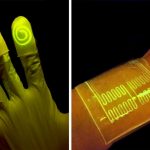
Engineers and biologists at MIT have developed Living sensors bandages that light up when in contact with certain chemicals

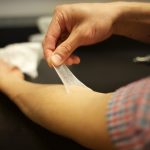
Engineers and biologists at MIT have teamed up to design a new “living material” — a tough, stretchy, biocompatible sheet of hydrogel injected with live cells that are genetically programmed to light up in the presence of certain chemicals. In a paper published this week in the Proceedings of the National Academy of Sciences, the researchers demonstrate the new material’s potential for sensing chemicals, both in the environment and in the human body. The team fabricated various wearable sensor...
More
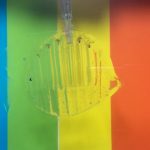
Engineers at MIT have fabricated transparent, hydrogel – gel-based robots that may one day assist in surgical operations

Engineers at MIT have fabricated transparent, gel-based robots that move when water is pumped in and out of them. The bots can perform a number of fast, forceful tasks, including kicking a ball underwater, and grabbing and releasing a live fish. The robots are made entirely of hydrogel — a tough, rubbery, nearly transparent material that’s composed mostly of water. Each robot is an assemblage of hollow, precisely designed hydrogel structures, connected to rubbery tubes. When the researchers p...
More

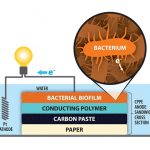
University of Rochester researchers have developed microbial fuel cell (MFC) with electrode made from paper, and will enable certain bacteria to produce electricity from waste

A microbial fuel cell (MFC), or biological fuel cell, is a bio-electrochemical system that drives an electric current by using bacteria and mimicking bacterial interactions found in nature. MFCs can be grouped into two general categories: mediated and unmediated. The first MFCs, demonstrated in the early 20th century, used a mediator: a chemical that transfers electrons from the bacteria in the cell to the anode. Unmediated MFCs emerged in the 1970s; in this type of MFC the bacteria typically...
More

Stanford engineers create a low-cost battery made with urea

Stanford University researchers created an aluminum-ion battery that uses an electrolyte material made of urea, the main component of urine (after water). A battery made with urea, commonly found in fertilizers and mammal urine, could provide a low-cost way of storing energy produced through solar power or other forms of renewable energy for consumption during off hours. A battery developed in Stanford Professor Hongjie Dai’s lab could provide low-cost storage for solar energy. (Image credit...
More

MIT researchers have developed ingestible electronic devices that can harness stomach acid to power it and could monitor physiological conditions or deliver drugs

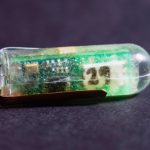
Researchers at MIT and Brigham and Women’s Hospital have designed and demonstrated a small voltaic cell that is sustained by the acidic fluids in the stomach. The system can generate enough power to run small sensors or drug delivery devices that can reside in the gastrointestinal tract for extended periods of time. This type of power could offer a safer and lower-cost alternative to the traditional batteries now used to power such devices, the researchers say. “We need to come up with ways to...
More

Curta was a small mechanical calculator introduced in 1947 that supported 11 to 15 digits

The Curta is a small mechanical calculator developed by Curt Herzstark. The Curta's design is a descendant of Gottfried Leibniz's Stepped Reckoner and Charles Thomas' Arithmometer, accumulating values on cogs, which are added or complemented by a stepped drum mechanism. It has an extremely compact design: a small cylinder that fits in the palm of the hand. The Curta was introduced in 1947, the last models were produced in 1970. It supported 11 to 15 digits making it even more accurate than mo...
More

Wyss Center for Bio and Neuroengineering in Geneva Switzerland has developed a brain-computer interface device that can decipher the thoughts of people who are unable to communicate

A brain-computer interface that can decipher the thoughts of people who are unable to communicate could revolutionize the lives of those living with complete locked-in syndrome according to a new paper published in PLOS Biology. Counter to expectations, the participants in the study reported being “happy” despite their condition. In the trial, people with complete locked-in syndrome, who were incapable of even moving their eyes to communicate, were able to respond “yes” or “no” via though...
More

Engineers At Caltech and ETH Zurich have Created Artificial Skin That “Feels” Temperature Changes

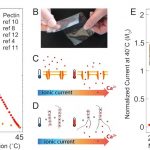
A team of engineers and scientists at Caltech and ETH Zurich have developed an artificial skin capable of detecting temperature changes using a mechanism similar to the one used by the organ that allows pit vipers to sense their prey. The material could be grafted onto prosthetic limbs to restore temperature sensing in amputees. It could also be applied to first-aid bandages to alert health professionals of a temperature increase—a sign of infection—in wounds. A paper about the new materia...
More

Scientists at MIT have developed a new material that can temporarily protect and tighten skin, and smooth wrinkles.

Scientists at MIT, Massachusetts General Hospital, Living Proof, and Olivo Labs have developed a new material that can temporarily protect and tighten skin, and smooth wrinkles. With further development, it could also be used to deliver drugs to help treat skin conditions such as eczema and other types of dermatitis. The material, a silicone-based polymer that could be applied on the skin as a thin, imperceptible coating, mimics the mechanical and elastic properties of healthy, youthful skin....
More

iPhone app that allow you to take a picture of a page in a book and then it reads it to you

'SayText' reads aloud the text in the image. It is intended for visually impaired users. SayText is a free spin off product from the DocScanner team. Place the iPhone center of a document and double-tap the “Take picture” -button Slowly elevate the iPhone upwards from the document, until the whole document is in picture. A beep sound indicates, that the document has been detected. The camera will shoot automatically when focused While the OCR is running, tap the screen to hear the...
More

Amazon’s ‘Echo’ Virtual Assistant Has Many New ‘Skills’ to Voice Control All Walks Of Your Daily Life

Amazon's 'Echo' is a hands-free Virtual Assistant with speaker that you control with your voice. Echo connects to the Alexa Voice Service to play music, provide information, news, sports... Amazon Echo (known in-development as Doppler or Project D and shortened and referred to as Echo) is a smart speaker developed by Amazon.com. The device consists of a 9.25-inch (23.5 cm) tall cylinder speaker with a seven-piece microphone array. The device connects to the voice-controlled intelligent person...
More

‘SensorTile’ is a sensing and connectivity hub ideal for developing products such as wearables, gaming accessories, smart-home and IoT devices.

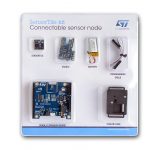
'SensorTile' is a sensing and connectivity hub ideal for developing products such as wearables, gaming accessories, smart-home and IoT devices. It has small sensor board with MEMS accelerometer, gyroscope, magnetometer, pressure sensor, and a MEMS microphone STMicroelectronics’ 13.5mm x 13.5mm 'SensorTile'  is currently the smallest turnkey sensor board of its type, containing a MEMS accelerometer, gyroscope, magnetometer, pressure sensor, and a MEMS microphone. With the on-board low-power ST...
More

IBM’s Watson supercomputer will soon be the new smart doctor on the block

IBM's Watson correctly diagnosed a patient after doctors failed. It turns out the world’s smartest supercomputer is a pretty good doctor, too. Five years after dominating geniuses in its debut on Jeopardy!, IBM’s Watson is still putting human intelligence to shame. The artificial intelligence machine correctly diagnosed a 60-year-old woman’s rare form of leukemia within 10 minutes — a medical mystery that doctors had missed for months at the University of Tokyo. After treatment for a wo...
More

‘Creative Technologies’ is a new fast growing field that integrates creative arts and technology

  The Creative Technologies Research Theme integrates creative arts and technology, creating a unique and dynamic combination in areas of multimedia, gaming, content and production. Creative Technologies researchers in Trinity look at technologies which are creative in themselves, including computer animation, computer graphics, and signal processing, while also carrying out research into how these technologies can be utilised in other wider research areas such as Education and Traini...
More

MIT Media Lab and Berklee’s Institute have started Open Music Initiative (OMI) to dramatically simplify the way music creators and rights owners are identified and compensated using blockchain-inspired open and interoperable digital rights management platform.

Berklee’s Institute for Creative Entrepreneurship (BerkleeICE) announced today a groundbreaking initiative called the Open Music Initiative (OMI) to dramatically simplify the way music creators and rights owners are identified and compensated—a thorny issue that has challenged the music industry and stifled creator incomes and industry revenues since the dawn of the digital era. The effort will combine BerkleeICE’s expertise in the music industry with the MIT Media Lab’s expertise in decentraliz...
More

‘ e-paper display’ – a new generation of electronic display mimicking ordinary ink on paper

Electronic paper and e-paper are display devices that mimic the appearance of ordinary ink on paper. Unlike conventional backlit flat panel displays that emit light, electronic paper displays reflect light like paper. "E Ink" is a Taiwan based electronic ink technology company, it recently announced a 32" flexible and extremely lightweight display. These two features make the display an ideal solution as a drop-in replacement for digital signage applications in transportation and other public...
More

LEGO launched ‘Boost’, an easy to build and program ‘robot kit’ that can operate using iphone

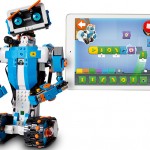
LEGO Group announced LEGO® BOOST, a supercharged building and coding set that lets children bring their LEGO creations to life by adding movement, sound and personality. Lego Boost is a programmable set of motors to bring your bricked creations to life. LEGO® BOOST combines the endless play opportunities of a traditional LEGO set with an endless variety of movement and sound capabilities made possible through an easy-to-use, app-based coding environment. LEGO BOOST has been developed for chil...
More

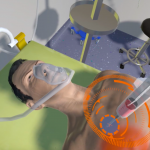
‘SimforHealth’ offers an immersive, interactive and collaborative approach to the training of health professionals, in line with the ethical concept

SimforHealth offers an immersive, interactive and collaborative approach to the training of health professionals, in line with the ethical concept. SimforHealth creates and markets customized solutions for digital simulation teaching, aimed at medical students and at health professionals in continuing education. SimforHealth helps with patient management via virtual consultations, which rely on a range of methods and technologies including 3D real-time simulators, serious games, virtual re...
More

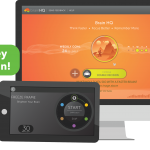
BrainHQ is an online brain-training system that helps sharpen brain. BrainHQ has 29 online exercises that work out attention, brain speed, memory, people skills, navigation, and intelligence.

BrainHQ is an online brain-training system that helps sharpe brain. BrainHQ has 29 online exercises that work out attention, brain speed, memory, people skills, navigation, and intelligence. It was designed by an international team of neuroscientists, led by Michael Merzenich—a professor emeritus in neurophysiology, member of the National Academy of Sciences, co-inventor of the cochlear implant, and Kavli Prize laureate. Changing your brain takes some work—so while the BrainHQ exercises ar...
More

Feynman Technique Helps You Study Faster and Retain More Information.

Feynman Technique Helps You Study Faster and Retain More Information. You can read something and hope that it'll all be beamed into your brain for future application. Or you can read it and write down what you just learned, as if you were teaching someone else, and actually retain it. In other words, implement a more “active” way of learning, which obviously takes a lot more work than it sounds. Ideally, when you write down your learnings, you’d also repeat what you wrote aloud, like a teache...
More
Posted in Uncategorized Tagged

Pacific Northwest National Laboratory witnessed the birth of atmospheric ice clouds in the laboratory

Scientists have witnessed the birth of atmospheric ice clouds, creating ice cloud crystals in the laboratory and then taking images of the process through a microscope, essentially documenting the very first steps of cloud formation. The team witnessed a process known as ice nucleation in unprecedented detail, taking time-lapse movies of the first few seconds when a particle attracts water vapor, forming ice crystals that become the core of icy cirrus clouds — the high, wispy clouds that act ...
More

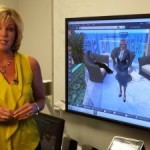
Nova Southeastern University’s College of Osteopathic Medicine create avatars in a virtual clinic to help diagnostic procedures

Medical students and researchers at Nova Southeastern University are stepping into the virtual world to better serve patients. Using Second Life®, students at Nova Southeastern University’s College of Osteopathic Medicine create avatars that fly into a virtual clinic where students can practice communication skills and diagnostic procedures on virtual world patients. The program allows students to practice in a relaxed environment where they are not afraid to make mistakes. Researchers at NSU...
More

‘Minecraft.Print’ – Making the Virtual Real – take virtual creations, and bring them into the real world

Minecraft is a video game focused on creativity and building. Players build constructions out of textured cubes in a 3D world–everything from a hut, to a train station, to a fully functional computer. Why can't we take those virtual creations, and bring them into the real world? Minecraft.Print() is our attempt to do so by creating a bridge between Minecraft and the real world, via 3D printers. A Minecraft player defines a 3D space to be printed, after which the software extracts the object, ...
More

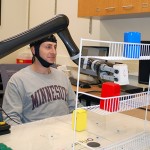
University of Minnesota has developed a prototype that allows people to control a robotic arm using only their brain.

Researchers at the University of Minnesota have made a major breakthrough that allows people to control a robotic arm using only their minds. The research has the potential to help millions of people who are paralyzed or have neurodegenerative diseases. The study is published online today in Scientific Reports, a Nature research journal. View a University of Minnesota video of the research subjects in action. “This is the first time in the world that people can operate a robotic arm t...
More

MIT’s Study On – Tuning Social Networks to Gain the Wisdom of the Crowd

eToro OpenBook enables investors to view, follow and copy the network's top traders automatically. As we engage more with social networking sites, there is always the danger of a “group think” mentality–when people follow a group consensus rather than critically evaluate information; make decisions without guidance from the social network; or follow “gurus” who provide them with bad information. So how do we avoid these errors and maximize the “wisdom of the crowd”? Part of the answer may ...
More

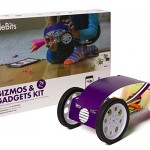
Create tomorrow’s innovators and idea-makers with littleBits electronic building blocks, a platform for large and small inventions for kids

'LittleBits' is a platform for large and small inventions for kids. The kit includes electronic building blocks that snap-on with magnet and allow kids to build projects in minutes. We spend more than eleven hours a day with technology, but most people don’t know how it works, and spend the majority of their time consuming media. We believe people are born creative, and our electronic building blocks help to unleash the inventor within by engaging them in an incredibly powerful, exhilarating ...
More

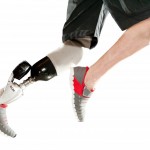
MIT Media Lab’s Biomechatronics group develops Bionic ankle-foot prosthesis that normalizes walking gait for persons with leg amputation

Biomechatronics Group at MIT  Media Lab's mission is two fold. First, seek to restore function to individuals who have impaired mobility due to trauma or disease through research and development. Second, develop technologies that augment human performance beyond what nature intends. These objectives are met by combining the scientific discipline of organismal and cellular neuromechanics with the technological discipline of bionic device design. Our research staff and students include biomecha...
More

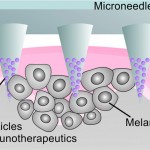
Researchers at North Carolina State University have developed and tested a self-regulating drug eluting patch that monitors and releases appropriate amounts of medicine.

Biomedical engineering researchers at North Carolina State University and the University of North Carolina at Chapel Hill have developed a technique that uses a patch embedded with microneedles to deliver cancer immunotherapy treatment directly to the site of melanoma skin cancer. In animal studies, the technique more effectively targeted melanoma than other immunotherapy treatments. According to the CDC, more than 67,000 people in the United States were diagnosed with melanoma in 2012 alone ...
More

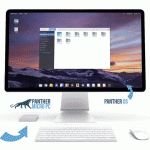
‘Panther Alpha’ is the Mini Supercomputer (Micro PC) that fits in the palm of your hand.

Panther Alpha, powered by Linux, is the ultra-portable Micro PC that makes even the slickest laptop designs seem bulky by comparison. With unparalleled customization options, smarter privacy settings, and much less power required to perform; you’re open to a whole new world of possibilities that fit right in the palm of your hand. Panther OS, makes for quite the astonishing Micro PC. It’s designed specifically to bring out the very best in your Panther Alpha, allow you to customize your exper...
More

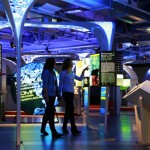
Max Planck Germany Science Tunnel Enables cross stream knoweldge share – Fundamental discoveries in one discipline can lead to crucial advances in completely different areas tomorrow

Today, new technologies build on a broad spectrum of scientific findings. Fundamental discoveries in one discipline can lead to crucial advances in completely different areas tomorrow. In all probability, this tendency will only intensify in the future. Or, to put it another way, after centuries of diversification, the life sciences, natural sciences and engineering disciplines are converging once again. This is the cusp on which the sciences are poised today – and, now and then, also caught in ...
More