New flu tracker uses Google search data better than Google.

A team of Harvard statisticians has come up with a new way to track the flu virus using Internet search data. The system uses a method that has been used before, tracking searchers for key words and phrases, but has coupled it with additional data to improve its accuracy. The new model, ARGO (AutoRegression with Google search data), was published in the Proceedings of the National Academy of Sciences and was built on Google Flu Trends, which was Google’s flu tracking model that emerged in 200...
More
ORNL’s hybrid device combines microscopy and mass spectrometry

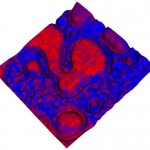
Researchers from the Department of Energy’s (DOE's) Oak Ridge National Laboratory (ORNL) have created a hybrid optical microscope/mass spectrometry-based imaging system capable of observing and analyzing specimens simultaneously. They have created a hybrid optical microscope, which also features a mass spectrometry-based imaging system. This new device paves the way for advance developments in the areas of chemical and pharmaceutical sciencesThe new device does not require any type of pretreatme...
More

Power Claw Gloves allow you to feel heat and cold in virtual reality apps.

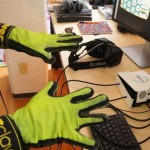
Can you imagine burning your fingertips or feel that ice freezes your hand as you interact with a program of virtual reality? The Mexican company Vivoxie created Power Claw, a pair of gloves with an interface that stimulates the skin and allows the sense of touch in cyber worlds.The device generate the sensation of heat, cold, vibration and roughness of objects that are part of a virtual reality. The gloves are complemented with Oculus Rift glasses. Designed to work with the Oculus Rift virtu...
More

MARTY, Stanford’s self-driving, electric, drifting DeLorean

MARTY was built in collaboration with Renovo Motors, an automotive start-up based in Silicon Valley that specializes in building advanced electric vehicle technology. Working closely together gave the Stanford team early access to a brand new platform derived from Renovo's electric supercar that delivers 4,000 pound-feet from on-motor gearboxes to the rear wheels in a fraction of a second, allowing precise control of the forces required to drift. "Stanford is a world leader in autonomous vehi...
More

Samsung Flexible Smartphone

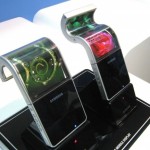
Samsung promises that flexible and foldable screens are coming to devices soon. The company’s latest patent, which was spotted by Patently Mobile, is for a flexible phone that morphs into a smart bangle you can strap onto your wrist. It’s an entirely bizarre and futuristic idea that certainly puts more focus on accessibility than style, but it sure sounds awesome. The patent features a flexible OLED screen that’s so flexible you can curl it into a bracelet and wear it on your wrist as a smart...
More

New “tricorder” technology might be able to “hear” tumors growing.

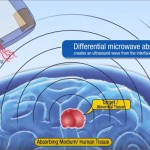
A team of scientists from Stanford University is testing a new “tricorder” technology able to remotely detect abnormal matter, such as buried plastic explosives or even early stage cancers in humans, by manipulating microwaves and ultrasound. The new “radio frequency (RF)/ultrasound hybrid imaging system,” the brainchild of Assistant Professor Amin Arbabian and Research Professor Pierre Khuri-Yakub, was designed for remote detection of embedded objects in a number of different kinds of matter, i...
More

An inside look at the Big Bang.

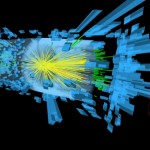
The Large Hadron Collider began its second run of experiments in June after a two-year hiatus from being the world’s largest particle accelerator. And the results are promising, achieving the highest energy ever achieved in a laboratory by colliding subatomic particles at 13 teraelectronvolts (TeV), physicists hope that these high-energy collisions may produce entirely new particles and simulate conditions seen in the early universe, according to an MIT statement.Soon to be published in Physics ...
More
Posted in Uncategorized Tagged

Australian-designed suit worn on Space Station.

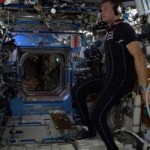
The brainchild of aerospace engineer, RMIT alumnus and senior research associate Dr James Waldie, the SkinSuit has been worn by an astronaut inside the International Space Station (ISS) for the first time. Denmark’s first astronaut, Andreas Mogensen, spent 10 days in the ISS last month and pulled on the SkinSuit to test its effectiveness in the weightless conditions. Inspired by the striking bodysuit worn by Cathy Freeman at the 2000 Sydney Olympics, Waldie and his collaborators have spent more ...
More
Posted in Uncategorized Tagged

To infinity and beyond.

Researchers at the Harvard John A. Paulson School of Engineering and Applied Sciences (SEAS) have designed the first on-chip metamaterial with a refractive index of zero, meaning that the phase of light can travel infinitely fast.,This new metamaterial was developed in the lab of Eric Mazur, the Balkanski Professor of Physics and Applied Physics and Area Dean for Applied Physics at SEAS, and is described in the journal Nature Photonics. “Light doesn’t typically like to be squeezed or manipula...
More

Tellspec : Predictive intelligence about food.

Tellspec Food Sensor is the world’s first consumer handled device able to scan food at a molecular level. It provides you with the most relevant and useful information about what is in your food so you can make an informed decision that better matches your health needs. The technology includes a three-part system ,a pocket-sized sensor, a cloud-based analysis engine, and a mobile app that work together to scan foods, identify calories, macronutrients, allergens, fiber, sugars, and also provide r...
More

3D printed objects may be toxic

Parts produced by some commercial 3D printers may be toxic, according to a new study that raises concerns about how to dispose of parts and waste materials from the devices which are becoming increasingly popular. Researchers at the University of California, Riverside studied two common types of 3D printers, one that melts plastic to build a part, and another that uses light to turn a liquid into a solid part. They found that parts from both types of printers were measurably toxic to zebrafish e...
More

Tanvas allows you to feel what you see.

Tanvas’ surface haptics technology allows you, for the first time, to feel what you see on a touchscreen, the edges of keys, the snap of a toggle switch, the swipe of a turned page or the direction and magnitude of impacts in a game. The company is poised to change the way people interact with touchscreens across essentially every industry, from automotive to education, from retail to medical, from consumer electronics to industrial applications. The technology sends ultrasonic sound waves th...
More

Oxygen found on Comet

For the first time ever, molecular oxygen has been found on a comet. Comet 67P/Churyumov–Gerasimenko, currently being orbited by the European Space Agency's Rosetta spacecraft, is the subject of a study published in Nature. According to ESA researchers, the oxygen present in the comet's surrounding gasses has likely been there since the formation of the comet. "It is the most surprising discovery we have made so far, because oxygen was not among the molecules expected in a cometary coma," the Un...
More
Posted in Uncategorized Tagged

Mars Solar Storms.

NASA’s Mars Atmosphere and Volatile Evolution (MAVEN) mission has identified the process that appears to have played a key role in the transition of the Martian climate from an early, warm and wet environment that might have supported surface life to the cold, arid planet Mars is today. Scientists studying Mars’ atmosphere say solar storms probably played a big role in transforming the Red Planet from the warm, hospitable place it was billions of years ago to the cold world it is today. The miss...
More

Milky Way

A team of astronomers, led by Istvan Dékány of the Pontificia Universidad Católica de Chile, has used data from the survey, taken between 2010 and 2014, to make a remarkable discovery, a previously unknown component of our home galaxy, the Milky Way. “The central bulge of the Milky Way is thought to consist of vast numbers of old stars. But the VISTA data has revealed something new, and very young by astronomical standards!” says Istvan Dékány, lead author of the new study. Analysing data fro...
More

Memory and conductivity

Scientists from Stanford University and the Department of Energy’s SLAC National Accelerator Laboratory have made the first direct images showing that electrical currents can flow along the boundaries between tiny magnetic regions of a material that normally doesn’t conduct electricity. The results could have major implications for magnetic memory storage. "This can provide a more straightforward way to use magnetic material as memory,” said Eric Yue Ma, a graduate student in the laboratory of Z...
More

Egyptian method filters seawater in minutes

Researchers from the University of Alexandria have developed a cheaper, simpler and potentially cleaner way to turn seawater into drinking water than conventional methods. This could have a huge impact on rural areas of the Middle East and North Africa, where access to clean water is a pressing issue if social stability and economic development is to improve. Right now, desalinating seawater is the only viable way to provide water to growing populations, and large desalination plants are now a f...
More
Posted in Uncategorized Tagged

Cosmic ‘Death Star’ destroys a planet

Astronomers announced that they have spotted a large, rocky object disintegrating in its death spiral around a distant white dwarf star. The discovery also confirms a long-standing theory behind the source of white dwarf “pollution” by metals. “This is something no human has seen before,” said lead author Andrew Vanderburg of the Harvard-Smithsonian Center for Astrophysics (CfA). “We’re watching a solar system get destroyed.” The evidence for this unique system came from NASA’s Kepler K2 miss...
More
Posted in Uncategorized Tagged

Big Data

Massachusetts Institute of Technology (MIT) researchers at the Computer Science and Artificial Intelligence Laboratory (CSAIL) are looking to take human intuition out of big data analysis by letting computers choose the feature set used to identify predictive patterns in the data. This effort is called “Data Science Machine”. Big Data represents a huge, complex ecosystem that brings together innovative processes from across the spectrum of data analysis, storage, networking, curation, search,...
More

New graphene based inks for high-speed manufacturing of printed electronics.

Developed by researchers at the University of Cambridge in collaboration with Cambridge-based Technology Company Novalia, the method allows graphene and other electrically conducting materials to be added to conventional water-based inks and printed using typical commercial equipment. This is the first time that graphene has been used for printing on a large-scale commercial printing press at high speed. A low-cost, high-speed method for printing graphene inks using a conventional roll-to-roll p...
More

RoboBee : The tiny flying submarine

A Harvard University lab has developed the first insect-size robots capable of flight and swimming. Researchers at the Harvard Paulson School have demonstrated a flying, swimming, insectlike robot, easing the way to create future aerial-aquatic robotic vehicles. Coming from the Harvard Microrobotics Lab, this discovery can only mean one thing, swimming RoboBees. The biggest challenge involved the conflicting design requirements. Aerial vehicles require large airfoils such as wings or sails to...
More

Scientists Discover the Key to Making Slow Melting Ice Cream

Scientists have discovered a naturally occurring protein that can be used to create ice cream that is more resistant to melting than conventional products. The protein binds together the air, fat and water in ice cream, creating a super-smooth consistency. The new ingredient could enable ice creams to keep frozen for longer in hot weather. It could also prevent gritty ice crystals from forming, ensuring a fine, smooth texture like those of luxury ice creams. The development could allow products ...
More

MIT launch of Digital Currency Initiative.

Digital currencies like Bitcoin are poised to make a dramatic impact on most people’s lives over the next decade. They offer tremendous possibilities for growing our global economy, and, similar to the cell phone, enabling developing nations to leapfrog the tech of developed nations. But, we are at a pivotal point for this nascent technology. Getting digital currencies right and realizing the projected impact, present daunting challenges that will require significant research and development to ...
More

GMO – Genetically Modified Organisms

Designer Babies Genetically modified babies have DNA from three different adults. Although having DNA from more than two sources can occur naturally (as in the cases of microchimerism and tetragametic chimerism), these 15 babies were created with a method called “cytoplasmic transfer,” which had been banned by the FDA. The method was initially developed to save female eggs that had been difficult to fertilize and was showing much promise—until tracking the growth of the genetically modified b...
More

New crystal captures carbon from humid gas

A new material with micropores might be a way to fight climate change. Scientists have created crystals that capture carbon dioxide much more efficiently than previously known materials, even in the presence of water. The research was recently published in a report in the scientific journal Science. One way to mitigate climate change could be to capture carbon dioxide (CO2) from the air. So far this has been difficult, since the presence of water prevents the adsorption of CO2. Complete dehyd...
More

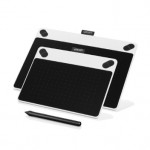
Latest Intuos Tablets Make Creative Dreams Come True

Wacom®, the world leader in pen-based creative tablets, introduced its next generation Intuos® product family to empower and inspire creative enthusiasts. The new range of Intuos Pen & Touch tablets consists of four models: Intuos Art, (for beginners with a passion for creativity), Intuos Comic, (more advanced painting and artistic skill) Intuos Photo (for photo editors who want to try new creative techniques) and Intuos Draw. (For comic and manga enthusiasts). Each model includes free...
More

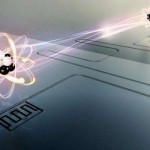
Lifetime of atoms extended using a mirror

Researchers at Chalmers University of Technology have succeeded in an experiment where they get an artificial atom to survive ten times longer than normal by positioning the atom in front of a mirror. The findings were recently published in the journal Nature Physics. The artificial atom consists of a superconducting circuit on a silicon chip. The interaction between the atom and its mirror image modifies the vacuum fluctuations seen by the atom and thus its lifetime. The microwaves that mediate...
More

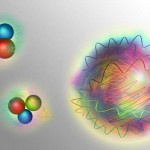
Glueballs: Particles purely made of nuclear force

For decades, scientists have been looking for so-called “glueballs." Now it seems they have been found at last. A glueball is an exotic particle, made up entirely of gluons, the “sticky” particles that keep nuclear particles together. Glueballs are unstable and can only be detected indirectly, by analyzing their decay. This decay process, however, is not yet fully understood. Professor Anton Rebhan and Frederic Brünner from TU Wien (Vienna) have now employed a new theoretical approach to calcula...
More

3-D Printing Breaks the Glass Barrier

Researchers have cracked the challenge of printing glass through a nozzle. A team of MIT researchers have opened up a new frontier in 3-D printing which is the ability to print optically transparent glass objects. They demonstrated the first-ever machine that can print molten glass through a nozzle and make transparent glass objects layer by layer according to digital instructions. The 3-D printer G3DP produces optically transparent glass with the push of a button and contains a "kiln cart...
More

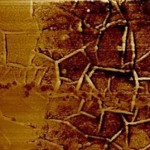
Disappearing Carbon Circuits on Graphene

Georgia Tech researchers have deposited carbon atoms onto graphene using a focused electron beam process to create patterns that evolve over time on the graphene. The patterns could be used to make reconfigurable electronic circuits, which evolve over a period of hours before ultimately disappearing into a new electronic state of the graphene. Graphene is also made up of carbon atoms, but in a highly-ordered form. Beyond allowing fabrication of disappearing circuits, the technology could be u...
More