Link between comet, asteroid showers & mass extinctions.

Dr Ken Caldeira of Carnegie Institution and Dr Michael Rampino of New York University offer new support linking the age of these craters with recurring mass extinctions of life, including the demise of the dinosaurs. Mass extinctions occurring over the past 260 million years were likely caused by comet and asteroid showers. Specifically, they show a cyclical pattern over the studied period, with both impacts and extinction events taking place every 26 million years. This cycle has been linked...
More

Astronomers measure ‘heartbeats’ of distant stars

In many ways stars are like living beings. They’re born, they live, they die and they even have a heartbeat. Using a novel technique, astronomers have detected thousands of stellar “pulses” in the galaxy Messier 87 (M87). Their measurements offer a new way of determining a galaxy’s age. We tend to think of stars as stable and unchanging. However, late in life stars like the Sun undergo a significant transformation. They become very bright and swell up to an enormous size, swallowing any planets ...
More

Miniaturizable magnetic resonance

A garnet crystal only one micrometre in diameter was instrumental in a University of Alberta team of physicists creating a route to “lab-on-a-chip” technology for magnetic resonance, a tool to simplify advanced magnetic analysis for device development and interdisciplinary science. “To most, a gem so tiny would be worthless, but to us, it’s priceless,” says Mark Freeman, University of Alberta physics professor and Canada Research Chair in condensed matter physics. “It was the perfect testbed for...
More

Mars to lose its largest moon, but gain a ring.

Mars’ largest moon, Phobos, is slowly falling toward the planet, but rather than smash into the surface, it likely will be shredded and the pieces strewn about the planet in a ring like the rings encircling Saturn, Jupiter, Uranus and Neptune. Mars could gain a ring in 10-20 million years when its moon Phobos is torn to shreds by Mars gravity. Though inevitable, the demise of Phobos is not imminent. It will probably happen in 20 to 40 million years, leaving a ring that will persist for anywhere ...
More

Porous Liquid.

Researchers in the School of Chemistry and Chemical Engineering at Queen’s, along with colleagues at the University of Liverpool, UK, and other, international partners, have invented the new liquid and found that it can dissolve unusually large amounts of gas, which are absorbed into the ‘holes’ in the liquid. Porous materials, as their name would suggest, are materials with holes. These are materials that look totally solid to the naked eye, but on a molecular level, contain lots of empty space...
More

Pluto Ice Volcanoes

Pluto may have two ice volcanoes that spew water ice, nitrogen, ammonia, and methane onto the dwarf planet's surface, NASA announced today. The potential volcanoes were spied near Pluto's South Pole, in images taken by NASA's New Horizons spacecraft during its July flyby. NASA scientists used the photos to measure the mountains, they are several miles high and tens of miles wide, with large holes in their summits. "On Earth that generally means one thing a volcano," said Oliver White, New Horizo...
More

X-Ray Vision, RF Capture and Emerald

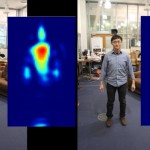
A team of researchers at MIT’s Computer Science and Artificial Intelligence Lab (CSAIL) has long believed that wireless signals like WiFi can be used to see things that are invisible to the naked eye. Since 2013, CSAIL researchers have been developing technologies that use wireless signals to track human motion. The team has shown that it can detect gestures and body movements as subtle as the rise and fall of a person’s chest from the other side of a house, allowing a mother to monitor a baby’s...
More

New, inexpensive way to clean water from oil sands production

Researchers have developed a process to remove contaminants from oil sands wastewater using only sunlight and nanoparticles that is more effective and inexpensive than conventional treatment methods. Frank Gu, a professor in the Faculty of Engineering at the University of Waterloo and Canada Research Chair in Nanotechnology Engineering, is the senior researcher on the team that was the first to find that photocatalysis , a chemical reaction that involves the absorption of light by nanoparticles ...
More

Chronos – Make any watch smart

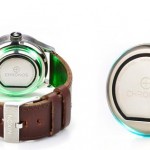
San Francisco startup Chronos is aiming its new device for people who prefer pretty analog watches to be the things on their wrists but would really like them to have the most basic features of a fitness tracker and a smart device. “We have developed a small, tiny disc that gives you all the very best of today’s wearable tech, but let’s you keep the watch you already wear,” Chronos founder and CEO Mark Nichol said. The metal Chronos disc is designed to resemble watch casing, so that it largely d...
More

Smartphone app helps predict famine.

A new mobile phone app designed to help aid workers predict where hunger may strike and provide help in good time was launched by Austrian scientists on Thursday. The app, which is free to use, combines and analyses satellite data and information collected through crowdsourcing using mobile phones, and creates a map highlighting areas at risk of food shortages and malnutrition. Useful information includes how often people in an area eat or whether there is civil unrest that might prevent people ...
More

Old laptop batteries could power slums.

Old laptop batteries still have enough life in them to power homes in slums, researchers have said. An IBM study analyzed a sample of discarded batteries and found 70% had enough power to keep an LED light on more than four hours a day for a year. Researchers said using discarded batteries is cheaper than existing power options, and also helps deal with the mounting e-waste problem. The IBM team created what they called an UrJar, a device that uses lithium-ion cells from the old batteries to ...
More

Hardware store robot gives customers high-tech help

Robotics technology benefits the customers and employees in many ways. San Jose's Orchard Supply Hardware, a subsidiary of Lowe's has brought in the Oshbot robot. About the size of small refrigerator, the talking robot can guide you through the aisles to the item you want. It even uses its 3D camera to determine the make and model of that rusty hinge you brought from home. "There's no way that every sales associate could know the exact number and location of every single item we sell," Kyle Nel,...
More
Posted in Uncategorized Tagged

Tail Lights Rider System for keeping horses safe at night.

Riding horses in low light poses some obvious dangers, particularly in areas where they're forced to share the road with drivers who could become easily distracted. Sadly, for Tail Lights creator Sami Gros, it took a near-tragedy to inspire a solution. "I was out riding my two horses with my best friend, and a car hit my friend and my horse. My friend was OK, but my horse suffered injuries that has made him unridable to this day," Gros said. "I searched the internet for a product that would allo...
More

Cyborg Rose: Researchers implant electronic circuits inside plants.

A team of Swedish researchers, by using living roses, has created analogue and digital electronic circuits inside living plants, calling them "electronic plants". The experiment demonstrates wires, digital logic and displays elements fabricated inside the plants that could develop new applications for organic electronics and new tools in plant science. The group at Linkoping University in Sweden, under the leadership of professor Magnus Berggren, used the vascular system of living roses to build...
More

Drive-by heat mapping

Technology that can scan large areas to find which buildings are leaking heat and wasting energy. The latest news from MIT is regarding Essess bringing “drive-by” innovations to energy efficiency in homes and businesses. Over the past few years, Essess Inc. has deployed cars mounted with imaging sensors to drive around the U.S. creating heat maps that show which homes aren’t sealed properly, wasting energy and their owners’ money. The startup deploys cars with thermal-imaging rooftop rigs tha...
More

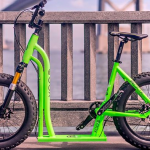
Moox Bike, the first-of-its kind bike and scooter hybrid.

With Moox Bike, you can pedal like a traditional bicycle or use the patented platform design to glide and scoot. The Moox Bike begs to be noticed. Its innovative design and striking colors not only make it fun to ride and glide, but turns heads along the way. Its design, construction and architecture provide an extremely comfortable and fluid ride. The Moox Bike is structurally sound with no-fuss. It will last for years with minimal maintenance. Each Moox Bike is individually tested and adheres ...
More

Hydrogel superglue is 90 percent water.

Nature has developed innovative ways to solve a sticky challenge. Mussels and barnacles stubbornly glue themselves to cliff faces, ship hulls, and even the skin of whales. Likewise, tendons and cartilage stick to bone with incredible robustness, giving animals flexibility and agility. The natural adhesive in all these cases is hydrogel, a sticky mix of water and gummy material that creates a tough and durable bond. Engineers at MIT have developed a method to make synthetic, sticky hydrogel th...
More

Desalination

MIT has developed a new and more efficient way to desalinate water. The process, called shock electrodialysis, filters water through a material made of small glass particles, according to an MIT News report. When an electric current is introduced to the system, the water divides into areas of high or low salt concentration. Once the current reaches a certain point, a shockwave is produced that divides the streams and allows the salty and fresh waters to be separated by a physical barrier. The pr...
More

Hot Jupiter ‘Companions’ could shed light on planet formation.

The discovery of two exoplanet "companions" provides insight into the hot Jupiter solar system, discovered from data collected by the K2 mission. Out of the some 300 hot Jupiters that have been spotted over the past two decades, these new objects are the first close-in planets to be discovered. Discovery of two close-in planet companions sheds new light on planet formation. For the past 20 years, astronomers peered into the night sky, puzzled about a type of planet called hot Jupiters. As they a...
More

Navy seeks secret of invisibility from fish.

A study released Thursday says that two ocean fish the big-eyed scad and the lookdown have fine-tuned a method of avoiding predators by hiding in light. Elements in their silvery skin render them nearly impossible to see. The Navy funded the study as part of an effort understand how fish do this, and how it could be used to the Navy's advantage. Although the study focused mostly on just two types of fish, the scad and lookdown are members of a family called the Carangidae, a bountiful clan that ...
More

The birth of a ‘baby planet’

Using a novel technique, scientists have observed a "baby planet" being formed nearly 450 light years away. When new planets absorb nearby gases and dust they get hot. A strange light is emitted as a result and that has allowed researchers to watch a distant exoplanet as it is being formed. The plant is circling a star dubbed LkCa 15 and was discovered by astronomers Adam Kraus and Michael Ireland using the Keck II telescope. Named LkCa 15b, and in orbit in a system with two other planets (aptly...
More
Posted in Uncategorized Tagged

IcyBreeze portable air conditioner and cooler.

Bixby based IcyBreeze portable air conditioner is a wheeled ice cooler that doubles as an eco-friendly portable air conditioner which can be used for camping or on the sidelines of sporting events in the summer heat. The cooler, which has ample room for food and beverages, has a rechargeable battery in the lid that can last up to six hours. It features a two-cup holder and three-speed fan with a low, medium and high setting that blows cold, dry air like an air conditioner. It’s all green and has...
More

Haiku ceiling fan for the smart home owner

Haiku ceiling fan includes Wi-Fi connectivity and sensors that enable it to regulate temperature and kick into action when someone enters the room. With either aluminum, Moso bamboo or matrix composite airfoils, Haiku uses a built-in Wi-Fi module, infrared motion, ambient temperature and humidity sensors to help maintain the user's ideal room temperature. This means it can start up or wind down as you enter or leave a room, speed up as more people enter the room and the temperature and humidity ...
More

Solar-Powered umbrella automatically inflates when the sun shines.

The Cumulus Parasol is a solar powered cloud-shaped parasol that automatically inflates when the sun starts shining to keep you in the shade. This artificial cumulus protects you from the sun. Whenever the sun comes out, this parasol inflates automatically in about 20 seconds to a cloud like shape using a solar panel at the top. The inflated Cumulus has a diameter of two meters. The cloud does not have a metal core structure. The curved shape of the inflated cloud is aerodynamic, allowing it ...
More

Grillbot: A Grill-Cleaning Robot

Grillbot, a cute, single button operated bot that perches on your grill that automatically cleans barbecue grill grates. It works automatically on both gas and charcoal grills (hot or cold). It doesn’t matter if it’s called a BBQ, a grill or a Barbie, those char-grilled steaks leave a thick layer of grease and grime behind. And while cooking is fun, cleaning is not. The Grillbot is the invention of former real estate agent Ethan Woods. Woods had his eureka moment while scrubbing his grill with a...
More

Lasers could rapidly make materials hotter than the Sun.

Lasers could heat materials to temperatures hotter than the centre of the Sun in only 20 quadrillionths of a second, according to new research that could revolutionise energy production. Physicists from Imperial College London have devised an extremely rapid heating mechanism that they believe could heat certain materials to ten million degrees in much less than a million millionth of a second. The method, proposed for the first time, could be relevant to new avenues of research in thermonuclear...
More

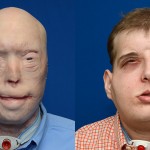
Most Extensive Face Transplant.

This past August, Hardison, now 41, received an entirely new scalp and face. For the first time since 2001, he has ears, a nose, lips, and eyelids, the last was especially crucial because, although he retained his vision on the fire, he was unable to blink or close his eyes for 14 years. His new face was donated by 26-year-old David Rodebaugh, a young BMX biker from Brooklyn, who was pronounced brain dead after being thrown off his bike. The revolutionary face transplant took 26 hours and was pe...
More

Using Holography to better understand clouds.

Scientists have just made a breakthrough in understanding how clouds interact with the surrounding air by studying clouds in unprecedented detail. Raymond Shaw, a professor of physics at Michigan Tech, looks at the smallest part of clouds, droplets. To understand groups of droplets, Shaw and the NCAR team flew airplanes through fluffy, cottonball cumulus clouds in Wyoming and Colorado. Aboard the plane, the team took detailed 3-D images with an instrument called the Holographic Detector for Clou...
More

SlingShot: Quest to solve the world’s safe water crisis.

Kamen's SlingShot (so-named after the Biblical David & Goliath story) device is an energy-efficient "vapor compression distiller," and one possible answer to the safe water crisis. The SlingShot is designed to take virtually any unfit source of water, such as contaminated well water or seawater, and turn it into clean water, without requiring a filter (which regularly need to be replaced) or using any chemical additives (which have to be purchased). The device does use combustible fuel to po...
More
Posted in Uncategorized Tagged

Microbiomes could hold keys to improving life.

Microbial life forms including viruses, bacteria, and fungi are the most diverse and abundant organisms on earth. They have shaped our evolutionary origins for billions of years and continue to have widespread impact. The UMIC foresees the microbiomes being leveraged through genetic engineering for applications within 10 years. “Microbes are everywhere. Therefore understanding microbiomes, whether they be the ones that live in and on our bodies or the ones in the environment, is essential to ...
More