New Medication Dispensing Service For Seniors At Home

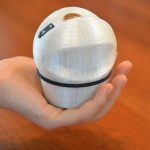
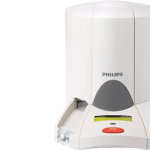
  Philips Medication Dispensing service is a simple way to manage even the most complex medication regimens. So seniors who live alone can stay on track.   How it works 1. Load You put the senior’s medications into individual cups and load them into the dispenser. Provide the medication schedule to Philips Lifeline and we will program the dispenser for you.   2. Dispense The senior presses the button when they hear the reminder. The dispenser will d...
More
FDA Approved ‘Micra Transcatheter Pacing System’ (New Pacemaker)

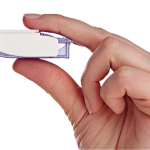
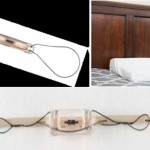
Micra Transcatheter Pacing System (TPS) contains a one inch-long, self-contained pacemaker that is implanted directly in the right ventricle chamber of the heart. It works like other pacemakers to control the heartbeat. Unlike other pacemakers, the Micra TPS does not have leads. The Micra TPS is a single-chamber pacing system – it paces only the right ventricle of the heart. How does it work? The Micra TPS is implanted directly into the heart via the femoral vein (in the leg) using a catheter...
More

NASA Is Testing Next-Generation Fire Shelters

NASA reached an agreement with the US Department of Agriculture’s Forest Service to test prototype fire shelters made from the space agency's next-generation thermal protection systems (TPM) materials—intended, initially, to protect future spacecraft upon re-entry (in fact, a first generation of the material has already been tested on the agency's third Inflatable Reentry Vehicle Experiment vehicle, IRVE-3). Not unlike a spacecraft tearing through the atmosphere, NASA’s hope is that its mater...
More

FDA clears military traumatic wound dressing for use in the civilian population

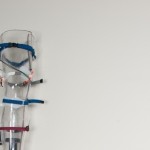
U.S. Food and Drug Administration cleared the use of the XSTAT 30 wound dressing, an expandable, multi-sponge dressing used to control severe, life-threatening bleeding from wounds in areas that a tourniquet cannot be placed (such as the groin or armpit) in battlefield and civilian trauma settings. The clearance expands the device’s indication from use by the military only to use in adults and adolescents in the general population. Early control of severe bleeding may prevent shock and may be l...
More

DNA Sequencing On SmartPhone

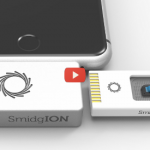
Oxford Nanopore Technologies has created a device that uses nanotechnology to put a complete lab on a single printed circuit board. It also can strip away single strands of DNA, which greatly reduces the preparation required for test samples. They have created the MinION device that connects to a laptop using a USB cable to produce immediate results. This amazing device fits in your hand, and is already commercially available. The big news, however, is that they have shrunk the technology even f...
More

Friendly Robot Walker -high-tech mobility aid

A team of European researchers, supported by the European Commission and Siemens, is developing a smart walker that will bring sensor and tablet technology to bear helping improve mobility in older adults. The "FriWalk" (short for Friendly Robot Walker) includes cameras and sensors for detailed gait analysis, a heart rate sensor, and a tablet interface that can provide activity coaching. FriWalk is a high-tech mobility aid that contains depth sensors and cameras to help support the user and m...
More

Japanese caretaker robot

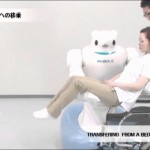
Japan's Riken Brain Science Institute and rubber manufacturer Sumitomo Riko have built an experimental robot bear nurse that is able to lift patients and gently transfer them between beds and wheelchairs. Ageing populations are an increasing concern and in Japan, hospital staff and carers in nursing homes are required to lift patients about 40 times a day, which is strenuous and can cause lower-backpain. To aid carers, the Riken-SRK Collaboration Center for Human-Interactive Robot Research...
More

3D printer that is able to print molecules to allow printing your own medicine.

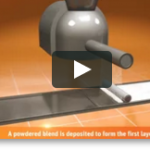
Harnessing the power of 3DP to develop innovative medicines Powder-liquid three-dimensional printing (3DP) technology was developed at the Massachusetts Institute of Technology (MIT) in the late 1980s as a rapid-prototyping technique. This technology uses an aqueous fluid to bind together multiple layers of powder using a unique, patent-protected process to create a wide range of products. This work was expanded into the areas of tissue engineering and pharmaceutical use from 1993 to 2003....
More

‘Intelligent Knife’ Uses Desorption Electrospray Ionization and Rapid Evaporative Ionization MS for the rapid profiling of pathogens in human biofluid or tissue matrices

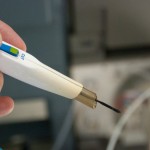
Scientists have developed an "intelligent knife" that can tell surgeons immediately whether the tissue they are cutting is cancerous or not. In the first study to test the invention in the operating theatre, the “iKnife” diagnosed tissue samples from 91 patients with 100 per cent accuracy, instantly providing information that normally takes up to half an hour to reveal using laboratory tests. The findings, by researchers at Imperial College London, are published today in the journal Scienc...
More

New biosensor chip for detecting DNA mutations

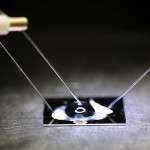
University of California, San Diego has developed a sensor capable of detecting single nucleotide polymorphisms (SNPs), a type of DNA mutations. Research team has created an electrical graphene chip that is able to detect mutations in DNA. Researchers say the technology could be used in a wide range of medical applications in the future, including blood testing for early cancer screenings, tracking disease biomarkers and even real-time detection of viral and even microbial sequences. Profe...
More

Molecular Pathology (MultiOmyx™) Visualizes Cancer

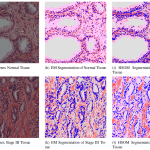
Tumor analysis is a key part of the cancer diagnostic workflow for all patients. Once a mass is removed from a patient, microscopic analysis is used to determine if it is cancer, as well as its characteristics and grade. Typically, protein or DNA changes in sections of the sample are measured to determine the patient’s potential drug response. Samples with insufficient information, however, can be a major problem for pathologists and oncologists who are challenged with increasing numbers of the...
More

‘AspireAssist’ new weight loss device

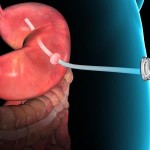
The FDA has just approved the AspireAssist device from AspireBariatrics for Weight Loss. AspireAssist helps you lose weight quickly through an innovative approach to portion control, reducing the number of calories absorbed by your body. AspireAssist provides a channel for stomach contents to be emptied before the nutrients are absorbed further down in the GI system. A tube is placed within the stomach that connects to a port on the belly. About twenty minutes after ingesting food the pati...
More

‘Open Bionics’ bionic arm

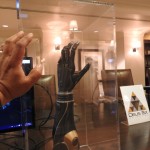
Open Bionics, who have previously collaborated with Disney for Marvel and Star Wars-inspired prosthetics, will produce an arm based on the game's protagonist Adam Jensen. The Deus Ex video game franchise, which is itself set in a world where human augmentation through mechanical prosthetics is the norm, seems like a natural source of inspiration for prosthetic design. Together, Eidos Montreal, Square Enix, and OpenBionics are working on the development of two Deus Ex inspired bionic arms, ...
More

New Chemical ‘Sponges’ Designed to Soak Up Toxic Cancer-fighting Drugs After Targeting Tumors

Doctors have a powerful arsenal of cancer-fighting chemotherapy drugs to choose from, though a key challenge is to better target these drugs to kill tumors while limiting their potentially harmful side effects. Now, researchers at the Department of Energy’s Lawrence Berkeley National Laboratory (Berkeley Lab) are helping to develop and test materials for a new device that can be inserted via a tiny tube into a vein and soak up most of these drugs like a sponge. That’s after a separate tube de...
More

Different brain wave frequencies can tell about the person’s health and state of mind.

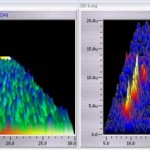
Your brain is made up of billions of brain cells called neurons, which use electricity to communicate with each other. The combination of millions of neurons sending signals at once produces an enormous amount of electrical activity in the brain, which can be detected using sensitive medical equipment (such as an EEG), measuring electricity levels over areas of the scalp. The combination of electrical activity of the brain is commonly called a brainwave pattern, because of its cyclic, "wave-l...
More

Wireless contact lens sensor approved by FDA

The US Food and Drug Administration has allowed the marketing of a contact lens sensor that may help practitioners identify the best time of day to measure a patient’s intraocular pressure (IOP). It is important to determine whether a patient has elevated IOP as it is often associated with the optic nerve damage that is characteristic of glaucoma. Triggerfish has a sensor embedded in a soft silicone contact lens that detects tiny changes or fluctuations in an eye’s volume. The device is wo...
More

Minimize Hair Loss after chemotherapy

Hair loss is a common side effect of certain types of chemotherapy, commonly associated with the treatment of breast cancer. Hair may fall out entirely, gradually, in sections, or may become thin. Hair loss due to cancer treatment is usually temporary, but minimizing or relieving these kinds of side effects are considered important to overall treatment. “We are pleased to see a product for breast cancer patients that can minimize chemotherapy-induced hair loss and contribute to the quality of...
More

LifeVest wearable defibrillator

LifeVest wearable defibrillator is worn by patients at risk for sudden cardiac arrest (SCA), providing protection during their changing condition and while permanent SCA risk has not been established. The LifeVest allows a patient’s physician time to assess their long-term arrhythmic risk and make appropriate plans. The LifeVest is lightweight and easy to wear, allowing patients to return to their common activities of daily living, while having the peace of mind that they are protected from SCA....
More

Smart Telescopic Contact Lens

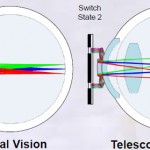
Researchers in Switzerland are working to develop magnifying contact lenses that zoom in and out with a wink. The innovative new vision-enhancing system, the first of its kind, includes a set of telescopic lenses and smart glasses that can distinguish between blinks and winks so that the user can easily flick between zoomed and normal vision. The visual aids, which are still in the prototype stage, could be useful for those with visual impairment, which affects some 285 million people worl...
More

Inhalable insulin

Afrezza® is an inhaled human insulin indicated to help improve glycemic control in adults with diabetes mellitus Inhalable insulin is a powdered form of insulin, delivered with a nebulizer into the lungs where it is absorbed. Inhaled insulin is another option for people with diabetes to control their blood sugar. It works for both type 1 and type 2 diabetes. The FDA has approved an inhaled, rapid-acting, dry-powder formulation of recombinant human insulin (Afrezza–Mannkind/Sanofi) for tre...
More

Abbott glucose monitor eliminates finger sticks

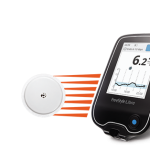
Blood glucose monitoring technology has evolved since the test strip. Now there are electrochemical sensors being developed that employ a two or three electrode system and are convenient to use. (Vashist, Zheng, Al-Rubeaan, Luong, & Sheu, 2011). The Abbott company has been a pioneer in diabetes monitoring systems. They are starting to roll out a new glucose monitoring system in select markets and should be worldwide in the near future. The FreeStyle® Libre Pro Flash Glucose Monitoring...
More

Portable, consumer-level device capable of collecting and interpreting large amounts of data to accurately diagnose specific medical conditions

By leveraging technological advances in wireless monitoring, artificial intelligence, and affordable point-of-care biomedical processes, new opportunities in consumer-driven, in-home, medical diagnostic tools are not only possible, but they are the future of health care. Many of us have spent hours navigating through a disjointed, complicated health care system, the failures of which are frustrating to both patients and providers. What if, instead of waiting several weeks to get an appointmen...
More

CardioMEMS HF System measures and monitors real-time 24×7 pulmonary artery (PA) pressure and heart rate in heart failure patients.

CardioMEMS HF System measures and monitors the pulmonary artery (PA) pressure and heart rate in certain heart failure patients. The System consists of an implantable PA sensor, delivery system, and Patient Electronics System. The implantable sensor is permanently placed in the pulmonary artery, the blood vessel that moves blood from the heart to the lungs. The sensor is implanted during a right heart catheterization procedure. The PA sensor is about the size of small paper clip and has a thin, c...
More

Acoustic engineering transcribes crackling knee sounds into moving graph

You’ve injured your knee. A doctor straps a listening device to it, and the noises you hear coming out of it are cringe-worthy. “Crackle! Krglkrglkrgl! Snap!” Your knee isn’t breaking; it’s only bending, and in the future, those sounds could help doctors determine whether the convalescing joint is healthy yet, or if it needs more therapy. Research engineers at the Georgia Institute of Technology are developing a knee band with microphones and vibration sensors to listen to and measure the ...
More

Flu Vaccine in Painless Skin Patches Under Development at Emory, Georgia Tech

Flu vaccine delivered through painless microneedles in patches applied to the skin could soon be an alternative to delivery through hypodermic needles, according to researchers at Emory University and the Georgia Institute of Technology. Using new grants from the National Institutes of Health (NIH) totaling approximately $11.5 million over five years, researchers from the two institutions plan to develop a new vaccine product using the microscopic needles. "A vaccine administered through a sk...
More

CUR a wearable patch that delivers high frequency impulses to block pain signals directy

Thimble Bioelectronics, a California-based company that focuses on developing digital pain management products, announced on this week that it is working on a wearable pain relief patch. Similar in look, size and shape to an ordinary band-aid; the product is based on Transcutaneous electrical nerve stimulation (TENS), a type of therapy that uses low-voltage electrical current for pain relief. Just place it where it hurts. The optimal waveform, amplitude, and modulation pattern settings are au...
More

Biostamp

  John Rogers, a materials science professor at the University of Illinois with a bold vision: Someday, he believes, we will all have sensors on our bodies that send information to a mobile phone, similar to the way a car’s sensors feed the vehicle’s computer. While all biostamps have a few common characteristics—they stretch like skin, include flexible circuits, and can be powered wirelessly— different functions require different sensors. The butterfly sensor on the left is desig...
More

WEARABLE TECHNOLOGY COULD HELP DETECT HEALTH RISKS, DEPRESSION

Engineers at Michigan State University working with folks at Bell Labs have developed WEARABLE TECHNOLOGY that could help detect health risk, depresion. It may be small, so small it’s hardly noticeable, but it could someday save lives. “It” is wearable technology that can monitor a person’s eating, drinking, coughing and even social habits, and that’s information a health care provider could find useful when treating someone dealing with obesity, diabetes, asthma or even depression. Thi...
More

Wearable system that monitors and predicts asthma attacks

Researchers have developed an integrated, wearable system that monitors a user’s environment, heart rate and other physical attributes with the goal of predicting and preventing asthma attacks. The researchers plan to begin testing the system on a larger subject population this summer. The system, called the Health and Environmental Tracker (HET), is composed of a suite of new sensor devices and was developed by researchers from the National Science Foundation’s Nanosystems Engineering Resear...
More

Home Urine Test Scanner

Bowden and Gennifer Smith, a PhD student in electrical engineering at Stanford, detail their new low-cost, portable device that would allow patients to get consistently accurate urine test results at home, easing the workload on primary care physicians. Other do-it-yourself systems are emerging, but the Stanford engineers think their approach is inexpensive and reliable, in part because they base their system on the same tried and trusted dipstick used in medical offices. https://youtu.be/...
More