


HIV breakthrough could lead to a cure

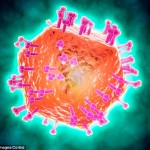
Scientists identify markers on immune cells that 'predict who can stop drug therapy and stay well.' Scientists have discovered the way a patient's immune system responds to HIV infection could offer clues as to whether they will go on to achieve remission after drug treatment. The breakthrough sheds light on the phenomenon known as 'post-treatment control' where the virus remains undetectable in some patients even after medication is stopped. The findings could open new avenues for understand...
More
Posted in Uncategorized

Grow herbs with zero effort

With Click & Grow smartpots, the technology does all the work. This is where nature and technology meet to make dreams come true. Click & Grow was made to take complete care of your plants. The company makes a little capsule of seeds that requires water and batteries, and it sells the plastic box that does all the work for you. All plants are grown using automatically controlled technology in a unique and specially developed Smart Soil. The Smart Soil is the heart of Click & Grow....
More
Posted in Uncategorized

New crystal captures carbon from humid gas

A new material with micropores might be a way to fight climate change. Scientists have created crystals that capture carbon dioxide much more efficiently than previously known materials, even in the presence of water. The research was recently published in a report in the scientific journal Science. One way to mitigate climate change could be to capture carbon dioxide (CO2) from the air. So far this has been difficult, since the presence of water prevents the adsorption of CO2. Complete dehyd...
More
Posted in Uncategorized

Seizure-symptom app is latest Apple health research tool

Johns Hopkins researchers today introduced EpiWatch, an app designed to collect data from patients with epilepsy before, during, and after their seizures. The app, which runs on Apple Watch and iPhone, uses the open source ResearchKit framework designed by Apple. The data gathered for the study by the app, including physiological changes, altered responsiveness, and other characteristics of recurrent seizures, will be used by researchers to better understand epilepsy, to develop new methods f...
More
Posted in Uncategorized

Researchers creating rapid diagnostic test for blood infections.

BYU is leading a collaborative team that has just kicked off a massive multidisciplinary effort to combat a threat to global health, the rising prevalence of bacteria that can’t be treated by antibiotics. Four BYU professors from three colleges have joined forces on the multi-year, National Institutes of Health-sponsored effort to create a faster diagnostic test for drug-resistant blood infections. As it stands now, diagnostic tests for these types of infections can take up to three days to prod...
More
Posted in Uncategorized

Researchers Discover How Termites Ventilate

Termites build massive, empty structures above their underground nest in order to control their local environment. Hunter King and Samuel A. Ocko, under the supervision of Applied Mathematics professor Lakshminarayan Mahadevan discovered the key to ventilation in the mounds of an Indian termite species. It is well known that termites build such massive, empty structures above their underground nest in order to control their local environment. The researchers conducted tests on live and dea...
More
Posted in Uncategorized

GMO Chickens Could Block Bird Influenza and Prevent Outbreaks

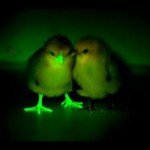
The latest innovative development by Researchers from the University of Edinburgh and the University of Cambridge are genetically modified glow-in-the-dark chickens developed in order to block the bird flu. The genetically modified organism chickens are given a shot of a fluorescent protein. The modified birds contain a protein to differentiate themselves from other chickens. Under ultraviolet light, their beaks and feet emit a haunting green hue. This sets them apart from regular birds To...
More
Posted in Uncategorized

New Modification Method Could Bring Lifesaving Medications to Market

A safe and efficient technique using cellulose to get drugs to safely reach their target to save lives was created. Xiangtao Meng, a fourth-year graduate student in the College of Natural Resources and Environment has developed a new technique that can get drugs to market, and to patients, that would otherwise fail. Taking medications orally is typically much more practical for patients than methods like intravenous injections, but the bioavailability of a drug the amount that actually rea...
More
Posted in Uncategorized

Latest Intuos Tablets Make Creative Dreams Come True

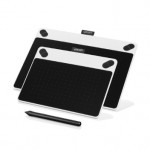
Wacom®, the world leader in pen-based creative tablets, introduced its next generation Intuos® product family to empower and inspire creative enthusiasts. The new range of Intuos Pen & Touch tablets consists of four models: Intuos Art, (for beginners with a passion for creativity), Intuos Comic, (more advanced painting and artistic skill) Intuos Photo (for photo editors who want to try new creative techniques) and Intuos Draw. (For comic and manga enthusiasts). Each model includes free...
More
Posted in Uncategorized

New Technology to Monitor Cancer Cells

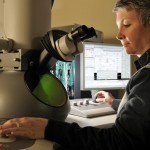
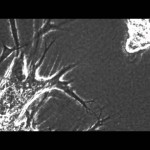
Deborah Kelly, a biologist at Virginia Tech Carilion Research Institute, has developed a "microchip-based toolkit" to watch the breast cancer affiliated BRCA1 gene act inside a human breast cancer cell. This new technology allows scientists to watch cancer cells in action at unprecedented resolution. They can now peer closely into the world of cells and molecules within a native, liquid environment. Kelly and colleagues have developed a way to isolate biological specimens in a flowing, liquid en...
More
Posted in Uncategorized

Temperature Increase Could Lead to Drastic Sea Level Rise

Antarctic ice shelf collapse and unstoppable sea level rise 'very likely' without tough climate action, say scientists. Warming of 1.5 to 2 degrees Celsius above current levels could lead to "unstoppable" sea level rise that would last for thousands of years. The new model, published today in Nature, shows that such temperatures would result in 80 to 85 per cent loss of major Antarctic ice shelves, something that is possible by the end of the century under existing IPCC scenarios. Collapse of th...
More
Posted in Uncategorized

Lifetime of atoms extended using a mirror

Researchers at Chalmers University of Technology have succeeded in an experiment where they get an artificial atom to survive ten times longer than normal by positioning the atom in front of a mirror. The findings were recently published in the journal Nature Physics. The artificial atom consists of a superconducting circuit on a silicon chip. The interaction between the atom and its mirror image modifies the vacuum fluctuations seen by the atom and thus its lifetime. The microwaves that mediate...
More
Posted in Uncategorized

Glueballs: Particles purely made of nuclear force

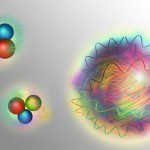
For decades, scientists have been looking for so-called “glueballs." Now it seems they have been found at last. A glueball is an exotic particle, made up entirely of gluons, the “sticky” particles that keep nuclear particles together. Glueballs are unstable and can only be detected indirectly, by analyzing their decay. This decay process, however, is not yet fully understood. Professor Anton Rebhan and Frederic Brünner from TU Wien (Vienna) have now employed a new theoretical approach to calcula...
More
Posted in Uncategorized

Seasonal paradox – why MS symptoms may improve as days get shorter

A new approach regarding Melatonin for MS Symptom Seasonal Variations Harvard-affiliated researchers from the Ann Romney Center for Neurologic Diseases at BWH wanted to understand why symptoms of multiple sclerosis change with the seasons, improving as the days get shorter. They have found an explanation that could lead to a deeper understanding of the disease and more targeted treatment options for patients. Multiple sclerosis is a disease that affects the central nervous system, includin...
More
Posted in Uncategorized

MIT develops wireless trackpad for your thumbnail.

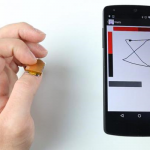
Wearable Thumbnail Sensor called NailO is the latest tiny wireless trackpad. A Novel tiny wireless trackpad that can be worn on a thumbnail has been developed by the researchers at the Massachusetts Institute of Technology. This device is called NailO, and the prototype trackpad is similar to the stick-on nails sometimes used as a fashion accessory. It attaches to the user’s thumb and can be controlled by running a finger over its surface. This new wearable device turns the user’s thumb...
More
Posted in Uncategorized

3-D Printing Breaks the Glass Barrier

Researchers have cracked the challenge of printing glass through a nozzle. A team of MIT researchers have opened up a new frontier in 3-D printing which is the ability to print optically transparent glass objects. They demonstrated the first-ever machine that can print molten glass through a nozzle and make transparent glass objects layer by layer according to digital instructions. The 3-D printer G3DP produces optically transparent glass with the push of a button and contains a "kiln cart...
More
Posted in Uncategorized

MIT System- Learning spoken language

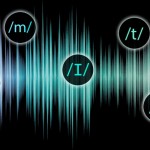
System learns to distinguish words’ and phonetic components without human annotation of training data. MIT researchers have developed a revolutionary new machine-learning system that can learn to distinguish spoken words and unlike its predecessors, it can also learn to distinguish lower-level phonetic units, such as syllables and phonemes. Every language has its own collection of phonemes, or the basic phonetic units from which spoken words are composed. The English language has somewhere...
More
Posted in Uncategorized

Disappearing Carbon Circuits on Graphene

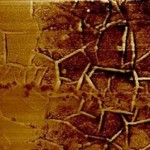
Georgia Tech researchers have deposited carbon atoms onto graphene using a focused electron beam process to create patterns that evolve over time on the graphene. The patterns could be used to make reconfigurable electronic circuits, which evolve over a period of hours before ultimately disappearing into a new electronic state of the graphene. Graphene is also made up of carbon atoms, but in a highly-ordered form. Beyond allowing fabrication of disappearing circuits, the technology could be u...
More
Posted in Uncategorized

Kidney created from stem cells

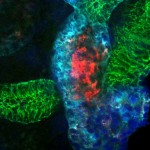
Harvard Stem Cell Institute (HSCI) principal faculty at Brigham and Women’s Hospital (BWH) have established a highly efficient method for making kidney structures from stem cells derived from skin taken from patients. The kidney structures formed could be used to study abnormalities of kidney development, chronic kidney disease, and the effects of toxic drugs, and could be incorporated into bioengineered devices to treat patients with acute and chronic kidney injury. In the longer term, these me...
More
Posted in Uncategorized

Potential breakthrough in bid for Alzheimer’s treatment.

A potential drug target has been discovered that could help scientists develop radical new treatments for Alzheimer’s disease. Blocking activity of the protein, known as GPR3, results in toxic deposits thought to play a key role in the disease clearing away from the brain. Laboratory mice suffering from Alzheimer’s-like symptoms showed improvements in learning, memory and social skills when they lacked GPR3, according to research published in the journal Science Translational Medicine. Further t...
More
Posted in Uncategorized

How robots can fall gracefully

Researchers at Georgia Tech have identified a way to teach robots how to fall with grace and without serious damage. The work is important as costly robots become more common in manufacturing alongside humans. The skill becomes especially important, too, as robots are sought for health care or domestic tasks working near the elderly, injured, children or pets. These machines are expensive to make and typically take months, if not years, to complete meaning every time they fall they can become da...
More
Posted in Uncategorized

COW – New technology that helps police officers find missing children

A new tool called (COW), a cellular on wheels, is a real lifesaver for missing children. Imagine if your child goes missing in a sea of people. It can happen in the blink of an eye. Losing your child even for a second to a couple of minutes is terrifying and tracking him or her down at an event like the state fair may seem impossible, until now. It’s all thanks to a new tool called a cellular on wheels or COW, for short. This new device may look like your typical smartphone, but law enf...
More
Posted in Uncategorized

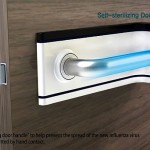
Self-Sterilizing Door Handle Keeps Your Hands Germ-Free

A revolutionary innovation from Yanko Design is a door handle with Self-Sterilization System which puts fears of bacteria-spreading influenza to rest. It is amazing that we never think that the dirtiest part of a public bathroom is likely the door handle and not places like the toilet seat or the paper towel dispenser, as this is one part of the bathroom that everyone touches on their way in or out, regardless of whether they have washed their hands or not. Door handles are a breeding grou...
More
Posted in Uncategorized

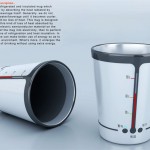
Intelligent, Energy-Saving Mug

The green mug is a refrigerated and insulated mug which is powered by absorbing the heat radiated by the water/ beverage. New Green Smart Glass is intended to make getting the perfect cup of coffee both easier and more eco-friendly. Chengzhu has created the Green Smart Glass which is a refrigerated and insulated mug which is powered by absorbing the heat radiated by the water/ beverage itself. Generally we do not drink hot coffee until it becomes cooler so there will be loss of heat. ...
More
Posted in Uncategorized

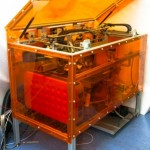
MIT invents ‘breakthrough’ 3D printer that can print 10 different materials simultaneously

Researchers from MIT's Computer Science and Artificial Intelligence Laboratory (CSAIL) have made a breakthrough in the field of 3D printing, developing a 3D printer prototype that is able to print up to 10 different materials simultaneously onto a single object. Delivering resolution at 40 microns or less than half the width of a human hair, the “MultiFab” system is the first 3-D printer to use 3-D-scanning techniques from machine vision, which offers two key advantages in accuracy and conven...
More
Posted in Uncategorized

UBC students develop “pro-bee-otic”, a probiotic for bees

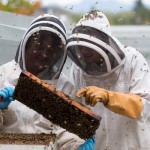
University of British Columbia students have developed a probiotic for honey bees, which they’ve coined the ‘pro-bee-otic.’ This innovative study by a group of UBC students is regarding the development a probiotic for honey bees. This is a particularly important solution, as global bee declines are a major problem and so much of the food we eat depends on pollination by insects. The students want to address this important issue and they feel that betting probiotics could be the key to prot...
More
Posted in Uncategorized

Scientists discover how to trap cancer cells before they spread.

Researchers at the Francis Crick Institute and the University of Copenhagen have discovered a new way to 'fence in' a tumor and help stop cancer cells from spreading. Tumors cause cells called fibroblasts to stiffen the surrounding tissue so that cancer cells can grip it, allowing them to tunnel through to the blood stream and spread around the body. They showed that adding experimental drugs, reprogrammed fibroblasts helped in stopping them from 'stiffening' the tissue around tumors. This he...
More
Posted in Uncategorized

Young stars’ flickering light reveals link with matter-eating black holes.

Astronomers have discovered a previously unknown link between the way young stars grow and the way black holes and other exotic space objects feed from their surroundings. The study, 'Accretion-induced variability links young stellar objects, white dwarfs, and black holes,' which is published in the journal Science Advances, shows how the 'flickering' in the visible brightness of young stellar objects (YSOs), very young stars in the final stages of formation is similar to the flickering seen fro...
More
Posted in Uncategorized

UCSB researchers create nanoparticles to act like blood platelets

Researchers at the University of California, Santa Barbara have created nanoparticles that resemble blood platelets that can be used to speed up the healing process and create clots faster to decrease blood loss from an injury. They have turned to the human body’s own mechanisms for inspiration in dealing with the necessary and complicated process of coagulation. By creating nanoparticles that mimic the shape, flexibility and surface biology of the body’s own platelets, they are able to accelera...
More
Posted in Uncategorized

How a moth slows its brain to see in the dark

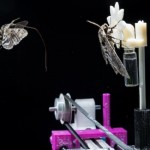
Hawkmoths are big, agile insects that hover in place expertly as they feed on nectar at dawn, dusk, and in the evenings. So, not only is it dark out, but the flowers are moving targets thanks to the breeze. Now, with the help of a robotic flower, researchers reveal how hawkmoths forage in the darkness: Their twilight or night vision is exquisitely attuned to flowers swaying in the wind. The findings, suggest that hawkmoth sight and flight evolved to perfectly match the movements of their only so...
More
Posted in Uncategorized