Xerox system automatically counts vehicle passengers.

Xerox rolls out Vehicle Passenger Detection System with highway speed accuracy for HOV/HOT Lane Enforcement. This system identifies the number of occupants in a vehicle with better than 95 percent accuracy at speeds ranging from stop-and-go to 100 mph. High occupancy carpooling lanes are critical to combating roadway congestion. However, their benefits are severely limited when motorists do not abide by the rules. Xerox (NYSE: XRX) announced the launch of its HOV/HOT lane compliancy test system ...
More

The Side Slip Seat makes the middle row the best seat on the plane.

The latest innovative concept invented by the Denver based firm Molon Labe Designs is called the Side-Slip seat, and one of the upsides of the design is that passengers “stuck” in the middle row get seats that are two inches wider, 20 inches, versus 18 inches of width apiece for window and aisle seats. The middle seat has long been the scourge of air travelers. While there aren’t really any good seats on a plane, the middle is the choice of last resort. The window seat comes with a view, and ...
More
Posted in Uncategorized Tagged

Haiku, a tiny little bike assistant.

Haiku is a small detachable device that you need to put on the handlebar of your bike . It uses Bluetooth to connect to your phone and present you all the information you need, starting with directions. You need to put directions on your phone first in order to get them on Haiku’s deported screen. The device tells you when you need to turn with simple arrows. If you are riding the bike and get a phone call or a message then Haiku has a few color LEDs on the side which blink when you receive a...
More

Object recognition through flexible machine learning.

At the Annual Conference on Neural Information Processing Systems, MIT researchers will present a new way of doing machine learning that enables semantically related concepts to reinforce each other. Machine learning, which is the basis for most commercial artificial-intelligence systems, is intrinsically probabilistic. An object-recognition algorithm asked to classify a particular image, for instance, might conclude that it has a 60 percent chance of depicting a dog, but a 30 percent chance of ...
More

Catalyst Destroys Common Toxic Nerve Agents Quickly

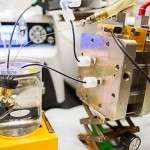
Northwestern scientists have developed a robust new material, inspired by biological catalysts, that is extraordinarily effective at destroying toxic nerve agents that are a threat around the globe. First used 100 years ago during World War I, deadly chemical weapons continue to be a challenge to combat. The material, a zirconium-based metal-organic framework (MOF), degrades in minutes one of the most toxic chemical agents known to mankind, Soman (GD), a more toxic relative of sarin. Computer...
More

Lumos helmet keeps cyclists safe with automatic brake lights.

Lumos is a next generation ultimate bicycle helmet with brake lights and turn signals, to help cyclists stay safe and visible on the road.For cyclists, the road can be a nasty place to be at night, so we're all for technologies that can help draw drivers' attention in order to reduce the number of accidents. The latest of such attempt is the Lumos helmet, which not only comes with turn signal indicators that can be controlled wirelessly, but also packs a brake light that comes on automaticall...
More

Next – The Perfect Keyboard for iPhone

Next, a Kickstarter project, comes fully loaded with lightning speed editing, predictive typing, all the emojis you love plus more, playful stickers and stunning themes. The software looks to extend the seamless typing experience provided by Apple’s stock keyboard by adding a thoughtful list of only the best and most meaningful features seen in other third-party keyboards. These include efficient gesture typing, super-fast edits with the quick cursor control, smart next-word predictions, beautif...
More

IBM announces carbon nanotube research breakthrough

IBM (NYSE:IBM) announced a research breakthrough that could soon permit replacing silicon transistors with carbon nanotubes in future high-performance electronic chips. Carbon nanotubes consist of single atomic sheets of carbon rolled up into a tube. The carbon nanotubes form the core of a transistor device whose superior electrical properties promise several generations of technology scaling beyond the physical limits of silicon. The IBM researchers developed a fabrication process that permi...
More

Bluesmart Carry-on smart suitcase knows its location and weighs itself.

Bluesmart, the world's first smart, connected carry-On, is a suitcase that includes proximity tracking to alert you if you walk away from your luggage, a TSA-approved lock that's controlled by your smartphone and a built-in battery to charge your gadgets along with a host of other features. There's also a scale integrated into the handle that will tell you how much your bag weighs just by lifting it off the ground, and a quick-access compartment for storing your laptop. With an abundance of sens...
More

Flyte lightbulb levitates and rotates in the air.

Flyte is a levitating light which hovers by magnetic levitation and is powered through the air. The amazing flyte hovering light uses magnetic levitation and wireless technology to rotate continuously with almost no friction. It is described as a new way to experience light, one that is free from the constraints of gravity and enhances wireless technology to receive power. Combing tesla laws of induction with the signature bulb, it is powered through the air making it safe and harmless as it nee...
More

Cicret wristband turns your arm into a touch screen

The new revolutionary bracelet, Cicret projects emails, videos and games and turns your arm into a touchscreen using a tiny built-in projector. Wearers of the of the Cicret bracelet will be able to check an email or watch a film that’s projected onto their forearm, and control the picture by using their skin like a touchscreen. It will also be possible for users to pair it with an existing smartphone, answer incoming phone calls and activate the speakerphone functionality on their smartphone. ...
More

Grow herbs with zero effort

With Click & Grow smartpots, the technology does all the work. This is where nature and technology meet to make dreams come true. Click & Grow was made to take complete care of your plants while you enjoy your life to the fullest. The company makes a little capsule of seeds that requires water and batteries, and it sells the plastic box that does all the work for you. All plants are grown using automatically controlled technology in a unique and specially developed Smart Soil. The Sma...
More

HidrateMe tracks your water intake and glows to remind you.

Sleek and stylish HidrateMe is a connected water bottle that will glow when you need to take a sip. It aims to help you fill up on your H20 with a sensor that monitors your intake and syncs that information up with an app on your smartphone. Should you need more water than you are ingesting, the bottle will glow. Water is an essential part of our daily lives, and we need it to maintain health and fitness. More than 750 million people around the world don’t have access to adequate amounts of s...
More
Posted in Uncategorized Tagged

NASA developed technology aims to save commercial airlines fuel and time

NASA’s latest technology for commercial airlines could save them fuel and time. The space administration's software is called the Traffic Aware Planner. This software helps to reduce fuel consumption, carbon emissions and cut travel times in commercial airlines. This latest technology is loaded on a tablet and will not require any major change to the already established aviation roles of pilots and ground crew, so the technology can be implemented right away. The app works by reading the plan...
More

Stanford team combines logic, memory to build a ‘high-rise’ chip.

Stanford researchers are building layers of logic and memory into skyscraper chips that are smaller, faster, cheaper and taller. They have created a four-layer prototype high-rise chip in which the bottom and top layers are logic transistors. Sandwiched between them are two layers of memory. The vertical tubes are nanoscale electronic "elevators" that connect logic and memory, allowing them to work together to solve problems. The circuit cards are like busy cities in which logic chips compute...
More

Cool Oculus – innovative ways to make buildings comfortable

Spiraling and swiveling, the large, metal structure currently sitting in the lobby of Princeton University’s School of Architecture opens and closes like a blossom. An aluminum blossom with sharp, louvered blades for petals. It’s a Cool Oculus, a high-tech chimney prototype that uses passive cooling techniques to keep a building comfortable in a desert climate. It integrates two passive cooling strategies into one architectural system.These complement one another on a day-night cycle in a des...
More

Google wants your glasses to stay on while you run, with self-adjusting specs.

The latest invention from Google are the new self-adjusting specs that could change the lives of the active and near-sighted .Wearing spectacles and keeping them in place, especially while doing physical work such as running, would be much easier now. The patent outlines a system built into a wearable device like Google Glass that uses motors and motion detectors to automatically tighten or loosen the spectacles' arms depending on what the wearer is doing. It relies on a simple input, adjustm...
More

Miniature invisibility cloak that can conceal 3-D objects by refracting light waves.

Scientists at the Berkeley Lab and UC Berkeley have created an invisibility cloak made from a thin material covered with millions of gold-plated antennae which wraps around an object and uses the antennae to divert light waves from its surface, rendering it undetectable to the human eye. Light reflects off the cloak as if it were reflecting off a flat mirror. Unlike the fictional character, the ultrathin cloak is real, and it successfully concealed microscopic 3D objects from detection in vis...
More

New light-controlled gel makes big strides in soft robotics.

A new material controlled by light may help scientists build better soft-bodied robots. The UC Berkeley scientists created the gel using graphene and a synthetic protein similar to elastin, which is found in humans' blood vessels, skin and more. The synthetic elastin, created from genetically engineered bacteria, absorbs water at room temperature, but at higher temperatures it expels the water and shrinks. Inspired by the way plants grow toward light sources, a phenomenon known as phototropis...
More

Cloaking device protects soldiers from shock waves

The amazing concept of a sci-fi cloaking device which is a shield of ionized air that damps the force of a shock wave and bends it, could protect soldiers protect soldiers from intense shock waves generated by explosions. The US Army has experienced much collateral damage due to shock waves from explosions and this new device will help in reducing the damage to the vehicle and the injuries to the soldiers onboard. An armored vehicle is equipped to handle debris from an explosion but is not...
More
Posted in Uncategorized Tagged

Improving Solar Efficiency with Stanford coating

Stanford engineers invent transparent coating that cools solar cells to boost efficiency. A transparent material that can improve the efficacy of solar cells, this coating has been invented by three Stanford engineers and has the tendency to radiate thermal energy into space which is released by solar cells, making cells cool. This invention shunts away the heat generated by a solar cell under sunlight and cools it in a way that allows it to convert more photons into electricity. The gr...
More

Stretchy, origami battery powers Samsung smartwatch

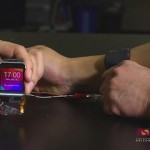
Stretchy batteries inspired by origami could power smartwatches and other wearable electronics. Newly introduced, stretchy origami-style batteries could power the wearable devices of the future, say researchers who have managed to power a Samsung Galaxy Gear 2 with a battery of their own invention. The lithium-ion batteries developed by a team from Arizona State University are capable of stretching to 150 percent of their natural size and of powering existing smartwatches. Scientists wo...
More

Harvard Scientists Make Solar Power Production More Efficient

Solar power could be increased tenfold without additional storage in the near future. A team of Harvard scientists and engineers demonstrated a rechargeable battery that could make storing electricity from intermittently available energy sources, like sun and wind which is safe and cost-effective for both residential and commercial use. Much of the nation’s energy policy is premised on the assumption that clean, renewable energy, such as wind and solar power, will require huge quantities o...
More

Breakthrough technology for hearing impaired

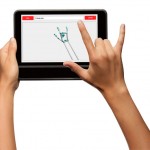
MotionSavvy is putting forward a device to help the hearing impaired listen and speak. UNI, a sensitive tablet that interprets sign language and turns it into text and audible voice. There are plenty of things to take for granted in this life, and the ability to hear is one of them. MotionSavvy, is building a tablet case that leverages the power of the Leap Motion controller in order to translate American Sign Language into English and vice versa. The entire 6-person team is deaf. Known...
More

RapidSOS acts as a fast “data pipeline” for 911

Mobile app automatically sends a caller’s location and medical data to dispatch centers. RapidSOS, a startup with MIT roots, is gearing up to release a one-touch 911 app that automatically sends location and preset medical data from a smartphone to dispatch centers, with aims of drastically reducing the time it takes first responders to get to a scene. According to the Federal Communications Commission (FCC), around 70 percent of 911 calls today are made via mobile phones. Yet when fieldin...
More

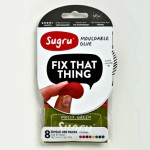
Sugru: First ever Moldable Glue that Turns into Rubber

Sugru is a moldable putty made out of silicone rubber and can be used to repair electronics along with its many other uses. Designer-inventor Jane Ni Dhulchaointigh’s unique silicone technology, Sugru feels like play-dough, and it's that easy to use too. Sugru is a moldable putty made out of silicone rubber and can be used to repair electronics along with its many other uses. The product adheres to many surfaces, fills in gaps better than most glues and sets in 30 minutes giving you tim...
More

The Senz° XL storm-proof umbrella

Gerwin Hoogendoorn, has recently introduced the Senz umbrella which can withstand winds of up to 62 miles per hour. With its aerodynamic shape that resists turning inside out, Senz umbrellas also come in different three sizes, the original, the XL and the mini. The unusual shape reminds one of a stealth fighter jet or perhaps something Batman might pull out if caught in a downpour. The XL storm-proof umbrella from Senz° with its striking silhouette is capable of withstanding winds of up...
More

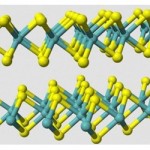
Scaling up production of 2D electronic materials

An MIT-led group of researchers has claimed to have determined a way to make large sheets of molybdenum telluride. Sheets of graphene and other materials that are virtually two-dimensional hold great promise for electronic, optical, and other high-tech applications but the biggest limitation in unleashing this potential has been figuring out how to make these materials in the form of anything larger than tiny flakes. Now researchers at MIT and elsewhere may have found a way to do so. The g...
More

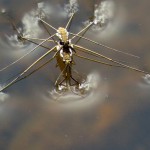
Researchers discover the key to staying dry underwater

Imagine staying dry underwater for months. The latest research from Northwestern University engineers identified a wide variety of surfaces that can do just that. Through a combination of analysis of “air-retaining insect surfaces” used by aquatic insects, aging and degassing experiments on material surfaces, and molecular simulations, these engineers believe they understand what keeps certain surfaces dry underwater. Saturation of air within “valleys” on surfaces (less than 1µm wide) defl...
More
Posted in Uncategorized Tagged

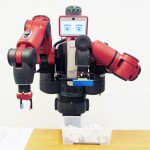
RoboSAM Robot can call for human help if needed

Smart Robot can assess its situation and call a human for help when it needs assistance. Researchers from the University of Maryland have developed RoboSAM (ROBOtic Smart Assistant for Manufacturing), an industrial robot smart enough to know when something is wrong, to pause and to call a human for help. The new RoboSAM, based on the Baxter industrial robot platform, is able to estimate the probability it can complete a task before beginning it, and can ask a human help if necessary. Cu...
More