Blood Pressure Study

A new study finds that at least 16.8 million Americans could potentially benefit from lowering their systolic blood pressure (SBP) to 120 mmHg, much lower than current guidelines of 140 or 150 mmHg. The scientists calculated the potential impact of preliminary results from the Systolic Blood Pressure Intervention Trial (SPRINT) that will be presented in full at the American Heart Association meeting and published online in the New England Journal of Medicine. The initial analysis of SPRINT, r...
More
New flu tracker uses Google search data better than Google.

A team of Harvard statisticians has come up with a new way to track the flu virus using Internet search data. The system uses a method that has been used before, tracking searchers for key words and phrases, but has coupled it with additional data to improve its accuracy. The new model, ARGO (AutoRegression with Google search data), was published in the Proceedings of the National Academy of Sciences and was built on Google Flu Trends, which was Google’s flu tracking model that emerged in 200...
More

Stroke & Working Overtime.

A recent analysis indicates that women who work 55 hours or more per week have a 30% higher risk of having a stroke than those working standard hours, making them just as likely to have a stroke as their male counterparts. The analysis was conducted by European public health re-searchers. It involved data from over 600,000 women and men enrolled in long-term observational studies in Europe and the United States. It was the first such analysis of the relationship between working long hours and st...
More

Contacts could help treat Glaucoma

A McMaster PhD candidate has harnessed a component naturally found in tears to develop a contact lens-based drug delivery system for glaucoma patients. Chemical engineer Myrto Korogiannaki has used hyaluronic acid to help get drugs to the eye from a lens in a controlled way. Patients with front-of-the-eye diseases, such as glaucoma, traditionally use medicated eye drops twice a day to treat their ailment. But those drops are incredibly inefficient as only about five per cent of the drug they car...
More

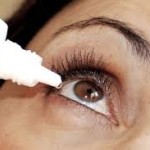
Eye drops with new chemical could clear up cataracts

Scientists have discovered a new chemical that could reverse cataracts, one of the leading causes of blindness. This new substance could be used in eye drops, greatly simplifying the treatment and making it accessible to the general population at a low price and without intrusive procedures. A cataract is a clouding of the lens in the eye leading to a decrease in vision. It can affect one or both eyes, generally evolves slowly, and causes about 50% of all the blindness cases in the world. Catara...
More

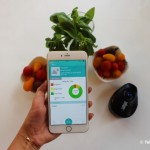
Tellspec : Predictive intelligence about food.

Tellspec Food Sensor is the world’s first consumer handled device able to scan food at a molecular level. It provides you with the most relevant and useful information about what is in your food so you can make an informed decision that better matches your health needs. The technology includes a three-part system ,a pocket-sized sensor, a cloud-based analysis engine, and a mobile app that work together to scan foods, identify calories, macronutrients, allergens, fiber, sugars, and also provide r...
More

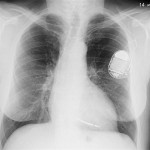
Battery-free pacemaker powered by the heart itself

Scientists are developing next-generation battery-free implantable pacemakers that may be powered by an unlikely source, the heart itself. The advancement is based upon a piezoelectric system that converts vibrational energy, created inside the chest by each heartbeat, into electricity to power the pacemaker. "Essentially, we're creating technology that will allow pacemakers to be powered by the very heart that they are regulating," said M Amin Karami, assistant professor of mechanical engineeri...
More

3D printed objects may be toxic

Parts produced by some commercial 3D printers may be toxic, according to a new study that raises concerns about how to dispose of parts and waste materials from the devices which are becoming increasingly popular. Researchers at the University of California, Riverside studied two common types of 3D printers, one that melts plastic to build a part, and another that uses light to turn a liquid into a solid part. They found that parts from both types of printers were measurably toxic to zebrafish e...
More

One night of poor sleep equals six months on a high-fat diet

New research finds that one night of sleep deprivation and six months on a high-fat diet could both impair insulin sensitivity to a similar degree, demonstrating the importance of a good night’s sleep on health. This study, conducted by Josiane Broussard, PhD, and colleagues from Cedars-Sinai Medical Center in Los Angeles, CA, used a canine model to examine whether sleep deprivation and a high-fat diet affect insulin sensitivity in similar ways. When the body becomes less sensitive to insulin (i...
More

Lack of sleep zaps cell growth, brain activity.

Lack of adequate sleep can do more than just make you tired. It can short-circuit your system and interfere with a fundamental cellular process that drives physical growth, physiological adaptation and even brain activity, according to a new study from the University of Tennessee, Knoxville. Albrecht von Arnim, a molecular biologist based in the Department of Biochemistry and Cellular and Molecular Biology, studied plants but said the concepts may well translate to humans. His team examined h...
More

Peptide drugs with longer lifespan open new doors for treating diseases.

A research led by scientists from the University of the Pacific holds new possibilities for the treatment of cancer and other diseases using peptide drugs. The researchers concocted a technique to considerably enhance the lifespan of peptides such that they could be used more efficiently. Peptides are small chains of amino acids, the building blocks of proteins. Treating diseases like cancer by using peptides is thought to be effective because they can be more potent, and safer to use than large...
More

Egyptian method filters seawater in minutes

Researchers from the University of Alexandria have developed a cheaper, simpler and potentially cleaner way to turn seawater into drinking water than conventional methods. This could have a huge impact on rural areas of the Middle East and North Africa, where access to clean water is a pressing issue if social stability and economic development is to improve. Right now, desalinating seawater is the only viable way to provide water to growing populations, and large desalination plants are now a f...
More
Posted in Uncategorized Tagged

EyeNetra : Your vision correction Built Into A Headset

A newly launched mobile eye-test device could lead to prescription virtual-reality screens. After five years of development and about 40,000 tests worldwide, the smartphone-powered eye-test devices developed by MIT spinout EyeNetra is coming to hospitals, optometric clinics, optical stores, and even homes nationwide. But on the heels of its commercial release, EyeNetra says it’s been pursuing opportunities to collaborate with virtual-reality companies seeking to use the technology to develop “vi...
More

Regenerating teeth now possible

Using lasers to regenerate and grow body parts sounds like science fiction, but researchers have just demonstrated that it might be a tranformative tool in medicine—or at least dentistry—in the future. A Harvard-led team just successfully used low-powered lasers to activate stem cells and stimulate the growth of teeth in rats and human dental tissue in a lab. The results were published today in the journal Science Translational Medicine. Stem cells exist throughout the body, and they fasci...
More
Posted in Uncategorized Tagged

Predictive technique could help determine breast cancer therapies

Researchers at the Georgia Institute of Technology have developed a predictive model that can provide doctors with an "invasiveness index" for cancer based on blood samples from individual patients, according to a new study. The test is based on chemical expression by specific cells in the body that help cancer move from the breast to other parts of the body. We want women to have more information to make a personal decision beyond the averages calculated for an entire population," said Manu ...
More

Study reveals how relaxation could cut health care costs

Relaxation-response techniques, such as meditation, yoga, and prayer, could reduce the need for health care services by 43 percent, according to a study at Harvard-affiliated Massachusetts General Hospital (MGH) that looked at participants in a relaxation-response-focused training program. Previous studies have shown that eliciting the relaxation response, a physiologic state of deep rest not only relieves stress and anxiety, but also affects physiologic factors such as blood pressure, heart rat...
More
Posted in Uncategorized Tagged

Antiviral compound fully protects monkeys from Ebola

Rhesus monkeys were completely protected from the deadly Ebola virus when treated three days after infection with a compound that blocks the virus's ability to replicate. These encouraging preclinical results suggest the compound, known as GS-5734, should be further developed as a potential treatment, according to research findings to be presented tomorrow at the IDWeek conference. Travis Warren, Ph.D., a principal investigator at the U.S. Army Medical Research Institute of Infectious Disease...
More

Coffee lowers risk of Parkinson’s, type 2 Diabetes, Five Cancers, and More

Harvard scientists have had coffee under the microscope for years, and last year announced the discovery of six new human genes that relate to coffee, reconfirming existence of two others previously identified. The long-running Harvard Nurses Health Study has found that coffee has protective qualities against type 2 diabetes and cardiovascular disease, and investigators are revisiting a 2001 study finding that it can also protect against Parkinson’s disease. Powell notes that this research at Ha...
More

LUMO LIFT- a small gadget that nudges you to stand up straight.

The Lumo Lift is a small wearable device that tracks posture and reminds the wearer not to slouch. The latest innovation from Lumo BodyTech for posture correcting devices, is Lumo lift, a small device that vibrates and reminds you to adjust your stance. The Lift can be clasped to an undershirt, collar or bra strap. The Lumo Lift, which comes in a variety of colors, detects your body's positioning and when you start to slouch, the device vibrates and reminds you to adjust your stance that n...
More
Posted in Uncategorized Tagged

CubeSensors monitor your sleeping environment

CubeSensors is a startup that makes small, pretty stylish, connected devices that monitor rooms, feeding back information about air quality, temperature, and other things. They are little boxes containing a few environmental sensors. These let you know how much nasty stuff was in your air and has systems of measuring temperature and humidity. Sense is a sleep tracking device measures temperature, humidity and ambient light. The Cubes that use the new Sleep feature glow gently to remind you wh...
More

UV-light enabled catheter fixes heart defects without surgery

The newly designed catheter device utilizes UV light technology and can be used to place the patch in a beating heart without open heart surgery. Researchers from Boston Children’s Hospital, the Wyss Institute for Biologically Inspired Engineering at Harvard University, Harvard John A. Paulson School of Engineering and Applied Sciences (SEAS) and the Karp Lab at Brigham and Women’s Hospital have jointly designed a specialized catheter for fixing holes in the heart using a biodegradable adhesive ...
More

Breathe fresh clean air in a SmartVent home.

SmartVent Evolve is an intelligent tablet based system that lets you control your home’s internal climate. This new system quietly ventilates your home with fresher, drier air, removing condensation and moisture and creating a healthier, more comfortable living environment. It is set to change home ventilation forever. Evolve’s sensor technology can monitor both temperature and humidity to effectively control condensation. This air is passed through a high efficiency filter and introduced int...
More

Kinsa’s Smart Ear wireless thermometer tells you what to do when you are sick.

Kinsa's new, second-generation Smart Ear Thermometer is a wireless thermometer designed to take accurate, instantaneous temperature readings from the ear without the hassles of an attached smartphone or keeping a probe under the tongue. It is designed to read temperatures from the ear, track illness symptoms, and help people take actionable steps Kinsa Smart Ear Thermometer features one-button activation and a screen that displays temperature, battery life, connectivity, and smiley/ frowny faces...
More

HidrateMe tracks your water intake and glows to remind you.

Sleek and stylish HidrateMe is a connected water bottle that will glow when you need to take a sip. It aims to help you fill up on your H20 with a sensor that monitors your intake and syncs that information up with an app on your smartphone. Should you need more water than you are ingesting, the bottle will glow. Water is an essential part of our daily lives, and we need it to maintain health and fitness. More than 750 million people around the world don’t have access to adequate amounts of s...
More
Posted in Uncategorized Tagged

A new sunblock that does not penetrate the skin

Researchers at Yale have developed a sunscreen made with bioadhesive nanoparticles that is not only waterproof, but does not penetrate the skin barrier, eliminating the health concerns associated with commercial sunscreens. While sunblocks are good at preventing sunburn and decreasing the risk of skin cancer from sun exposure, nanoparticles designed to reflect or absorb cancer-causing ultraviolet light, can go below the skin’s surface and enter the bloodstream. As a result, they pose possible...
More

Level of your hunger could determine your bone structure.

Yale School of Medicine researchers have found that Brain neurons which control hunger and appetite also regulate bone mass. “We have found that the level of your hunger could determine your bone structure,” said one of the senior authors, Tamas L. Horvath, the Jean and David W. Wallace Professor of Comparative Medicine, and professor of neurobiology and obstetrics, gynecology, and reproductive sciences.“The less hungry you are, the lower your bone density, and surprisingly, the effects of th...
More

A mirror that monitors vital signs

Wish you could check your vital stats while brushing your teeth? Thanks to the new innovation by MIT PhD student Ming-Zher Poh, reading your pulse and other vital stats may someday be as easy as standing in your bathroom. Working with public-domain software, Poh developed a way to measure the pulse by analyzing subjects sitting in front of a two-way mirror. The MIT Media Lab Medical Mirror is equipped with a computer monitor along with a built-in camera that tracks changes in brightness pr...
More

Wikipearls: Bite-sized foods wrapped in edible Food packaging

WikiFoods, Inc. has developed a revolutionary, plastic-free food and beverage packaging technology that delivers Triple Good called WikiPearls™ which are good for you, good for the environment, and just plain good. Created by David Edwards, a Harvard professor and biomedical engineer, the intention of the WikiPearl is to kill the packaging and make its relationship with food symbiotic. WikiPearl skins are inspired by the way nature packages fruits and vegetables. These skins are delicious ...
More

Penn scientists make breakthrough in Alzheimer’s disease research

Scientists reveal a cure for Alzheimer's disease may be closer than we thought. University of Pennsylvania researchers have made some exciting strides in the fight against Alzheimer's and they hope the discoveries will lead to a delay in the onset of the disease. Alzheimer's disease is a heartbreaking condition for both patients and their family members. Almost half the people who live to be 85 years old will develop Alzheimer's disease. Dr. Lee and Dr. John Trojanowski have lead the wa...
More

Inexpensive, Portable Wound-Healing Device

A novel and inexpensive device known as the wound pump has been invented by Daielle Zurovcik, which is a portable wound-healing device. This negative pressure pump helps to heal acute and chronic wounds, which will be affordable to low-income populations because it does not need electricity or batteries to operate and has a unique, simplified design. After surgery a patient requires care for an amputated limb or the open wounds of a fractured bone. Vacuum pumps speed healing by removing ba...
More