Device allows paralyzed man to swipe credit card, perform other movements.

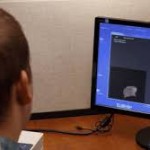
NeuroLife, was invented at Battelle, which teamed with physicians and neuroscientists from The Ohio State University Wexner Medical Center to develop the research approach and perform the clinical study. Ohio State doctors identified the study participant and implanted a tiny computer chip into his brain. Device allows paralyzed man to swipe credit card, perform other movements. That pioneering participant, Ian Burkhart, is a 24-year-old quadriplegic from Dublin, Ohio, and the first person...
More
Electronic sensors that monitor temperature and pressure within the skull

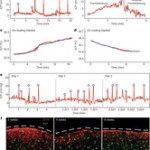
Researchers have developed a new class of small, thin electronic sensors that monitor temperature and pressure within the skull – crucial health parameters after a brain injury or surgery – then melt away when no longer needed. This eliminates the need for additional surgery to remove the monitors and reduces the risk of infection and haemorrhage. Similar sensors can be adapted for postoperative monitoring in other body systems as well, the researchers say. Led by John A. Rogers, a professor ...
More

Nanomaterials entering food chain

In recent years, the use of nanomaterials for water treatment, food packaging, pesticides, cosmetics and other industries has increased. Such particles, like silver nanoparticles deployed as a pesticide, are used to suppress the growth of harmful microorganisms. The increased use has led to concerns that these toxic particles could end up in food designed for human consumption. One study showed that artificial silver nanoparticles from polyethylene films destined for package of such foods as ...
More
Posted in Uncategorized Tagged

New light-activated nanoparticles kill over 90% of antibiotic-resistant bacteria

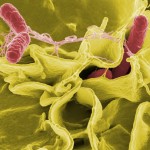
Nanoparticle treatment developed by researchers at the University of Colorado Boulder could provide an effective means of fighting antibiotic-resistant bacteria including Salmonella, E. Coli, and Staphylococcus, based on results in a laboratory environment. In testing with a lab-grown culture, the nanoparticles killed 92 percent of drug-resistant bacterial cells while leaving the other cells intact. The treatment consists of light-activated therapeutic nanoparticles called "'quantum dots". Th...
More

University of Washington has developed a new handheld, pen-sized microscope

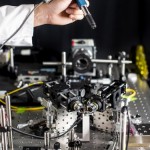
Handheld, miniature microscope being developed by University of Washington mechanical engineers could allow surgeons to “see” at a cellular level in the operating room and determine where to stop cutting. The new technology, developed in collaboration with Memorial Sloan Kettering Cancer Center, Stanford University and the Barrow Neurological Institute, is outlined in a paper published in January in the journal Biomedical Optics Express. The handheld microscope, roughly the size of a pen, ...
More

Nanyang Technological University (NTU) in Singapore has designed a low power chip that works with existing neural implants.

Paralyzed people and Parkinson’s disease patients can regain some control of their limbs and symptoms with neural implants. The problem is that with traditional implant hookups, wires from the implant run through the skull and connect with an external computer. Not only are the wires cumbersome but there is a high risk of infection with the open entry holes in the skull. Scientists at Nanyang Technological University (NTU) in Singapore have designed a low power chip that works with existing n...
More

EARLY CHILDHOOD EDUCATION VERY IMPORTANT

Brains are built over time, from the bottom up. The basic architecture of the brain is constructed through an ongoing process that begins before birth and continues into adulthood. Early experiences affect the quality of that architecture by establishing either a sturdy or a fragile foundation for all of the learning, health and behavior that follow. In the first few years of life, 700 new neural connections are formed every second. After this period of rapid proliferation, connections are...
More
Posted in Uncategorized Tagged

‘Sensmi’ tracks and analyzes your daily stress levels

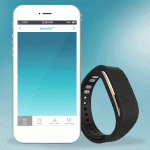
'Sensmi' is the world's most accurate smart wristband that tracks and analyzes your daily stress levels and sleep patterns. It helps you pursue life with less stress and more mindfulness. With sensmi, you can easily find out when, where, who, and what triggers the most stress in life and work, and practice stress-relieving exercises to calm down and increase focus, based on sensmi's suggestions. sensmi also accurately tracks and records lab quality sleep data (light to deep) to evaluate ch...
More

New drug-delivery capsule may replace injections

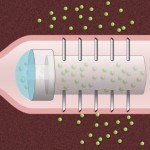
Pill coated with tiny needles can deliver drugs directly into the lining of the digestive tract. Given a choice, most patients would prefer to take a drug orally instead of getting an injection. Unfortunately, many drugs, especially those made from large proteins, cannot be given as a pill because they get broken down in the stomach before they can be absorbed. To help overcome that obstacle, researchers at MIT and Massachusetts General Hospital (MGH) have devised a novel drug capsule coat...
More

Japanese researchers develop flexible, ultra-thin thermometer that’s the width of about one fourth of a human hair.

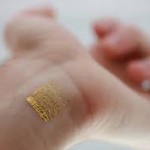
The thermal sensor can be attached directly to the skin, potentially useful in monitoring the health of infants or even making sportswear more comfortable. Japanese researchers have developed a micro-thin thermal sensor that can be attached directly to the skin, potentially useful in monitoring the health of infants or even making sportswear more comfortable. The group said that the device, embedded in an ultra-fine film, can measure target temperatures between 25 and 50 degrees Celsius, a r...
More
Posted in Uncategorized

‘e-skin'(electronic skin) – University of Tokyo

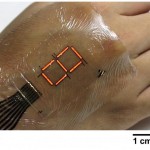
University of Tokyo researchers have developed an ultrathin, ultraflexible, protective layer and demonstrated its use by creating an air-stable, organic light-emitting diode (OLED) display. This technology will enable creation of electronic skin (e-skin) displays of blood oxygen level, e-skin heart rate sensors for athletes and many other applications. Integrating electronic devices with the human body to enhance or restore body function for biomedical applications is the goal of researchers ...
More

NASA’s research on deforestation and its impact

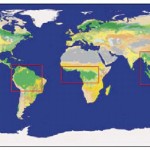
Up to thirty percent of the rain that falls in tropical forests is water that the rainforest has recycled into the atmosphere. Water evaporates from the soil and vegetation, condenses into clouds, and falls again as rain in a perpetual self-watering cycle. In addition to maintaining tropical rainfall, the evaporation cools the Earth’s surface. In many computer models of future climate, replacing tropical forests with a landscape of pasture and crops creates a drier, hotter climate in the tropics...
More
Posted in Uncategorized Tagged

NASA : Self-Guided Multimedia Stress Management and Resilience Training

OBJECTIVES: Stress and anxiety-related problems are some of the most common and costly behavioral health problems in society. For those working in operational environments (i.e., astronauts, flight controllers, military), stress and anxiety-related problems before, during, or after missions can seriously compromise efficiency, safety, and performance. To address behavioral health issues like stress, it is important to maximize the privacy, validity, and acceptability of the training and counter...
More
Posted in Uncategorized Tagged

NASA’s Remote Diagnostics Solution

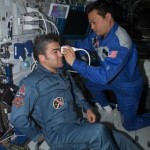
A variety of large-scale medical studies are being conducted in space by the National Space Biomedical Research Institute (NSBRI). Prominent among these is the Advanced Diagnostic Ultrasound in Microgravity Study, in which astronauts (including former ISS Commanders Leroy Chiao and Gennady Padalka) perform ultrasound scans under the guidance of remote experts to diagnose and potentially treat hundreds of medical conditions in space. Usually there is no physician on board the International Spa...
More
Posted in Uncategorized Tagged

NASA Technology Aids Early Detection of Diseases

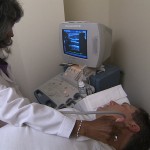
Dynamic light scattering technology, which was developed at the NASA's Glenn Research Center to protect the health of astronauts, can be used in simple noninvasive eye examinations to diagnose health problems long before clinical symptoms appear. The technology uses light to look into the eye as a "window to the body." It works because, for every tissue type in the body, there is a corresponding tissue type in the human eye. By measuring subtle changes in the tissues, fluids, and blood vess...
More
Posted in Uncategorized Tagged

Cleaning with sound waves

Sound may not be a normal cleaning product in your house, but it is just the thing for cleaning delicate jewelry, surgical instruments, lenses, and many other small, intricate objects. Soon, it could also make cleaning big objects like houses or machines much more efficient. Cutaway view of a loudspeaker. One model of an ultrasonic cleaner. This benchtop size is used by jewelers, cosmetic and tattoo professionals, dive shops, light manufacturing facilities, maintenance facilities and more. Ph...
More

River pollution causes gender-bending in fish

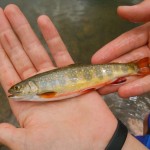
According to a recent report by the U.S. Geological Survey, male bass are experiencing sex changes due to chemicals that are found in most waterways across Northeast National Wildlife Refuges. Studies have found that up to 85% of male smallmouth bass in the region are demonstrating "characteristics of the opposite sex" – including eggs being located where testes should be. This isn't a one off – in fact, 27% of largemouth bass in the same region also show undesirable sex change indications. M...
More
Posted in Uncategorized Tagged

NASA Satellite Data to the Aid of Allergy Sufferers

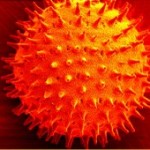
When you stroll through your front door in the morning, does the yellow haze coating the porch send you leaping back into the house? Can the mere word "pollen" make you start to sniffle, sneeze and reach for the tissue to blow your nose? If you answered "yes" to these questions, you're probably one of millions of people in the United States suffering from hay fever. Pollen can do more, however, than just make you sneeze. If you have asthma, cardiovascular disease, chronic obstructive pulmonar...
More
Posted in Uncategorized Tagged

NASA Satellite Maps Show Human Fingerprint on Global Air Quality

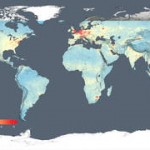
Using new, high-resolution global satellite maps of air quality indicators, NASA scientists tracked air pollution trends over the last decade in various regions and 195 cities around the globe. The findings were presented Monday at the American Geophysical Union meeting in San Francisco and published in the Journal of Geophysical Research. "These changes in air quality patterns aren't random," said Bryan Duncan, an atmospheric scientist at NASA's Goddard Space Flight Center in Greenbelt, Mary...
More
Posted in Uncategorized Tagged

Lab Grown Human Parts

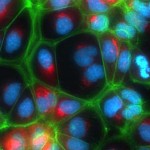
Scientists have successfully cultivated a range of human body structures, similar structures that have been successfully tested in animals, and small-scale human organs known as "organoids," which are used to study human organ function and structure at a level of detail that was previously impossible. Using stem cells, scientists from the Max Planck Institute for Infection Biology in Berlin grew the innermost cellular layer of human fallopian tubes, the structures that connect the ovaries and...
More
Posted in Uncategorized Tagged

NASA – Spider web in Zero Gravity

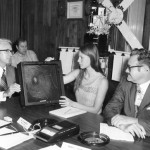
High school student Judith Miles Skylab experiment with Keith Demorest and Henry Floyd, both of Marshall Space Flight Center (MSFC). In her experiment, called "Web Formation in Zero Gravity," spiders were released into a box and their actions recorded to determine how well they adapted to the absence of gravity. The experiment flew aboard the Skylab 3 mission and proved that spiders could still spin webs in microgravity. The experiement was designed to measure motor response, an indicat...
More
Posted in Uncategorized Tagged

NASA Study Finds Storage Impacts Nutrients in Space Food

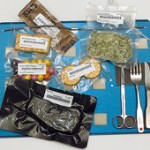
Long-duration storage has a more significant impact on the nutritional value of space foods than does spaceflight, a NASA study has found. Results of the study point to the need to develop different packaging or other means to increase the shelf life of nutrients in the space food system for future multiyear exploration missions. These findings also highlight the importance of minimizing the time from food production to crew consumption. The status of certain vitamins in the human body is alt...
More
Posted in Uncategorized Tagged

Cranfield’s Nano Membrane Toilet that generate energy to power homes in villages

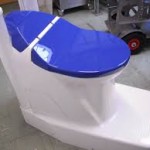
Cranfield University is developing the Nano Membrane Toilet which will be able to treat human waste on-site without external energy or water. The toilet is designed for single-household use (equivalent to 10 people) and will accept urine and faeces as a mixture. The toilet flush uses a unique rotating mechanism to transport the mixture into the toilet without demanding water whilst simultaneously blocking odour and the user’s view of the waste. Solids separation (faeces) is principally acc...
More

NASA’s space health care technology evolved into around-the-clock, remote patient monitoring for all.

In July 1969, just days after Neil Armstrong become the first man to walk on the Moon during the Apollo 11 mission , NASA’s Manned Spacecraft Center (now Johnson Space Center ) honored Spacelabs Medical with a certificate of appreciation for its “outstanding” contributions to the Apollo Program—contributions which proved vital to successfully achieving the Nation’s goal of landing men on the Moon and returning them safely to Earth. Product Outcome After pioneering medical telemetry in the ...
More

NU Scientists Advance Efforts in the Early Detection of Alzheimer’s

One minute. The Alzheimer’s Association estimates that in just that small period of time, almost every minute, a person in the United States will develop one of the top-10 killers in America: Alzheimer’s. 2015 was the first year in which Alzheimer scientists were able to see some real, substantial success in clinical trials. Bill Klein, in neurobiology and neurology at Northwestern, and his team have turned their focus away from what was once considered the cause of Alzheimer’s, plaques an...
More

Study Reveals Autism Could Be Reversible

Researchers at the Massachusetts Institute of Technology have shown that it may be possible to reverse autism. Autism is a genetically-linked condition and there is still much uncertainty as to what all the different genetic causes of the condition are. One genetic cause for example, affecting 1% of the those with autism, is the lack of a Shank3, which has responsibilities related to brain development. Those missing the gene experience autism symptoms such as avoiding social activities/interact...
More

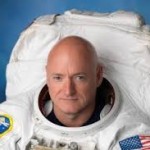
Astronaut Scott Kelly Grew 2 Inches in Space and Aged Less Than People on Earth

Astronaut Scott Kelly Grew 2 Inches in Space and Aged Less Than People on Earth Image Credit: NASA Astronaut Scott Kelly Grew 2 Inches in Space and Aged Less Than People on Earth After 340 days on the International Space Station, Scott Kelly grew 2 inches taller than his twin brother who spent the time on Earth, CNBC reports. Gaining a couple inches is pretty common among astronauts who spend a significant amount of time in space. That's because the microgravity environment allows room ...
More
Posted in Uncategorized Tagged

Telomere-lengthening procedure turns clock back years in human cells

Telomere-lengthening procedure turns clock back years in human cells Researchers at the Stanford University School of Medicine have developed a new procedure to increase the length of human telomeres. This increases the number of times cells are able to divide, essentially making the cells many years younger. This not only has useful applications for laboratory work, but may point the way to treating various age-related disorders – or even muscular dystrophy. The role of telomeres and telo...
More
Posted in Uncategorized Tagged

Gene Therapy

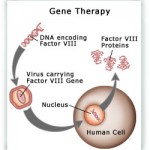
Gene Therapy for Diseases Gene Therapy has made important medical advances in less than two decades. Within this short time span, it has moved from the conceptual stage to technology development and laboratory research to clinical translational trials for a variety of deadly diseases. Among the most notable advancements are the following: Gene Therapy for Genetic Disorders Severe Combined Immune Deficiency (ADA-SCID) ADA-SCID is also known as the bubble boy disease. Affected children are b...
More
Posted in Uncategorized Tagged

British scientists have identified the specific gene that accounts for gray hair

The first gene identified for graying hair has been discovered by an international UCL-led study, confirming graying has a genetic component and is not just environmental. Published today in Nature Communications, the study analyzed a population of over 6,000 people with varied ancestry across Latin America to identify new genes associated with hair color, graying, density and shape - i.e. straight or curly. "We already know several genes involved in balding and hair color but this is the ...
More
Posted in Uncategorized Tagged