Biomedical imaging at one-thousandth the cost.

MIT researchers have developed a biomedical imaging system that could ultimately replace a $100,000 piece of a lab equipment with components that cost just hundreds of dollars. The system uses a technique called fluorescence lifetime imaging, which has applications in DNA sequencing and cancer diagnosis, among other things. So the new work could have implications for both biological research and clinical practice. “The theme of our work is to take the electronic and optical precision of this big...
More

Electric fields remove nanoparticles from blood with ease.

Engineers at the University of California, San Diego developed a new technology that uses an oscillating electric field to easily and quickly isolate drug-delivery nanoparticles from blood. The technology could serve as a general tool to separate and recover nanoparticles from other complex fluids for medical, environmental, and industrial applications. Nanoparticles, which are generally one thousand times smaller than the width of a human hair, are difficult to separate from plasma, the liquid ...
More

New method developed to predict response to nanotherapeutics

Many nanotherapeutics are currently being tested in clinical trials and several have already been clinically approved to treat cancers. But the ability to predict which patients will be most responsive to these treatments has remained elusive. Now, a collaboration between investigators at Massachusetts General Hospital (MGH) and Brigham and Women's Hospital (BWH) has led to a new approach that uses an FDA-approved, magnetic nanoparticle and magnetic resonance imaging (MRI) to identify tumors mos...
More

Scientists grow functional vocal cord tissue in lab.

UW-Madison scientists have grown human vocal cord tissue in a dish, which made sound when transplanted into voice boxes from cadaver dogs, a development that could lead to better treatments for people with voice disorders. Such implants likely won’t be ready for human testing for years. But re-creating the tissue, known as a vocal fold, and showing it was functional in dog larynges and was not rejected by a mouse model of the human immune system are significant steps, the researchers said. “We n...
More

Speedy Microscopic Submarines powered by Light

A team from Rice University has developed single-molecule nanosubmarines that could eventually be used to deliver medicines directly inside the body. Back in 2006, this same group developed nanocars, a single-molecule vehicle with four wheels, axles, and independent suspensions that could be “driven” across a terrestrial surface. Unfortunately, many of the nano-scale devices developed since then either required or emitted toxic chemicals. Several years ago, however, a new motor developed by a gr...
More

Flexible, implantable device could block pain signals

Building on wireless technology that has the potential to interfere with pain, scientists have developed flexible, implantable devices that can activate and, in theory, block pain signals in the body and spinal cord before those signals reach the brain. The researchers, at Washington University School of Medicine in St. Louis and the University of Illinois at Urbana-Champaign, said the implants one day may be used in different parts of the body to fight pain that doesn’t respond to other therapi...
More

Genetic link to depression.

Scientists discover two gene variations linked to the condition Depression which can run in families and be in the genes. While it has long been known that the condition can run in families, researchers have struggled to find any DNA mutations linked to it, despite analyzing more than 9,000 cases. This had led to debate over whether people inherited a susceptibility to the illness or if another factor, such as the environment was the true culprit. Studies on severe depression within families hav...
More

Researchers discover 10 new genetic links to eczema.

Eczema, which affects thousands of New Zealanders, is characterized by red patches of itchy, dry broken skin driven by inflammation and is most common in people who suffer from allergies. Eczema can be brought on by a wide range of environmental triggers, including soaps and detergents, perfumes, clothing, jewelry, certain foods and even extremes of weather. Ten new genetic links to eczema have been uncovered that could lead to greater understanding of the skin condition, as well as potential...
More

Our Bodies, our Microbial Clouds.

We leave a trail of microbes on every surface we touch, from pens and keyboards to door handles and elevator buttons. Everywhere you go, in everything you do, you are surrounded by an aura of microbes. They drift down from your hair when you scratch your head, they fly off your hand when you wave to your friend, and they spew out of your mouth when you talk. Even when you sit around doing nothing, you’re sitting in your own, personal microbial bubble. In addition to leaving our mark on surfaces,...
More

Artificial Ebola virus slowed by large fullerene system.

A recent study shows that a large fullerene system can interrupt the infection of an artificial Ebola virus. An infection with Ebola starts when the virus gains access to the cellular DC-SIGN receptor and begins to infect the immune system’s dendritic cells. Thanks to the new, larger molecule comprised of fullerenes that are coated with carbohydrates, scientists can block the receptor and interrupt the infection. This has been tested on an artificial virus model. Researchers attained a remark...
More

MRI Scan and Stroke Risk

Atrial fibrillation is a heart rhythm disorder that affects millions of people. It can make you feel lousy. Even worse, it can cause potentially disabling or deadly strokes. A special MRI scan may help identify people with atrial fibrillation who are at high risk of having a stroke. This could help many people with this condition to avoid taking warfarin or other clot-preventing medications for life. A normal heartbeat starts in a cluster of cells called the pacemaker. It sits in the heart’s ...
More

Microbiomes could hold keys to improving life.

Microbial life forms including viruses, bacteria, and fungi are the most diverse and abundant organisms on earth. They have shaped our evolutionary origins for billions of years and continue to have widespread impact. The UMIC foresees the microbiomes being leveraged through genetic engineering for applications within 10 years. “Microbes are everywhere. Therefore understanding microbiomes, whether they be the ones that live in and on our bodies or the ones in the environment, is essential to ...
More

Blood Pressure Study

A new study finds that at least 16.8 million Americans could potentially benefit from lowering their systolic blood pressure (SBP) to 120 mmHg, much lower than current guidelines of 140 or 150 mmHg. The scientists calculated the potential impact of preliminary results from the Systolic Blood Pressure Intervention Trial (SPRINT) that will be presented in full at the American Heart Association meeting and published online in the New England Journal of Medicine. The initial analysis of SPRINT, r...
More

New flu tracker uses Google search data better than Google.

A team of Harvard statisticians has come up with a new way to track the flu virus using Internet search data. The system uses a method that has been used before, tracking searchers for key words and phrases, but has coupled it with additional data to improve its accuracy. The new model, ARGO (AutoRegression with Google search data), was published in the Proceedings of the National Academy of Sciences and was built on Google Flu Trends, which was Google’s flu tracking model that emerged in 200...
More

Nanotechnology advances could pave way for implantable artificial kidney

A surgically implantable, artificial kidney could be a promising alternative to kidney transplantation or dialysis for people with end stage renal disease (ESRD). Currently, more than 20 million Americans have kidney diseases, and more than 600,000 patients are receiving treatment for ESRD. U.S. government statistics indicate kidney care costs the U.S. health care system $40 billion annually, accounting for more than 6 percent of Medicare spending. “We aim to conduct clinical trials on an implan...
More

Stroke & Working Overtime.

A recent analysis indicates that women who work 55 hours or more per week have a 30% higher risk of having a stroke than those working standard hours, making them just as likely to have a stroke as their male counterparts. The analysis was conducted by European public health re-searchers. It involved data from over 600,000 women and men enrolled in long-term observational studies in Europe and the United States. It was the first such analysis of the relationship between working long hours and st...
More

Contacts could help treat Glaucoma

A McMaster PhD candidate has harnessed a component naturally found in tears to develop a contact lens-based drug delivery system for glaucoma patients. Chemical engineer Myrto Korogiannaki has used hyaluronic acid to help get drugs to the eye from a lens in a controlled way. Patients with front-of-the-eye diseases, such as glaucoma, traditionally use medicated eye drops twice a day to treat their ailment. But those drops are incredibly inefficient as only about five per cent of the drug they car...
More

New “tricorder” technology might be able to “hear” tumors growing.

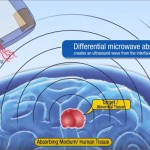
A team of scientists from Stanford University is testing a new “tricorder” technology able to remotely detect abnormal matter, such as buried plastic explosives or even early stage cancers in humans, by manipulating microwaves and ultrasound. The new “radio frequency (RF)/ultrasound hybrid imaging system,” the brainchild of Assistant Professor Amin Arbabian and Research Professor Pierre Khuri-Yakub, was designed for remote detection of embedded objects in a number of different kinds of matter, i...
More

Eye drops with new chemical could clear up cataracts

Scientists have discovered a new chemical that could reverse cataracts, one of the leading causes of blindness. This new substance could be used in eye drops, greatly simplifying the treatment and making it accessible to the general population at a low price and without intrusive procedures. A cataract is a clouding of the lens in the eye leading to a decrease in vision. It can affect one or both eyes, generally evolves slowly, and causes about 50% of all the blindness cases in the world. Catara...
More

MRI shows heart ages differently in women than in men.

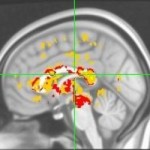
The analysis of MRI scans of the ageing hearts of nearly 3,000 adults was led by investigators at Johns Hopkins.' Our results are a striking demonstration of the concept that heart disease may have different pathophysiology in men and women and of the need for tailored treatments that address such important biologic differences,' said João Lima of the Johns Hopkins University School of Medicine, who led the research. Published in the journal Radiology, this is believed to be the first long-term ...
More

More than 11 moles on your arm could indicate higher risk of melanoma.

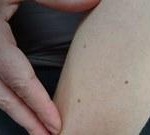
People who have more than 11 moles on their right arm could have a higher risk of skin cancer. Researchers at King’s College London have investigated a new method that could be used by GPs to quickly determine the number of moles on the entire body by counting the number found on a smaller ‘proxy’ body area, such as an arm. Naevus (mole) count is one of the most important markers of risk for skin cancer despite only 20 to 40 per cent of melanoma arising from pre-existing moles. The risk is thoug...
More

Battery-free pacemaker powered by the heart itself

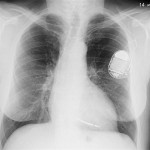
Scientists are developing next-generation battery-free implantable pacemakers that may be powered by an unlikely source, the heart itself. The advancement is based upon a piezoelectric system that converts vibrational energy, created inside the chest by each heartbeat, into electricity to power the pacemaker. "Essentially, we're creating technology that will allow pacemakers to be powered by the very heart that they are regulating," said M Amin Karami, assistant professor of mechanical engineeri...
More

One night of poor sleep equals six months on a high-fat diet

New research finds that one night of sleep deprivation and six months on a high-fat diet could both impair insulin sensitivity to a similar degree, demonstrating the importance of a good night’s sleep on health. This study, conducted by Josiane Broussard, PhD, and colleagues from Cedars-Sinai Medical Center in Los Angeles, CA, used a canine model to examine whether sleep deprivation and a high-fat diet affect insulin sensitivity in similar ways. When the body becomes less sensitive to insulin (i...
More

2015 Nobel Prize In Chemistry awarded for mapping how cells repair damaged DNA.

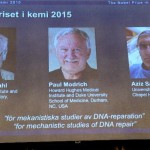
The Nobel Prize in Chemistry 2015 has been awarded to Tomas Lindahl, Paul Modrich and Aziz Sancar “for mechanistic studies of DNA repair.” The three scientists outlined chemical pathways that cells in living things, including human beings, use to repair damaged DNA. "Their work has provided fundamental knowledge of how a living cell functions and is, for instance, used for the development of new cancer treatments," the academy said. The organization tweeted graphics explaining the scientists'...
More

Wasp’s Venom could be a powerful weapon against Cancer

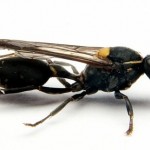
A toxin in Polybia paulista's sting reportedly kills tumor cells without harming healthy ones. It seems like an oxymoron, but scientists say the venom of Polybia paulista, a wasp native to Brazil, fits that description. According to a study published in the Biophysical Journal this week, the wasp’s venom contains a toxin, named MP1, that selectively destroys tumor cells without harming normal ones. The BBC called the venom a potentially powerful “weapon against cancer.” In lab tests, MP1 was ...
More

Lack of sleep zaps cell growth, brain activity.

Lack of adequate sleep can do more than just make you tired. It can short-circuit your system and interfere with a fundamental cellular process that drives physical growth, physiological adaptation and even brain activity, according to a new study from the University of Tennessee, Knoxville. Albrecht von Arnim, a molecular biologist based in the Department of Biochemistry and Cellular and Molecular Biology, studied plants but said the concepts may well translate to humans. His team examined h...
More

Peptide drugs with longer lifespan open new doors for treating diseases.

A research led by scientists from the University of the Pacific holds new possibilities for the treatment of cancer and other diseases using peptide drugs. The researchers concocted a technique to considerably enhance the lifespan of peptides such that they could be used more efficiently. Peptides are small chains of amino acids, the building blocks of proteins. Treating diseases like cancer by using peptides is thought to be effective because they can be more potent, and safer to use than large...
More

Egyptian method filters seawater in minutes

Researchers from the University of Alexandria have developed a cheaper, simpler and potentially cleaner way to turn seawater into drinking water than conventional methods. This could have a huge impact on rural areas of the Middle East and North Africa, where access to clean water is a pressing issue if social stability and economic development is to improve. Right now, desalinating seawater is the only viable way to provide water to growing populations, and large desalination plants are now a f...
More
Posted in Uncategorized Tagged

Scientists Can Now 3D-Print The Building Blocks of Life

Scientists have developed a 3D-printing method capable of producing highly uniform blocks of embryonic stem cells. These cells are capable of generating all cell types in the body and could be used as the ‘Lego bricks’ to build tissue constructs, larger structures of tissues, and potentially even micro-organs. They could also be used for stem cell regulation and expansion, regenerative medicine, drug screening studies, and potentially even for the construction of micro-organs. “It was really ...
More

EyeNetra : Your vision correction Built Into A Headset

A newly launched mobile eye-test device could lead to prescription virtual-reality screens. After five years of development and about 40,000 tests worldwide, the smartphone-powered eye-test devices developed by MIT spinout EyeNetra is coming to hospitals, optometric clinics, optical stores, and even homes nationwide. But on the heels of its commercial release, EyeNetra says it’s been pursuing opportunities to collaborate with virtual-reality companies seeking to use the technology to develop “vi...
More