Magnetic 3D printing from Northeastern could help newborns

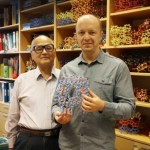
Researchers at Northeastern University are developing patient-specific 3D printed medical devices for newborns. Anything to do with babies tugs at the heartstrings of most anyone, so the idea of patient-specific catheters made to offer greater support to premature newborns is exponentially inspiring. Their innovative designs are different indeed in that they use magnetic fields to mold 3D printed material into customized devices and products. Meant to be more durable, as well as lightweight, Nor...
More

Harvard research focus to treat the progressive loss of eyesight associated with aging at its source

Eye Diseases Eighty percent of Americans fear losing their sight. But, unfortunately, after the age of forty, macular degeneration, and with it cloudy, soft, blurred vision at best, becomes a reality for millions of people. Age-related macular degeneration, and Stargardt disease, the most common form of inherited juvenile macular degeneration, are diseases of the retina that cause a loss of central vision over time. The retina is a layer of light-sensitive cel...
More
Posted in Uncategorized Tagged

Personal robot

Robots are an intriguing technology that can straddle both the physical and social world of people. Inspired by animal and human behavior, MIT's robotic team's goal is to build capable robotic creatures with a "living" presence, and to gain a better understanding of how humans will interact with this new kind of technology. People will physically interact with them, communicate with them, understand them, and teach them, all in familiar human terms. Ultimately, such robots will possess the socia...
More

Microwave camera that can see through the wall

A team of researchers have been working on a handheld camera that sports the technology that can see through the wall using micro wave, additionally future usage envisioned is for cancer detection and aerospace engineering. The camera currently takes 30 images per second by transmitting millimeter and microwaves to a "collector" on the other side of a subject, and then sends them to a laptop for real-time inspection. Aside from being able to see straight through your BVDs, it can also be used...
More
Posted in Uncategorized Tagged

Regenerating teeth now possible

Using lasers to regenerate and grow body parts sounds like science fiction, but researchers have just demonstrated that it might be a tranformative tool in medicine—or at least dentistry—in the future. A Harvard-led team just successfully used low-powered lasers to activate stem cells and stimulate the growth of teeth in rats and human dental tissue in a lab. The results were published today in the journal Science Translational Medicine. Stem cells exist throughout the body, and they fasci...
More
Posted in Uncategorized Tagged

Brain auto pilot mode – a fast track path

The structure of the human brain is complex, reminiscent of a circuit diagram with countless connections. But what role does this architecture play in the functioning of the brain? To answer this question, researchers at the Max Planck Institute for Human Development in Berlin, in cooperation with colleagues at the Free University of Berlin and University Hospital Freiburg, have for the first time analysed 1.6 billion connections within the brain simultaneously. They found the highest agreement ...
More
Posted in Uncategorized

Smart Mice with half Human brain

Smart Mice with half Human brain Mice have been created whose brains are half human. As a result, the animals are smarter than their siblings by professors at the University of Rochester Medical Center in New York. The idea is not to mimic fiction, but to advance our understanding of human brain diseases by studying them in whole mouse brains rather than in dishes. The altered mice still have mouse neurons – the “thinking” cells that make up around half of all their brain cells. But pra...
More
Posted in Uncategorized

‘IQ gene’ and inevitably the possibility of enhancing human intelligence

“IQ gene” and, inevitably, the possibility of enhancing human intelligence. The inspiration for the study of Tang et al. comes from the predominant theory on the cellular basis for learning, called Hebb's rule, which states that synaptic transmission between two neurons will be strengthened if the two cells are simultaneously active and one cell repeatedly excites or causes the other cell to fire. This form of synaptic plasticity called long-term potentiation (LTP) clearly exists, as well as th...
More
Posted in Uncategorized

GMO – Genetically Modified Organisms

Designer Babies Genetically modified babies have DNA from three different adults. Although having DNA from more than two sources can occur naturally (as in the cases of microchimerism and tetragametic chimerism), these 15 babies were created with a method called “cytoplasmic transfer,” which had been banned by the FDA. The method was initially developed to save female eggs that had been difficult to fertilize and was showing much promise—until tracking the growth of the genetically modified b...
More

HIV breakthrough could lead to a cure

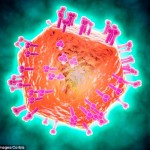
Scientists identify markers on immune cells that 'predict who can stop drug therapy and stay well.' Scientists have discovered the way a patient's immune system responds to HIV infection could offer clues as to whether they will go on to achieve remission after drug treatment. The breakthrough sheds light on the phenomenon known as 'post-treatment control' where the virus remains undetectable in some patients even after medication is stopped. The findings could open new avenues for understand...
More

New crystal captures carbon from humid gas

A new material with micropores might be a way to fight climate change. Scientists have created crystals that capture carbon dioxide much more efficiently than previously known materials, even in the presence of water. The research was recently published in a report in the scientific journal Science. One way to mitigate climate change could be to capture carbon dioxide (CO2) from the air. So far this has been difficult, since the presence of water prevents the adsorption of CO2. Complete dehyd...
More

Seizure-symptom app is latest Apple health research tool

Johns Hopkins researchers today introduced EpiWatch, an app designed to collect data from patients with epilepsy before, during, and after their seizures. The app, which runs on Apple Watch and iPhone, uses the open source ResearchKit framework designed by Apple. The data gathered for the study by the app, including physiological changes, altered responsiveness, and other characteristics of recurrent seizures, will be used by researchers to better understand epilepsy, to develop new methods f...
More

Researchers creating rapid diagnostic test for blood infections.

BYU is leading a collaborative team that has just kicked off a massive multidisciplinary effort to combat a threat to global health, the rising prevalence of bacteria that can’t be treated by antibiotics. Four BYU professors from three colleges have joined forces on the multi-year, National Institutes of Health-sponsored effort to create a faster diagnostic test for drug-resistant blood infections. As it stands now, diagnostic tests for these types of infections can take up to three days to prod...
More

GMO Chickens Could Block Bird Influenza and Prevent Outbreaks

The latest innovative development by Researchers from the University of Edinburgh and the University of Cambridge are genetically modified glow-in-the-dark chickens developed in order to block the bird flu. The genetically modified organism chickens are given a shot of a fluorescent protein. The modified birds contain a protein to differentiate themselves from other chickens. Under ultraviolet light, their beaks and feet emit a haunting green hue. This sets them apart from regular birds To...
More

New Modification Method Could Bring Lifesaving Medications to Market

A safe and efficient technique using cellulose to get drugs to safely reach their target to save lives was created. Xiangtao Meng, a fourth-year graduate student in the College of Natural Resources and Environment has developed a new technique that can get drugs to market, and to patients, that would otherwise fail. Taking medications orally is typically much more practical for patients than methods like intravenous injections, but the bioavailability of a drug the amount that actually rea...
More

New Technology to Monitor Cancer Cells

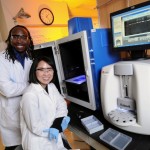
Deborah Kelly, a biologist at Virginia Tech Carilion Research Institute, has developed a "microchip-based toolkit" to watch the breast cancer affiliated BRCA1 gene act inside a human breast cancer cell. This new technology allows scientists to watch cancer cells in action at unprecedented resolution. They can now peer closely into the world of cells and molecules within a native, liquid environment. Kelly and colleagues have developed a way to isolate biological specimens in a flowing, liquid en...
More

Seasonal paradox – why MS symptoms may improve as days get shorter

A new approach regarding Melatonin for MS Symptom Seasonal Variations Harvard-affiliated researchers from the Ann Romney Center for Neurologic Diseases at BWH wanted to understand why symptoms of multiple sclerosis change with the seasons, improving as the days get shorter. They have found an explanation that could lead to a deeper understanding of the disease and more targeted treatment options for patients. Multiple sclerosis is a disease that affects the central nervous system, includin...
More

Potential breakthrough in bid for Alzheimer’s treatment.

A potential drug target has been discovered that could help scientists develop radical new treatments for Alzheimer’s disease. Blocking activity of the protein, known as GPR3, results in toxic deposits thought to play a key role in the disease clearing away from the brain. Laboratory mice suffering from Alzheimer’s-like symptoms showed improvements in learning, memory and social skills when they lacked GPR3, according to research published in the journal Science Translational Medicine. Further t...
More

Scientists discover how to trap cancer cells before they spread.

Researchers at the Francis Crick Institute and the University of Copenhagen have discovered a new way to 'fence in' a tumor and help stop cancer cells from spreading. Tumors cause cells called fibroblasts to stiffen the surrounding tissue so that cancer cells can grip it, allowing them to tunnel through to the blood stream and spread around the body. They showed that adding experimental drugs, reprogrammed fibroblasts helped in stopping them from 'stiffening' the tissue around tumors. This he...
More

UCSB researchers create nanoparticles to act like blood platelets

Researchers at the University of California, Santa Barbara have created nanoparticles that resemble blood platelets that can be used to speed up the healing process and create clots faster to decrease blood loss from an injury. They have turned to the human body’s own mechanisms for inspiration in dealing with the necessary and complicated process of coagulation. By creating nanoparticles that mimic the shape, flexibility and surface biology of the body’s own platelets, they are able to accelera...
More

Artificial Foam Heart Created

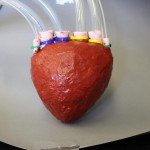
Cornell University researchers have developed a new lightweight and stretchable material with the consistency of memory foam that has potential for use in prosthetic body parts, artificial organs and soft robotics. The foam is unique because it can be formed and has connected pores that allow fluids to be pumped through it. The foam starts as a liquid, so researchers can pour it into a 3D printed mould in order to form the heart, adding appropriate valves to the finished structure. This means...
More

Scientists produce clearest-ever images of enzyme that plays key roles in aging, cancer.

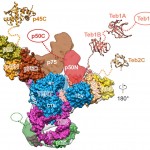
An enzyme called telomerase plays a significant role in aging and most cancers, but until recently many aspects of the enzyme’s structure could not be clearly seen. Scientists from UCLA and UC Berkeley have produced images of telomerase in much higher resolution than ever before, giving them major new insights about the enzyme. Their findings, could ultimately lead to new directions for treating cancer and preventing premature aging. “Many details we could only guess at before, we can now see...
More

Brain cells can be activated by a prosthetic hand.

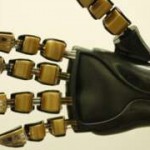
Researchers from Stanford University have improved artificial hands by attaching some flexible sensors on the fingertips, which can generate some electrical signals that can communicate with our brain directly instead of via a processor or a computer to translate back the signals to our brain. Engineers have built a flexible sensor that detects touch and, just like skin, produces electrical pulses that get faster when the pressure increases. They have also used those pulses to drive neuronal ...
More

Predictive technique could help determine breast cancer therapies

Researchers at the Georgia Institute of Technology have developed a predictive model that can provide doctors with an "invasiveness index" for cancer based on blood samples from individual patients, according to a new study. The test is based on chemical expression by specific cells in the body that help cancer move from the breast to other parts of the body. We want women to have more information to make a personal decision beyond the averages calculated for an entire population," said Manu ...
More

COMPASS method points researchers to protein structures.

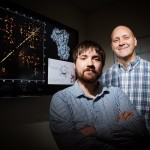
University of Illinois researchers developed a new approach, dubbed COMPASS that points directly to a protein’s likely structure using a combination of advanced molecular spectroscopy techniques, predictive protein-folding algorithms and image recognition software. Led by U. of I. chemistry professor Chad Rienstra, the team published its results in the journal Structure. “We’ve taken a process that would take months and brought it down to hours,” said Joseph Courtney, an Illinois graduate studen...
More

Malaria protein may hold key for cancer cure.

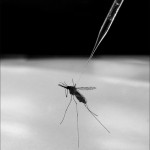
Danish scientists who were working on ways to fight malaria in pregnant women have accidentally discovered that the malaria protein they were using in their vaccine, when armed with a toxin, could kill cancer cells. The test was conducted on mice, and showed that the malaria protein first attached itself to the carbohydrate of the cancer cell, which later was killed off by the toxin. They hope to be able to begin tests on humans in the next four years. For decades, scientists have been search...
More

Skin Cells Converted into Placenta-Generating Cells

Researchers at the Hebrew University of Jerusalem successfully converted skin cells into placenta-generating cells using the reprogramming method. The intent is to help women who have recurrent miscarriage and placental dysfunction diseases give birth to healthy babies, although researchers said more work will need to be done before that is possible. The placenta is the least understood human organ, but arguably one of the most important ones. It influences not only the health of a woman and ...
More

How the Brain Controls Sleep

MIT neuroscientists have discovered a brain circuit that can trigger small regions of the brain to fall asleep or become less alert, while the rest of the brain remains awake. This circuit originates in a brain structure known as the thalamic reticular nucleus (TRN), which relays signals to the thalamus and then the brain’s cortex, inducing pockets of the slow, oscillating brain waves characteristic of deep sleep. Slow oscillations also occur during coma and general anesthesia, and are associate...
More

Novel theoretical approach to reduce antibiotic resistance.

Moffitt Cancer Center researchers have developed novel theoretical approach to reduce antibiotic resistance. The increasing rate of antibiotic resistance and slowing discovery of novel antibiotic treatments presents a growing threat to public health. It is estimated that each year in the United States 2 million people become infected with bacteria that are resistant to one or more types of antibiotics, and at least 23,000 people will die because of these infections. This problem is being exacerb...
More

Study reveals how relaxation could cut health care costs

Relaxation-response techniques, such as meditation, yoga, and prayer, could reduce the need for health care services by 43 percent, according to a study at Harvard-affiliated Massachusetts General Hospital (MGH) that looked at participants in a relaxation-response-focused training program. Previous studies have shown that eliciting the relaxation response, a physiologic state of deep rest not only relieves stress and anxiety, but also affects physiologic factors such as blood pressure, heart rat...
More
Posted in Uncategorized Tagged