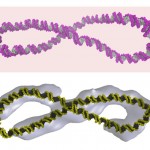


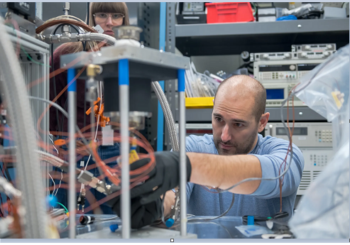

Supercoiled DNA is far more dynamic than the “Watson-Crick” double helix

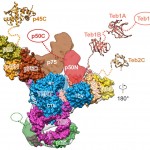
Researchers have imaged in unprecedented detail the three-dimensional structure of supercoiled DNA, revealing that its shape is much more dynamic than the well-known double helix. As reported online today in the journal Nature Communications, the simulations also show the dynamic nature of DNA, which constantly wiggles and morphs into different shapes, a far cry from the commonly held idea of a rigid and static double helix. Improving our understanding of what DNA looks like when it is in the...
More
Posted in Uncategorized

Fossil teeth place humans in Asia “20,000 years early.”

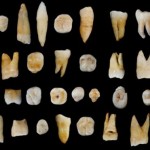
The discovery of 47 human teeth from a cave in southern China has rewritten the narrative of our ancestors' spread out of Africa. Scientists excavating an area in Daoxian say the fossils belong to modern humans and date to at least 80,000 years ago. The date is 20,000 years earlier than had been previously thought, and fills a gap our knowledge on the spread of modern humans around the world. It suggests that modern humans reached southern China from Africa long before they had arrived in northe...
More
Posted in Uncategorized

How the Brain Controls Sleep

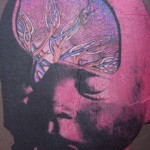
MIT neuroscientists have discovered a brain circuit that can trigger small regions of the brain to fall asleep or become less alert, while the rest of the brain remains awake. This circuit originates in a brain structure known as the thalamic reticular nucleus (TRN), which relays signals to the thalamus and then the brain’s cortex, inducing pockets of the slow, oscillating brain waves characteristic of deep sleep. Slow oscillations also occur during coma and general anesthesia, and are associate...
More
Posted in Uncategorized

Novel theoretical approach to reduce antibiotic resistance.

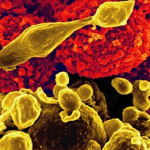
Moffitt Cancer Center researchers have developed novel theoretical approach to reduce antibiotic resistance. The increasing rate of antibiotic resistance and slowing discovery of novel antibiotic treatments presents a growing threat to public health. It is estimated that each year in the United States 2 million people become infected with bacteria that are resistant to one or more types of antibiotics, and at least 23,000 people will die because of these infections. This problem is being exacerb...
More
Posted in Uncategorized

Study reveals how relaxation could cut health care costs

Relaxation-response techniques, such as meditation, yoga, and prayer, could reduce the need for health care services by 43 percent, according to a study at Harvard-affiliated Massachusetts General Hospital (MGH) that looked at participants in a relaxation-response-focused training program. Previous studies have shown that eliciting the relaxation response, a physiologic state of deep rest not only relieves stress and anxiety, but also affects physiologic factors such as blood pressure, heart rat...
More
Posted in Uncategorized

GM pig organs could soon be transplanted into humans

Pig organs could soon be transplanted into patients after Harvard University scientists discovered a way to genetically modify pig DNA so it is more compatible with humans. Scientists have spent decades trying to engineer pig tissue so that it would not be rejected by the human body, but the immune system has always prevented success. A major hurdle in transplanting pig organs into humans has been overcome by the scientists. All pig DNA carries the porcine endogenous retrovirus which infects ...
More
Posted in Uncategorized

Antiviral compound fully protects monkeys from Ebola

Rhesus monkeys were completely protected from the deadly Ebola virus when treated three days after infection with a compound that blocks the virus's ability to replicate. These encouraging preclinical results suggest the compound, known as GS-5734, should be further developed as a potential treatment, according to research findings to be presented tomorrow at the IDWeek conference. Travis Warren, Ph.D., a principal investigator at the U.S. Army Medical Research Institute of Infectious Disease...
More
Posted in Uncategorized

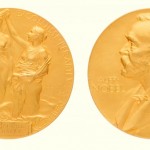
Molecular “kiss of death” wins Noble Prize in Chemistry

Three researchers who unraveled the mechanism behind a molecular kiss of death, a tag that marks proteins for destruction, have been awarded this year's Nobel Prize in Chemistry. Irwin Rose of the University of California, together with Aaron Ciechanover and Avram Hershko from the Israel Institute of Technology in Haifa, transformed cell biology during the early 1980s through their studies of how proteins are broken down inside cells. Their work sparked new ideas about how cells regulate themsel...
More
Posted in Uncategorized

Drones Could Plant 1 Billion Trees a Year

A UK-based startup called BioCarbon Engineering with CEO Lauren Fletcher and his team have a plan for using fixed-wing and multiple-rotor drones to plant 1 billion trees per year. The startup run by a former NASA engineer, is on a mission to fight industrial-scale deforestation, which robs our planet of 26 billion trees each year. The process begins by deploying fixed wing drones to assess areas in need of replanting and create 3-D maps. The drones conduct aerial surveys and produce detailed ...
More
Posted in Uncategorized

Bloodhound: World’s fastest racing car.

The supersonic car built to smash the current land speed record has been unveiled in London. Its top speed is more than 1,000mph an hour which is faster than a speeding bullet, and it is powered by Rolls-Royce jet engines and a rocket. The Bloodhound is part of a £40m project spearheaded by Richard Noble, a man who held the record between 1983-1997 at 633.4mph, to break the land speed record. Noble's record was beaten by RAF fighter pilot Andy Green in 1997, who hit more than 763mph. Now work...
More
Posted in Uncategorized

Scientists explain earthworms’ ability to counteract plant toxins

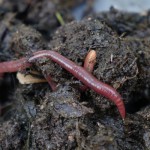
Earthworms have chemical compounds that help them overcome toxic plant defenses to digest difficult leaf litter. Researchers have identified unique chemical compounds in the digestive tracts of earthworm species which counteract the defensive toxins produced by plants, allowing earthworms to consume them safely. Many plants produce defensive chemicals called polyphenols. By binding gut enzymes, polyphenols inhibit the digestion of plant matter. Dead plants retain these chemicals even as th...
More
Posted in Uncategorized

The Dash – completely wireless stereo earphones

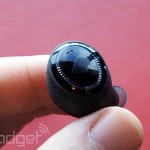
A revolutionary innovation, The Dash consists of a pair of discrete and completely wireless stereo earphones where each earphone is its own, tiny, proprietary computer. Everything about the Dash is focused on delivering freedom of movement, incredible sound and comfort. Music is a part of everyone’s life. It brings joy, excitement and motivation. However it is not always a pleasure listening to music with headphones. Cables tangle and pull at the headphones and ultimately break. In addi...
More
Posted in Uncategorized

The UPP cartridge: New Portable Charger

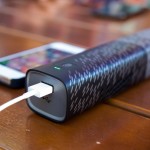
UPP cartridge has a life of 9 years so it is always ready in an emergency. Imagine you have an emergency and your phone is not charged. If you want the ultimate in reliable back up power for use in an emergency or as an everyday extra power source you need an Upp. Upp is a Fuel Cell, not a battery so it does not need any charging from the mains, allowing you to be away from the power grid for longer than conventional battery packs. This is a hydrogen fuel cell charger that can provide u...
More
Posted in Uncategorized

Soft robot to swim through Europa’s oceans

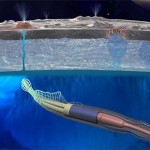
A soft, swimming robot for exploring Jupiter’s moon Europa. A Cornell engineering team has received a nine-month, $100,000 starter grant from NASA to develop a soft, swimming robot suitable for exploring the harsh conditions of other worlds, notably Jupiter’s moon Europa. An amphibious robot that can swim through the oceans of distant moons and planets could be the next iteration of self-sustaining, robotic space exploration. The Cornell team developing this otherworldly robot is led by Ma...
More
Posted in Uncategorized

Underwater kite-turbine scheme

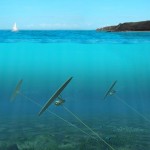
A £25m tidal energy project which works through moving "kites" underwater is being launched on Anglesey. Swedish firm Minesto wants to harness power under the sea off the coast of Holyhead. It will set up its UK offices there and hopes to become a manufacturing centre, creating more jobs there. The so-called Deep Green technology works on the principle that underwater "kites" can reach speeds 10 times faster than the current. This works in the same way a kite flies faster than the wind, and t...
More
Posted in Uncategorized

Manmade Tidal Lagoon could change the future of clean energy.

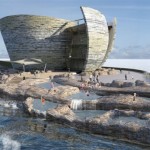
The Swansea Bay Tidal Lagoon will be the world’s first ever plant to generate electricity using its own novel method. Should it prove successful, the plant’s template could be adopted worldwide as a way of generating green power while simultaneously providing sea wall protection to coastal communities. Just outside the Welsh city of Swansea, the U.K. is planning one of the most innovative power plants ever constructed. It’s not the plant’s size that is striking, though it could ultimately pro...
More
Posted in Uncategorized

Mitas AirCell dramatically boosts the performance of tire inflation systems

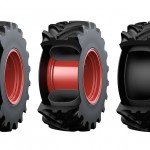
Mitas has introduced AirCell, an inner tire that the company boasts enables the inflation of large agricultural tires by 14 psi (from 11 to 26 psi) within just half a minute. According to Mitas, that is more than 10 times faster than the current method of inflation. Mitas AirCell is located on the rim inside the tire and occupies about 30% of the volume of the tire. Mitas Aircell has been designed for the Mitas 710/75 R42 SFT, other sizes will follow. AirCell is continuously inflated to a max...
More
Posted in Uncategorized

Corning brings Gorilla Glass photo print to India.

US-based Fortune 500 major Corning is launching a online service for the Indian market to get their treasured photographs printed on a high-resolution, scratch-resistant Gorilla glass panels, just like the touch screens on smartphones and tablets. The 160 year old firm, that created the glass casing for Thomas Edison's light bulbs, is a major supplier to Indian auto, pharmacy and telecom firms and has been exporting a part of its optic fibre cables made in India. Apart from entering the Indian c...
More
Posted in Uncategorized

Robot That Builds Its Own Children

Scientists at the University of Cambridge in England have created a mother robot that not only constructs its own children but mimics the process of natural selection to improve their capabilities with each generation. It's a robotic version of nature's survival of the fittest. The mother robot analyzes the performance of each of the “children” it creates, and incorporates preferential traits into the next generation. The Mother robot makes each child better than the last. "As the mother creates...
More
Posted in Uncategorized

How the brain loses and regains consciousness

Massachusetts General Hospital (MGH) investigators have identified specific EEG (electroencephalogram) signatures that indicate when patients lose and regain consciousness under the general anesthetic drug propofol. The study reveals brain patterns produced by the general anesthesia drug which could help doctor’s better monitor patients. "We have discovered highly structured EEG patterns that indicate when people are sedated during administration of propofol, when they are unconscious and whe...
More
Posted in Uncategorized

NASA’s Cassini Probe Spies an ocean under the Icy shell of Saturn’s moon Enceladus

New research using data from its Cassini spacecraft shows a global ocean lies beneath the icy crust of Saturn’s moon Enceladus. NASA’s Cassini mission has confirmed the presence of what it termed a “global ocean” beneath the icy crust of Saturn’s moon, Enceladus and it has managed to deduce the presence of the ocean after analyzing new data from the Cassini mission. This exciting discovery expands the region of habitability for Enceladus from just a regional sea under the South Pole to all of...
More
Posted in Uncategorized

WiFi Nomiku is the world’s first WiFi-enabled immersion circulator

Nomiku allows a temperature-controlled way of cooking conveniently at your home. WiFi Nomiku, the world’s first WiFi-connected immersion circulator is a convenient device for sous-vide cooking with a small footprint, a large screen for displaying recipes, Wi-Fi connectivity to allow communication between chefs and has an app that’s both iOS and Android compatible. Sous vide is the method of cooking vacuum-sealed food in a controlled low-temperature water bath. It is a top chef's secret wea...
More
Posted in Uncategorized

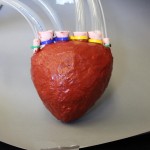
Delivering missing protein heals damaged hearts in animals

Researchers have discovered that a particular protein, Fstl1, plays a key role in regenerating dead heart-muscle cells. Scientists at the Stanford University School of Medicine and their colleagues have enabled damaged heart tissue in animals to regenerate by delivering a protein to it via a bioengineered collagen patch. There is currently no effective treatment to reverse the scarring in the heart after heart attacks. Heart attacks cause millions of deaths annually worldwide and are predi...
More
Posted in Uncategorized

Stem Cells Used to Strengthen Babies’ Bones in the Womb

The first clinical trial injecting fetal stem cells into babies in the womb will start in January and will be led by Sweden's Karolinska Institute and in the UK by Great Ormond Street Hospital. The stem cells will come from terminated pregnancies. It is hoped the cells, which are able to transform into a range of tissues, will lessen symptoms of incurable brittle bone disease. Severe brittle bone disease is rare but can be so devastating that many women decide to end their pregnancy on being ...
More
Posted in Uncategorized

Scientists reveal birth date of earth’s inner core.

A reassessment of ancient rocks has led scientists to estimate that Earth's inner core started to form earlier than was previously thought, around 1.3 billion years ago. As it started to freeze, the core began generating a bigger magnetic field, which continues to today. Earth's active core contrasts sharply with that of our neighbor Mars, whose strong early magnetic field died around four billion years ago. Our planet's magnetic field is generated deep in the planet by the turbulent motion o...
More
Posted in Uncategorized

The plan to store wind energy in giant underwater air bubbles.

A novel plan has been created to store wind energy in compressed air inside giant balloons deep underwater, displacing highly pressurized deep sea water.  It's a controversial compressed air underwater cave energy project in Northern Ireland. A project to compress air into caverns under the seabed will be used, along with gas, to run turbines when the wind does not blow. The search for new ways to produce energy are often complicated and controversial but weather is annoyingly fickle, and so ...
More
Posted in Uncategorized

Unique brain ‘Fingerprint’ offers new method of identification.

Neurologists at Yale University have discovered that it is possible to identify an individual's unique identity by mapping brain activity. Unlike a fingerprint, which is based on the physical structure of a finger or thumb, a brain profile is based on brain activity, which is similarly unique. The research, published in the journal Nature Neuroscience, used data obtained through functional MRI (fMRI) scans to build an individual's connectivity profile. Neuroscientists have found that they can...
More
Posted in Uncategorized

Coffee lowers risk of Parkinson’s, type 2 Diabetes, Five Cancers, and More

Harvard scientists have had coffee under the microscope for years, and last year announced the discovery of six new human genes that relate to coffee, reconfirming existence of two others previously identified. The long-running Harvard Nurses Health Study has found that coffee has protective qualities against type 2 diabetes and cardiovascular disease, and investigators are revisiting a 2001 study finding that it can also protect against Parkinson’s disease. Powell notes that this research at Ha...
More
Posted in Uncategorized

This creature could hold the key to eternal life

Sea anemones are a common sight on many coastlines, and despite their brightly colored appearance it seems they may have more common with humans than people realize. What's more, researchers are wondering whether the creatures could hold the secret to eternal life. Once thought to be plants, sea anemones are soft bodied animals that attach themselves to rocks and coral reefs in shallow waters. Their tentacles inject venom into the small fish and shrimp that brush up against them and guide the...
More
Posted in Uncategorized

How the brain keeps time

Neuroscientists at MIT and Columbia University have now figured out how neurons in one part of the brain measure time intervals and accurately reproduce them. Keeping track of time is critical for many tasks, such as playing the piano, swinging a tennis racket, or holding a conversation. The researchers found the lateral intraparietal cortex (LIP), which plays a role in sensorimotor function, represents elapsed time, as animals measure, and then reproduce a time interval. They also demonstrated ...
More
Posted in Uncategorized