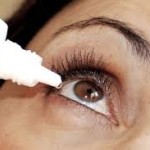
Eye drops with new chemical could clear up cataracts

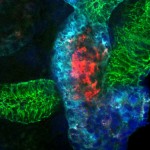
Scientists have discovered a new chemical that could reverse cataracts, one of the leading causes of blindness. This new substance could be used in eye drops, greatly simplifying the treatment and making it accessible to the general population at a low price and without intrusive procedures. A cataract is a clouding of the lens in the eye leading to a decrease in vision. It can affect one or both eyes, generally evolves slowly, and causes about 50% of all the blindness cases in the world. Catara...
More

Tellspec : Predictive intelligence about food.

Tellspec Food Sensor is the world’s first consumer handled device able to scan food at a molecular level. It provides you with the most relevant and useful information about what is in your food so you can make an informed decision that better matches your health needs. The technology includes a three-part system ,a pocket-sized sensor, a cloud-based analysis engine, and a mobile app that work together to scan foods, identify calories, macronutrients, allergens, fiber, sugars, and also provide r...
More

Battery-free pacemaker powered by the heart itself

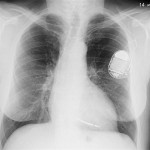
Scientists are developing next-generation battery-free implantable pacemakers that may be powered by an unlikely source, the heart itself. The advancement is based upon a piezoelectric system that converts vibrational energy, created inside the chest by each heartbeat, into electricity to power the pacemaker. "Essentially, we're creating technology that will allow pacemakers to be powered by the very heart that they are regulating," said M Amin Karami, assistant professor of mechanical engineeri...
More

2015 Nobel Prize In Chemistry awarded for mapping how cells repair damaged DNA.

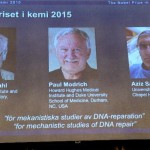
The Nobel Prize in Chemistry 2015 has been awarded to Tomas Lindahl, Paul Modrich and Aziz Sancar “for mechanistic studies of DNA repair.” The three scientists outlined chemical pathways that cells in living things, including human beings, use to repair damaged DNA. "Their work has provided fundamental knowledge of how a living cell functions and is, for instance, used for the development of new cancer treatments," the academy said. The organization tweeted graphics explaining the scientists'...
More

Wasp’s Venom could be a powerful weapon against Cancer

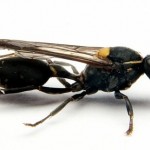
A toxin in Polybia paulista's sting reportedly kills tumor cells without harming healthy ones. It seems like an oxymoron, but scientists say the venom of Polybia paulista, a wasp native to Brazil, fits that description. According to a study published in the Biophysical Journal this week, the wasp’s venom contains a toxin, named MP1, that selectively destroys tumor cells without harming normal ones. The BBC called the venom a potentially powerful “weapon against cancer.” In lab tests, MP1 was ...
More

Peptide drugs with longer lifespan open new doors for treating diseases.

A research led by scientists from the University of the Pacific holds new possibilities for the treatment of cancer and other diseases using peptide drugs. The researchers concocted a technique to considerably enhance the lifespan of peptides such that they could be used more efficiently. Peptides are small chains of amino acids, the building blocks of proteins. Treating diseases like cancer by using peptides is thought to be effective because they can be more potent, and safer to use than large...
More

Egyptian method filters seawater in minutes

Researchers from the University of Alexandria have developed a cheaper, simpler and potentially cleaner way to turn seawater into drinking water than conventional methods. This could have a huge impact on rural areas of the Middle East and North Africa, where access to clean water is a pressing issue if social stability and economic development is to improve. Right now, desalinating seawater is the only viable way to provide water to growing populations, and large desalination plants are now a f...
More
Posted in Uncategorized Tagged

Scientists Can Now 3D-Print The Building Blocks of Life

Scientists have developed a 3D-printing method capable of producing highly uniform blocks of embryonic stem cells. These cells are capable of generating all cell types in the body and could be used as the ‘Lego bricks’ to build tissue constructs, larger structures of tissues, and potentially even micro-organs. They could also be used for stem cell regulation and expansion, regenerative medicine, drug screening studies, and potentially even for the construction of micro-organs. “It was really ...
More

EyeNetra : Your vision correction Built Into A Headset

A newly launched mobile eye-test device could lead to prescription virtual-reality screens. After five years of development and about 40,000 tests worldwide, the smartphone-powered eye-test devices developed by MIT spinout EyeNetra is coming to hospitals, optometric clinics, optical stores, and even homes nationwide. But on the heels of its commercial release, EyeNetra says it’s been pursuing opportunities to collaborate with virtual-reality companies seeking to use the technology to develop “vi...
More

Magnetic 3D printing from Northeastern could help newborns

Researchers at Northeastern University are developing patient-specific 3D printed medical devices for newborns. Anything to do with babies tugs at the heartstrings of most anyone, so the idea of patient-specific catheters made to offer greater support to premature newborns is exponentially inspiring. Their innovative designs are different indeed in that they use magnetic fields to mold 3D printed material into customized devices and products. Meant to be more durable, as well as lightweight, Nor...
More

Personal robot

Robots are an intriguing technology that can straddle both the physical and social world of people. Inspired by animal and human behavior, MIT's robotic team's goal is to build capable robotic creatures with a "living" presence, and to gain a better understanding of how humans will interact with this new kind of technology. People will physically interact with them, communicate with them, understand them, and teach them, all in familiar human terms. Ultimately, such robots will possess the socia...
More

Kidney created from stem cells

Harvard Stem Cell Institute (HSCI) principal faculty at Brigham and Women’s Hospital (BWH) have established a highly efficient method for making kidney structures from stem cells derived from skin taken from patients. The kidney structures formed could be used to study abnormalities of kidney development, chronic kidney disease, and the effects of toxic drugs, and could be incorporated into bioengineered devices to treat patients with acute and chronic kidney injury. In the longer term, these me...
More

Self-Sterilizing Door Handle Keeps Your Hands Germ-Free

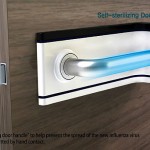
A revolutionary innovation from Yanko Design is a door handle with Self-Sterilization System which puts fears of bacteria-spreading influenza to rest. It is amazing that we never think that the dirtiest part of a public bathroom is likely the door handle and not places like the toilet seat or the paper towel dispenser, as this is one part of the bathroom that everyone touches on their way in or out, regardless of whether they have washed their hands or not. Door handles are a breeding grou...
More

UCSB researchers create nanoparticles to act like blood platelets

Researchers at the University of California, Santa Barbara have created nanoparticles that resemble blood platelets that can be used to speed up the healing process and create clots faster to decrease blood loss from an injury. They have turned to the human body’s own mechanisms for inspiration in dealing with the necessary and complicated process of coagulation. By creating nanoparticles that mimic the shape, flexibility and surface biology of the body’s own platelets, they are able to accelera...
More

Artificial Foam Heart Created

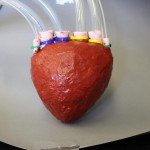
Cornell University researchers have developed a new lightweight and stretchable material with the consistency of memory foam that has potential for use in prosthetic body parts, artificial organs and soft robotics. The foam is unique because it can be formed and has connected pores that allow fluids to be pumped through it. The foam starts as a liquid, so researchers can pour it into a 3D printed mould in order to form the heart, adding appropriate valves to the finished structure. This means...
More

Gene-editing study reveals pathway that could help short circuit blood disorder

CRISPR is able to circumvent the genetic mutation that causes sickle cell disease. The latest Sickle Cell Research from Dana-Farber/Boston Children’s Cancer and Blood Disorders Center is that they have found that changes to a small stretch of DNA may circumvent the genetic defect behind sickle cell disease. They are developing gene-editing approaches to treat the disease and other hemoglobin disorders. This stretch of DNA, called an enhancer, controls a molecular switch that determines whe...
More

Nigerian student creates mobile medical battery back-up system.

A Nigerian product design engineering graduate from the University of Derby in the United Kingdom (UK), Jaiyeola Oduyoye, has created a mobile medical battery back-up system that aids the growth of surgeries taking place in developing countries. Oduyoye, has created a product that provides temporary backup electricity to operate in theatres in developing countries, countries that have difficulty in accessing 24/7 electricity, so that they are able to perform surgeries in their country, rather th...
More

Tension helps heart cells develop normally in the lab.

Stanford researchers Beth Pruitt and Alexandre Ribeiro have discovered that a heart cell matured from stem cells in the lab looks and behaves like a normal adult heart cell when grown in a long, thin shape and on a surface that provides some tension. Pruitt and her colleagues at the Stanford University School of Medicine began working on the problem of how to develop more normal looking heart cells through a Stanford Bio-X grant in 2010. At the time, their goal was to find ways of probing the me...
More

Self-Propelling healing powder stops internal bleeding.

Scientists at the University of British Columbia have developed a self-propelled powder capable of delivering coagulants to hard-to-reach severe bleeding sites, like a ruptured uterus or severed aorta. Kastrup and his research partners developed gas-generating calcium carbonate micro-particles, which can bind with tranexamic acid, a clotting agent, and deliver it to internal bleeding sources. UBC researchers have created the first self-propelled particles capable of delivering coagulants agai...
More

Miniature human kidney grown in a dish.

Miniature human kidneys have been grown in a Petri dish using stem cells as the starting point, report scientists in Australia. The mini-kidneys, measuring up to 1cm, were the equivalent of the developing organ in a 13-week-old foetus. The team say the findings, published in the journal Nature, could lead to new ways of testing drugs and eventually a way of replacing damaged kidneys. Experts said there was still a long way to go. The scientists were mimicking the process that takes place insi...
More

LUMO LIFT- a small gadget that nudges you to stand up straight.

The Lumo Lift is a small wearable device that tracks posture and reminds the wearer not to slouch. The latest innovation from Lumo BodyTech for posture correcting devices, is Lumo lift, a small device that vibrates and reminds you to adjust your stance. The Lift can be clasped to an undershirt, collar or bra strap. The Lumo Lift, which comes in a variety of colors, detects your body's positioning and when you start to slouch, the device vibrates and reminds you to adjust your stance that n...
More
Posted in Uncategorized Tagged

WATCHMAN device offers option to patients with irregular heart beats

FDA approved WATCHMAN Left Atrial Appendage Closure Device is a first-of-its-kind, proven alternative to long-term warfarin therapy for stroke risk reduction in patients with non-valvular atrial fibrillation. The WATCHMAN™ LAAC Device is designed specifically for the left atrial appendage. Featuring an intra-LAA design to avoid contact with the left atrial wall, the WATCHMAN device is engineered to conform to the unique anatomy of the LAA to reduce embolization risk. The device offers a new stro...
More

Fovista® Treatment for wet Age-Related Macular Degeneration (AMD).

Fovista is a promising new treatment for wet AMD is currently in Phase 3 clinical trials. It is designed to target platelet derived growth factor (PDGF) in combination with anti-VEGF drugs to disrupt the formation of abnormal new blood vessels in wet AMD. Patients with wet AMD are helped by drugs that block the growth and leakage of abnormal blood vessels. Currently, the most frequently used drugs that are injected into the eye are Eylea®, Lucentis®, or Avastin®. On average, patients who rece...
More

Protein-based sensor detects viral infection, kills cancer cells

A revolutionary discovery that protein-based sensor could detect viral infection or kill cancer cells. MIT biological engineers is that they have developed a modular system of proteins that can detect a particular DNA sequence in a cell and then trigger a specific response, such as cell death. This system can be customized to detect any DNA sequence in a mammalian cell and then trigger a desired response, including killing cancer cells or cells infected with a virus. This technology is ...
More

CubeSensors monitor your sleeping environment

CubeSensors is a startup that makes small, pretty stylish, connected devices that monitor rooms, feeding back information about air quality, temperature, and other things. They are little boxes containing a few environmental sensors. These let you know how much nasty stuff was in your air and has systems of measuring temperature and humidity. Sense is a sleep tracking device measures temperature, humidity and ambient light. The Cubes that use the new Sleep feature glow gently to remind you wh...
More

A noninvasive way to measure pressure in the brain.

MIT researchers team up with Boston Medical Center and Philips to test a noninvasive way to measure intracranial pressure. Current methods to check for increased pressure in a patient’s brain are invasive. One widely used technique is to drill a hole in the skull to insert a catheter or sensor into the brain tissue. Because of the risk of brain injury and infection, doctors typically only measure intracranial pressure or ICP when a patient is very sick, even though knowledge of this pressure cou...
More

Researchers disguise drugs as platelets to target Cancer

The latest technique that coats anticancer drugs in membranes made from a patient’s own platelets has been discovered. It allows the drugs to last longer in the body and attack both primary cancer tumors and the circulating tumor cells that can cause a cancer to metastasize .The work was tested successfully in an animal model. “There are two key advantages to using platelet membranes to coat anticancer drugs,” says Zhen Gu, corresponding author of a paper on the work and an assistant professor i...
More

UV-light enabled catheter fixes heart defects without surgery

The newly designed catheter device utilizes UV light technology and can be used to place the patch in a beating heart without open heart surgery. Researchers from Boston Children’s Hospital, the Wyss Institute for Biologically Inspired Engineering at Harvard University, Harvard John A. Paulson School of Engineering and Applied Sciences (SEAS) and the Karp Lab at Brigham and Women’s Hospital have jointly designed a specialized catheter for fixing holes in the heart using a biodegradable adhesive ...
More

New prosthetic heart valve offers alternative to open heart surgery

A team of researchers from the National University of Singapore (NUS) have developed a novel prosthetic heart valve, known as VeloX, which can be implanted through a small incision for the treatment of a serious heart valve disorder called mitral regurgitation. This is a condition in which the mitral valve on the left side of the heart does not close properly. The device is particularly beneficial to patients who are of high surgical risk or are unsuitable for existing clinical interventions. ...
More

Kinsa’s Smart Ear wireless thermometer tells you what to do when you are sick.

Kinsa's new, second-generation Smart Ear Thermometer is a wireless thermometer designed to take accurate, instantaneous temperature readings from the ear without the hassles of an attached smartphone or keeping a probe under the tongue. It is designed to read temperatures from the ear, track illness symptoms, and help people take actionable steps Kinsa Smart Ear Thermometer features one-button activation and a screen that displays temperature, battery life, connectivity, and smiley/ frowny faces...
More