Canberra schoolboy William Grame wins trip to NASA for diabetes test-strip invention

William Grame's invention to dispose of diabetics blood testing strips, has won the 11-year-old a trip to NASA. William's invention is a small, plastic disposal unit that fits into testing kits used by diabetics. Diabetics can feed strips into it throughout the day, and dispose them all when it gets full. William has 3D-printed a device that safely stores diabetes test strips. It is well established that diabetes wreaks havoc on people's blood sugar levels, but one thing we don't usually think a...
More

HidrateMe tracks your water intake and glows to remind you.

Sleek and stylish HidrateMe is a connected water bottle that will glow when you need to take a sip. It aims to help you fill up on your H20 with a sensor that monitors your intake and syncs that information up with an app on your smartphone. Should you need more water than you are ingesting, the bottle will glow. Water is an essential part of our daily lives, and we need it to maintain health and fitness. More than 750 million people around the world don’t have access to adequate amounts of s...
More
Posted in Uncategorized Tagged

A new sunblock that does not penetrate the skin

Researchers at Yale have developed a sunscreen made with bioadhesive nanoparticles that is not only waterproof, but does not penetrate the skin barrier, eliminating the health concerns associated with commercial sunscreens. While sunblocks are good at preventing sunburn and decreasing the risk of skin cancer from sun exposure, nanoparticles designed to reflect or absorb cancer-causing ultraviolet light, can go below the skin’s surface and enter the bloodstream. As a result, they pose possible...
More

Young scientist bags Google science prize for Ebola express detection kit.

Olivia Hallisey of Greenwich, won the top prize for her Ebola test kit in the fifth annual Google Science Fair, which honored nine students aged 13 to 18 from all over the world last week. The Connecticut-based sophomore from Greenwich High School invented the much needed "novel temperature-dependent, rapid, simple and inexpensive Ebola detection platform." It could soon be much easier to diagnose Ebola thanks to this student’s new invention. Aid workers in Ebola-stricken regions could soon b...
More

A mirror that monitors vital signs

Wish you could check your vital stats while brushing your teeth? Thanks to the new innovation by MIT PhD student Ming-Zher Poh, reading your pulse and other vital stats may someday be as easy as standing in your bathroom. Working with public-domain software, Poh developed a way to measure the pulse by analyzing subjects sitting in front of a two-way mirror. The MIT Media Lab Medical Mirror is equipped with a computer monitor along with a built-in camera that tracks changes in brightness pr...
More

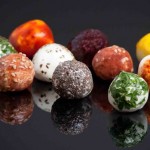
Wikipearls: Bite-sized foods wrapped in edible Food packaging

WikiFoods, Inc. has developed a revolutionary, plastic-free food and beverage packaging technology that delivers Triple Good called WikiPearls™ which are good for you, good for the environment, and just plain good. Created by David Edwards, a Harvard professor and biomedical engineer, the intention of the WikiPearl is to kill the packaging and make its relationship with food symbiotic. WikiPearl skins are inspired by the way nature packages fruits and vegetables. These skins are delicious ...
More

Scientists produce cancer drug from rare plant in lab

Stanford scientists produce cancer drug from rare plant in lab to benefit human health. Elizabeth Sattely, an assistant professor of chemical engineering at Stanford, and her graduate student Warren Lau have isolated the machinery for making a widely used cancer-fighting drug from an endangered plant. Many of the drugs we take today to treat pain, fight cancer or other diseases were originally identified in plants, some of which are endangered or hard to grow. In many cases, those plants a...
More

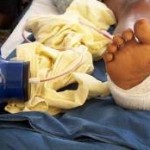
Inexpensive, Portable Wound-Healing Device

A novel and inexpensive device known as the wound pump has been invented by Daielle Zurovcik, which is a portable wound-healing device. This negative pressure pump helps to heal acute and chronic wounds, which will be affordable to low-income populations because it does not need electricity or batteries to operate and has a unique, simplified design. After surgery a patient requires care for an amputated limb or the open wounds of a fractured bone. Vacuum pumps speed healing by removing ba...
More

No More Needle Injections with Micro-Poration

Micro-poration is a painless method of transferring medication through the skin. The latest invention called micro-poration is a painless method of transferring medication (intraepidermal) into the body using laser technology. It is an alternative to injecting a needle. A handheld laser creates micro pores in the epidermis of the skin for the transfer of molecules. This device delivers medication and vaccinations directly through the skin. As an alternative to injecting a needle, mic...
More

A revolutionary way to treat acne with nanoparticles

Lauric acid – a natural product found in coconut oil and human breast milk -- shines as a possible new acne treatment. A revolutionary and Innovative system of using ‘nano- bombs’ to treat acne has been developed by Dissaya Nu Pornpattananangkul, a doctoral bioengineering student at the University of California San Diego . Common acne also known as "acne vulgaris," afflicts more than 85 percent of teenagers and over 40 million people in the United States and current treatments have undesir...
More

Israeli Mini-Scanner Can Tell The Difference Between Food, Drink or Pills

An Israeli start-up has launched a pocket device which analyses instantly the composition of food, drink, medication or other objects. It is the first molecular sensor that fits in the palm of your hand. The process it uses is simple. Its SCiO tool sends data on the chemical makeup of a substance to the user's smartphone, where a variety of applications will present the results. The SCiO does not need physical contact with the substance being tested because it uses a beam of light in wh...
More

Ebola color coded Protection Suit

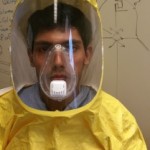
The Johns Hopkins University’s has developed a new personal protective suit for front-line health care workers in Ebola. The suit uses technology originally designed by Johns Hopkins to keep cancer patients comfortable. This new suit is color coded to show what surfaces are safe to touch when removing it. The suit, intended for use in future Ebola outbreaks like the 2014 epidemic that killed thousands in West Africa, has elements to keep the wearer more comfortable than existing suits, reduce...
More
Posted in Uncategorized Tagged

Next generation intuitive programable robot

NAO is a 58-cm tall humanoid robot developed by ALDEBRAN Japan. It's a programmable robot that can function based on AI and app(function based) like program. Aldebaran created NAO to be a true daily companion. He is the little creature who helps you be your best. His humanoid form and extreme interactivity make him really endearing and intuitive Dedicated communities of developers have recognized potential for the robot to be a powerful and incredibly expressive medium for creating applica...
More
Posted in Uncategorized

3D-printed toothbrush cleans all Your teeth in 6 Seconds

Imagine if you could brush your teeth in six seconds. Bizzident is the 6 Second toothbrush that provides a faster and better way to brush your teeth. This new and revolutionary technique of brushing has just been developed by a team of dentists who have created a toothbrush which they claim can clean teeth thoroughly in such a short amount of time. The process of ordering one of these custom-fit brushes begins in your dentist's office. Your dentist takes an impression of your teeth and sen...
More

Ultra-Flexible Devices to Monitor the Brain

Brain activity can be monitored with tiny flexible electronics which could roll up to fit in a pocket. Charles Lieber, a nanoscientist and nanotechnologist at Harvard University, has designed latest ultra-thin electronics flexible enough to get stuffed into the needle of a syringe with a diameter as small as the average width of a human hair. Currently available flexible electronics are usually flat sheets, designed to lie on surfaces. They help to monitor and manipulate living tissue but ...
More

OncoSec’s novel intratumoral therapies

OncoSec Medical Incorporated ("OncoSec") has designed "smart" catheter-based devices to perform minimally invasive intratumoral immunotherapy. The new catheter-based electrodes are designed to be compatible with standard medical instruments which can access deep visceral tumors and are capable of treating the tumor. These all-in-one devices have the ability to inject a DNA-based agent while deploying electrodes to perform electroporation in a single procedure. They have an adjustable ne...
More

Facial replacement via 3D printing

Amazing innovative technology was created to rebuild the human face with 3D printing in silicone. English chemist Frederick Kipping did his pioneering work on the study of the organic compounds of silicon which led to synthetic rubber and silicone-based lubricants used to enhance the decollete of dancers, seal fish tanks and now rebuild the human face. Industrial designer Tom Fripp was contacted by researchers at the University of Sheffield and asked if it would be possible to print struct...
More

Rubber That Can Use Energy from body movements to Generate Power

Power-generating rubber material could harness walking and other movement to charge electronic devices. Researchers at Princeton University have recently invented a new energy-harvesting rubber material composed of ceramic nanoribbons that could harvest energy from your breathing and walking. This material is composed of ceramic nanoribbons embedded onto silicone rubber sheets which generates electricity when flexed and is highly efficient at converting mechanical energy to electrical ener...
More

Nest: The Smart Thermostat

Tony Fadell who invented the iPod and the iPhone has developed a new thermostat called 'Nest'. The slimmer and sleeker Nest Thermostat includes many features, one of which is a bigger, sharper display which saves energy. Nest is a thermostat that utilizes artificial intelligence and learns from manual adjustments. It uses sensors to detect room temperatures and can also know whether a room is occupied or not. It can interact with you directly or communicate with you over the internet throu...
More

Pocket Breathalyzer for measuring blood alcohol content

The iBAC alcometer is a thumb-sized, portable, breathalyzer spectrometer that measures your blood alcohol content in a way that is similar to tests done at a laboratory. It transmits the breathalyzer reading to your smartphone via Bluetooth where an application containing your bio data such as your weight and other physical characteristics analyzes the results in about a minute. It will measure your degree of sobriety, your alcohol burning rate and will even forecast when you will have a z...
More

Smart Pills for collecting data inside the body

Imagine if a vitamin sized pill could collect medical data from your body. Companies such as SmartPill have come out with wireless devices contained in tiny capsules to collect information from inside the body. The SmartPill capsule includes miniaturized sensors or cameras, a printed circuit board and tiny batteries that work to collect medical data as it makes its way through a person's gastrointestinal tract. Once swallowed, the device collects the required information, stores the data a...
More

Contacts lenses that changes color when sugar levels change in the blood

Smart contact lens, created by a University of Western Ontario professor, help measure blood glucose levels for people with diabetes. An ongoing innovative research of a new Smart Lens by Jin Shang, a professor of biochemical engineering at the University of Western Ontario is a contact lens that changes color when sugar levels change in the blood. Diabetes is a huge and growing problem affecting one in every 19 people on the planet. It is a daily struggle for people with diabetes to keep ...
More

Ultra-flexible, Ultra-Thin Devices Developed to Monitor the Brain

Brain activity can be monitored with tiny flexible electronics which could roll up to fit in a pocket. Charles Lieber, a nanoscientist and nanotechnologist at Harvard University, has designed latest ultra-thin electronics flexible enough to get stuffed into the needle of a syringe with a diameter as small as the average width of a human hair. Traditional electronics are rigid and the procedures to measure brain activity would involve surgery; surgeons would make an opening equal to the siz...
More

Revolutionary Invention Created to Build Human Organs

A new technology that  uses three dimensional human tissues to build organs. Organovo is an early-stage medical laboratory and research company which designs and develops three dimensional human tissue for medical research and therapeutic applications. The latest science invention from Organovo is a technology (novogen) which allows living tissue cells to be assembled into patterns and complex structures such as organs. Organovo has partnered with Invetech., a company based in Australia to...
More

A Novel Stethoscope Save Costs and Save Lives

A new cardiac stethoscope funded by the National Science Foundation (NSF) helps doctors detect heart failure more effectively than ever before. Despite advances in medicine that make many heart conditions treatable, the absence of effective, early diagnosis often leads to sudden, unexpected deaths. Annually more than one million patients are hospitalized due to heart failure and the cost of health care services, medications to treat heart failure etc. are tremendous. Furthermore most of the p...
More

Amazing Water Drop Lenses

A new discovery has led to the creation of liquid optical lenses. Bruno Berge, physicist and inventor, has created liquid optical lens by a process known as electro-wetting. In this process, a water drop is deposited on a metal substrate and covered by a thin insulating layer. When a voltage is applied to the metal, it modifies the angle of the liquid drop. The liquid lens is comprised of two liquids, water and oil; one is a conductor while the other is an insulator. A variation in the ...
More

Atmospheric Water Generators that Make Water from Air

The WaterMill WM-200 is unlike any other water collection device. It is an  intelligent system that can regulate itself to produce pure water for a healthy family and environment. Johathan Ritchey has invented this novel device, which is essentially an atmospheric water collection device that condenses water vapor and purifies it. Originally designed for areas that do not have clean drinking water, the Watermill is for households that need an eco-friendly, cost effective alternative to bot...
More

Stick-on Micro-Electric Medical Tattoo Invented

A novel stick on tattoo has been developed that can effectively measure data about the human heart, brain waves and muscle activity. The latest in medical invention is new type of ultra-thin, self-adhesive electronic device that can effectively measure the aforementioned vital signs without the use of bulky equipment, conductive fluids, or glues. This product is in the form of a tattoo which has to be applied to the skin like any ink transfer tattoo. It is made from a rubbery polymer subst...
More

Life-Saving Infant Incubator That Requires No Electricity

A new portable and reusable infant incubator that requires no electricity and minimal costs was invented by Jane Chen and Rajan Patel. These two innovators came up with an innovative infant warmer which is simple, energy-efficient, and cost-effective. Every year 20 million babies are born premature with low birth weight and they struggle to survive because they cannot regulate their body temperature and they don't have enough fat on their tiny bodies to keep warm. The solution is to kee...
More

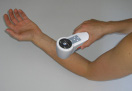
Tenease – A New treatment for Tennis Elbow

A new medical device called Tenease  has been developed by Ranjan Vhadra, a leading orthopedic surgeon for the treatment for tennis elbow.  The disease itself is a chronic condition caused by damage to the fibres of the elbow which lead to weakness and pain. As this is a common condition, it may affect most adults at some stage in their lives. Vibration therapy has proven to be the most effective method for treating tennis elbow and can also help reduce pain by more than 40 percent; however, ...
More