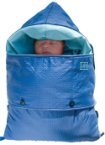
Life-Saving Infant Incubator That Requires No Electricity

A new portable and reusable infant incubator that requires no electricity and minimal costs was invented by Jane Chen and Rajan Patel. These two innovators came up with an innovative infant warmer which is simple, energy-efficient, and cost-effective. Every year 20 million babies are born premature with low birth weight and they struggle to survive because they cannot regulate their body temperature and they don't have enough fat on their tiny bodies to keep warm. The solution is to kee...
More
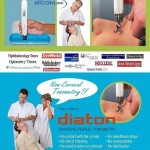
Painless Glaucoma Diagnostic Device

BioCOM Inc. has made a convenient pain-free tonometry device to detect glaucoma. The latest Glaucoma IOP Eye Test THROUGH THE EYELID technology by BiCOM Inc. with the DIATON tonometer enables any healthcare professional to quickly and painlessly determine whether a patient has glaucoma and take preventive measures or determine treatment plans to save eyesight. In a study published by the British Journal of Ophthalmology, the number of people with glaucoma worldwide is expected to be 79.6 m...
More

Tenease – A New treatment for Tennis Elbow

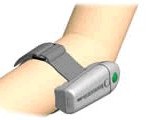
A new medical device called Tenease  has been developed by Ranjan Vhadra, a leading orthopedic surgeon for the treatment for tennis elbow.  The disease itself is a chronic condition caused by damage to the fibres of the elbow which lead to weakness and pain. As this is a common condition, it may affect most adults at some stage in their lives. Vibration therapy has proven to be the most effective method for treating tennis elbow and can also help reduce pain by more than 40 percent; however, ...
More

Non-Toxic Sterilizing Spray Invented

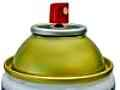
An innovative product promises dirt and germ free surfaces without using toxic coatings. This latest science invention from the Saarbrücken Institute for New Materials in Turkey and patented by Nanopool GmbH Germany is a spray-on invisible thin glass coating that sterilizes, protects and strengthens surfaces. It is a flexible and breathable spray-on glass film which repels water, dirt, stains, fungus, bacteria and viruses. The film is approximately 500 times thinner than a human hair and h...
More

Portable water purification device for the ultimate traveler

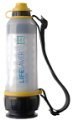
 Inventor Micheal Pritchard has found a solution for safe drinking water with a handheld water purification device that creates fresh water instantly. The LifeSaver bottle provides refreshing, germ free water anywhere. The bottle itself is designed to be uncomplicated and user friendly. This bottle consists of long lasting cartridges which help remove viruses and bacteria from contaminated water. One just needs to pump the products manually a few times and pristine drinking water will start t...
More

Contact Lenses Deliver Medicine to Treat Eyes

Scientists at Harvard Medical School have developed soft contact lenses which can ‘dispense' prescription drugs over a period of weeks to the exact spot they are needed. Eye drops are used to dispense most eye medications but they are inefficient in several ways. Only about 1 to 7 percent of eye drop medications are absorbed into the eye because most of it drips out; drugs applied to the eyes in this manner may be washed out after only thirty minutes or so. To add, patients find eye drops cum...
More

Laser Lights and Viruses: Novel Additions to Biosensors

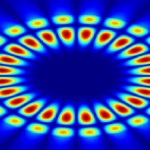
New biosensors use suits of light and virus-filled fibers for accurate and timely detection to improve safety. Researchers funded by the National Science Foundation (NSF) are creating a new biosensor that uses laser light and engineered viruses, created with advanced manufacturing techniques, to more accurately detect the smallest amounts possible of biological molecules in our food, water or blood. Health tests conducted for pregnancy and blood sugar involve putting a drop of fluid on a t...
More

Clues to Waterproof Glue Found in Antarctic Creature

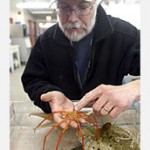
Scientists are recycling nutrients in the oceans to make waterproof glue. Today, animal glues made from bone glue, hide or skin glue, and fish glue are sparsely used for making and restoring objects, paintings, and illuminated parchment manuscripts due to difficulty of storage in a wet state and constant requirement for fresh raw materials. For 20 years, Sam Bowser, a scientist at the New York State Department of Health's Wadsworth Center, has been doing research on a single-celled creatur...
More

HipGrid: The latest non-invasive measurement system for Hip Replacement

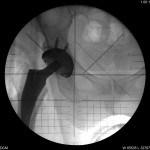
Invented by orthopedic surgeons, HipGrid™ is one of the latest non-invasive measurement systems for hip replacement. This measurement system surgeons is used during operations to access the implant position and restoration of anatomic alignment of the patient. With the help of this technology, they can visualize and quantify where the implants are positioned in relation to key anatomical landmarks while operating. Patients rely on their surgeons' ability to ensure proper positioning and align...
More

The Assisi Loop: Non-invasive pain relief treatment for pets

The Assisi Loop provides non-invasive pain relief therapy for pets, an alternative to conventional drug-based treatments. Assisi Animal Health is a science-based company specializing in offering clinical therapeutic solutions to veterinarians or by veterinary prescription to pet owners. As of today, non-steroidal anti-inflammatory drugs are the primary therapy mode for treating pain in animals. Yet they account for the largest number of adverse drug reactions as reported to the FDA. To add...
More

MARVEL and 3D brain surgery

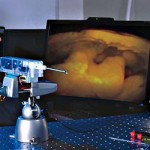
MARVEL is the world’s first 3D, high definition endoscope under 4mm with rotating tip . MARVEL which stands for Multi Angle Rear Viewing tool, has just received the award for Outstanding technology from the federal laboratory Consortium for Innovation in brain surgery Industry today has shifted from open skull operations to the latest techniques in which a tiny camera and tools are inserted through a small hole in the brain called an endoscope, a device that examines the interior of a body...
More

Freespira a new, non-pharmaceutical treatment for panic disorder

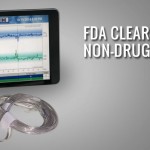
A novel non-drug treatment, the Freespira Breathing System, can train individuals with panic disorder to adjust their breathing, reducing the number of panic attack occurrences substantially—all at home. Individuals with panic disorder have a different breathing pattern than others, even during times when they are not having a panic attack. Scientists have proved this difference through research that has shown varying respiration rates and exhaled CO2 levels between those with panic disorder ...
More

Digital Nose that can “sniff out” disease

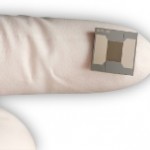
Many of us have heard the claims that dogs – with their acute sense of smell – have “sniffed out” disease in their owners. So, what if a technology could be developed that allowed humans the same type of “superpower"? In fact, such a technology is not very far-fetched at all. Dr. Andrew Koehl, a researcher who originally started to develop the sensor-based technology at the University of Cambridge and has since continued to develop it at Owlstone Nanotech, has invented a microchip spectromete...
More
Posted in Uncategorized

Trigger for stress processes discovered in the brain

At the Center for Brain Research at the MedUni Vienna an important factor for stress has been identified in collaboration with the Karolinska Institutet in Stockholm (Sweden). This is the protein secretagogin that plays an important role in the release of the stress hormone CRH and which only then enables stress processes in the brain to be transmitted to the pituitary gland and then on-wards to the organs. If, however, the presence of secretagogin, a calcium-binding protein, is suppressed, t...
More
Posted in Uncategorized

Virus can spread around an entire building within just hours of contaminating one surface

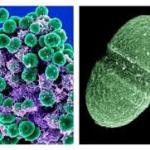
A virus can spread around a whole building within two hours of coming into contact with just one surface, a new study has found, presented at the 54th Interscience Conference on Antimicrobial Agents and Chemotherapy (ICAAC) in Washington. A team at the University of Arizona, Tucson found that when a virus, for example the Norovirus, contaminates a single doorknob or elevator button it spreads rapidly through entire office buildings, hotels or hospitals. The team, led by microbiologist Char...
More
Posted in Uncategorized