
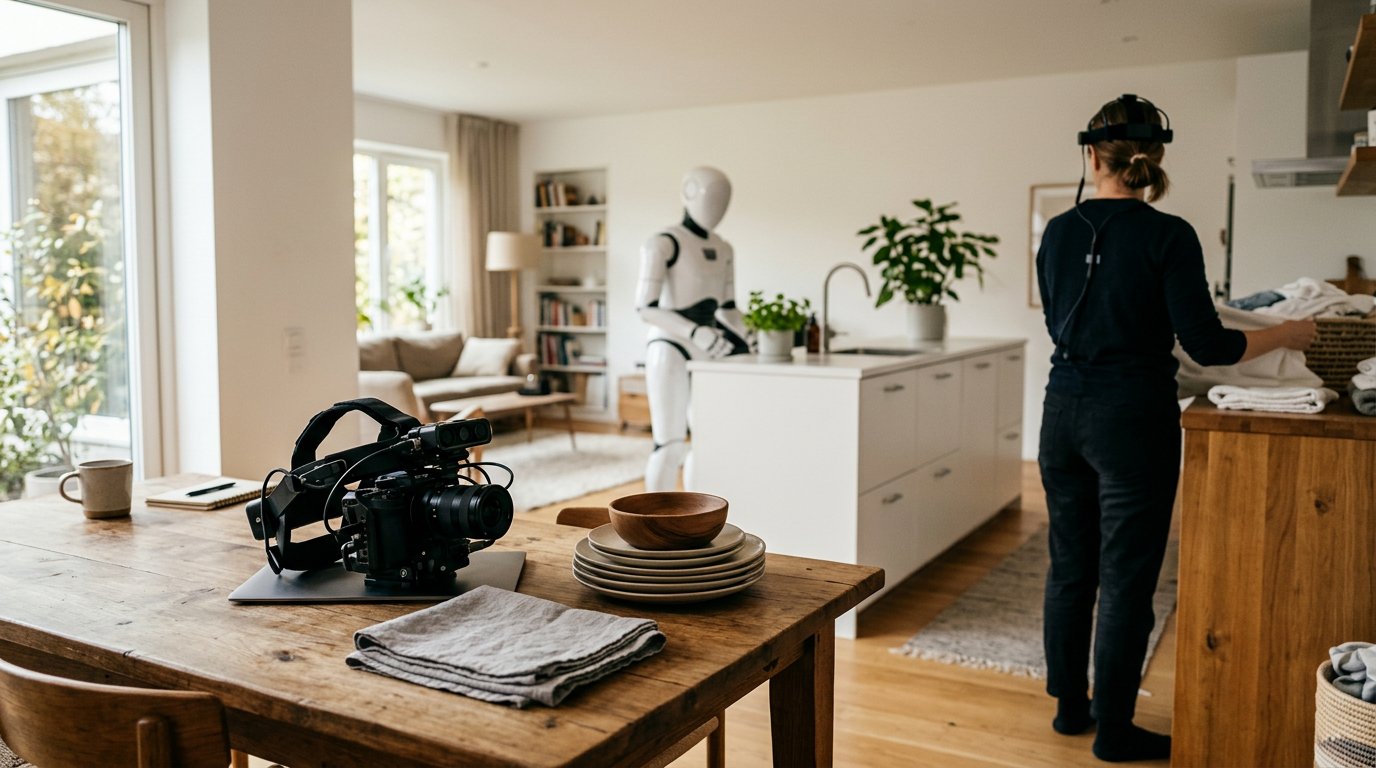
Large language models learned to write by reading the internet. Robots have no such library. To learn how to fold a shirt, screw on a bottle cap or stack plates without smashing them, they need to watch people do it, thousands of times, from angles that match a robot’s own eyes and hands. That has created a new kind of work: recording videos for physical AI training. One of the companies doing it at scale is Objectways, a data firm with roots in Arizona and the southern Indian town of Karur, which now bills itself as “the real-world data engine for physical AI.”
Who Objectways is
According to its About page, Objectways was founded in the US in August 2018 to supply human-labelled training data, opened its first Indian office in January 2019 with 25 annotators, and had grown past 2,200 employees by January 2024, with offices in Phoenix and Scottsdale, Arizona, and in Karur, Coimbatore and Chennai in Tamil Nadu. Its founder and CEO, Ravishankar (Ravi) Rajalingam, was previously a lead architect at Databricks. The company’s homepage claims more than 500 million data labels created and over 100 customers, and lists SOC 2 Type II, ISO 27001 and HIPAA among its certifications.
For most of its life Objectways did classic annotation work: drawing boxes on images, labelling text, moderating content. Rajalingam told CNN in April 2026 that he previously supplied data for virtual assistants and self-driving cars before shifting his focus to robotics in 2025. Today the homepage pitch is blunt: the company helps robotics firms “collect, generate, annotate, and validate the multimodal data required to train intelligent machines,” turning “real-world actions into training data.”
Why robots need video of people
Developers call first-person footage of human work “egocentric data.” As Prathosh A.P., a professor at the Indian Institute of Science, put it to NPR, today’s AIs are “brains without a body” that must now be given motor skills. CNN reported that recording people is cheaper than operating fleets of real robots and more realistic than pure simulation, and cited a February 2026 Nvidia research report in which adding more than 20,000 hours of first-person video to robot training improved success on tasks such as rolling T-shirts and unscrewing bottle caps by more than 50%.
Objectways’ embodied AI page lists the real-world tasks it captures: household activities, assembly and maintenance, repair and inspection, tool-based interactions and skilled manual tasks, delivered as egocentric viewpoints, RGB-D streams, action-focused clips and synchronised sensor data.
Recording Videos for Physical AI Training: Five Examples
Objectways’ public dataset catalogue, together with reporting from inside its Karur facilities, shows what this work looks like in practice. Here are five examples.
1. First-person household chores
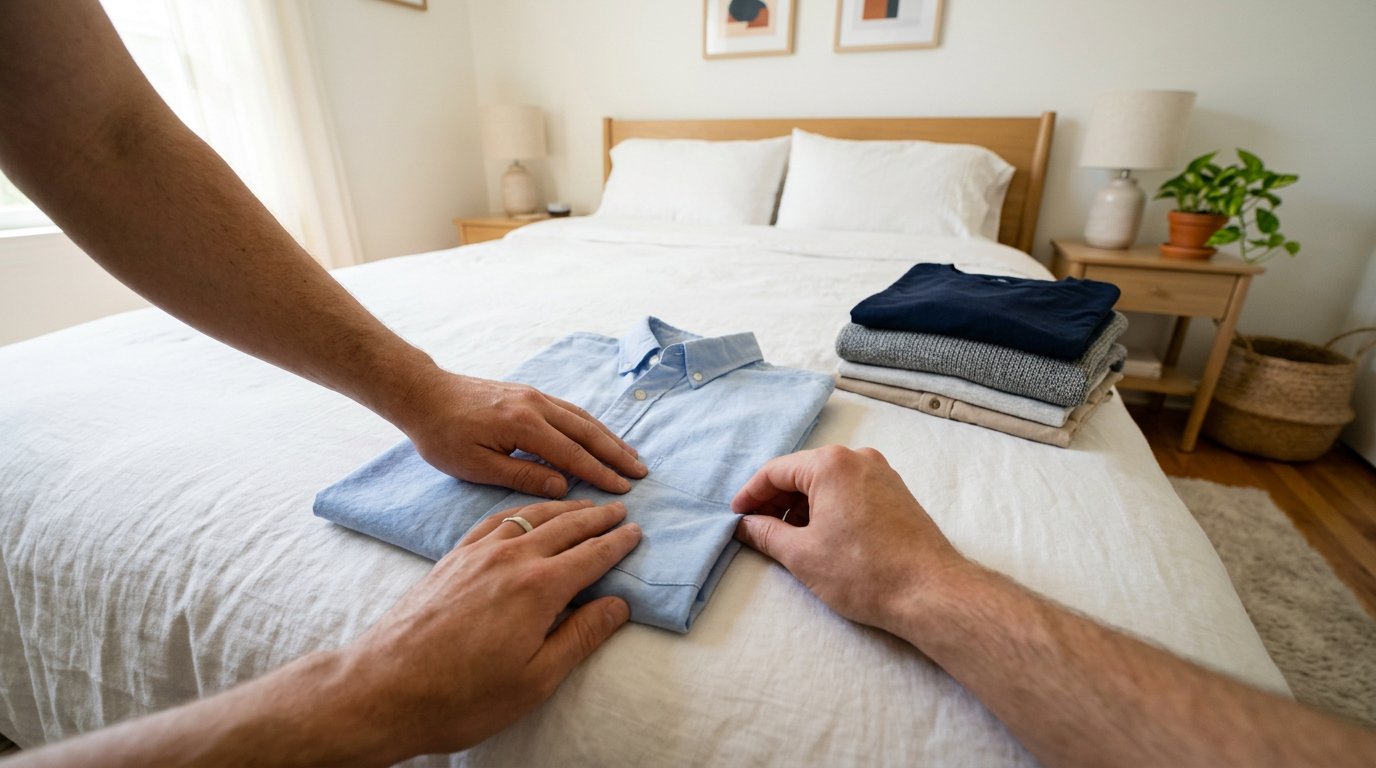
The most common format is a person wearing a head-mounted camera or a phone on a headband while doing housework. Objectways’ egocentric video catalogue lists clips such as “folding clothes bedroom,” “cleaning stove kitchen,” “organizing vessels kitchen” and “arranging things bathroom,” recorded as 1080p MP4 at about 30 frames per second. NPR visited a floor in Karur fitted out like an Ikea-style three-bedroom house, where a worker recorded herself chopping onions in a mock kitchen, and met a 24-year-old contractor who records folding, mopping and dishwashing at home for about US$2.60 an hour.
2. Handheld robot-gripper demos (UMI)
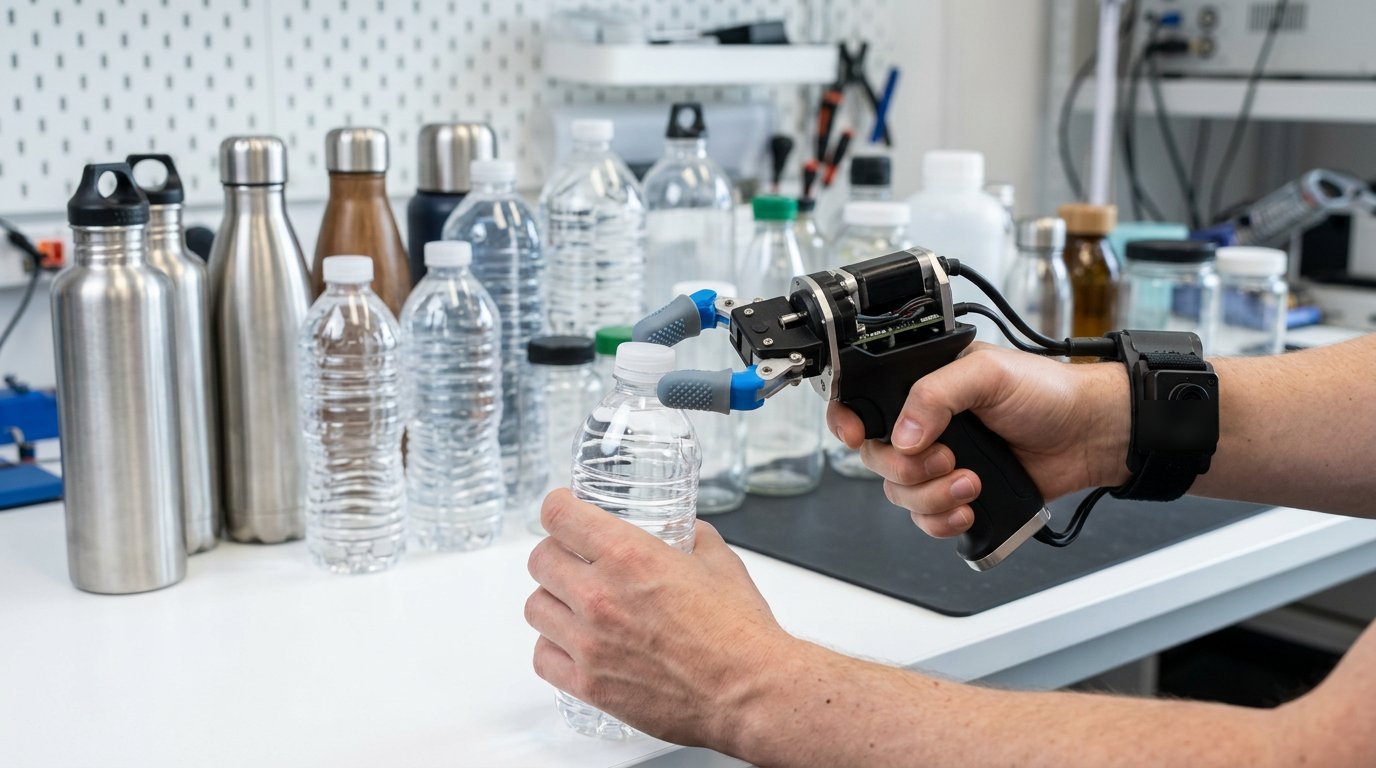
Human hands are not robot hands, so some recordings put a robot’s gripper in a person’s fist. Objectways sells UMI gripper datasets, “in-the-wild wrist gripper demos,” with single- and double-handed episodes filmed at up to 3840 x 3360 resolution. NPR watched young men in Karur, GoPros strapped to their heads, use grippy claws to screw lids on and off dozens of bottles of different sizes and materials. Employee Rajeshkumar Ramaswamy said each action is repeated about 100 times so a robot can learn what a water bottle is and how to handle it; he called this “exocentric” data, seen from the robot’s point of view.
3. Teleoperation sessions
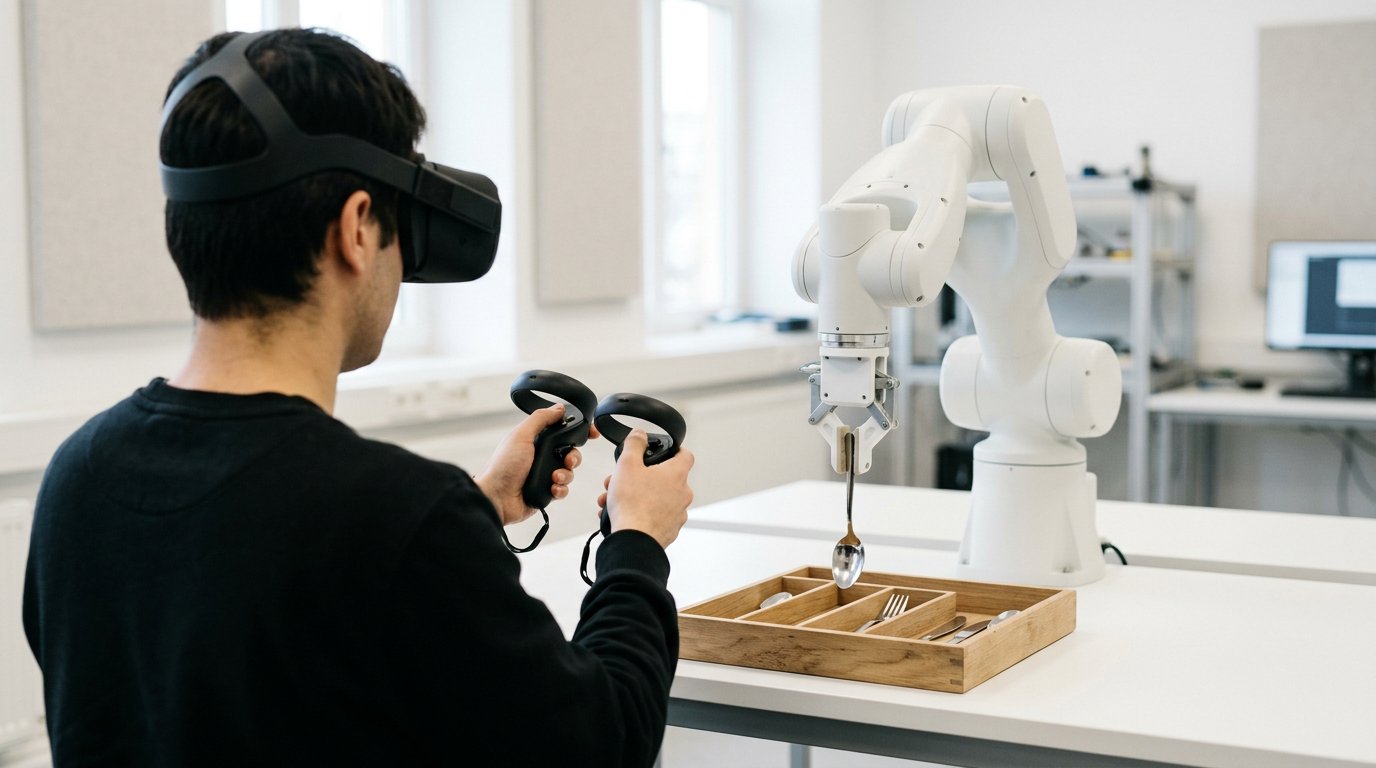
In teleoperation, a person drives a real robot remotely and the system records both what the robot’s sensors see and the operator’s control commands. Objectways’ data collection page says this pairing “provides impactful insights into how robots should act” and supports uses from warehouse fulfillment and industrial safety checks to household help and navigation. Its teleoperation catalogue includes tasks such as organizing cutlery, stacking plates, unstacking bowls, sorting objects by size or colour, classifying fruits and vegetables and folding a T-shirt.
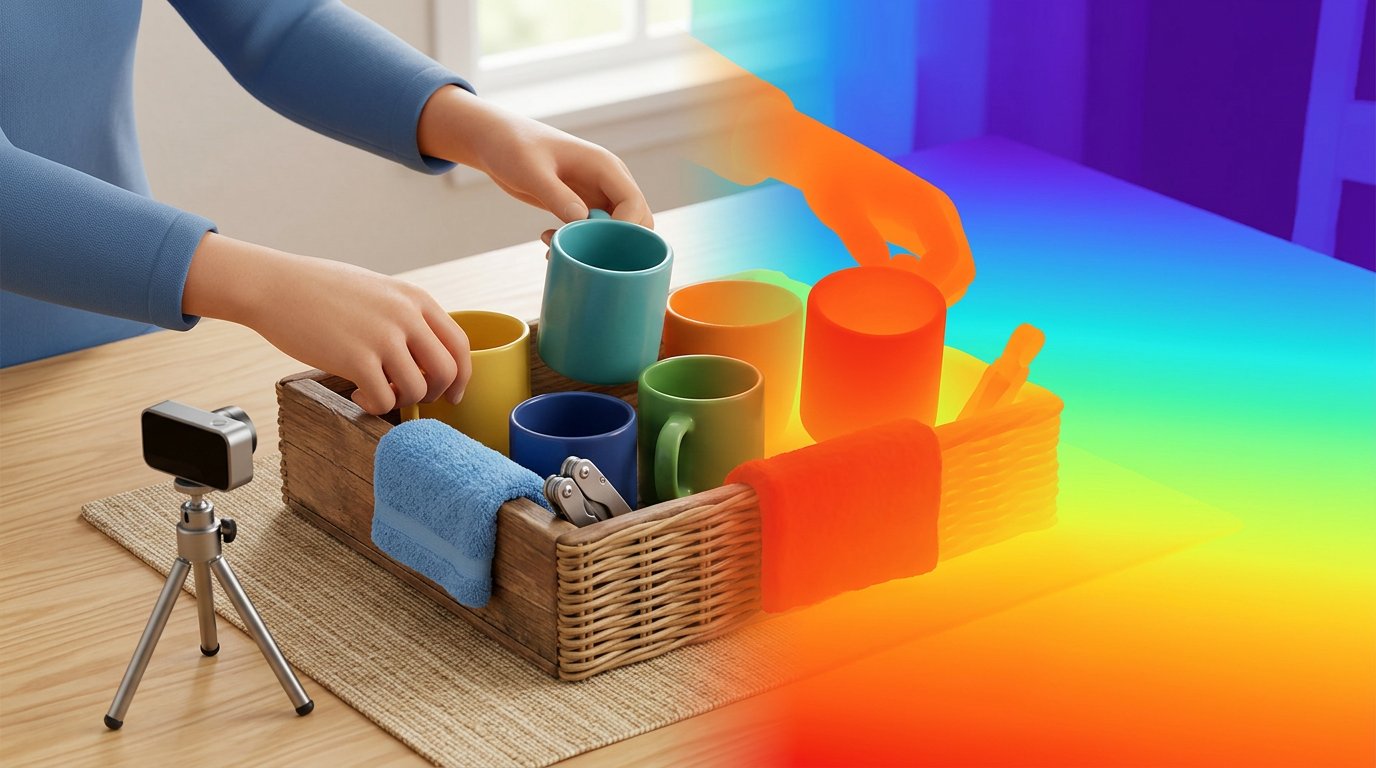
4. Depth (RGB-D) video of tricky moments
Ordinary video is flat; robots also need to judge distance. Objectways offers depth video datasets rendered as colour-coded depth maps, with task names that read like a list of what robots still find hard: multi-object reasoning, precision placement and alignment, deformable object manipulation, container interaction, tool usage, dynamic scenes, edge cases and rare scenarios, and failure recovery and retry. Recording a person fumbling and then correcting a grasp is useful precisely because robots will fumble too.
5. Workers filming factory jobs
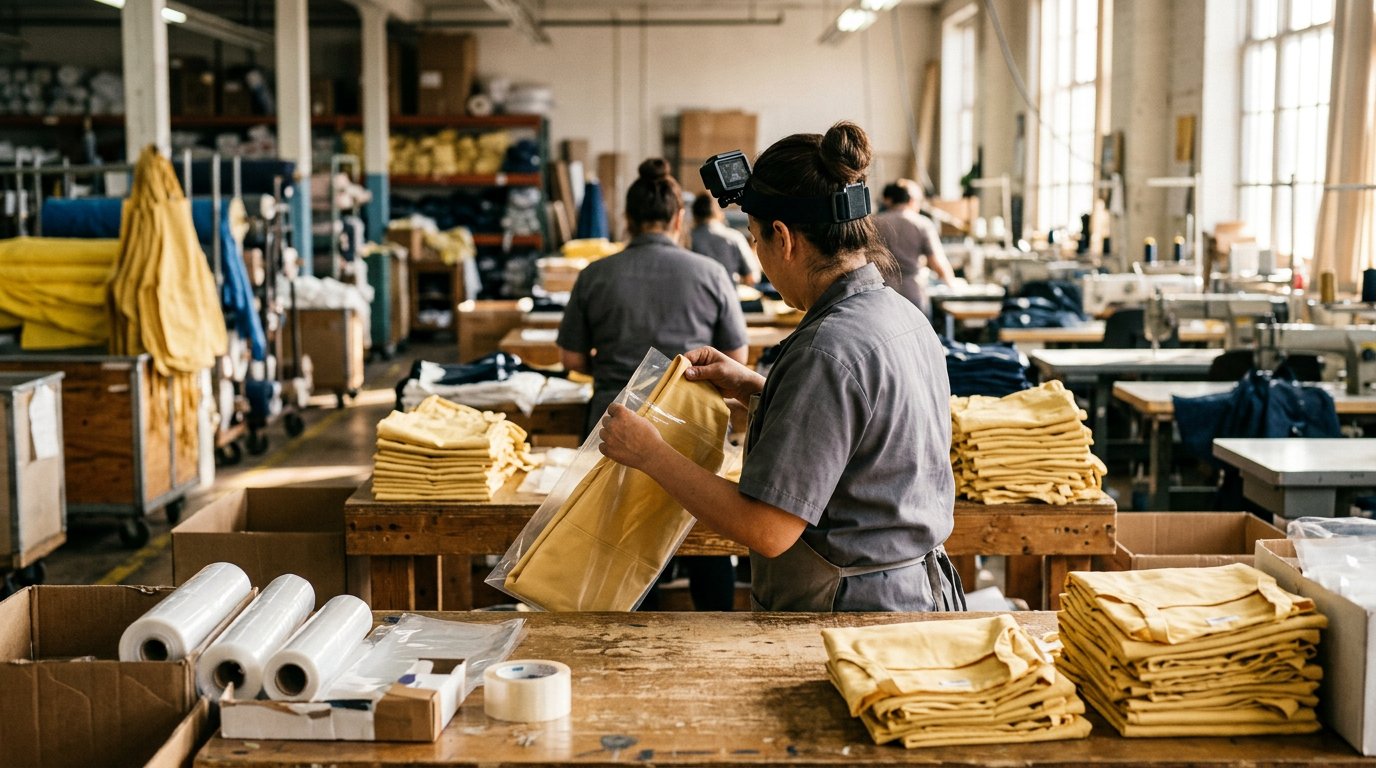
Recording is also moving onto shop floors. Objectways says it captures tasks like cooking, assembly, retail stocking and field repairs. NPR’s October 2026 report from Karur described workers at the Texworth textile factory wearing GoPros and smart glasses while folding and packing aprons, footage meant to teach robots to fold, quality-check and package. One packer, Kannagi Periyasaamy, is paid about US$2.60 an hour to record and says she knows why; a colleague who earns US$90 a month said no one told her the purpose. NPR’s report does not state which company was collecting that factory footage.
Why where you film matters
A robot trained in one kind of home can fail in another. Rajalingam told CNN that “the India kitchen is very different from the US kitchen,” and that a broomstick differs too, so Objectways collects “all over the world.” With about 90% of his customers in the US, some pay more for footage from American households, where hourly rates can be up to three times those in India or Vietnam. NPR heard the same logic in Karur: a robot that grips a stainless-steel plate firmly, as many Indian households use, might shatter a ceramic one. Quality is another constraint; Rajalingam told CNN only about half of submitted footage is usable.
Not every customer is chasing household humanoids. Rajalingam told NPR that Indian clients want help building robots for jobs that are hard to staff, such as tapping rubber trees, dusting solar panels in remote areas and destemming chillies.
The people behind the footage
The labour picture is mixed. For contractors like the young woman NPR met, recording chores pays about US$120 a month for a few hours’ work a day. Objectways says on its About page that more than half its team are women and 80% are first-generation college graduates. But NPR also found factory workers who were made to record without being told why, prompting Astha Kapoor of the Aapti Institute to call it “exploitation of labor.” Economist Amit Basole questioned whether India has the policy agility to retrain workers if robots arrive. Others, including Kapoor and Rajalingam himself, told NPR that robots will likely remain more expensive to run in India than people for some time.
Takeaways
- Video is now robot fuel. First-person, gripper-view, teleoperation and depth recordings each teach different skills, and buyers increasingly want a mix.
- Diversity is a feature. Homes, kitchens and objects vary by country, so where footage is filmed shapes how robots behave.
- Consent should be explicit. Anyone commissioning workplace recordings should make sure workers know what is filmed, why and how they are paid.
Objectways is a reminder that the road to capable robots still runs through human hands. For a wider look at how people train today’s AI, read our related piece, Human Data for Frontier AI: Inside Appen’s Comeback Quarter.
Sources
- Objectways, homepage: “The Real-World Data Engine for Physical AI”
- Objectways, About Us
- Objectways, Embodied AI datasets
- Objectways, Egocentric video dataset collection
- Objectways, UMI gripper video dataset collection
- Objectways, Teleoperation video dataset collection
- Objectways, Depth video dataset collection
- Objectways, Data collection services
- NPR, “These workers help train robots who could one day steal their jobs,” 14 October 2026
- CNN, “How filming your chores could train the android butlers of the future,” 4 April 2026