ABB Intelleqt: A Factory-Built Motor With Intelligence Inside

Industrial electric motor in a bright factory with soft blue glowing lines suggesting built-in data sensing
AI-generated illustration Most of the motors that keep factories, pumps and fans turning have one thing in common: they say nothing. They spin, they wear, and often the first sign of trouble is a stoppage. On November 24, 2026, ABB announced a motor built to change that. Intelleqt, which the company calls the world's first low-voltage motor with intelligence integrated at the factory, is designed to deliver operational insight from its very first rotation. The launch came at the SPS trad...
More

EVE Energy Debuts a Three-Layer Battery Stack for AI Data Centers

EVE Energy Debuts a Three-Layer Battery Stack for AI Data Centers
AI-generated illustration AI computing does not draw power politely. Training and inference clusters can swing from light to heavy load in fractions of a second, and the electrical systems behind them were not designed for that rhythm. On November 25, 2026, battery maker EVE Energy used RE+ 2026 in Las Vegas to launch a storage portfolio built specifically for AI data centers, which it calls AIDC energy storage. Everything here comes from EVE's own press release, so the specifications ar...
More

Sungrow PowerStack 3.0 Builds Storage Around the Site

Sungrow PowerStack 3.0 Builds Storage Around the Site
AI-generated illustration Commercial battery storage has a configuration problem. A factory that wants backup power needs one setup, a warehouse pairing storage with rooftop solar needs another, and a depot adding EV chargers needs a third. Each variation tends to mean more equipment, more wiring and more commissioning time. On November 11, 2026, Sungrow said it wants to change that with PowerStack 3.0, a commercial and industrial (C&I) storage series it describes as a move from "All...
More

Cornell’s Polymer Fiber Forest Cools Chips 25% Better in Tests

Macro view of thousands of upright golden fibers standing on a circuit board with a blue cooling glow
AI-generated illustration Every chip has a heat problem, and the usual fix creates a new one. Materials that carry heat well, like metals, also carry electricity, which is a risk when they sit between delicate circuits. Polymers are safe insulators but poor heat carriers. Cornell engineers now say they have found a way around that trade-off by growing what they call a "polymer fiber forest." What the researchers built According to Cornell Chronicle, the work comes from the group of Zh...
More

Valeo’s Aluminum Rear Door Cooling Targets Dense AI Racks

Data center aisle with server racks fitted with aluminum rear-door cooling panels under blue light
AI-generated illustration AI servers are getting hotter faster than most server rooms can cope. Valeo, the French automotive supplier, used Data Centre World Paris on November 18 and 19, 2026 to show how it plans to help: an aluminum rear door cooling module, direct-to-chip cold plates, in-rack cooling distribution units and a pump-free loop heat pipe system. Here is what the company announced and why the details matter for anyone running dense compute. An aluminum rear door instead o...
More

Trina Elementa Hybrid Genset Pairs Gas and Batteries for AI Sites

Containerized battery units and gas engine generators beside a data center at sunset
AI-generated illustration Data center developers have a timing problem. AI demand is arriving faster than grid connections, and waiting years for an interconnection is not an option for many projects. On November 19, 2026, Trina Storage unveiled a possible bridge: Elementa Hybrid Genset, a modular power plant that pairs gas generation with battery storage and a shared controller. The launch took place at RE+ 2026 in Las Vegas, and the details below come from Trina Storage's press release...
More

1Finity NIC Targets 800 Gbps Between Data Centers 100 km Apart

Two distant data center buildings joined by a glowing beam of light across a landscape with wind turbines
AI-generated illustration AI training is straining data centers on power and space, so operators are looking at spreading computing across several sites. The weak link is the network between them. On November 17, 2026, 1Finity, a Fujitsu company, announced an optical network interface card it says can move up to 800 Gbps over roughly 100 km. What the 1Finity NIC is The 1Finity press release introduces the Ultra Optical System N100, also called the 1Finity NIC. It is a PCI Express card...
More

ZutaCore Z2O Cools AI Data Centers With Zero Water

Data center aisle with glowing translucent cooling tubes and rooftop dry coolers visible through glass
AI-generated illustration Power, not silicon, has become the ceiling on AI, and a surprising share of that power goes to moving heat. On November 16, 2026, at Supercomputing 2026 in Chicago, cooling specialist ZutaCore unveiled Z₂O, a waterless cooling architecture that it says collapses the entire thermal stack into a single loop, according to the company's Business Wire release. One loop from chip to rooftop Z₂O runs a unified two-phase loop from ZutaCore's direct-to-chip cold plate...
More

ASUS Gallop: A Humanoid Learning a Real Factory Job

White humanoid robot placing a component on a circuit board on a factory line
AI-generated illustration Humanoid robot videos are everywhere, and most show a machine doing something impressive once. ASUS is trying to answer a plainer question: can a humanoid do one specific factory job, every shift, to the same quality bar as a person? On November 13, 2026, Dr. Albert Chang of ASUS laid out how the company's first humanoid, Gallop, is being built to do exactly that, according to the ASUS Pressroom blog. A real station, not a staged demo Gallop's first job is at an...
More

UADA Pit-less Pump Cuts Rice Irrigation Water 27 Percent

Rice is famous for needing water, and farmers who grow it in flooded, levee-ringed fields pay for that habit in pumping costs, tillage and time. A decade of work at the University of Arkansas System Division of Agriculture (UADA) has produced a different answer: a pump that lets rice grow in furrows with far less water. In a November 10, 2026 announcement, UADA said the Pit-less Tailwater Pump is now commercially available. This article is a news summary of the university's release and is n...
More

IBM Spectrum Collective Orchestrates AI, HPC and Analytics

Buying more computing power is the obvious answer to growing AI demand. IBM argues it is the incomplete one. On November 12, 2026, the company announced general availability of IBM Spectrum Collective, a platform built on a simple claim: the difference between wasted and well-used compute is orchestration. Here is what IBM says the product does, the workloads it targets, and the questions buyers will likely ask. The problem IBM is pointing at In its announcement, IBM describes a shift. Dema...
More

Waterloo’s Boiling Drops Could Cool AI Chip Hotspots Fast

Every AI query warms a chip somewhere, and the chips that run them are getting hotter. A University of Waterloo team now says a single drop of boiling coolant, placed exactly where a processor spikes, could keep data centre hardware cooler without paying for expensive fluid across the whole tank. On November 10, 2026, the university released results of a hybrid immersion cooling concept from its engineering faculty, published in the Journal of Colloid and Interface Science. In lab tests, on...
More

Ambiq heliaAOT 1.0 Cuts Edge AI Latency Up to 76%

Most of the AI chatter this year is about giant models in data centers. Yet some of the most practical progress is happening at the opposite end: tiny chips in rings, earbuds and sensors that must run a neural network for days on a sliver of battery. On November 9, 2026, Ambiq Micro announced heliaAOT 1.0, a compiler built for exactly that job. According to Ambiq's press release, it cuts inference latency by up to 76% and energy per inference by up to 72% against LiteRT Micro, a common embe...
More

Teradyne Omnyx Edge Tests the Boards Inside Physical AI

Everyone talks about the AI model inside a robot. Far fewer ask who checks the circuit boards that run it. Teradyne thinks that question gets more urgent as AI leaves the data center, and on November 9, 2026 it introduced Omnyx Edge, an inline board test platform built for exactly that job. The company, which makes automated test equipment and advanced robotics, positions the product as the edge-focused sibling of its Omnyx family, which established its AI board test capability in the data ...
More

Google TPU 8tx and 8i Max Target Secure, Long-Context AI

Google has added two more systems to its eighth-generation Tensor Processing Unit family: TPU 8tx, aimed at secure, confidential inference, and TPU 8i Max, built for very large context windows. In a November 9, 2026 post, Amin Vahdat, Google's SVP and Chief Technologist for AI and Infrastructure, said it is the first time the company has introduced four TPU systems in a single year. The announcement matters less for raw speed than for what it says about where AI hardware is heading: special...
More

IBM Puts Its Most Advanced Quantum Computer in Chicago

Quantum computers usually live in a handful of corporate labs, far from the people who might use them. On November 6, 2026, IBM, the University of Chicago, the State of Illinois and the Illinois Quantum and Microelectronics Park (IQMP) unveiled an IBM Quantum System Two in Chicago, the company's first quantum computer in Illinois and, in IBM's words, its most advanced system available. The machine is now operational at Hyde Park Labs, hosted by the University of Chicago, and is built around...
More

Viridien and AMESA Team Up on HPC for Enterprise AI Agents

Training an AI agent to run part of a factory or supply chain takes serious computing power, and most companies would rather not build a supercomputer to get it. On November 5, 2026, Viridien and AMESA announced a partnership aimed at exactly that gap. Viridien, a Paris-based advanced technology and HPC company, will supply the high-performance computing infrastructure behind AMESA Agent Cloud. AMESA is an enterprise AI platform for what it calls operational autonomy. What was announced ...
More

WOTA Unit Recycles Home Water for Water-Scarce Caribbean Islands

Imagine a household that takes 100 showers' worth of water out of its own wastewater in a single month. That is roughly what a Japanese company says happened in a demonstration home in Antigua and Barbuda, and it is now using the result to argue for a different way to supply water on islands. On November 3, 2026, WOTA, a Tokyo-based water technology company and Earthshot Prize finalist, issued a news release timed to the Commonwealth Business Forum 2026, held November 2 to 4. In it, WOTA pr...
More

Harvard Scientists Train Computer to Distinguish Scents

A team of Harvard scientists led by Venkatesh Murthy, professor of molecular and cellular biology, tackled a seemingly complex phenomenon in their investigation: how mice can distinguish scents from one another. Using a machine-learning algorithm, Murthy and his colleagues “trained” a computer to recognize the neural patterns linked to various scents, and to identify specific odors in a mixture of smells. The study, published in the journal Neuron, focused on creating an algorithm for a compu...
More

NASA Aims to Sequence DNA in Space

NASA is conducting a lot of research in space, but interestingly enough, now they’re focusing on sequencing an integral biological molecule: DNA. Ever since the first strands of DNA were sequenced in the 1970s, researchers understood the profound significance of analyzing genetics for a wide range of medical and biological research. DNA sequencing at large can be used to identify forms of life, study organism evolution and relation, pinpoint genetic diseases in individuals and assist in crim...
More

How Silvon is Adding Innovation to the Textile Industry

A person bed’s can be covered with bacteria, allergens and fungus. Silvon is designed to change that, permanently preventing the growth of 99.9% of bacteria by literally using a silver lining (of a sort). Dermatologists recommend that people wash their pillowcases every two or three days. Given the hustle and bustle of everyday life however, it is difficult to follow through on that. The average adult washes their sheets every 2-3 weeks, with studies suggesting some men just change their shee...
More

Aerion Mouse

Aerion Mouse is a gesture-driven computer mouse that’s somewhat smaller than traditional mice. It gets placed between the top of any two of the user’s fingers. The user then points the mouse at the display to operate it and, instead of clicking on any buttons, just leans to the left to achieve what a typical left click on a mouse would and leans to the right for a right click. One main benefits to Aerion is that it allows one to keep fingers close to a typing position without having to grab a se...
More

Pluto Ice Volcanoes

Pluto may have two ice volcanoes that spew water ice, nitrogen, ammonia, and methane onto the dwarf planet's surface, NASA announced today. The potential volcanoes were spied near Pluto's South Pole, in images taken by NASA's New Horizons spacecraft during its July flyby. NASA scientists used the photos to measure the mountains, they are several miles high and tens of miles wide, with large holes in their summits. "On Earth that generally means one thing a volcano," said Oliver White, New Horizo...
More

Our Bodies, our Microbial Clouds.

We leave a trail of microbes on every surface we touch, from pens and keyboards to door handles and elevator buttons. Everywhere you go, in everything you do, you are surrounded by an aura of microbes. They drift down from your hair when you scratch your head, they fly off your hand when you wave to your friend, and they spew out of your mouth when you talk. Even when you sit around doing nothing, you’re sitting in your own, personal microbial bubble. In addition to leaving our mark on surfaces,...
More

Microbiomes could hold keys to improving life.

Microbial life forms including viruses, bacteria, and fungi are the most diverse and abundant organisms on earth. They have shaped our evolutionary origins for billions of years and continue to have widespread impact. The UMIC foresees the microbiomes being leveraged through genetic engineering for applications within 10 years. “Microbes are everywhere. Therefore understanding microbiomes, whether they be the ones that live in and on our bodies or the ones in the environment, is essential to ...
More

11,000 years of isolation: Remote village has unusual Gut Bacteria.

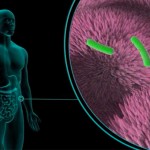
A medical checkup of people living in remote villages deep in the Amazon rainforest in Venezuela has uncovered striking details about these villagers' microbiomes and the bacteria living on and in their bodies. The villagers appear to have the highest levels of bacterial diversity ever reported in a human group, the researchers found. Their microbiomes include bacteria that have genes that could make them resistant to treatment with antibiotics. Some of these genes could even make these bacteria...
More

New “tricorder” technology might be able to “hear” tumors growing.

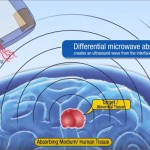
A team of scientists from Stanford University is testing a new “tricorder” technology able to remotely detect abnormal matter, such as buried plastic explosives or even early stage cancers in humans, by manipulating microwaves and ultrasound. The new “radio frequency (RF)/ultrasound hybrid imaging system,” the brainchild of Assistant Professor Amin Arbabian and Research Professor Pierre Khuri-Yakub, was designed for remote detection of embedded objects in a number of different kinds of matter, i...
More

The surprising trick jellyfish and lampreys use to swim.

Jellyfish and lampreys have among the most energy-efficient swimming motions of any animal. From a long time, researchers have assumed that in order to move forward, fly or swim, humans and animals exert pressure on surface, air or water around them. But a new study published in the journal Nature Communications has revealed that two sea animals do not follow the general theory. Jellyfish and lampreys pull their way through the water, as per the study. A Stanford led team shows how these anci...
More

UBC students develop “pro-bee-otic”, a probiotic for bees

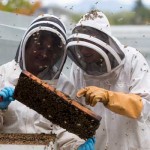
University of British Columbia students have developed a probiotic for honey bees, which they’ve coined the ‘pro-bee-otic.’ This innovative study by a group of UBC students is regarding the development a probiotic for honey bees. This is a particularly important solution, as global bee declines are a major problem and so much of the food we eat depends on pollination by insects. The students want to address this important issue and they feel that betting probiotics could be the key to prot...
More

NASA’S New Horizons finds blue skies and red water ice on Pluto.

Images sent back by NASA’s New Horizons spacecraft last week reveal that Pluto has blue atmospheric hazes and water ice on its surface. Pluto’s haze layer shows its blue color in this picture taken by the New Horizons Ralph/Multispectral Visible Imaging Camera (MVIC). The high-altitude haze is thought to be similar in nature to that seen at Saturn’s moon Titan. The source of both hazes likely involves sunlight-initiated chemical reactions of nitrogen and methane, leading to relatively small, ...
More