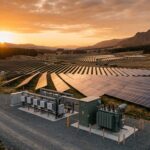
ARENA Backs Clutch Industries to Build Solid-State PowerNet Batteries

A portable battery pack plugged into a wall-mounted stack of battery units in a garage, with a caravan and boat outside
AI-generated illustration What if the battery that backs up your house could be unplugged on Friday and run a caravan or a boat on Saturday? That is the idea behind PowerNet, a modular battery from Melbourne's Clutch Industries, and it just got a major push toward factory production. In a news release, the Australian Renewable Energy Agency (ARENA) said it is providing $6.77 million toward a $19.35 million project to build a scalable manufacturing line for it in Coburg North, Victoria. A...
More
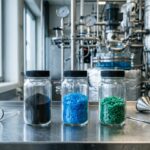
Fortum Makes Battery-Grade Nickel, Cobalt and Lithium From Scrap

Three clear jars of dark powder, blue crystals and green crystals on a steel lab bench in front of a pilot reactor
AI-generated illustration Every electric car battery eventually reaches the end of its life, and what is inside it is valuable: nickel, cobalt and lithium that Europe mostly imports. On November 23, 2026, Fortum Battery Recycling reported a step toward closing that loop. In a company news release, it said it has produced the first customer samples of battery-grade nickel sulphate, cobalt sulphate and lithium hydroxide from recycled batteries. The samples came out of a pilot campaign in H...
More

Carnegie Mellon Shrinks Seawater Hydrogen Toward Suitcase Size

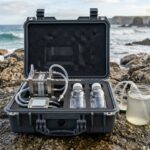
Open rugged carry case on seaside rocks holding a compact electrolyzer stack, tubing and a jar of seawater
AI-generated illustration Hydrogen is light for the energy it carries, which is why it keeps coming up as a fuel for drones and remote industrial sites. The catch is the equipment needed to make it. Researchers in Shawn Litster's lab at Carnegie Mellon University are asking whether that equipment can shrink until it fits in a suitcase, and in a November 25, 2026 university story they describe a lab demonstration that points that way. It is early, bench-scale work. But the idea behind it ...
More

Enovix Wins a Custom Battery Design for Next-Gen Smart Eyewear

Exploded view of smart glasses with a glowing curved trapezoid battery cell beside the circuit boards
AI-generated illustration In wearables, the battery often decides what the product can look like. Eyewear is the extreme case: there is very little room in a temple arm, and every gram sits on your face. On November 23, 2026, Enovix announced a design win aimed at that problem, according to its press release. An unnamed "leading global technology company" has issued a purchase order for engineering services to develop a custom battery cell for an upcoming smart eyewear product. The compa...
More

Vitamin B12 Powers a Rechargeable Zinc-Air Battery Prototype

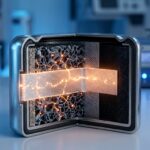
Coin-cell battery prototype on a lab bench with a glowing molecular model and carbon nanotube mesh above it
AI-generated illustration Vitamin B12 is best known from supplement shelves and nutrition labels. Researchers at Spain's University of Córdoba have now given it a very different job: helping a rechargeable battery work. In a prototype described in a university release dated November 4, 2026, B12 acts as the catalyst in a zinc-air cell that completed up to 250 charge and discharge cycles. It is laboratory-scale work, and the team is clear that this is a prototype. But it adds an unusual, ...
More

HKUST Stitches Perovskite Solar Layers Together for Longer Life

Cross-section of a perovskite solar cell with glowing layers joined by fine vertical nano-threads
AI-generated illustration Perovskite solar cells have a reputation problem: they are cheap to make and efficient in the lab, yet they tend to wear out too fast. A research team at the Hong Kong University of Science and Technology (HKUST) now says a big part of the answer is mechanical. Their fix, called Trans-Interface Engineering (TIE), literally stitches the cell's layers together at the molecular level. The work was published in Nature Photonics and featured on the cover of the journ...
More

EVE Energy Debuts a Three-Layer Battery Stack for AI Data Centers

EVE Energy Debuts a Three-Layer Battery Stack for AI Data Centers
AI-generated illustration AI computing does not draw power politely. Training and inference clusters can swing from light to heavy load in fractions of a second, and the electrical systems behind them were not designed for that rhythm. On November 25, 2026, battery maker EVE Energy used RE+ 2026 in Las Vegas to launch a storage portfolio built specifically for AI data centers, which it calls AIDC energy storage. Everything here comes from EVE's own press release, so the specifications ar...
More

Sungrow PowerStack 3.0 Builds Storage Around the Site

Sungrow PowerStack 3.0 Builds Storage Around the Site
AI-generated illustration Commercial battery storage has a configuration problem. A factory that wants backup power needs one setup, a warehouse pairing storage with rooftop solar needs another, and a depot adding EV chargers needs a third. Each variation tends to mean more equipment, more wiring and more commissioning time. On November 11, 2026, Sungrow said it wants to change that with PowerStack 3.0, a commercial and industrial (C&I) storage series it describes as a move from "All...
More

Rice’s Flash Graphite Targets Four-Minute EV Battery Charging

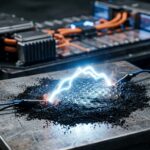
Electric arc flashing through black carbon powder forming hexagonal graphite layers in front of an EV battery pack
AI-generated illustration Charging an electric vehicle is still slower than filling a tank, and part of the reason sits inside the battery's anode, where lithium ions have to squeeze into layers of graphite. A Rice University team says it has found a way to build a better graphite in a fraction of a second, and early cell tests point to a four-minute charging rate. The work comes from the lab of chemist James Tour and was described in a Rice University news release on November 23, 2026. ...
More

Rice Etches Diamond Nanowires Across a Whole Wafer in One Step

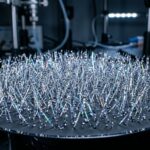
Rice Etches Diamond Nanowires Across a Whole Wafer in One Step (AI-generated illustration)
AI-generated illustration Diamond is one of the most promising materials in electronics, hard, heat-conducting and chemically tough. It is also notoriously difficult to shape. Rice University engineers announced on November 23, 2026 a way to carve forests of microscopic diamond nanowires across an entire 2-inch wafer in one continuous plasma etching step, without the patterned stencils that usually make such work slow and costly. Why diamond is hard to pattern As Rice News reports, en...
More

BYD Joins Solar, Storage and Robot Charging in Abu Dhabi

Desert solar canopy at sunset with an electric SUV in a charging bay, a robotic arm plugging in the connector and battery cabinets nearby
AI-generated illustration Picture pulling up to a charging site in the desert, stepping out, locking the car and walking away. The car drives itself to a bay, a robotic arm opens the charge port cover and plugs in, and the electricity comes from panels overhead and batteries beside the bay. That is the scene BYD described on November 10, 2026, when it announced an integrated charging installation in the Abu Dhabi desert. This article draws on BYD's press release on its UK media site. Cla...
More

Tohoku’s Manganese Trick Makes Aluminum-Foil Battery Anodes Last

Cutaway coin-cell battery with a glowing aluminum foil strip and orange atoms moving through its fine grain network on a lab bench
AI-generated illustration Open a lithium-ion battery and the negative electrode is usually a thin copper foil coated with graphite, mixed with binders and baked in energy-hungry steps. Researchers have long wondered whether one plain sheet of aluminum could do all of that work alone. A team at Tohoku University in Japan, working with UACJ Corporation, says a small pinch of manganese gets that idea noticeably closer to practical. The result was announced by Tohoku University on November 1...
More

Electrified Cloth Captures and Releases Phosphate From Water

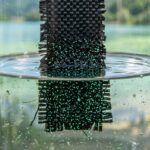
Black carbon cloth electrode with glowing green particles clinging to it, submerged in a clear glass of water before a blurred lake
AI-generated illustration Phosphate is a double-edged molecule. Farmers need it to grow crops, yet when rain washes fertilizer into lakes and rivers, the same nutrient can feed harmful algal blooms that starve water of oxygen. On November 18, 2026, Northwestern University announced that its researchers, working with Argonne National Laboratory, had built a reusable fabric electrode that pulls phosphate out of water and can hand it back on demand. The details below come from the universit...
More

Terabase Construct Adds an AI Agent to Solar Construction Sites

Aerial view of a solar farm under construction with a drone and a glowing digital-twin grid
AI-generated illustration A single 300 MW solar site can sprawl across 1,500 to 2,500 acres, roughly two to three times the size of Central Park. Keeping a build that large on schedule is hard, and progress is often still stitched together from daily reports and spreadsheets. On November 16, 2026, Terabase Energy announced a next-generation release of its Construct software that tries to change this, calling it the first AI construction execution system for utility-scale solar. The detai...
More

HKUST Powers Seawater Hydrogen With Its Own Waste Heat

Coastal hydrogen electrolyzer linked to a membrane water purification unit at sunrise
AI-generated illustration Green hydrogen has an awkward catch: making it takes large volumes of purified freshwater. A team from Hong Kong and Arizona says it has a workaround that uses seawater and turns the electrolyzer's own waste heat into the purification power. The freshwater paradox As described in a HKUST Boundless article dated November 23, 2026, hydrogen is seen as a cornerstone of a low-carbon future, yet producing it depends on clean water, which is increasingly scarce. Se...
More

Samsung SDI Brings PrismStack Batteries to AI Data Centers

Samsung SDI Brings PrismStack Batteries to AI Data Centers - editorial illustration
AI-generated illustration AI data centers do not just need more electricity; they need electricity that behaves. Training clusters swing their power draw quickly, and a brief outage can ruin hours of work. That is the backdrop for Samsung SDI's showing at RE+ 2026 in Las Vegas, where the battery maker laid out a lineup built around AI data center power needs. What Samsung SDI showed In its November 18, 2026 announcement, Samsung SDI said it was presenting next-generation battery solu...
More

Dow NORDEL NGT EPDM Speeds Up Car Weatherseal Production

Car door with black rubber weatherseal in front of a glowing molecular chain pattern
AI-generated illustration Weatherseals are the unglamorous rubber strips that keep water, dust and noise out of a car cabin. On November 17, 2026, Dow introduced a new family of EPDM rubber designed to make those parts faster to produce without giving up quality. The series is called NORDEL NGT, and its first grade is aimed squarely at automotive sealing. What Dow launched As described in Dow's press release, NORDEL NGT (Next Generation Technology) EPDM is a new series of grades for r...
More

Trina Elementa Hybrid Genset Pairs Gas and Batteries for AI Sites

Containerized battery units and gas engine generators beside a data center at sunset
AI-generated illustration Data center developers have a timing problem. AI demand is arriving faster than grid connections, and waiting years for an interconnection is not an option for many projects. On November 19, 2026, Trina Storage unveiled a possible bridge: Elementa Hybrid Genset, a modular power plant that pairs gas generation with battery storage and a shared controller. The launch took place at RE+ 2026 in Las Vegas, and the details below come from Trina Storage's press release...
More

Salt Vault: Sodium-Ion UPS Batteries for AI Data Centers

Sleek battery cabinet with teal indicator lights in a dim blue data center aisle
AI-generated illustration AI clusters do not draw power the way a typical office building does. A training run can swing from near idle to full load in milliseconds, and then do it again, over and over. On November 19, 2026, Proper Voltage announced a battery cabinet built for exactly that pattern: Salt Vault, a UPS system powered by sodium-ion cells from UNIGRID. According to Proper Voltage's announcement, the product is aimed at data center backup power and is meant to slot into the UP...
More

Rice Splits CO2 With Visible Light at Room Temperature

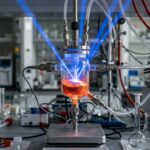
Laboratory glass reactor with blue light beams striking glowing copper-colored powder inside
AI-generated illustration Carbon dioxide is one of the most stubborn molecules in chemistry, which is exactly why it is so hard to turn into something useful. Rice University researchers now report a way to split it using visible light at room temperature, a step toward recycling emissions into raw material for industry. The work was published in the Proceedings of the National Academy of Sciences and announced by Rice News on November 20, 2026. The problem with splitting CO2 Conventi...
More

LG’s AEROS Intelligence Turns Battery Data Into Decisions

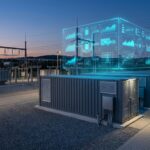
Containerized grid battery units beside a substation at dusk with a glowing data dashboard hologram above
AI-generated illustration Grid batteries are no longer a novelty; they are infrastructure, and infrastructure needs maintenance, warranties and careful accounting. On November 12, 2026, LG Energy Solution Vertech launched AEROS Intelligence, a software platform that turns the data coming off battery energy storage systems (BESS) into decisions for owners and operators. What LG Energy Solution Vertech launched According to the company's press release, AEROS Intelligence is the analytic...
More

Siemens SIRIUS 3QC1: Hybrid DC Contactor for 1,500 V Grids

Compact gray DC switching module mounted on a battery storage rack with an electric truck charging bay behind glass
AI-generated illustration Every battery storage site, megawatt truck charger and solar-plus-storage microgrid has to switch large direct current on and off safely. That job is harder than it sounds, because DC current has no natural zero crossing and tends to leave a stubborn arc behind when contacts open. On November 20, 2026, Siemens announced what it calls the world's first semiconductor-based heavy duty DC contactor, the SIRIUS 3QC1, built for up to 1,500 V and 600 A. What Siemens...
More

Forsee Power ZEN 8 LFP: Drop-In Battery for Compact Machines

Electric street sweeper with open battery bay beside a compact electric excavator in a city yard at dusk
AI-generated illustration Compact street sweepers and mini excavators do their work in the places where noise and exhaust bother people most: city streets, building sites, farm yards. Yet their batteries have been a tight squeeze to design. On November 18, 2026, Forsee Power announced ZEN 8 LFP, a lithium iron phosphate battery aimed squarely at that niche, and built so that existing customers can swap it in without redesigning their machines. The details below come from Forsee Power's o...
More

ZutaCore Z2O Cools AI Data Centers With Zero Water

Data center aisle with glowing translucent cooling tubes and rooftop dry coolers visible through glass
AI-generated illustration Power, not silicon, has become the ceiling on AI, and a surprising share of that power goes to moving heat. On November 16, 2026, at Supercomputing 2026 in Chicago, cooling specialist ZutaCore unveiled Z₂O, a waterless cooling architecture that it says collapses the entire thermal stack into a single loop, according to the company's Business Wire release. One loop from chip to rooftop Z₂O runs a unified two-phase loop from ZutaCore's direct-to-chip cold plate...
More

MIT’s Flapping Microrobot Now Flies With Its Own Sensors

Tiny winged robot with a miniature circuit board hovering next to a sunflower
AI-generated illustration For a decade, MIT's tiny flying robots have been remarkably athletic, with bumblebee-like speed, agility and durability. They had one big limitation: they were tethered to a laboratory motion-capture system because they could not carry the electronics needed to know where they were. According to MIT News, that has changed. A new version carries its own sensors and computer and still flies precisely. Why weight was the obstacle The robot is roughly the size an...
More

Boise State’s 2D Alloy Ink Prints Tiny, Powerful Supercapacitors

Boise State's 2D Alloy Ink Prints Tiny, Powerful Supercapacitors (illustration)
AI-generated illustration Batteries get most of the attention in energy storage, yet they are not good at everything. They struggle with sudden, large bursts of current, they wear out after roughly 1,000 to 10,000 cycles, and they do not like the cold. At Boise State University, researchers have just reported a printable material that could help close those gaps from the other side, by making better supercapacitors that can be printed onto flexible surfaces. According to Boise State News...
More

Siemens WATTBLOC Builds Utility Solar From Modular Inverter Blocks

Utility-scale solar farm at sunset with modular inverter units and a transformer in the foreground
AI-generated illustration Utility-scale solar plants are getting bigger, and the equipment that turns their direct current into grid-ready power is under pressure to be more flexible, easier to service and quicker to expand. On November 16, 2026, Siemens answered with WATTBLOC, a U.S.-assembled platform that rethinks how a solar plant converts power by building it from small, independent blocks. This article draws on Siemens' press release from Las Vegas. Performance figures below are th...
More

Caltech’s Nanosyringes Inject Working Proteins Into Plant Cells

Translucent glowing syringes releasing luminous particles into the surface of a green leaf
AI-generated illustration Getting a useful protein into a plant cell is surprisingly hard. Every cell is wrapped in a rigid wall and a membrane, and most delivery tricks either rely on inserting DNA or struggle to get past those barriers. On November 18, 2026, Caltech announced a different route: bacterial "nanosyringes" that have been re-aimed at plant cells and loaded with working molecular tools. The work, led by Gozde Demirer's lab in chemical engineering, appears in Nature Nanotechn...
More

Moment Energy Nova Puts Retired EV Batteries on the Grid

Row of white outdoor battery storage cabinets beside a modern office building at sunset with a pallet of used EV battery packs in front
AI-generated illustration Most grid batteries start life as new cells. Moment Energy is betting that the better source is already on the road. On November 17, 2026, the company unveiled Nova, a commercial battery energy storage system (BESS) built from repurposed electric vehicle batteries, and said it is the first of its kind to earn both UL 1973 and UL 9540 certification. Those two safety listings matter because they are what lets a stationary battery sit next to a hospital, an airport...
More

KAIST Battery Electrode Turns Curved Drone Legs Into Storage

A quadcopter drone on a lab bench with one curved carbon-fiber leg cut away to show a glowing woven battery layer
AI-generated illustration Most drones and robots carry their energy the way a hiker carries a water bottle: as a separate load strapped onto a frame that does its own job. A new electrode from KAIST points to a different idea, where a landing leg or a robot limb is also part of the battery. The catch has always been shape, because real frames are curved and hollow. On November 18, 2026, KAIST announced an electrode built to work in exactly those places. What KAIST built According to K...
More