PolyU Implant Glows to Show It Works, With No Battery Inside

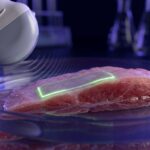
A thin transparent film on a tissue sample glowing green under UV light while an ultrasound probe sends waves toward it
AI-generated illustration Implanted electronics have a visibility problem. Once a device is under the skin, nobody can easily tell whether it is intact, powered or breaking down, and a battery adds its own limits and leakage risks. A team at The Hong Kong Polytechnic University (PolyU), working with Yonsei University in South Korea, has demonstrated a different approach: an implant with no battery that powers itself from ultrasound and glows so its condition can be seen from outside the ...
More
OpenAI MedChemBench Tests How AI Reasons About Drug Chemistry

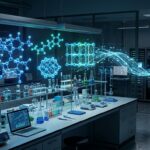
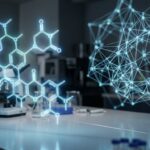
Glowing molecular diagrams floating above a laboratory bench next to a luminous network lattice
AI-generated illustration Anyone can say an AI model is "good at chemistry." Proving it is harder, especially in medicinal chemistry, where improving one property of a molecule often wrecks another. On November 20, 2026, OpenAI published MedChemBench, a benchmark built to measure exactly that kind of reasoning, and the company is candid about what the first results do and do not show. What MedChemBench actually asks According to OpenAI, the benchmark contains 99 problems drawn from 11...
More

Mottronix and CEA-Leti Take Mott-RAM Memory Toward 1 Mbit

Glowing teal and amber crystal lattice floating above a memory array on a dark silicon wafer
AI-generated illustration Running AI on a phone, a robot or a car is limited by energy as much as by speed. A large share of that energy goes into moving data between memory and processor. On November 25, 2026, French deeptech company Mottronix and research institute CEA-Leti announced a collaboration aimed at that problem, according to a CEA-Leti press release. The goal is to bring a new memory technology called Mott-RAM to pre-industrial maturity on standard CMOS and to deliver first r...
More

Vitamin B12 Powers a Rechargeable Zinc-Air Battery Prototype

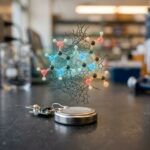
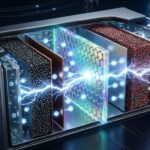
Coin-cell battery prototype on a lab bench with a glowing molecular model and carbon nanotube mesh above it
AI-generated illustration Vitamin B12 is best known from supplement shelves and nutrition labels. Researchers at Spain's University of Córdoba have now given it a very different job: helping a rechargeable battery work. In a prototype described in a university release dated November 4, 2026, B12 acts as the catalyst in a zinc-air cell that completed up to 250 charge and discharge cycles. It is laboratory-scale work, and the team is clear that this is a prototype. But it adds an unusual, ...
More

ASU Builds Nanoscale DNA Structures From a Minimal Cube Kit

Translucent glowing blue cubes self-assembling into a large fractal lattice
AI-generated illustration Imagine designing a handful of tiny building blocks, dropping them in a container, shaking, and watching them assemble themselves into an intricate shape. Researchers at Arizona State University have done that with DNA, at a scale almost unimaginably small. Associate Professor Petr Sulc's team describes the approach in research published November 25, 2026 in Science Robotics, as reported in an ASU News story. Sulc sums it up this way: "It's like playing Minecraf...
More

Stanford Finds Wires Thinner Than Copper Can Carry More Current

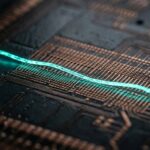
Glowing teal nanowire running across a dark chip surface beside fine copper traces
AI-generated illustration A modern computer chip is smaller than a postage stamp, yet it can hide about 100 kilometers of copper wire inside, linking billions of transistors. The thinnest of those wires are more than a thousand times slimmer than a human hair, and that is where copper starts to fail. Researchers at Stanford University now report a material that does the opposite: it gets better at carrying current as the wire gets smaller. The work was announced in a Stanford Report stor...
More

HKUST Stitches Perovskite Solar Layers Together for Longer Life

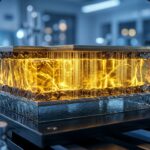
Cross-section of a perovskite solar cell with glowing layers joined by fine vertical nano-threads
AI-generated illustration Perovskite solar cells have a reputation problem: they are cheap to make and efficient in the lab, yet they tend to wear out too fast. A research team at the Hong Kong University of Science and Technology (HKUST) now says a big part of the answer is mechanical. Their fix, called Trans-Interface Engineering (TIE), literally stitches the cell's layers together at the molecular level. The work was published in Nature Photonics and featured on the cover of the journ...
More

WHOI’s Deep Venture AUV Is Built for Full-Ocean-Depth Science

Orange autonomous underwater vehicle with a spotlight above a dark deep seafloor beside a pale chimera fish
AI-generated illustration The deepest parts of the ocean are still among the least observed places on Earth, partly because reaching them has meant big ships, specialized crews and one-purpose machines. On November 20, 2026, the Woods Hole Oceanographic Institution (WHOI) announced a different approach: Deep Venture, a compact autonomous underwater vehicle (AUV) built with NASA's Jet Propulsion Laboratory (JPL) that is rated for full ocean depth. What Deep Venture isAccording to WHOI'...
More

QMUL’s Degradable E-Patch Reads Heartbeats and Steers a Robot Hand

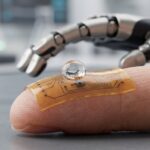
Translucent amber gelatin patch with fine conductive traces and a water droplet on a fingertip, a robotic hand blurred behind
AI-generated illustration Most wearable sensors are built to last, which is part of the problem when they eventually end up in the bin. Researchers at Queen Mary University of London have taken a different route: a soft electronic patch made largely from gelatin and starch that sticks to skin with a drop of water. The team reports that it can sense movement, record electrical signals from the body and even steer a robotic hand. The work was announced by the university's School of Enginee...
More

Rice’s Flash Graphite Targets Four-Minute EV Battery Charging

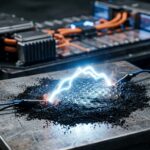
Electric arc flashing through black carbon powder forming hexagonal graphite layers in front of an EV battery pack
AI-generated illustration Charging an electric vehicle is still slower than filling a tank, and part of the reason sits inside the battery's anode, where lithium ions have to squeeze into layers of graphite. A Rice University team says it has found a way to build a better graphite in a fraction of a second, and early cell tests point to a four-minute charging rate. The work comes from the lab of chemist James Tour and was described in a Rice University news release on November 23, 2026. ...
More

Cornell’s Polymer Fiber Forest Cools Chips 25% Better in Tests

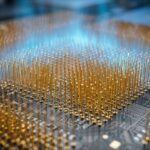
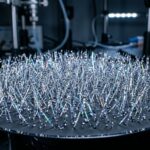
Macro view of thousands of upright golden fibers standing on a circuit board with a blue cooling glow
AI-generated illustration Every chip has a heat problem, and the usual fix creates a new one. Materials that carry heat well, like metals, also carry electricity, which is a risk when they sit between delicate circuits. Polymers are safe insulators but poor heat carriers. Cornell engineers now say they have found a way around that trade-off by growing what they call a "polymer fiber forest." What the researchers built According to Cornell Chronicle, the work comes from the group of Zh...
More

Rice Etches Diamond Nanowires Across a Whole Wafer in One Step

Rice Etches Diamond Nanowires Across a Whole Wafer in One Step (AI-generated illustration)
AI-generated illustration Diamond is one of the most promising materials in electronics, hard, heat-conducting and chemically tough. It is also notoriously difficult to shape. Rice University engineers announced on November 23, 2026 a way to carve forests of microscopic diamond nanowires across an entire 2-inch wafer in one continuous plasma etching step, without the patterned stencils that usually make such work slow and costly. Why diamond is hard to pattern As Rice News reports, en...
More

DeepMind Agents Find Cheaper Quantum Algorithms, Proof-Checked

DeepMind Agents Find Cheaper Quantum Algorithms, Proof-Checked (AI-generated illustration)
AI-generated illustration Quantum computers keep getting better, yet many of the problems people most want them to solve still demand more hardware than anyone can build today. Google DeepMind and Google Quantum AI now report a different lever: instead of waiting for bigger machines, use teams of AI agents to make the algorithms themselves cheaper to run. In a November 23, 2026 post and an accompanying paper, the researchers describe how teams of Gemini 4 agents improved several well-kno...
More

AKU’s Tele-ICU Wins Doctors’ Trust, but Rural Gaps Remain

Illustration of a central hospital linked by glowing lines to rural clinics, with a doctor consulting a phone at a patient bedside
AI-generated illustration Picture a junior doctor on a night shift in a district hospital in Pakistan. A patient on the ward is deteriorating, there is no intensivist in the building, and the nearest specialist is hundreds of kilometres away. What the doctor does next is often a phone call. A new study from Aga Khan University (AKU) asks what the doctors on the other end of that call think of the service, and what stops them from acting on the advice. The paper, published on 2 November 2...
More

Tohoku’s Manganese Trick Makes Aluminum-Foil Battery Anodes Last

Cutaway coin-cell battery with a glowing aluminum foil strip and orange atoms moving through its fine grain network on a lab bench
AI-generated illustration Open a lithium-ion battery and the negative electrode is usually a thin copper foil coated with graphite, mixed with binders and baked in energy-hungry steps. Researchers have long wondered whether one plain sheet of aluminum could do all of that work alone. A team at Tohoku University in Japan, working with UACJ Corporation, says a small pinch of manganese gets that idea noticeably closer to practical. The result was announced by Tohoku University on November 1...
More

WashU Polymer Gets Stronger the More It Bends

Translucent hydrogel sleeve bending over a robotic joint with glowing ring-shaped molecules clustering at the bend
AI-generated illustration Most materials tire. Bend a paper clip enough times and it snaps, and plastics crack with age. A team at Washington University in St. Louis says it has made a polymer that does the opposite: the more it is bent and strained, the stronger it becomes. The result, led by chemistry professor Chenfeng Ke, was described in Nature Materials and in a November 20, 2026 story on the university's newsroom. How the material works The polymer is a hydrogel, a flexible ne...
More

Texas A&M’s PertReason Aims to Explain How Cells Change

A glowing 3D virtual cell with luminous network pathways on a dark blue background
AI-generated illustration Most AI models in biology are good at one kind of question: given this genetic change, will a disease appear? Far fewer can say why it happened or what to do about it. Researchers at Texas A&M University are working on that gap with a model called PertReason, which has now been accepted to the Conference on Neural Information Processing Systems (NeurIPS). The problem PertReason targets As described in the Texas A&M Engineering news story, today's AI m...
More

MIT’s Superconducting Sandwich Stores a Bit and Steers Signals

Frost-covered circuit board with a small layered chip whose middle layer glows blue, connected by fine gold wires
AI-generated illustration Computers are hungry. Data centers, supercomputers and AI clusters keep asking for more power, more capacity and more speed, and a big part of the challenge is simply feeding processors with data fast enough. This week, researchers at the MIT Plasma Science and Fusion Center (PSFC) described a tiny device that tackles one corner of that problem: a layered "sandwich" that can remember a bit of information and also steer electrical signals, in a form meant for sup...
More

Google Shows Quantum Contextuality Holds Up to 105 Qubits

Superconducting quantum chip with glowing qubits and floating tiles linked by threads of light
AI-generated illustration Entanglement usually gets the credit for what quantum computers can do. A new study from Google Quantum AI points to a quieter ingredient called contextuality, and shows it holds up on a real processor with more than a hundred qubits. The work was published on the cover of Science on November 19, 2026. What contextuality means In Google's announcement, contextuality is described as a property in which a system's measurement results are not fixed in advance. W...
More

Tokyo’s Nanomesh Sensor Is Spun Straight Onto Skin

Ultra-thin transparent sensor with fine circuit lines conforming to a fingertip in a bright lab
AI-generated illustration Most wearable sensors are built flat and then pressed onto the body, which is why they wrinkle, peel or feel uncomfortable on curved skin. A team led by Professor Takao Someya and Associate Professor Tomoyuki Yokota at the University of Tokyo, with RIKEN, has flipped the process. According to the University of Tokyo press release, they spin conductive nanofibres directly onto the skin so the sensor takes the shape of whatever it lands on. Fabricating the sens...
More

CSUN’s ELFNet AI Maps Electron Bonding 350x Faster

Glowing crystal lattice of atoms between a layered neural network and a colorful electron density map
AI-generated illustration Finding a new material is often a story of waiting for computers. When chemists hunt for compounds that could superconduct or store energy in unusual ways, they may need to screen millions of candidates, and each one can demand heavy quantum-mechanical calculations. A team at California State University, Northridge (CSUN) says it has found a way to skip much of that wait. Their AI model, ELFNet, predicts a key chemical-bonding map 350 times faster than tradition...
More

MIT’s Dry Bottlebrush Material Could Replace Ultrasound Gel

Translucent ultrasound patch on a neck with sound waves and an inset of bottlebrush polymer molecules
AI-generated illustration Anyone who has had an ultrasound knows the cold, sticky gel. It fills tiny gaps between the probe and skin so sound waves can pass through. For a doctor's visit that is fine, but for a wearable patch meant to image continuously the gel is a weak link, because it dries out within a day or two. On November 19, 2026, MIT engineers and colleagues reported a dry, stretchy replacement in the journal Science. What the team built According to MIT News, engineers at M...
More

Caltech’s Nanosyringes Inject Working Proteins Into Plant Cells

Translucent glowing syringes releasing luminous particles into the surface of a green leaf
AI-generated illustration Getting a useful protein into a plant cell is surprisingly hard. Every cell is wrapped in a rigid wall and a membrane, and most delivery tricks either rely on inserting DNA or struggle to get past those barriers. On November 18, 2026, Caltech announced a different route: bacterial "nanosyringes" that have been re-aimed at plant cells and loaded with working molecular tools. The work, led by Gozde Demirer's lab in chemical engineering, appears in Nature Nanotechn...
More

Penn’s Self-Sensing Artificial Muscles Give Soft Robots Fine Control

Robotic hand wrapped in blue and copper coiled fibers pressing piano keys next to a small mechanical eye module on a lab bench
AI-generated illustration A robotic finger presses a piano key, pauses, and moves on to the next note. Nearby, an artificial eye shifts its gaze through a series of small, controlled steps. According to Penn Engineering, both demonstrations rely on a new kind of artificial muscle that can sense its own state, hold intermediate positions, and coordinate with other muscles. The work, announced on November 12, 2026, comes from teams led by Shu Yang and Cynthia Sung. It is a small-scale stor...
More

NVIDIA Nemotron for Science Gives Labs an Open Agent Toolkit

A compact AI computer beside glowing molecule graphics and a robotic arm handling lab glassware
AI-generated illustration Scientific work is full of tasks that are tedious for people and awkward for general chatbots: reading reaction diagrams, planning lab protocols, repairing a broken simulation setup. On November 16, 2026, NVIDIA introduced Nemotron for Science, a bundle of an open model, a new chemistry dataset and post-training recipes aimed at helping researchers build agents for those jobs. What is in the package As described in NVIDIA's announcement, Nemotron for Science ...
More

PAN 2: An Open World Model That Simulates What Happens Next

PAN 2: An Open World Model That Simulates What Happens Next editorial illustration
AI-generated illustration A language model predicts the next word. A world model tries to predict the next moment of the world itself. On November 10, 2026, the Institute of Foundation Models (IFM), established by Mohamed bin Zayed University of Artificial Intelligence (MBZUAI), released PAN 2, an open, general-purpose world model aimed at physical intelligence. The pitch is simple to state: give PAN 2 a starting scene and an action described in words, and it simulates a video of what ha...
More

MIT Trains Faster Climate Emulators With Synthetic Scenarios

Climate projections drive decisions about power grids, public health and farming, yet the physics-based models behind them can take months on a supercomputer to simulate a single future. A new technique from MIT aims to shrink that bottleneck by changing what AI models learn from. In research announced by MIT News on November 12, 2026 and published in the Proceedings of the National Academy of Sciences, a team describes a way to train climate emulators with a fraction of the usual data whil...
More

KAIST Liquid-Crystal Separator Keeps 94% Capacity at 4C Charging

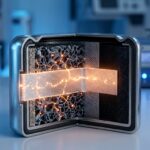
Cutaway view of a battery cell with a thin liquid crystal separator layer
AI-generated illustration Fast charging and long battery life usually pull in opposite directions. Push lithium metal batteries to charge quickly and the lithium can grow into sharp, branch-like deposits that wear out the cell. A KAIST team now reports a separator design that gives lithium ions a straighter route, and it kept 94% of its capacity after 100 fast-charge cycles in the lab. KAIST announced the work on November 9, 2026. It comes from a joint team led by Professors Dong Ki Yoon...
More

DuPont, Microsoft and NobleAI Team Up on AI-Driven R&D

Holographic molecular structures floating above a materials science lab bench
AI-generated illustration Materials science is slow because every promising idea eventually needs a lab test, and labs are expensive. On November 12, 2026, DuPont said it is working with Microsoft and NobleAI to move more of that exploration into software, in a collaboration it says is designed to reduce cycle times for delivering customer solutions, per the company's press release. Three partners, three roles DuPont (NYSE: DD) describes the collaboration as combining its application exp...
More

ClinicalTrials.gov Modernization: New PRS, APIs and AI

Every drug, device and therapy that reaches patients starts as a study, and for more than two decades the public record of those studies in the United States has lived in one place: ClinicalTrials.gov. Run by the National Library of Medicine (NLM) at the National Institutes of Health, the registry has quietly undergone one of the largest technology overhauls in federal health data. In May 2026, NLM announced that its multi-year modernization of both the public website and the submission sys...
More