PolyU Implant Glows to Show It Works, With No Battery Inside

A thin transparent film on a tissue sample glowing green under UV light while an ultrasound probe sends waves toward it
AI-generated illustration Implanted electronics have a visibility problem. Once a device is under the skin, nobody can easily tell whether it is intact, powered or breaking down, and a battery adds its own limits and leakage risks. A team at The Hong Kong Polytechnic University (PolyU), working with Yonsei University in South Korea, has demonstrated a different approach: an implant with no battery that powers itself from ultrasound and glows so its condition can be seen from outside the ...
More


AKU’s Tele-ICU Wins Doctors’ Trust, but Rural Gaps Remain

Illustration of a central hospital linked by glowing lines to rural clinics, with a doctor consulting a phone at a patient bedside
AI-generated illustration Picture a junior doctor on a night shift in a district hospital in Pakistan. A patient on the ward is deteriorating, there is no intensivist in the building, and the nearest specialist is hundreds of kilometres away. What the doctor does next is often a phone call. A new study from Aga Khan University (AKU) asks what the doctors on the other end of that call think of the service, and what stops them from acting on the advice. The paper, published on 2 November 2...
More

AKU’s Machine Learning Maps Hidden Diabetes Risk Groups

AI-generated illustration Every hospital discharge leaves behind a trail of diagnosis codes. Most of the time those codes are used for billing and then forgotten. A team at Aga Khan University (AKU) in Karachi asked a different question: if you hand fourteen years of those codes to an unsupervised machine learning algorithm, will it find patterns that doctors and hospital planners should care about? The answer, published in BMJ Open, is yes. Working with records from 78,271 adults with d...
More

11 Smart Glasses Compared: Features and Healthcare Potential

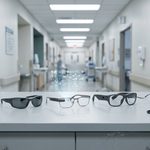
AI-generated illustration Smart glasses spent a decade as a punchline. In 2026 they became a shelf category. You can now buy camera glasses for $299, display glasses that caption a conversation in your lens, and standalone AR frames that map the room around you. Hospitals are paying attention for two opposite reasons: researchers are showing that a camera on a clinician's face can make AI notes more accurate, while risk managers are writing policies to keep those same cameras out of exam...
More

Ohio State and Microsoft Plan a Five-Year Smart Hospital Push

Modern smart hospital at dusk with data connections and a digital twin overlay
AI-generated illustration Hospitals are slow to change, yet the pressure to modernize is constant. On November 10, 2026, The Ohio State University and Microsoft announced a five-year strategic partnership that bundles several modernization efforts into one plan: a smart hospital, a cloud migration, a unified data platform, and AI for clinicians and researchers. The facts below come from Microsoft's announcement on Microsoft Source, which describes the partnership between Microsoft an...
More

Google Cloud Launches Gemini for Healthcare, an Agentic AI Layer

Hospital corridor with a holographic network linking records, scans and a clinician tablet
AI-generated illustration Healthcare teams rarely lack data. They lack a way to pull it together fast enough to act on it. Patient history sits in one system, coverage rules in another, and billing details in a third. On November 10, 2026, Google Cloud introduced a product aimed squarely at that gap: Gemini for healthcare, an agentic AI solution for providers and health plans. The details come from Google Cloud's launch press release, which describes a product in preview, built on Google...
More

Da Vinci 5: The Surgical Robot That Keeps Getting Upgrades

Most surgical robots are judged by what they can do on the day they ship. The da Vinci 5, Intuitive's fifth generation multiport system, was built to be judged differently: by how much it can learn to do afterward. Two and a half years after its U.S. clearance, the platform has picked up the sense of touch in Europe, cardiac indications across three continents, more than 100 software updates and a stated path toward remote surgery. It is quickly becoming the clearest example of a surgical r...
More

TriNetX Launches Human-Validated Facts From Clinical Notes

Clinical notes hold some of the most useful facts in medicine, from disease stage to biomarker results, yet they are written in free text that computers struggle to read. AI can now pull facts out of notes quickly, but researchers want to know whether those facts can be trusted. In a press release dated November 10, 2026, TriNetX announced a product aimed squarely at that question. This is a news summary of the company's announcement, not medical advice. What TriNetX launched TriNetX, a ...
More

CMU’s ESTIMATA-EX Uses Phone Photos to Estimate Surgical Blood Loss

In many operating rooms, one of the most important numbers is still an educated guess: how much blood has the patient lost? Chiang Mai University in Thailand says it has built an AI system to replace that guess with a measurement. In a university announcement dated 2 November 2026, the team introduced ESTIMATA-EX, which estimates blood loss and counts blood-soaked surgical materials from photos taken on a smartphone or tablet. This article covers the announcement as news and is not medical ...
More

Newcastle and Ufonia Trial Dora, an Empathetic AI Phone Assistant

Picture a follow-up phone call that never gets rushed, never runs late and never depends on whether a clinic has enough staff that week. That is the idea behind Dora Care, a generative AI assistant now being trialled in the UK's National Health Service. According to a Newcastle University press release published on 6 November 2026, the assistant holds spoken telephone consultations with patients who live with a long-term illness, helping clinicians keep track of how they are doing. This art...
More

Tamu Massif, the “World’s Largest Single Volcano”.

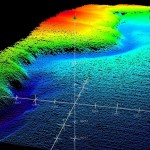
After 36 days of battling sharks that kept biting their equipment, scientists have returned from the remote Pacific Ocean with a new way of looking at the world’s largest and possibly most mysterious volcano, Tamu Massif. The team has begun making 3-D maps that offer the clearest look yet at the underwater mountain, which covers an area the size of New Mexico. In the coming months, the maps will be refined and the data analyzed, with the ultimate goal of figuring out how the mountain was formed....
More

VISTA pinpoints earliest giant galaxies

ESO’s VISTA survey telescope has spied a horde of previously hidden massive galaxies that existed when the Universe was in its infancy. By discovering and studying more of these galaxies than ever before, astronomers have, for the first time, found out exactly when such monster galaxies first appeared. Just counting the number of galaxies in a patch of sky provides a way to test astronomers’ theories of galaxy formation and evolution. However, such a simple task becomes increasingly hard as astr...
More

An inside look at the Big Bang.

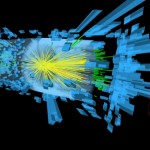
The Large Hadron Collider began its second run of experiments in June after a two-year hiatus from being the world’s largest particle accelerator. And the results are promising, achieving the highest energy ever achieved in a laboratory by colliding subatomic particles at 13 teraelectronvolts (TeV), physicists hope that these high-energy collisions may produce entirely new particles and simulate conditions seen in the early universe, according to an MIT statement.Soon to be published in Physics ...
More

Oxygen found on Comet

For the first time ever, molecular oxygen has been found on a comet. Comet 67P/Churyumov–Gerasimenko, currently being orbited by the European Space Agency's Rosetta spacecraft, is the subject of a study published in Nature. According to ESA researchers, the oxygen present in the comet's surrounding gasses has likely been there since the formation of the comet. "It is the most surprising discovery we have made so far, because oxygen was not among the molecules expected in a cometary coma," the Un...
More

Bloodhound: World’s fastest racing car.

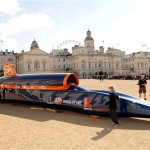
The supersonic car built to smash the current land speed record has been unveiled in London. Its top speed is more than 1,000mph an hour which is faster than a speeding bullet, and it is powered by Rolls-Royce jet engines and a rocket. The Bloodhound is part of a £40m project spearheaded by Richard Noble, a man who held the record between 1983-1997 at 633.4mph, to break the land speed record. Noble's record was beaten by RAF fighter pilot Andy Green in 1997, who hit more than 763mph. Now work...
More

WiFi Nomiku is the world’s first WiFi-enabled immersion circulator

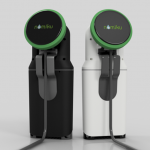
Nomiku allows a temperature-controlled way of cooking conveniently at your home. WiFi Nomiku, the world’s first WiFi-connected immersion circulator is a convenient device for sous-vide cooking with a small footprint, a large screen for displaying recipes, Wi-Fi connectivity to allow communication between chefs and has an app that’s both iOS and Android compatible. Sous vide is the method of cooking vacuum-sealed food in a controlled low-temperature water bath. It is a top chef's secret wea...
More

Canberra schoolboy William Grame wins trip to NASA for diabetes test-strip invention

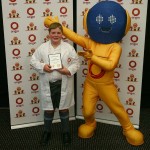
William Grame's invention to dispose of diabetics blood testing strips, has won the 11-year-old a trip to NASA. William's invention is a small, plastic disposal unit that fits into testing kits used by diabetics. Diabetics can feed strips into it throughout the day, and dispose them all when it gets full. William has 3D-printed a device that safely stores diabetes test strips. It is well established that diabetes wreaks havoc on people's blood sugar levels, but one thing we don't usually think a...
More

Stanford team combines logic, memory to build a ‘high-rise’ chip.

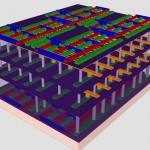
Stanford researchers are building layers of logic and memory into skyscraper chips that are smaller, faster, cheaper and taller. They have created a four-layer prototype high-rise chip in which the bottom and top layers are logic transistors. Sandwiched between them are two layers of memory. The vertical tubes are nanoscale electronic "elevators" that connect logic and memory, allowing them to work together to solve problems. The circuit cards are like busy cities in which logic chips compute...
More

Paralyzed man walks again after cell transplant

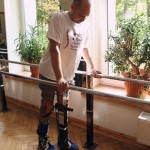
The world's first cell transplant enables paralyzed man to walk. A ground-breaking cell transplant, the world's first, was carried out by surgeons in Poland in collaboration with scientists in London on Darek Fidyka who was paralyzed from the chest down after a brutal knife attack in 2010 left with an 8mm gap in his spinal column. He showed no sign of recovery despite many months of intensive physiotherapy. Darek's injuries were so severe that no level of therapy could give him feeling bac...
More

The Giant Magellan Telescope

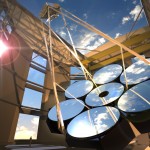
Imagine looking into space using this super-giant telescope. With a gigantic 39-meter aperture, the Giant Magellan Telescope is a super-giant earth-based telescope that promises to revolutionize our view and understanding of the universe. It will be constructed at the Las Campanas Observatory in Chile and is expected to take 10 years to build. The GMT has a unique design that offers several advantages. It is a segmented mirror telescope that will use seven of the world's largest mirrors...
More

Vertical Farming

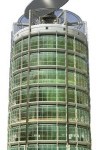
An eco-friendly architectural concept for cultivating food within skyscrapers. Dickson Despommier, a microbiologist and professor of environmental health sciences at Columbia University, is credited with popularizing the concept of vertical farming. It is estimated that over the next four decades, our population will increase by 3 billion people and that 80% of us will be living in cities Many scientists are concerned that the amount of land required to feed us in the future will not be...
More

Amazing Batteries that Run on Any Liquid

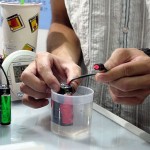
A new, “organic” battery has been invented which generates a charge within 10 seconds and will last anywhere from two days to a week depending on the liquid. The world’s first chlorophyll organic battery has been invented by Chungpin Liao, a professor at the Graduate School of Electro-Optic and Material Science of National Formosa University in Taiwan. He claims that his battery can be filled up with almost anything, including water and urine, and it can provide electricity from two to sev...
More

Horizontal Showers Enhance Showering Experience

A horizontal shower provides, for the first time, a reclining shower experience. Imagine if you could extend your nap time by a precious 10 minutes or so when you wake up. Most of us can barely muster the energy to get out of bed and go into the shower in the morning. German company Dornbracht has actually made this possible by creating a device called the Horizontal Shower which washes you while you are lying down. The shower looks like a tanning bed mounted to the wall with an array of s...
More

Skyscraper Uses Built-In Wind Turbines for Energy

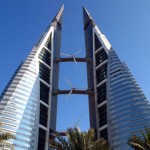
Bahrain is the home of the first skyscraper to have wind turbines integrated into the structure of the building. The Bahrain World Trade Center is a 50-story twin tower complex containing two identical towers that rise over 240 meters in height. The sail-shaped buildings offer a visually striking image and boasts of one its very unique feature which is the 3 giant wind turbines tying the two “sails” together. It is the first skyscraper in the world to integrate wind turbines into its desig...
More

World’s first 3D-printed electric car

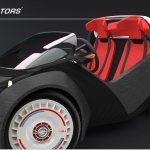
Order and pick up your customized personal car. That's the vision of Arizona-based company Local Motors. Local Motors plans to transform the traditional automotive world with the launch of a three dimensional (3D) printed car next year. Strati is an electric car developed by Local Motors and manufactured in collaboration with Cincinnati Incorporated and Oak Ridge National Laboratory. It is made from ABS plastic that has been enforced with carbon fibre. The car was manufactured using a Larg...
More

Tires That Cannot Go Flat

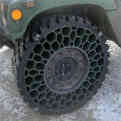
Biomimicry, the science that imitates nature to create new products, is the field responsible for new, airless, tubeless, tires that cannot go flat. Resilient Technologies, a Wisconsin based company, is behind this invention. The inspiration for the design of the tire was found in nature: the honeycomb. Instead of using a pressurized air cavity, the tire design relies on a geometric pattern of six-sided cells that are arranged in a matrix like a honeycomb. The tire has uniform flexibility ...
More