NU Scientists Advance Efforts in the Early Detection of Alzheimer’s

One minute. The Alzheimer’s Association estimates that in just that small period of time, almost every minute, a person in the United States will develop one of the top-10 killers in America: Alzheimer’s. 2015 was the first year in which Alzheimer scientists were able to see some real, substantial success in clinical trials. Bill Klein, in neurobiology and neurology at Northwestern, and his team have turned their focus away from what was once considered the cause of Alzheimer’s, plaques an...
More

Boeing Creates a Self-Cleaning Airplane Lavatory

Many passengers are reluctant to use airplane lavatories given that so many individuals use them on a single flight, leaving it a potential “germ-zone.” But what if the lavatory could clean itself after every use? To make airplane lavatories more hygienic, Boeing engineers and designers have created a self-cleaning prototype bathroom that uses ultraviolet (UV) light and non-touch technology to kill 99% of germs, all in less than three seconds. The prototype lavatory consists of touc...
More

Hot Jupiter ‘Companions’ could shed light on planet formation.

The discovery of two exoplanet "companions" provides insight into the hot Jupiter solar system, discovered from data collected by the K2 mission. Out of the some 300 hot Jupiters that have been spotted over the past two decades, these new objects are the first close-in planets to be discovered. Discovery of two close-in planet companions sheds new light on planet formation. For the past 20 years, astronomers peered into the night sky, puzzled about a type of planet called hot Jupiters. As they a...
More

Our Bodies, our Microbial Clouds.

We leave a trail of microbes on every surface we touch, from pens and keyboards to door handles and elevator buttons. Everywhere you go, in everything you do, you are surrounded by an aura of microbes. They drift down from your hair when you scratch your head, they fly off your hand when you wave to your friend, and they spew out of your mouth when you talk. Even when you sit around doing nothing, you’re sitting in your own, personal microbial bubble. In addition to leaving our mark on surfaces,...
More

Using Holography to better understand clouds.

Scientists have just made a breakthrough in understanding how clouds interact with the surrounding air by studying clouds in unprecedented detail. Raymond Shaw, a professor of physics at Michigan Tech, looks at the smallest part of clouds, droplets. To understand groups of droplets, Shaw and the NCAR team flew airplanes through fluffy, cottonball cumulus clouds in Wyoming and Colorado. Aboard the plane, the team took detailed 3-D images with an instrument called the Holographic Detector for Clou...
More

Wasp’s Venom could be a powerful weapon against Cancer

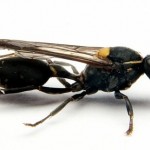
A toxin in Polybia paulista's sting reportedly kills tumor cells without harming healthy ones. It seems like an oxymoron, but scientists say the venom of Polybia paulista, a wasp native to Brazil, fits that description. According to a study published in the Biophysical Journal this week, the wasp’s venom contains a toxin, named MP1, that selectively destroys tumor cells without harming normal ones. The BBC called the venom a potentially powerful “weapon against cancer.” In lab tests, MP1 was ...
More

RoboBee : The tiny flying submarine

A Harvard University lab has developed the first insect-size robots capable of flight and swimming. Researchers at the Harvard Paulson School have demonstrated a flying, swimming, insectlike robot, easing the way to create future aerial-aquatic robotic vehicles. Coming from the Harvard Microrobotics Lab, this discovery can only mean one thing, swimming RoboBees. The biggest challenge involved the conflicting design requirements. Aerial vehicles require large airfoils such as wings or sails to...
More

Wikipearls: Bite-sized foods wrapped in edible Food packaging

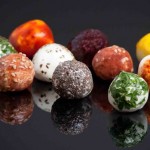
WikiFoods, Inc. has developed a revolutionary, plastic-free food and beverage packaging technology that delivers Triple Good called WikiPearls™ which are good for you, good for the environment, and just plain good. Created by David Edwards, a Harvard professor and biomedical engineer, the intention of the WikiPearl is to kill the packaging and make its relationship with food symbiotic. WikiPearl skins are inspired by the way nature packages fruits and vegetables. These skins are delicious ...
More

Kidney Transplant Breakthrough

Yokoo and his team who have found a way to grow a full-sized kidney using stem cells. The American Cancer Society estimates there will be 61,000 new cases of kidney cancer in the United States this year. About 14,000 Americans will die from the disease in 2015. Kidney cancer is rare in people under the age of 45. The average age in the United States for diagnosis is 64. Still, there are more than 100,000 people in the United States awaiting kidney transplants, according to the National Kidney...
More

Sponge-like “Swelling Glass” absorbs toxins in contaminated water

A new glass has been developed that swells up like a sponge to clean contaminated groundwater. A company called Absorbent Materials has used nanotechnology to create a nanobot particle made from glass that can absorb pollutants from dirty water. The glass particles act like sponges by attracting and binding contaminants to themselves and expanding eight times in size during the process. However, unlike a sponge, these nanobots are hydrophobic, meaning they don't absorb water. This new s...
More

Portable water purification device for the ultimate traveler

 Inventor Micheal Pritchard has found a solution for safe drinking water with a handheld water purification device that creates fresh water instantly. The LifeSaver bottle provides refreshing, germ free water anywhere. The bottle itself is designed to be uncomplicated and user friendly. This bottle consists of long lasting cartridges which help remove viruses and bacteria from contaminated water. One just needs to pump the products manually a few times and pristine drinking water will start t...
More