
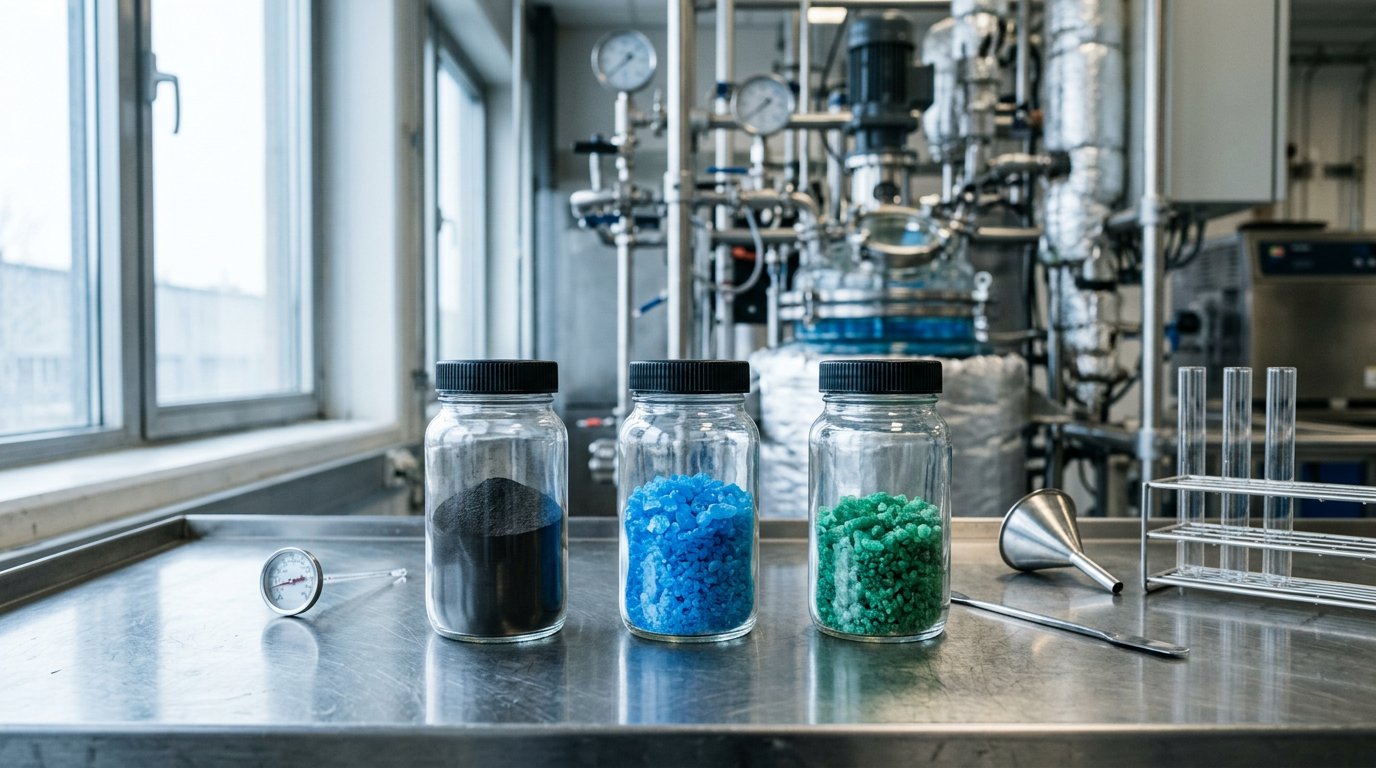
Every electric car battery eventually reaches the end of its life, and what is inside it is valuable: nickel, cobalt and lithium that Europe mostly imports. On November 23, 2026, Fortum Battery Recycling reported a step toward closing that loop. In a company news release, it said it has produced the first customer samples of battery-grade nickel sulphate, cobalt sulphate and lithium hydroxide from recycled batteries.
The samples came out of a pilot campaign in Harjavalta, Finland. They are not yet a commercial product, but they are the kind of proof customers ask for before they sign supply deals.
What Fortum announced
According to Fortum, the pilot campaign demonstrated the potential of its next-generation recycling technology to make high-quality, low-emission battery materials. The three outputs are the chemicals cell makers need: nickel sulphate and cobalt sulphate for cathode materials, and lithium hydroxide, a common lithium source for high-nickel cathodes.
The company says the materials are now going through customer qualification, the stage where a buyer tests whether a material meets its own specifications. Fortum describes the feedback so far as highly encouraging, and says talks about possible offtake agreements are progressing with several customers. Those are early signals rather than signed contracts, and the release gives no volumes or prices.
The idea inside the process
The release points to one key design choice: the internal circulation of essential reagents. In plain terms, the process reuses the chemicals it needs instead of consuming fresh ones at every step. Fortum says this sharply reduces chemical consumption, limits waste and cuts CO2 emissions.
It also frames the process as industrial electrification. Clean electricity drives the transformation of the materials, so the plant does not depend on large amounts of external chemical inputs. Fortum does not publish yield, purity figures or energy numbers in the release, so those details remain something to watch for in later technical disclosures.
Why Harjavalta matters
The site is already central to European battery policy. Fortum notes that in 2025 the European Commission named the Harjavalta facility a Strategic Project under the Critical Raw Materials Act. Business Finland granted the extension project EUR 86.4 million in support, and Fortum has signed a grant agreement with CINEA for up to EUR 40 million from the EU Innovation Fund.
Anssi Airas, Head of Fortum Battery Recycling, said that building a competitive and resilient battery value chain needs not only additional capacity but technologies that provide a real competitive advantage. He added that the recent progress shows how recycling can help customers build more resilient supply chains and strengthen Europe’s battery materials ecosystem.
What it means
- Recycled content is becoming a material grade, not a compromise: Battery-grade samples are the threshold for use in new cells.
- Regional supply: Producing the chemicals close to European cell makers is the main strategic argument behind the project.
- Process design is the differentiator: Reusing reagents inside the process targets both cost and environmental footprint.
- Qualification comes next: Customer testing and offtake agreements will show whether pilot quality holds up at larger scale.
The honest caveat is scale. A pilot campaign produces samples, not tonnes. The step from samples to a reliable commercial stream is where many recycling ideas have stalled, and Fortum has not given a date for that step in this release.
Conclusion
Fortum’s announcement is modest in wording but meaningful in direction. Making nickel, cobalt and lithium chemicals that customers can qualify for batteries is what turns recycling from a waste service into a materials supply business. The next signals to look for are the results of customer qualification and any signed offtake agreements.