
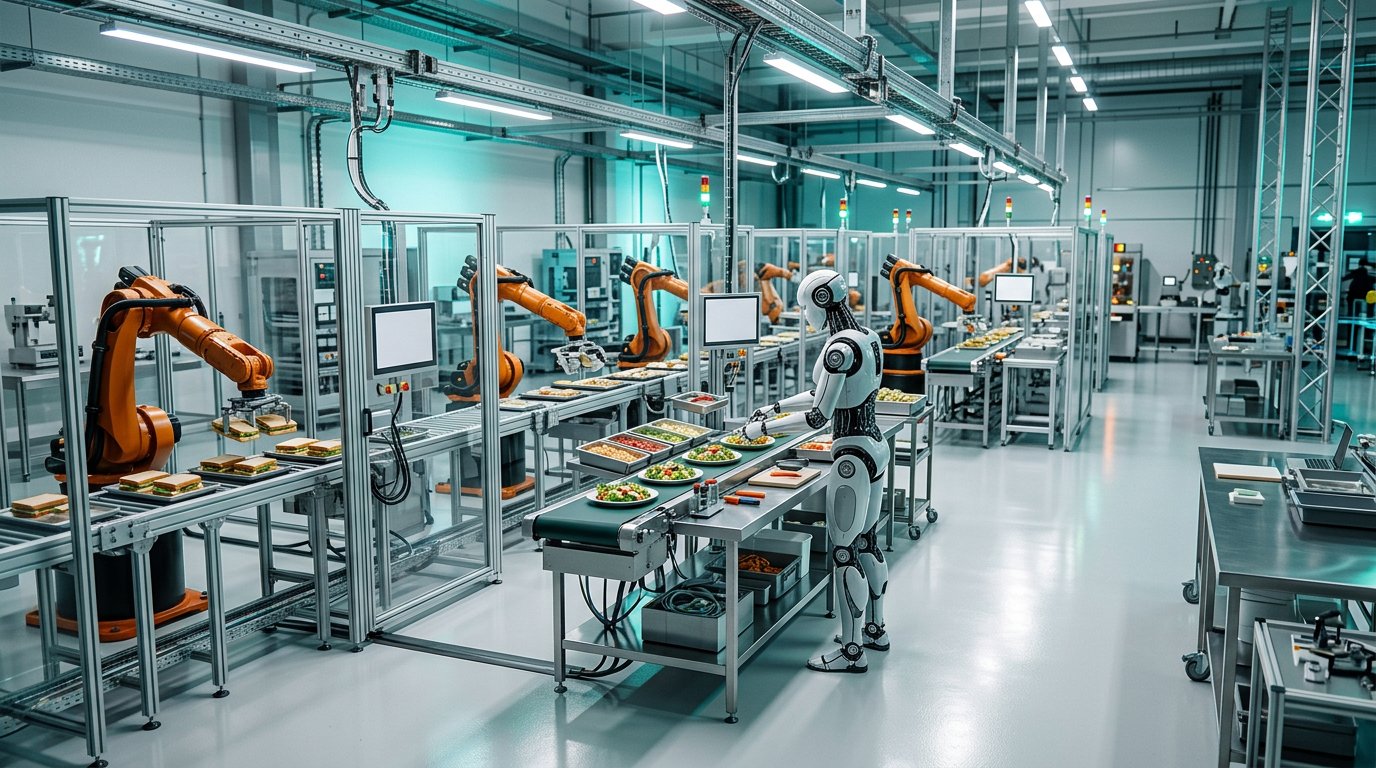
Europe’s industrial strength rests on know-how: how to handle materials, run machines and assemble products. What if that knowledge could be taught to robots and become an asset its owners could license? That is the idea behind a new project in Spain. On November 27, 2026, NEURA Robotics announced that it, the Government of Aragón and Costa Group have signed a Memorandum of Understanding to set up NEURA Gym Aragón and a surrounding Physical AI Model Zone.
What the partners agreed
The project envisages investment in the double-digit millions of euros, with NEURA taking a leading investment role. The partners target an opening in mid-2027. NEURA will build and operate the Gym, supplying the technology and tools that link training to application development. It is an MoU, so the exact amount, site and scope are still to be settled.
The roles are split. The Government of Aragón supports regional coordination, skills development and connections with businesses, universities and research institutes. Costa Group, an agri-food group based in Fraga, is the industrial anchor partner, and its agricultural and industrial operations will supply practical challenges. Universities such as the University of Zaragoza contribute research methods and talent.
How a robot gym works
NEURA describes physical AI as robots using perception and learned capabilities to perform tasks in the real world. Building reliable applications needs experience with real materials, tools and processes. The Gym combines robotics, AI models, simulation and NEURA’s Neuraverse platform so that companies can bring their own tasks and process knowledge, train and test applications on different robot systems, and judge performance before deployment.
The shared infrastructure is meant to be open to small and medium-sized businesses as well as large industrial groups, alongside universities and technology centers. Early participants, NEURA says, can build practical experience and prepare teams for deployment.
From the gym to the real world
The planned Physical AI Model Zone extends that work into designated environments where partners can test applications under representative operating conditions, potentially in industrial operations and selected service settings. Its scope, locations and participants are still to be defined, and any extension into publicly accessible areas will require appropriate permissions and safety measures. The point, according to NEURA, is to show how an application performs beyond a training cell before wider rollout.
The partners will first explore uses that raise productivity and reduce physically demanding or repetitive work, with further openings in logistics, automotive and manufacturing.
Who owns the skills
One notable design choice is commercial. Through Neuraverse, participants keep control of their company-specific knowledge and robotic skills. They can keep a skill private or license it to others under agreed terms, and the Aragón site will connect to NEURA’s growing network of Gyms elsewhere. CEO David Reger put it this way: “A company that develops a valuable skill should benefit when others use it.”
What it means
For manufacturers and food producers without a robotics lab, a shared gym lowers the barrier to trying physical AI on their own processes. For the region, NEURA expects skilled roles in operating the Gym, training users and developing applications, plus work for local suppliers and technical service providers. The open questions are practical: final investment, location and how the licensing model works in practice.
Bottom line
NEURA Gym Aragón is a plan, not yet a building. If it opens on schedule in mid-2027, it will test whether turning shop-floor expertise into licensable robot skills can become a real business model for European industry.