




Harvard Scientists Make Solar Power Production More Efficient

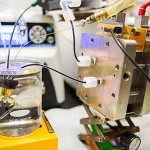
Solar power could be increased tenfold without additional storage in the near future. A team of Harvard scientists and engineers demonstrated a rechargeable battery that could make storing electricity from intermittently available energy sources, like sun and wind which is safe and cost-effective for both residential and commercial use. Much of the nation’s energy policy is premised on the assumption that clean, renewable energy, such as wind and solar power, will require huge quantities o...
More
Posted in Uncategorized

Breakthrough technology for hearing impaired

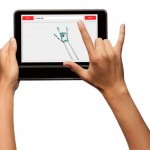
MotionSavvy is putting forward a device to help the hearing impaired listen and speak. UNI, a sensitive tablet that interprets sign language and turns it into text and audible voice. There are plenty of things to take for granted in this life, and the ability to hear is one of them. MotionSavvy, is building a tablet case that leverages the power of the Leap Motion controller in order to translate American Sign Language into English and vice versa. The entire 6-person team is deaf. Known...
More
Posted in Uncategorized

How flu viruses gain the ability to spread

New study reveals the soft palate is a key site for evolution of airborne transmissibility. Researchers from MIT and the National Institute of Allergy and Infectious Diseases (NIAID) made the surprising finding on Flu virus, while examining the H1N1 flu strain, which caused a 2009 pandemic that killed more than 250,000 people Scientists have discovered that the soft palate which is the soft tissue at the back of the roof of the mouth, plays a key role in viruses’ ability to travel through ...
More
Posted in Uncategorized

RapidSOS acts as a fast “data pipeline” for 911

Mobile app automatically sends a caller’s location and medical data to dispatch centers. RapidSOS, a startup with MIT roots, is gearing up to release a one-touch 911 app that automatically sends location and preset medical data from a smartphone to dispatch centers, with aims of drastically reducing the time it takes first responders to get to a scene. According to the Federal Communications Commission (FCC), around 70 percent of 911 calls today are made via mobile phones. Yet when fieldin...
More
Posted in Uncategorized

Combination drug therapy shrinks pancreatic tumors in mice

A combination of two drugs appears to be effective at shrinking pancreatic cancers in laboratory mice Pancreatic cancer is one of the most deadly of all human cancers, and its incidence is increasing. A combination of two drugs, one already approved by the Food and Drug Administration, appears to be effective at shrinking pancreatic cancers in laboratory mice, according to a new study by researchers at the Stanford University School of Medicine. The drugs, which affect the structure and fu...
More
Posted in Uncategorized

Sugru: First ever Moldable Glue that Turns into Rubber

Sugru is a moldable putty made out of silicone rubber and can be used to repair electronics along with its many other uses. Designer-inventor Jane Ni Dhulchaointigh’s unique silicone technology, Sugru feels like play-dough, and it's that easy to use too. Sugru is a moldable putty made out of silicone rubber and can be used to repair electronics along with its many other uses. The product adheres to many surfaces, fills in gaps better than most glues and sets in 30 minutes giving you tim...
More
Posted in Uncategorized

The Senz° XL storm-proof umbrella

Gerwin Hoogendoorn, has recently introduced the Senz umbrella which can withstand winds of up to 62 miles per hour. With its aerodynamic shape that resists turning inside out, Senz umbrellas also come in different three sizes, the original, the XL and the mini. The unusual shape reminds one of a stealth fighter jet or perhaps something Batman might pull out if caught in a downpour. The XL storm-proof umbrella from Senz° with its striking silhouette is capable of withstanding winds of up...
More
Posted in Uncategorized

Scaling up production of 2D electronic materials

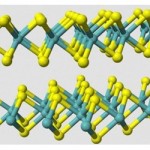
An MIT-led group of researchers has claimed to have determined a way to make large sheets of molybdenum telluride. Sheets of graphene and other materials that are virtually two-dimensional hold great promise for electronic, optical, and other high-tech applications but the biggest limitation in unleashing this potential has been figuring out how to make these materials in the form of anything larger than tiny flakes. Now researchers at MIT and elsewhere may have found a way to do so. The g...
More
Posted in Uncategorized

Researchers discover the key to staying dry underwater

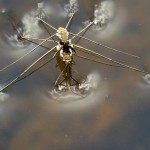
Imagine staying dry underwater for months. The latest research from Northwestern University engineers identified a wide variety of surfaces that can do just that. Through a combination of analysis of “air-retaining insect surfaces” used by aquatic insects, aging and degassing experiments on material surfaces, and molecular simulations, these engineers believe they understand what keeps certain surfaces dry underwater. Saturation of air within “valleys” on surfaces (less than 1µm wide) defl...
More
Posted in Uncategorized

Cheaper, Faster, More Accurate Test to Identify Gene Defects in Heart Patients

Stanford researchers have designed a new technique to test cardiac patients for any genes that might be causing problems. This new technique could eventually enable doctors to diagnose genetic heart diseases by rapidly scanning more than 85 genes known to cause cardiac anomalies. For the subset of heart patients whose illness isn’t caused by a lifetime of cigarettes, trans fats or high glycemic foods, a new genetic test developed at the Stanford University School of Medicine may be able to...
More
Posted in Uncategorized

Telomere Changes Predict Cancer

A simple blood test may be able to predict cancer years before a diagnosis. A distinct pattern in the changing length of blood telomeres, the protective end caps on our DNA strands, can predict cancer many years before actual diagnosis, according to a new study from Northwestern Medicine in collaboration with Harvard University. "Understanding this pattern of telomere growth may mean it can be a predictive biomarker for cancer," Dr. Lifang Hou, the lead study author and a professor of prev...
More
Posted in Uncategorized

Penn scientists make breakthrough in Alzheimer’s disease research

Scientists reveal a cure for Alzheimer's disease may be closer than we thought. University of Pennsylvania researchers have made some exciting strides in the fight against Alzheimer's and they hope the discoveries will lead to a delay in the onset of the disease. Alzheimer's disease is a heartbreaking condition for both patients and their family members. Almost half the people who live to be 85 years old will develop Alzheimer's disease. Dr. Lee and Dr. John Trojanowski have lead the wa...
More
Posted in Uncategorized

Scientists produce cancer drug from rare plant in lab

Stanford scientists produce cancer drug from rare plant in lab to benefit human health. Elizabeth Sattely, an assistant professor of chemical engineering at Stanford, and her graduate student Warren Lau have isolated the machinery for making a widely used cancer-fighting drug from an endangered plant. Many of the drugs we take today to treat pain, fight cancer or other diseases were originally identified in plants, some of which are endangered or hard to grow. In many cases, those plants a...
More
Posted in Uncategorized

Inexpensive, Portable Wound-Healing Device

A novel and inexpensive device known as the wound pump has been invented by Daielle Zurovcik, which is a portable wound-healing device. This negative pressure pump helps to heal acute and chronic wounds, which will be affordable to low-income populations because it does not need electricity or batteries to operate and has a unique, simplified design. After surgery a patient requires care for an amputated limb or the open wounds of a fractured bone. Vacuum pumps speed healing by removing ba...
More
Posted in Uncategorized

No More Needle Injections with Micro-Poration

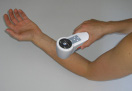
Micro-poration is a painless method of transferring medication through the skin. The latest invention called micro-poration is a painless method of transferring medication (intraepidermal) into the body using laser technology. It is an alternative to injecting a needle. A handheld laser creates micro pores in the epidermis of the skin for the transfer of molecules. This device delivers medication and vaccinations directly through the skin. As an alternative to injecting a needle, mic...
More
Posted in Uncategorized

A revolutionary way to treat acne with nanoparticles

Lauric acid – a natural product found in coconut oil and human breast milk -- shines as a possible new acne treatment. A revolutionary and Innovative system of using ‘nano- bombs’ to treat acne has been developed by Dissaya Nu Pornpattananangkul, a doctoral bioengineering student at the University of California San Diego . Common acne also known as "acne vulgaris," afflicts more than 85 percent of teenagers and over 40 million people in the United States and current treatments have undesir...
More
Posted in Uncategorized

RoboSAM Robot can call for human help if needed

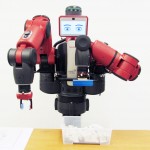
Smart Robot can assess its situation and call a human for help when it needs assistance. Researchers from the University of Maryland have developed RoboSAM (ROBOtic Smart Assistant for Manufacturing), an industrial robot smart enough to know when something is wrong, to pause and to call a human for help. The new RoboSAM, based on the Baxter industrial robot platform, is able to estimate the probability it can complete a task before beginning it, and can ask a human help if necessary. Cu...
More
Posted in Uncategorized

World’s Fastest Motor from Celeroton

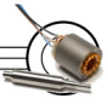
The world’s fastest motor which can spin in excess of 1 million revolutions per minute has been developed by researchers at ETH Zurich's Department of Power Electronics and marketed by the Swiss company, Celeroton. The need for smaller electronic devices requires smaller holes, which means we need smaller, faster, more efficient drills. This new motor could be applied for faster drills and more efficient and compact compressors for cars and airplanes. Compared to collapsed stars that sp...
More
Posted in Uncategorized

Israeli Mini-Scanner Can Tell The Difference Between Food, Drink or Pills

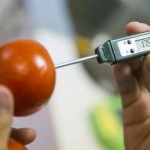
An Israeli start-up has launched a pocket device which analyses instantly the composition of food, drink, medication or other objects. It is the first molecular sensor that fits in the palm of your hand. The process it uses is simple. Its SCiO tool sends data on the chemical makeup of a substance to the user's smartphone, where a variety of applications will present the results. The SCiO does not need physical contact with the substance being tested because it uses a beam of light in wh...
More
Posted in Uncategorized

AquaVenture’s SeaBird – Fastest Personal Submarine

Sea Bird is one of the fastest personal submersible vehicles today, without a motor of its own. An innovative and exciting way to satisfy your adventurous needs and see what lies beneath the waves, Seabird is the latest personal submarine SeaBird from Aquaventure’s. The company recently announced a new version of its SeaBird submarine .This unique submarine doesn’t rely on an engine in order to move through water. It is attached to a boat on the surface via a 400 feet long cable and is tow...
More
Posted in Uncategorized

Personalized heart models for surgical planning

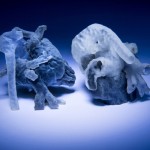
A new system can convert MRI scans into 3D-printed, physical models in a few hours. Researchers at MIT and Boston Children’s Hospital have developed a system that can take MRI scans of a patient’s heart and, in a matter of hours, convert them into a tangible, physical model that surgeons can use to plan surgery. The models could provide a more intuitive way for surgeons to assess and prepare for the anatomical idiosyncrasies of individual patients. MRI data consist of a series of cross ...
More
Posted in Uncategorized

Ebola color coded Protection Suit

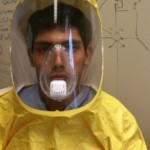
The Johns Hopkins University’s has developed a new personal protective suit for front-line health care workers in Ebola. The suit uses technology originally designed by Johns Hopkins to keep cancer patients comfortable. This new suit is color coded to show what surfaces are safe to touch when removing it. The suit, intended for use in future Ebola outbreaks like the 2014 epidemic that killed thousands in West Africa, has elements to keep the wearer more comfortable than existing suits, reduce...
More
Posted in Uncategorized

Nightlight Simplified With Touch

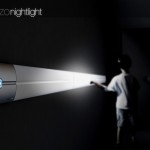
The Senzo Nightlight is an innovative lamp designed to provide a soft light that follows you in the dark at the very touch of your fingertips. With this kind of design, there isn't any more stumbling and fumbling in the night. Designed by Soledad Clavell and Marcos Madia, and inspired by the notion of ‘fingertips skimming the walls until you reach the door’, this tubular Senzo Nightlight is fitted on the wall approximately 80 cm above the floor for maximum convenience. At night if you don’...
More
Posted in Uncategorized

The New Swan Umbrella Dryer

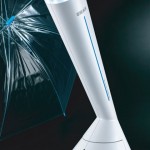
A new concept called the Swan umbrella dryer has just been introduced, to dry a wet umbrella to avoid water from spilling all around the place. We all get caught out in the rain on many occasions and need to use an umbrella. Sometimes it is really pouring along with thunderstorms and windy climate. We get totally drenched along with a soaking umbrella in such situations. The house gets very slippery and messy when the umbrella is all wet and we normally tend to leave them on the front p...
More
Posted in Uncategorized

The Combi Monitor: The Screen That Prints

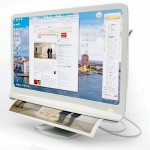
The combi Monitor is a screen that doubles up as a printer as well. The latest sleek design of the Document Extractor Combi Monitor, puts touch screen controls, paper scanning, and smart screen printing harmoniously into one computer body. This new device boasts a 27" display with a graphical user interface designed for simple touch-screen use. This monitor is just not a convergence product which is combined of printer and scanner but has the solution for saving our precious working times ...
More
Posted in Uncategorized

Aspirin’s disease-fighting abilities

A new study provides key insights into aspirin's disease-fighting abilities. A recent study led by researchers at the Boyce Thompson Institute (BTI) shows that salicylic acid, an active metabolite of aspirin, blocks HMGB1, an inflammatory protein associated with a wide variety of diseases. Aspirin is one of the oldest and most commonly used medicines, but many of its beneficial health effects have been hard for scientists and physicians to explain. Researchers have identified a key targ...
More
Posted in Uncategorized

Penn Research Simplifies Recycling of Rare-earth Magnets

Chemical technology can instantaneously separate elements and enable a smaller scale recycler. The latest news from researchers at the University of Pennsylvania is that they have pioneered a process that could enable the efficient recycling of two metals, neodymium and dysprosium. These elements comprise the small, powerful magnets that are found in many high-tech devices. Despite their ubiquity in consumer electronics, rare-earth metals are, as their name suggests, hard to come by. Mi...
More
Posted in Uncategorized

Drug disarms deadly C. difficile bacteria without destroying healthy gut flora

Scientists find way to disarm deadly bacteria without destroying the good ones in your gut. The new discovery of a drug that blocks the intestinal pathogen without killing resident, beneficial microbes may prove superior to antibiotics, currently the front-line treatment for infection. Nearly half a million Americans get infected in a single year by Clostridium difficile, a dangerous bacteria that causes life-threatening diarrhea. It kills 15,000 people a year. It's the most common cause o...
More

Posted in Uncategorized

Building a brain from the inside out

Researchers at UC San Francisco have succeeded in mapping the genetic signature of a unique group of stem cells in the human brain that seem to generate most of the neurons in our massive cerebral cortex. The human cerebral cortex contains 16 billion neurons, wired together into arcane, layered circuits responsible for everything from our ability to walk and talk to our sense of nostalgia and drive to dream of the future. In the course of human evolution, the cortex has expanded as much as...
More

Posted in Uncategorized

Paralyzed man walks again after cell transplant

The world's first cell transplant enables paralyzed man to walk. A ground-breaking cell transplant, the world's first, was carried out by surgeons in Poland in collaboration with scientists in London on Darek Fidyka who was paralyzed from the chest down after a brutal knife attack in 2010 left with an 8mm gap in his spinal column. He showed no sign of recovery despite many months of intensive physiotherapy. Darek's injuries were so severe that no level of therapy could give him feeling bac...
More

Posted in Uncategorized