
Finding a new drug or material is mostly an exercise in elimination: chemists synthesize and test enormous numbers of molecules to find the few that behave the way they need. A machine-learning model from MIT called CheMeleon aims to shrink that pile by predicting molecular properties from very little experimental data.
According to MIT News (November 6, 2026), the work was reported in the Journal of Chemical Information and Modeling and comes from the group of chemical engineering professor Wi...
More
Artificial Intelligence
XPENG’s GroundingPI Puts Perception First in Physical AI
Robots are getting better at reasoning and planning, yet they still stumble on a more basic question: where, exactly, is the thing I am supposed to pick up? On November 4, 2026, XPENG announced GroundingPI, an open-source visual perception model built with researchers from Peking University, The University of Hong Kong and other institutions, that tackles that question head-on.
According to XPENG's announcement, the roughly 4-billion-parameter model reached an average score of 73.68 across 34 p...
More
Higgs Realtime Duplex: Boson’s AI That Talks While It Works
Most voice assistants still work like walkie-talkies: you speak, you stop, they answer. Boson AI wants to retire that rhythm. On November 5, 2026, the company introduced Higgs Realtime Duplex, which it describes as its first full-duplex interactive "omni" model. According to Boson's announcement, it listens, watches and talks at the same time, shows a face of its own, and keeps thinking and calling tools in the background without pausing the conversation.
That is a meaningful shift for anyone b...
More
Tencent Hy4 Joins the Top Tier of Open-Source AI Models
Tencent has pushed its in-house AI family a big step up the ladder. On November 4, 2026, the company announced Hy4, the latest generation of its Hy large language model, and said it now sits among the strongest open-source models in the world. According to Tencent's announcement, the model weights and system cards will follow "in the coming days," which would put a model with vision, computer use and long-horizon agent skills into the hands of developers who want to run it themselves.
For busin...
More
Light-Based AI Training Cuts Computation, Tokyo Team Shows
AI is hungry for power, and one answer is to stop doing all the math on transistors. Researchers at the University of Tokyo, working with NTT researchers, have shown a way to train and run a neural network on light, using far less computation than conventional methods. The work was announced on November 5, 2026 and published in Nature Computational Science.
The problem: AI that costs too much to run
According to the University of Tokyo press release, training AI models can consume vast amounts ...
More
Flower’s Endeavor 1.1 Puts Frontier AI Under Customer Control
Companies adopting AI keep running into the same trade-off. The most capable models live behind closed APIs, where the provider decides what changes, where the computing happens and what customers may do with the results. Running an open model yourself brings control, but it also brings the burden of hosting it and understanding how it behaves. On November 3, Flower Labs announced a model meant to remove that choice. According to the company's announcement, Endeavor 1.1 is a frontier model that...
More
NVIDIA RTX Spark Brings On-Device AI Characters to Games
For most of gaming history, the people you met inside a game could say only what a writer had scripted for them. Ask a guard something off-script and you got silence or a canned line. NVIDIA wants to change that, and its latest developer update shows how close the company thinks we are. In an October 27 post on the NVIDIA Technical Blog, the company laid out a bundle of AI tools for its new RTX Spark PC platform: a small language model built to run game characters on the device itself, a faster...
More
NVIDIA’s 9.6M-Parameter RE-USE Cleans Speech in Any Language
Most speech-cleanup models are big. NVIDIA's new NemotronLabs RE-USE is not: it has 9.6 million parameters, yet its model card shows it matching or beating open models that are 26 to 50 times larger on several measures. NVIDIA researchers promoted the open model on October 30, 2026, according to GIGAZINE.
What it does
According to NVIDIA's Hugging Face model card, RE-USE is a multilingual universal speech enhancement model. It restores speech damaged by noise, reverberation, clipping, bandwidth...
More
KAIST’s CluSTER Cuts AI Fine-Tuning Time by 70%
Training a specialist AI model is expensive mostly because of repetition. Researchers at KAIST say they have found a way to cut that repetition: a method called CluSTER fine-tuned a model on medical question-and-answer data using about 31 percent of the dataset and cut training time by 69.6 percent, with only a small loss in accuracy, Aju Press reported on November 2, 2026.
The problem: fine-tuning wastes GPU time
Large language models first learn broad knowledge, then developers fine-tune them...
More
Mischief 1: A Video Model Tuned by Lab-Grown Neurons
Brain cells in the lab, software on the GPUOn October 30, The Biological Computing Co. (TBC) launched mischief 1, an image-to-video model it says generates video five times faster than its base model. It is available through fal and OpenRouter and starts at half a cent per second, so a five-second clip costs 2.5 cents and 100 clips cost $2.50, according to the company's release.The unusual part is the origin story. TBC grows living neurons in its lab and studies how they respond to signals. It ...
More
Mistral Large 4 Goes Open-Weight at 1 Trillion Parameters
What was releasedOn October 29, Mistral AI released the weights of Mistral Large 4, nicknamed Le Chonk, three weeks after a public preview. According to Hugging Face's launch post, it is a multimodal, multilingual mixture-of-experts model with about 1 trillion total parameters, about 49 billion active per token, and a 1 million token context window. It takes text and images in and produces text.Two official variants are available, FP8 and NVFP4, plus community GGUF builds. The Next Web reports ...
More
One Robots.txt Rule to Opt Out of AI Training
A single switch instead of manyOpenAI, Google, Microsoft and Anthropic said on October 30 that they will adopt a new standard for publishers who do not want their pages used to train AI, The Verge reported. Until now, a site had to signal its wishes to each company separately. The new control lets a publisher apply one preference across multiple AI companies.The proposal comes from Kevin Kelley, a technical lead for standards at Anthropic, and moves through the Internet Engineering Task Force, ...
More
DeepSeek’s Super Agent Aims to Manage Itself
A team of AIs behind one chat windowOn October 31, DeepSeek published a new architecture it calls Super Agent, according to a November 1 report by The Asia Business Daily. The pitch is simple: today's AI assistants answer one question at a time, but the people supervising them can only follow so much. DeepSeek says a person can manage roughly three to five conversations at once, which caps how much work AI can actually absorb.Super Agent tries to lift that cap by turning a single assistant into...
More
NVIDIA Nemotron 3.5 Transcribe: One Open Model for 40 Languages
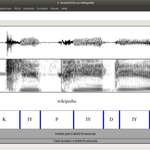
A speech waveform, spectrogram and phonetic transcription, the raw material speech-recognition models learn from. Image: Wugapodes, via Wikimedia Commons, LGPL.
A transcript can capture every word and still miss what people need: who said what, a translation for a colleague, or the correct spelling of an industry term. On October 28, 2026, NVIDIA released Nemotron 3.5 Transcribe, a free, open-weight model designed to do all of that in one place, steered by plain-language instructions.
One...
More
Genie 4: DeepMind’s World Model Now Simulates Sound and Speech

The London building at 6 Pancras Square that houses Google DeepMind. Photo: Gciriani, via Wikimedia Commons, CC BY-SA 4.0.
Imagine typing "a crowded rural train station in 1980s Japan" and then walking around inside it, hearing the platform noise, changing the weather with a sentence, and watching passengers react. That is the promise of Genie 4, the new world model Google DeepMind announced on October 27, 2026. It is still a research preview, but it shows how quickly AI is moving from gener...
More
GPT-6.1 Terra: OpenAI’s Cheaper Model for Everyday Computer Work
Most of the work that fills an office day is not frontier mathematics. It is reading an invoice and typing its numbers into accounting software, filling out a form, checking a drawing, or trimming a video. On October 26, 2026, OpenAI released a model aimed squarely at that kind of work: GPT-6.1 Terra, a fast, mid-tier model that combines visual reasoning with the ability to operate a computer, at a standard API price 50% lower than the model it replaces.
The launch says a lot about where the A...
More
What Did Hubble See on Your Birthday?

Hubble explores the universe 24 hours a day, 7 days a week. That means it has observed some fascinating cosmic wonder every day of the year, including on your birthday.
The Hubble spacecraft has been in space for 32 years now and has gone through several repairs and maintenance work when the Shuttle missions were ongoing. The flying observatory has completed one billion seconds of operations in Zero gravity and conducted more than 1.5 million scientific observations.
What did Hubble look ...
More
Dream Chaser first and only winged commercial spaceplane that is a Supersonic Space Craft

The Dream Chaser spaceplane is a multi-mission vehicle capable of supporting a variety of LEO needs. It can be customized for both domestic and international customers via vehicle configuration, launch site, destination, landing site, duration, and a host of other variables. We have entered into agreements with multiple international space agencies. Together we are developing technologies, applications, and missions for Dream Chaser-based space systems.
Dream Chaser is an American reusable l...
More
MIT’s Computer Science and Artificial Intelligence Laboratory (CSAIL)

MIT's Computer Science and Artificial Intelligence Laboratory pioneers new research in computing that improves the way people work, play, and learn.
Their focus is on developing fundamental new technologies, conducting basic research that furthers the field of computing, and inspiring and educating future generations of scientists and technologists.
CSAIL has its roots in two MIT computing powerhouses: The Laboratory for Computer Science (LCS) and the Artificial Intelligence Laboratory (A...
More
iScanner smart app that can count items, measure space, solve math problem, scan documents & OCR it.

iScanner is a document scanner that create HD scans of contracts, notes, papers, books, or other documents and OCR them.
https://www.youtube.com/watch?v=TQ0o2J854T4
iScanner will turn your device into a powerful digital office and help you instantly scan, save, and share any document in PDF, JPG or TXT formats. Go paperless with our fast PDF scanner - store all your documents in a neat mobile office right on your phone.
AI and computer visionRecognition is based on a self-learning ne...
More
Oak Ridge National Laboratory (ORNL) scientist (Anisur Rahman & Tomonori Sait and team) have developed glue so strong that it can hold 300 lbs at 400 F.

ORNL researchers used polymer chemistry to transform a common household plastic into a reusable adhesive with a rare combination of strength and ductility, making it one of the toughest materials ever reported.
ORNL scientists Md Anisur Rahman, Tomonori Saito & team worked to develop this glue.
Researchers at the Department of Energy’s Oak Ridge National Laboratory used polymer chemistry to transform a common household plastic into a reusable adhesive with a rare combination of streng...
More
Awais Ahmed’s ‘Pixxel’ – A space technology company creating world’s highest resolution hyperspectral satellite-imaging constellation.

Pixxel is a space technology company working towards creating the world's highest resolution hyperspectral imaging satellite-imaging constellation. The images gathered by Pixxel's satellites will provide up-to-date information relevant to climate monitoring, crop yield prediction, urban planning, and disaster response.
Awais Ahmed is the Founder & Chief Executive Officer of Pixxel.
Pixxel is a space data company, building a constellation of hyperspectral earth imaging satellites a...
More
LeGrow Smart Indoor Planter is a LEGO-like system that makes indoor planting easy.

LeGrow’s self-watering pot modules make indoor planting and maintaining easy. significantly reducing how often your seedlings and saplings need watering, gardening is perfectly practical, whether you’re a beginner or a busy bee.
Indoor Gardening Made Easy, Innovative, and Beautiful
LeGrow combines a sleek, modern aesthetic, cutting-edge technology, and quality material so you can grow and sustain a truly gorgeous garden.
INCLUDED IN THE LEGROW BUILDER KIT - 10 Patented Design ...
More
Rocket Lab – private aerospace manufacturer and small satellite launch service provider

Rocket Lab is a private American aerospace manufacturer and small satellite launch service provider with a wholly owned New Zealand subsidiary.
It developed a sub-orbital sounding rocket named Ātea and currently operates a lightweight orbital rocket known as Electron, which provides dedicated launches for smallsats and CubeSats.
Rocket labs is enabling companies, students, scientists, researchers, governments and entrepreneurs alike to get their ideas to orbit, right now. A solar syst...
More
‘ZED Fellowship’ for learners and aspiring aerospace professionals

Zed Factor Fellowship is a new fellowship for aerospace professionals from under-represented groups.
Founded by a group of space professionals from diverse backgrounds, the Zed Factor Fellowship empowers and engages learners and aspiring aerospace professionals from underrepresented backgrounds through hands-on, practical experiences working in and contributing to the leading companies of the aerospace community.
ZFF fellows create and conduct their own community service project, ampl...
More
LeoLabs – mapping platform for space, for objects in low Earth orbit

LeoLabs is building a global network of radar arrays that can track smaller debris than we can today, and with better precision.
With their network of ground-based, phased array radars, LeoLabs produces high-resolution data on objects in low Earth orbit (LEO), providing unparalleled support for industries that rely on satellite services.
Tracking & Monitoring
The commercial off-the-shelf tracking service providing automated, independent monitoring for satellites - even those small...
More
University Of Pennsylvania’s researcher Mohsen Azadi and his team levitate object using light.

At University of Pennsylvania in the mechanical engineer Igor Bargatin’s lab, Mohsen Azadi and his team were able to successfully demonstrate levitation of an object using light. Team built a "nanocardboard,” a material that’s as thin as a few strands of DNA and weighs less than a thousandth of a gram, but stiff enough to resist flopping for levitation.
Crookes radiometer - also known as a light mill, the instrument is essentially a glass bulb under partial vacuum with paper vanes that are b...
More
CubeSat – miniature satellites
A CubeSat (U-class spacecraft) is a type of miniaturized satellite for space research that is made up of multiple cubic modules of 10 cm × 10 cm × 10 cm size.
CubeSats are a class of nanosatellites that use a standard size and form factor. The standard CubeSat size uses a "one unit" or "1U" measuring 10x10x10 cms and is extendable to larger sizes; 1.5, 2, 3, 6, and even 12U. Originally developed in 1999 by California Polytechnic State University at San Luis Obispo (Cal Poly) and Stanford U...
More
Terahertz (THz) spectroscopy systems – allowing us to gain new insights about many-body quantum kinetics
Terahertz spectroscopy detects and controls properties of matter with electromagnetic fields that are in the frequency range between a few hundred gigahertz and several terahertz (abbreviated as THz).
Terahertz (THz) represents the portion of the electromagnetic radiation between the microwave and the infrared region.
Terahertz (THz) spectroscopy systems are widely employed to retrieve the chemical and material composition of a sample. This is single-handedly the most important driving mo...
More
NASA Artemis Program

Artemis program is a U.S. government-funded international human spaceflight program that has the goal of landing "the first woman and the next man" on the Moon, specifically at the lunar south pole region by 2024.
NASA is leading the program, but expects international partnerships to play a key role in advancing Artemis as the next step towards the long-term goal of establishing a sustainable presence on the Moon, laying the foundation for private companies to build a lunar economy, and eve...
More