Interact with real objects by reaching through your screen.

Unreal MIT invention Inform - allows you to reach through the screen and touch things. Recently unveiled, inFORM is MIT's new scrying pool for imagining the interfaces of tomorrow. Almost like a table of living clay, the inFORM is a surface that three-dimensionally changes shape, allowing users to not only interact with digital content in meatspace, but even hold hands with a person hundreds of miles away inFORM can also interact with the physical world around it, for example moving obj...
More

Search for better biofuels microbe’s leads to the human gut

Microbes in the human gut can digest fiber in order to ferment them into nutrients that nourish human cells. The latest research by scientists is that microbes in the human gut can digest fiber, breaking it down into simple sugars in order to ferment them into nutrients that nourish human cells. Scientists have scoured cow rumens and termite guts for microbes that can efficiently break down plant cell walls for the production of next-generation biofuels, but some of the best microbes actua...
More

Lowering Beta-blocker dose may boost survival after heart attack

A new study suggests that low dose beta-blockers may be as effective as high dose after a heart attack. Surprisingly, heart attack patients live as long or even longer on one-fourth the suggested dose. In a surprising new finding, heart attack patients treated with a substantially lower dosage of beta-blockers than used in earlier clinical trials, survived at the same rate, or even better, than patients on the higher doses used in those trials. In fact, patients who received one-fourth of ...
More

‘Osmo Numbers’ Takes the Fear Out Of Figures

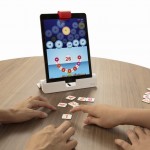
iPad Game System Osmo wants to make learning math fun. Osmo, the clever educational gadget for iPads, got a new game. Numbers teaches math with special tiles. Aiming to make math fun and engaging, Osmo Numbers offers multiple ways to solve each puzzle and real time feedback. Numbers is an under-the-sea themed game where players have to come up with equations that equal a given integer using physical tiles. If they are successful, a trapped fish is freed from a bubble. As numbers appear ...
More

Wikipearls: Bite-sized foods wrapped in edible Food packaging

WikiFoods, Inc. has developed a revolutionary, plastic-free food and beverage packaging technology that delivers Triple Good called WikiPearls™ which are good for you, good for the environment, and just plain good. Created by David Edwards, a Harvard professor and biomedical engineer, the intention of the WikiPearl is to kill the packaging and make its relationship with food symbiotic. WikiPearl skins are inspired by the way nature packages fruits and vegetables. These skins are delicious ...
More

Improving Solar Efficiency with Stanford coating

Stanford engineers invent transparent coating that cools solar cells to boost efficiency. A transparent material that can improve the efficacy of solar cells, this coating has been invented by three Stanford engineers and has the tendency to radiate thermal energy into space which is released by solar cells, making cells cool. This invention shunts away the heat generated by a solar cell under sunlight and cools it in a way that allows it to convert more photons into electricity. The gr...
More

Genetic Mutations Clue to Breast Cancer Relapse

Scientists have discovered a genetic clue to why some breast cancers relapse, which could lead to better treatment. The latest research on breast cancer was presented at the European Cancer Congress (ECC) in Vienna by Rd. Lucy Yates, leader of the team from the Wellcome Trust Sanger Institute at the University of Cambridge, Xinhua. The research team has found genetic mutations as clues to breast cancer relapse, which could tell whether breast cancer is likely to relapse after treatment. ...
More

Stretchy, origami battery powers Samsung smartwatch

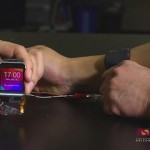
Stretchy batteries inspired by origami could power smartwatches and other wearable electronics. Newly introduced, stretchy origami-style batteries could power the wearable devices of the future, say researchers who have managed to power a Samsung Galaxy Gear 2 with a battery of their own invention. The lithium-ion batteries developed by a team from Arizona State University are capable of stretching to 150 percent of their natural size and of powering existing smartwatches. Scientists wo...

More

Harvard Scientists Make Solar Power Production More Efficient

Solar power could be increased tenfold without additional storage in the near future. A team of Harvard scientists and engineers demonstrated a rechargeable battery that could make storing electricity from intermittently available energy sources, like sun and wind which is safe and cost-effective for both residential and commercial use. Much of the nation’s energy policy is premised on the assumption that clean, renewable energy, such as wind and solar power, will require huge quantities o...
More

Breakthrough technology for hearing impaired

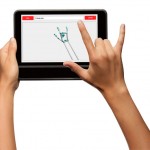
MotionSavvy is putting forward a device to help the hearing impaired listen and speak. UNI, a sensitive tablet that interprets sign language and turns it into text and audible voice. There are plenty of things to take for granted in this life, and the ability to hear is one of them. MotionSavvy, is building a tablet case that leverages the power of the Leap Motion controller in order to translate American Sign Language into English and vice versa. The entire 6-person team is deaf. Known...
More

How flu viruses gain the ability to spread

New study reveals the soft palate is a key site for evolution of airborne transmissibility. Researchers from MIT and the National Institute of Allergy and Infectious Diseases (NIAID) made the surprising finding on Flu virus, while examining the H1N1 flu strain, which caused a 2009 pandemic that killed more than 250,000 people Scientists have discovered that the soft palate which is the soft tissue at the back of the roof of the mouth, plays a key role in viruses’ ability to travel through ...
More

RapidSOS acts as a fast “data pipeline” for 911

Mobile app automatically sends a caller’s location and medical data to dispatch centers. RapidSOS, a startup with MIT roots, is gearing up to release a one-touch 911 app that automatically sends location and preset medical data from a smartphone to dispatch centers, with aims of drastically reducing the time it takes first responders to get to a scene. According to the Federal Communications Commission (FCC), around 70 percent of 911 calls today are made via mobile phones. Yet when fieldin...
More

Combination drug therapy shrinks pancreatic tumors in mice

A combination of two drugs appears to be effective at shrinking pancreatic cancers in laboratory mice Pancreatic cancer is one of the most deadly of all human cancers, and its incidence is increasing. A combination of two drugs, one already approved by the Food and Drug Administration, appears to be effective at shrinking pancreatic cancers in laboratory mice, according to a new study by researchers at the Stanford University School of Medicine. The drugs, which affect the structure and fu...
More

Sugru: First ever Moldable Glue that Turns into Rubber

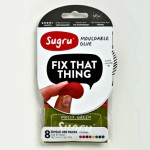
Sugru is a moldable putty made out of silicone rubber and can be used to repair electronics along with its many other uses. Designer-inventor Jane Ni Dhulchaointigh’s unique silicone technology, Sugru feels like play-dough, and it's that easy to use too. Sugru is a moldable putty made out of silicone rubber and can be used to repair electronics along with its many other uses. The product adheres to many surfaces, fills in gaps better than most glues and sets in 30 minutes giving you tim...
More

The Senz° XL storm-proof umbrella

Gerwin Hoogendoorn, has recently introduced the Senz umbrella which can withstand winds of up to 62 miles per hour. With its aerodynamic shape that resists turning inside out, Senz umbrellas also come in different three sizes, the original, the XL and the mini. The unusual shape reminds one of a stealth fighter jet or perhaps something Batman might pull out if caught in a downpour. The XL storm-proof umbrella from Senz° with its striking silhouette is capable of withstanding winds of up...
More

Scaling up production of 2D electronic materials

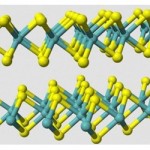
An MIT-led group of researchers has claimed to have determined a way to make large sheets of molybdenum telluride. Sheets of graphene and other materials that are virtually two-dimensional hold great promise for electronic, optical, and other high-tech applications but the biggest limitation in unleashing this potential has been figuring out how to make these materials in the form of anything larger than tiny flakes. Now researchers at MIT and elsewhere may have found a way to do so. The g...
More

Researchers discover the key to staying dry underwater

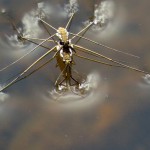
Imagine staying dry underwater for months. The latest research from Northwestern University engineers identified a wide variety of surfaces that can do just that. Through a combination of analysis of “air-retaining insect surfaces” used by aquatic insects, aging and degassing experiments on material surfaces, and molecular simulations, these engineers believe they understand what keeps certain surfaces dry underwater. Saturation of air within “valleys” on surfaces (less than 1µm wide) defl...
More

Cheaper, Faster, More Accurate Test to Identify Gene Defects in Heart Patients

Stanford researchers have designed a new technique to test cardiac patients for any genes that might be causing problems. This new technique could eventually enable doctors to diagnose genetic heart diseases by rapidly scanning more than 85 genes known to cause cardiac anomalies. For the subset of heart patients whose illness isn’t caused by a lifetime of cigarettes, trans fats or high glycemic foods, a new genetic test developed at the Stanford University School of Medicine may be able to...
More

Telomere Changes Predict Cancer

A simple blood test may be able to predict cancer years before a diagnosis. A distinct pattern in the changing length of blood telomeres, the protective end caps on our DNA strands, can predict cancer many years before actual diagnosis, according to a new study from Northwestern Medicine in collaboration with Harvard University. "Understanding this pattern of telomere growth may mean it can be a predictive biomarker for cancer," Dr. Lifang Hou, the lead study author and a professor of prev...
More

Penn scientists make breakthrough in Alzheimer’s disease research

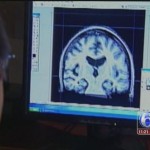
Scientists reveal a cure for Alzheimer's disease may be closer than we thought. University of Pennsylvania researchers have made some exciting strides in the fight against Alzheimer's and they hope the discoveries will lead to a delay in the onset of the disease. Alzheimer's disease is a heartbreaking condition for both patients and their family members. Almost half the people who live to be 85 years old will develop Alzheimer's disease. Dr. Lee and Dr. John Trojanowski have lead the wa...
More

Scientists produce cancer drug from rare plant in lab

Stanford scientists produce cancer drug from rare plant in lab to benefit human health. Elizabeth Sattely, an assistant professor of chemical engineering at Stanford, and her graduate student Warren Lau have isolated the machinery for making a widely used cancer-fighting drug from an endangered plant. Many of the drugs we take today to treat pain, fight cancer or other diseases were originally identified in plants, some of which are endangered or hard to grow. In many cases, those plants a...
More

Inexpensive, Portable Wound-Healing Device

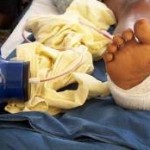
A novel and inexpensive device known as the wound pump has been invented by Daielle Zurovcik, which is a portable wound-healing device. This negative pressure pump helps to heal acute and chronic wounds, which will be affordable to low-income populations because it does not need electricity or batteries to operate and has a unique, simplified design. After surgery a patient requires care for an amputated limb or the open wounds of a fractured bone. Vacuum pumps speed healing by removing ba...
More

No More Needle Injections with Micro-Poration

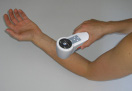
Micro-poration is a painless method of transferring medication through the skin. The latest invention called micro-poration is a painless method of transferring medication (intraepidermal) into the body using laser technology. It is an alternative to injecting a needle. A handheld laser creates micro pores in the epidermis of the skin for the transfer of molecules. This device delivers medication and vaccinations directly through the skin. As an alternative to injecting a needle, mic...
More

A revolutionary way to treat acne with nanoparticles

Lauric acid – a natural product found in coconut oil and human breast milk -- shines as a possible new acne treatment. A revolutionary and Innovative system of using ‘nano- bombs’ to treat acne has been developed by Dissaya Nu Pornpattananangkul, a doctoral bioengineering student at the University of California San Diego . Common acne also known as "acne vulgaris," afflicts more than 85 percent of teenagers and over 40 million people in the United States and current treatments have undesir...
More

RoboSAM Robot can call for human help if needed

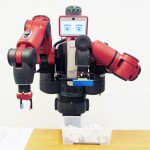
Smart Robot can assess its situation and call a human for help when it needs assistance. Researchers from the University of Maryland have developed RoboSAM (ROBOtic Smart Assistant for Manufacturing), an industrial robot smart enough to know when something is wrong, to pause and to call a human for help. The new RoboSAM, based on the Baxter industrial robot platform, is able to estimate the probability it can complete a task before beginning it, and can ask a human help if necessary. Cu...
More

World’s Fastest Motor from Celeroton

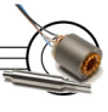
The world’s fastest motor which can spin in excess of 1 million revolutions per minute has been developed by researchers at ETH Zurich's Department of Power Electronics and marketed by the Swiss company, Celeroton. The need for smaller electronic devices requires smaller holes, which means we need smaller, faster, more efficient drills. This new motor could be applied for faster drills and more efficient and compact compressors for cars and airplanes. Compared to collapsed stars that sp...
More

Israeli Mini-Scanner Can Tell The Difference Between Food, Drink or Pills

An Israeli start-up has launched a pocket device which analyses instantly the composition of food, drink, medication or other objects. It is the first molecular sensor that fits in the palm of your hand. The process it uses is simple. Its SCiO tool sends data on the chemical makeup of a substance to the user's smartphone, where a variety of applications will present the results. The SCiO does not need physical contact with the substance being tested because it uses a beam of light in wh...
More

AquaVenture’s SeaBird – Fastest Personal Submarine

Sea Bird is one of the fastest personal submersible vehicles today, without a motor of its own. An innovative and exciting way to satisfy your adventurous needs and see what lies beneath the waves, Seabird is the latest personal submarine SeaBird from Aquaventure’s. The company recently announced a new version of its SeaBird submarine .This unique submarine doesn’t rely on an engine in order to move through water. It is attached to a boat on the surface via a 400 feet long cable and is tow...
More

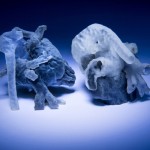
Personalized heart models for surgical planning

A new system can convert MRI scans into 3D-printed, physical models in a few hours. Researchers at MIT and Boston Children’s Hospital have developed a system that can take MRI scans of a patient’s heart and, in a matter of hours, convert them into a tangible, physical model that surgeons can use to plan surgery. The models could provide a more intuitive way for surgeons to assess and prepare for the anatomical idiosyncrasies of individual patients. MRI data consist of a series of cross ...
More

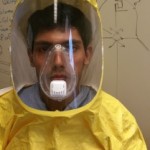
Ebola color coded Protection Suit

The Johns Hopkins University’s has developed a new personal protective suit for front-line health care workers in Ebola. The suit uses technology originally designed by Johns Hopkins to keep cancer patients comfortable. This new suit is color coded to show what surfaces are safe to touch when removing it. The suit, intended for use in future Ebola outbreaks like the 2014 epidemic that killed thousands in West Africa, has elements to keep the wearer more comfortable than existing suits, reduce...
More