
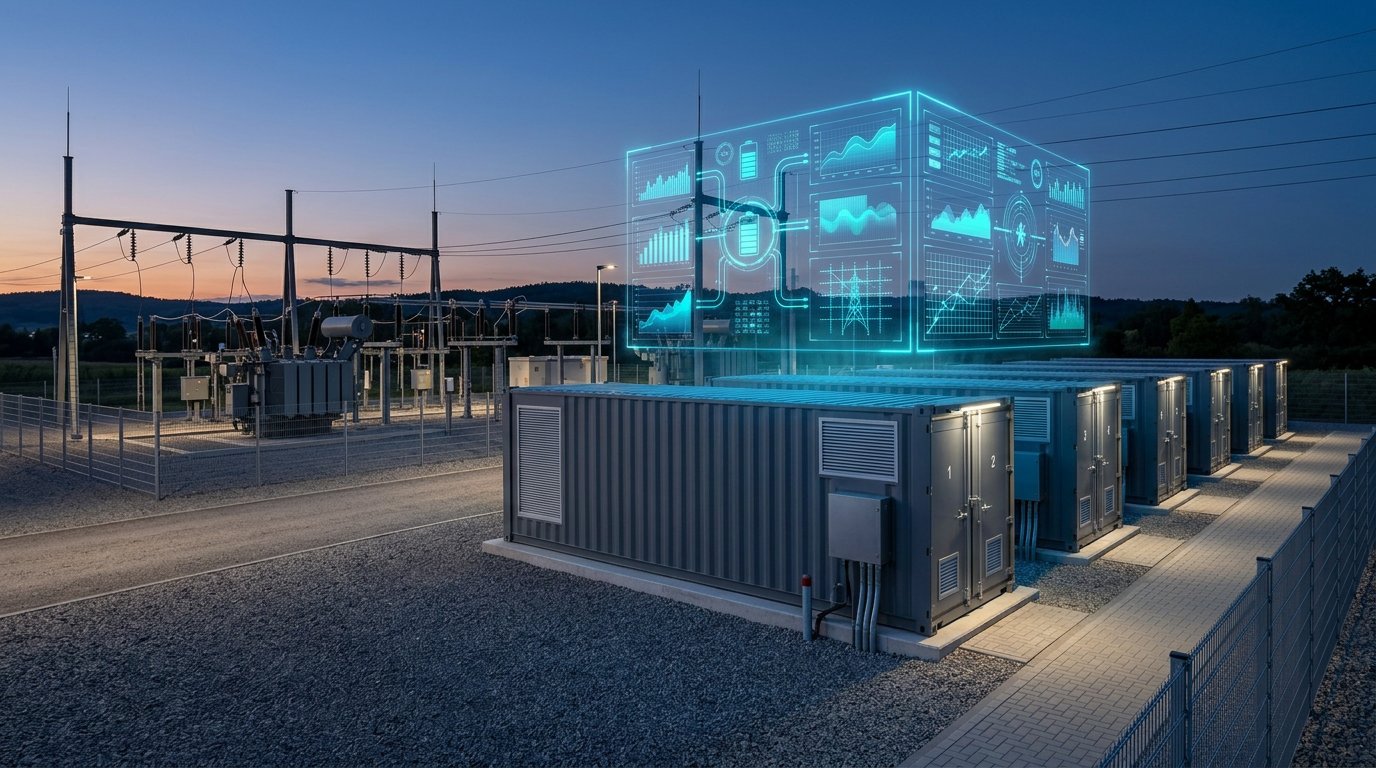
Grid batteries are no longer a novelty; they are infrastructure, and infrastructure needs maintenance, warranties and careful accounting. On November 12, 2026, LG Energy Solution Vertech launched AEROS Intelligence, a software platform that turns the data coming off battery energy storage systems (BESS) into decisions for owners and operators.
What LG Energy Solution Vertech launched
According to the company’s press release, AEROS Intelligence is the analytics layer of the broader AEROS software suite. The suite already includes AEROS Onsite for real-time energy management and plant controls, and AEROS Cloud for monitoring and reporting. The new platform sits underneath them as a decision-support tool.
The company says it combines LG Energy Solution battery design data with more than 17 years of operating data from its energy storage fleet. The goal is to help customers move from reactive asset management to proactive decision making across a project’s lifecycle.
Four capabilities in one platform
The release lists four modules:
- BESS Health gives early insight into battery degradation and site health. Used together with Warranty Hub, the company says it can help customers defer battery augmentation for around 1.5 years and preserve millions in capital value over a project’s life.
- Predictive Maintenance flags risks early to prevent outages. LG Energy Solution Vertech says it offers up to a 90% reduction in downtime for some corrective maintenance actions.
- Energy Optimizer links battery insight to dispatch decisions, balancing asset life against revenue opportunity. The company says it reduces state of charge error by about 30% to 50%.
- Warranty Hub tracks key performance indicators, warranties and the current status of assets against contract terms, including remaining headroom.
These figures are the company’s own claims in a launch announcement, not independent test results, and the release says some of the downtime gains apply to certain corrective actions only.
Why battery data matters now
The release frames the problem plainly: as storage plays a bigger role in power markets, operators must manage asset health, maintenance needs and the tension between earning revenue today and preserving battery value for later. Every cycle a battery runs earns money and also uses up life. Software that models that trade-off, while staying inside warranty terms, can change how a site is operated.
Chief Product Officer Tristan Doherty described battery storage as a critical infrastructure asset for the modern grid, adding that managing it well goes beyond the hardware itself. The pitch is a vertically integrated stack: storage systems, lifecycle services and software from one provider.
What it means
For anyone financing or running storage projects, the interesting idea is warranty-aware operation. Delaying a battery augmentation, the top-up of capacity added as cells age, by about 1.5 years would defer a large capital cost. Whether that holds in practice will depend on each site’s duty cycle and contract, and the release gives no customer case data yet.
It also shows a wider shift in energy storage: competition is moving from cells and containers toward the software that squeezes value from them. Operating data collected over many years becomes a competitive asset in its own right.
The bottom line
AEROS Intelligence is a software launch, not a new battery, but it targets a real pain point for storage owners: knowing the true health of their assets and operating them accordingly. Watch for independent results from live sites to confirm the headline numbers.