
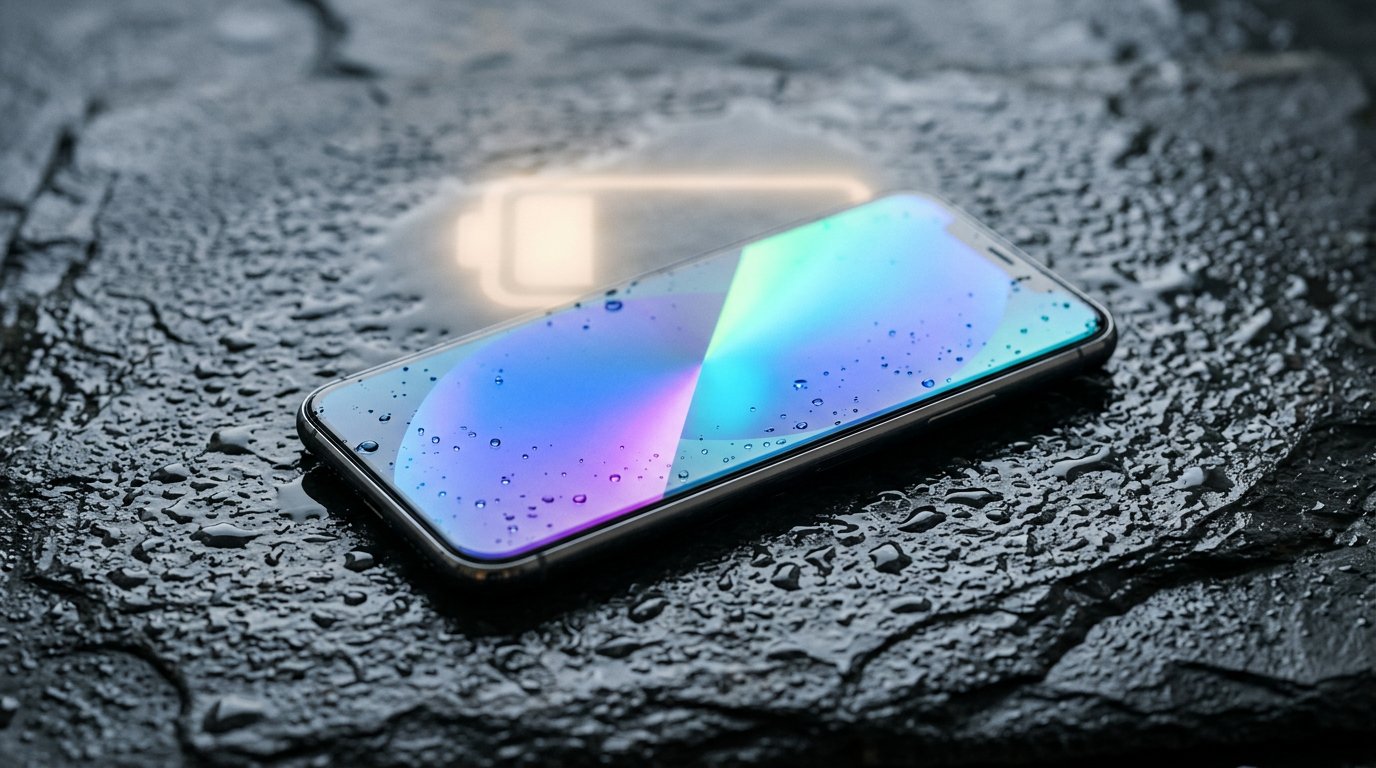
Phone makers often chase bigger numbers: more cameras, more megapixels, more charging watts. Sharp’s newest standard-model phone goes a different way. The AQUOS sense11, announced November 17, 2026, is built around staying power: a thin, light body, a 5,000 mAh battery, a durability rating list that reads like a hiking-gear spec sheet, and a promise of six years of security updates. Here is what Sharp says it delivers.
Light, slim and long-lasting
According to Sharp’s press release, the sense11 weighs about 157 g and is roughly 7.6 mm thick, yet it carries a 5,000 mAh battery. Sharp estimates about two days of use on a full charge, based on its own criteria of 10 hours of use per day: four hours of video streaming, three of music, two of social media and one of gaming. The company notes that real-world battery life will vary.
It also includes Sharp’s proprietary “Intelligent Charge” technology, which controls charging to help reduce battery degradation. Memory gets a boost too: the base model has 8 GB of RAM, about 1.3 times the previous AQUOS sense10, so social apps and browsers can run side by side more smoothly. The phone uses a Snapdragon 7s Gen 3 processor, a 6.2-inch Full HD+ Pro IGZO OLED display with a 1 to 240 Hz variable refresh rate, and a peak brightness of up to 3,000 nits, about 1.5 times the previous model, to help with visibility in strong sunlight.
Built to last, and to stay updated
Durability is a headline feature. Sharp lists IPX5, IPX8 and IPX9 water resistance, IP6X dust resistance, and shock resistance tested against 16 items under the MIL-STD-810H procedures. Sharp is careful to add that the results were confirmed under test conditions and do not guarantee operation or freedom from damage in every situation. The body and camera ring are aluminum.
The software promise matters just as much for longevity. Sharp says the phone gets six years of security updates after launch and up to four OS version upgrades. It ships with Android 17. Those commitments are what turn a good hardware spec into a phone someone can keep for years rather than replace after two.
AI in the camera and the assistant
The camera system pairs two 50.3-megapixel sensors, a standard camera with optical image stabilization and a super-wide camera, with a 32-megapixel front camera. All-pixel phase-detection autofocus uses every pixel to find focus quickly across the frame, and HDR video recording is supported.
New AI features include one that identifies the subject a user wants to keep and removes unwanted people in the background. The phone can also remove shadows cast on food or text and reduce reflections when shooting through glass. A masking feature carried over from the flagship AQUOS R11 makes text on signs and billboards unreadable to protect privacy. Sharp cautions that the effect can be less noticeable depending on the subject and conditions, and processing may take time.
Sharp’s integrated AI service, “NIAH,” comes preinstalled and opens with a double press of the power key. It can answer questions about how to use the phone, help users with home appliance care, and manage daily schedules and household tasks, with lock-screen notifications for registered tasks. Sharp’s linked appliance information is described on a Japanese-language site.
Other details and availability
Extras include a slim W-Box speaker, the “Akarium” light-and-sound notification feature, microSD card support, Osaifu-Keitai mobile payments and NFC, dual connectivity with a nano SIM plus eSIM, and Wi-Fi 6 with Bluetooth 5.2. Storage options are 128 GB with 8 GB of RAM, or, on the SIM-free model only, 256 GB with 12 GB of RAM. The colors are copper, gold, silver and black.
Sales begin sequentially through participating carriers and retailers from November 26, 2026, with a SIM-free model for the open market available the same day. Sharp’s release lists the release date for Japan, so buyers elsewhere should check local availability.
What it means
The AQUOS sense11 is a reminder that not every meaningful phone upgrade is about speed. Long battery life, a durable shell and years of software support lower the cost of ownership and reduce electronic waste, because a phone that stays secure and usable longer does not need replacing as often. The on-device AI features are practical rather than flashy: cleaner photos and a helper that explains the phone itself. All performance, battery and durability figures here are Sharp’s own claims and tests.
Conclusion
For people who want a dependable everyday phone, Sharp is betting that endurance beats spectacle. With a light frame, two-day battery estimate and six years of security updates, the sense11 is a clear example of a device designed to last.