
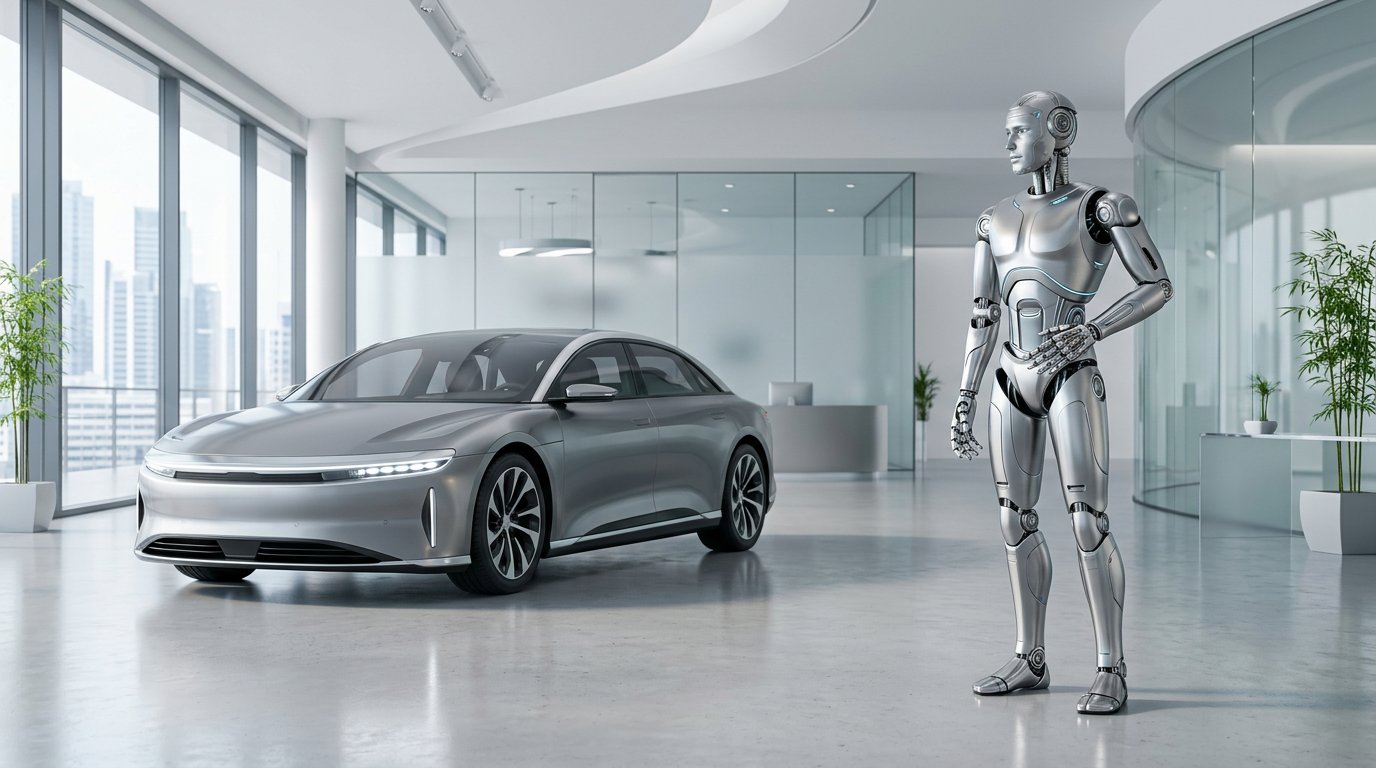
Carmakers keep saying their cars are robots on wheels. XPENG is now trying to make the reverse true too: at its eighth AI Day on November 25, 2026, the company showed a humanoid robot, IRON, built on the same AI and hardware foundation as its vehicles. The details come from XPENG’s press release.
Three systems, one loop
The centerpiece is the Turing Physical AI Architecture, also called VLA 3.0. XPENG says it links three systems working at different speeds. System 0 is the ultra-fast layer that brings body control into the AI loop, coordinating power, energy, communication and execution so the AI gets direct feedback on what the body can safely do. System 1 is the real-time layer, powered by the company’s VLA 2.0 model, which turns what the machine sees into actions. System 2 is the slow, deliberate layer that combines vision-language task planning with an Agent Runtime state machine to plan complex jobs.
Results of each action flow back into the architecture so the system keeps adapting. XPENG also said its VLA 2.0 model, version 6.4.0, supports agent-driven autonomous closed-loop training that speeds overall training by 10 to 12 times, and supports recursive self-improvement and self-distillation across computing platforms.
IRON: brain and body designed together
IRON has 76 degrees of freedom and more than 1,500 tactile sensing points, covering over 80% of key body areas. Three proprietary Turing AI chips handle onboard models and whole-body control. The robot can navigate on its own, accept tasks by voice or app, charge itself, report abnormal conditions and monitor its own health.
The schedule is specific. IRON is due to begin training as a store assistant in XPENG retail stores in the first quarter of 2027, with an official public release targeted for the second quarter of 2027. To get there, XPENG built a Robot Data Factory covering more than 250 scenarios and 15 job categories, reusing data-processing and evaluation tools from its car business. A dedicated automated assembly line includes more than 600 AI-based quality-inspection items and over 1,000 tests for finished robots and key parts.
The company also plans an open ecosystem where partners can download capability packages, customize functions and build new skills. Its commercial model mixes hardware sales, software subscriptions and the open platform, with token-based and scenario-based services still under consideration.
The car as a robot
The same thinking is applied to vehicles. XPENG’s X-VMC 2.0 motion-control system connects propulsion, braking, steering and suspension so AI can influence driving, comfort and energy use. The first feature, VLA Adaptive Deceleration, uses road-scene understanding to adjust deceleration and energy recovery when the driver lifts off the pedal. In XPENG’s urban-congestion tests it increased usable range by 12.4% compared with recovery switched off, and it is due for an over-the-air rollout in December 2026.
XPENG also cited a 13.93% drop in vehicle accident claims in China since VLA 2.0 launched, and said public urban test rides of its NGP assisted-driving system began at its Paris store in November, with a first global rollout aimed at the first half of 2027. Its robotaxi program has obtained an L4 demonstration operation qualification in Guangzhou, with a purpose-built model, YOYO-01, scheduled for 2027.
What it means
The strategic bet is reuse. Cars already carry chips, sensors, control software and safety processes, and a company that mass-produces them has experience in testing and quality. XPENG argues the same stack can accelerate humanoids, while robot sensing can feed back into vehicles. Whether that holds will depend on real deployments: store assistant work in 2027 is a controlled setting, which is a sensible place to start, and the figures above are company-reported rather than independently verified.
For businesses watching physical AI, the useful signals are the dates and the commercial model. A named pilot role, a target release window and a platform for third-party skills suggest XPENG wants IRON to be a product with a software business around it, not a trade-show prop.
Bottom line
XPENG’s message is that intelligence and physical capability should be developed together, whether the machine has wheels or legs. IRON’s first jobs in 2027 will show how far a car company’s playbook can carry into humanoid robotics.
XPENG also framed the program as a long game. It described the shared foundation as spanning proprietary chips, world foundation models, perception, software, control and physical hardware, and said it is extending the same base toward higher-level autonomous mobility. Its ARIDGE unit, for example, is advancing a manned eVTOL aircraft toward airworthiness certification after receiving Type Inspection Authorization documentation and completing certification flight testing, and is working with partners in the United Arab Emirates on a low-altitude regulatory sandbox.
That breadth is both the appeal and the risk. A single architecture can spread engineering cost across cars, robots and aircraft, but each product still needs its own safety case, certification path and customers. Watching which of the announced milestones arrive on time over the next year will say more than the keynote did.