

On 10 November 2026 the Israel Innovation Authority and the Israel Employment Service picked seven training programs to prepare the country’s tech workforce for artificial intelligence. The budget is modest, NIS 10 million, but the goal is pointed: give more than 1,000 people, many of them experienced engineers between jobs, practical AI skills and a route back into research and development roles, according to the Authority’s announcement. It is the latest move in a busy year in which the agency has also put money behind quantum computing, Physical AI, healthcare startups going abroad and climate tech.
For anyone who designs innovation programs, inside a government, a university or a large company, the Authority is worth studying. It is one of the most active public innovation funders in the world, and its 2026 portfolio shows how a national agency can spread risk across people, infrastructure and new companies at the same time.
What the Israel Innovation Authority does
The Authority describes itself as an “independent and impartial statutory public entity” responsible for Israel’s innovation policy, with a mission to “invest in innovation in order to promote sustainable and inclusive growth,” according to its About page. Its main tool is the conditional grant: funding that is repaid through royalties only if the product succeeds commercially. That lets it absorb risk that private investors avoid, particularly in deep tech.
The same page lists three strategic pillars: direct investment in R&D where markets fail, preparing future ecosystems in fields such as quantum computing, AI, bio-convergence, climate tech and advanced manufacturing, and improving competitiveness through human capital, regulation and access to global markets. The work runs through four divisions: Startup, Growth and Advanced Manufacturing, Technological Infrastructure, and International Collaboration. Their tools range from the Tnufa ideation grants and technology incubators to the MAGNET academia-industry consortia and bi-national R&D funds.
Why it matters now
High-tech is the engine the Authority is trying to keep running. Its annual State of High-Tech 2026 report says the sector’s output reached NIS 352 billion in 2025, up 8.2% in real terms, and accounted for 18.3% of GDP and half of the country’s economic growth that year. High-tech exports totaled US$85 billion, about 58% of all exports.
The same report flags weak spots. Real growth in high-tech output averaged about 6.5% a year between 2008 and 2022 but only 1.9% in 2023 to 2025, and exports make up nearly 79% of the sector’s output, which leaves it exposed to a strong shekel. The Authority’s homepage notes the report also recorded the first decline in R&D employees and more activity moving abroad. Much of the 2026 agenda reads as a response: retrain talent, build infrastructure companies cannot afford alone, and create new companies in fields where private capital is thin.
Five Israel Innovation Authority Programs to Know
These five initiatives, all announced in 2026 and drawn from the Authority’s own releases, show the range of tools it uses.
1. Reskilling engineers for AI roles
The newest program pairs the Authority with the Israel Employment Service. Its release lists seven selected providers. They include IMPACT Innovation Labs, which retrains high-tech job seekers on Physical AI for machines, sensors and robots; itworks, with tracks in AI integration and AI hardware and accelerated computing; and Mifalot with Reichman University, offering GenAI & LLM, AI Native Developer and AI Product Builder tracks. Others target graduates from Israel’s geographic periphery and under-represented groups. Each program will report against performance indicators, and Employment Service head Inbal Mashash said success will be measured by “how many participants secure employment and generate income.”

2. A shared national quantum computing infrastructure
In July the Authority launched a NIS 100 million call to build a national quantum computing R&D infrastructure, according to its announcement. The facility must integrate at least three different quantum processing technologies, because no single approach has yet proven superior, and offer services across the stack, from qubits and control systems to error correction, algorithms and applications. The operator must start serving users within 12 months and be fully running within 18. The Times of Israel put the budget at about US$33 million. The case for it appears in an October Authority and C4IR Israel report: Israeli quantum companies grew from about 5 in 2019 to more than 20 in 2025, raised nearly US$500 million in 2025, and are strongest in software, control and orchestration.

3. Venture-studio incubators for Physical AI and human-machine interfaces
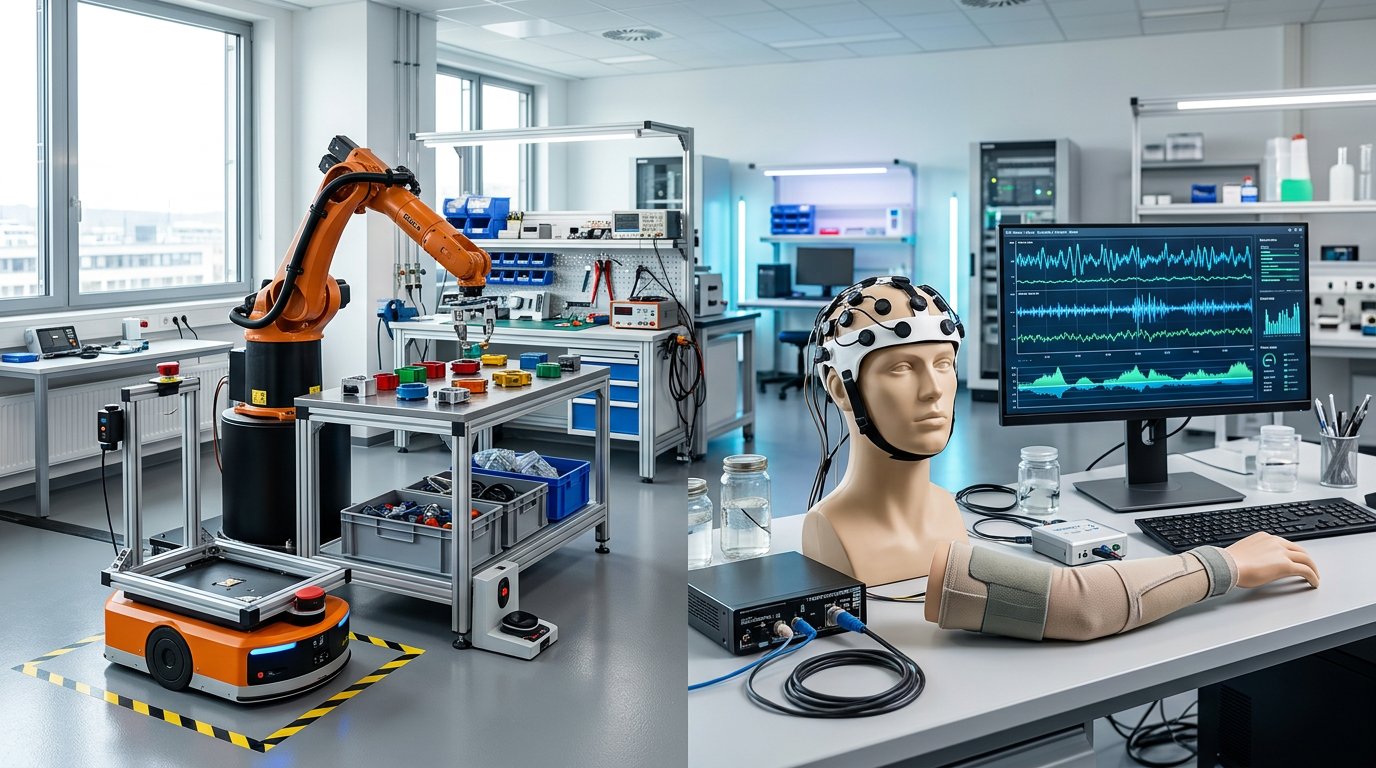
In September the Authority picked two new technology incubators that will build deep-tech startups from scratch rather than wait for them to appear, its release says. Intelligent Machine Labs – Foundry focuses on Physical AI for robotics and industrial automation, backed by funds including Tene Capital, SpringHill Ventures, Schestowitz Ventures and MassChallenge. Augmenta Health Incubator focuses on human-machine interfaces for healthcare, neurotechnology and bio-convergence, with partners including aMoon, Ichilov hospital and Bar-Ilan University. Each gets a five-year franchise and up to NIS 40 million for management and shared labs, and the Authority can invest up to NIS 23 million per startup from pre-seed through Series A.
4. Pilot accelerators that take startups to global customers
Many Israeli startups stall between a working prototype and a first pilot with a big foreign customer. The International Technology Pilot Accelerator Programs, launched in July, aim to close that gap, according to the Authority’s release. The first cohort covers the United States (healthcare), Europe (climate tech) and India, with about ten companies in each and support worth roughly NIS 300,000 per company. The U.S. program, BreakthroughBio, starts with biotech and medtech and is run by MassChallenge Boston, connecting companies with R&D partners, pilot sites, investors and regulatory expertise.
5. A Climate Tech Fellows leadership network
Not every bet is on hardware. In June the Authority committed NIS 12 million over three years to a Climate Tech Fellows Program, run by the Kinneret Innovation Center with Maoz and academic support from Reichman University, its announcement says. Fellows from academia, industry, government and civil society will work on real climate challenges, learn about AI and bio-convergence, and study entrepreneurship, investment and policy. CEO Dror Bin linked the program to rising energy demand from AI and electrification, saying that investing in technology alone is not enough: “We must also invest in the people who will lead this transformation.”

Practical takeaways for innovators
- Fund people and infrastructure, not only companies. Training programs and a shared quantum facility sit next to startup grants in the same portfolio, because companies cannot grow without talent and expensive test beds.
- Build companies where the market will not. The venture-studio incubator model creates startups around validated industrial and clinical needs, with the state sharing risk from pre-seed onward.
- Stay hardware-agnostic in unsettled fields. Requiring three quantum technologies in one facility is a hedge any R&D leader can copy when no architecture has won yet.
- Measure outcomes, not enrollment. The AI reskilling programs will be judged on jobs and income, which makes it possible to scale what works.
- Get to real customers early. Pilot accelerators put startups in front of foreign partners and regulators while products are still being shaped.
Conclusion
The Israel Innovation Authority’s 2026 programs show a national agency adjusting to a slower, more competitive phase for high-tech. Rather than one big bet, it is spreading conditional money across reskilling, shared deep-tech infrastructure, new company creation and market access. For innovation leaders elsewhere, the lesson is the mix: talent, test beds, venture building and customer pilots working together.
Sources
- Israel Innovation Authority, “NIS 10 Million Investment in 7 Tech Training Programs,” 10 November 2026
- Israel Innovation Authority, “About Israel Innovation Authority”
- Israel Innovation Authority, homepage (“All That Is New”)
- Israel Innovation Authority, “State of High-Tech 2026: Macro,” 31 May 2026
- Israel Innovation Authority, “NIS 100 Million to Establish A National Quantum Computing R&D Infrastructure,” 20 July 2026
- Israel Innovation Authority, “Israel Emerges as a Global Quantum Innovation Hub,” 26 October 2026
- Israel Innovation Authority, “Two New Tech Incubators Selected to Establish Companies in Physical AI and Human-Machine Interface,” 16 September 2026
- Israel Innovation Authority, “New International Technology Pilot Accelerator Program,” 29 July 2026
- Israel Innovation Authority, “New NIS 12 Million Initiative Launched to Advance National Climate Tech Leadership Network,” 7 June 2026
- The Times of Israel, “Israel earmarks NIS 100 million for national quantum computing R&D infrastructure,” 20 July 2026