Food giants are not usually the first name that comes to mind for robotics and sensor research, yet Nestlé just gave that work a dedicated home. On November 20, 2026, the company inaugurated its Deep Tech Center in Orbe, Switzerland, a site meant to develop, test and scale advanced technologies for the whole group.
What Nestlé opened
According to Nestlé’s announcement, the Center will bring together experts in advanced technologies and engineering. Its stated purpose is to help the company draw on consumer insights, speed up innovation, deliver superior quality and run more efficiently. The work spans three areas: consumer experiences, research and development, and manufacturing, using AI, smart sensors, robotics and connected systems.
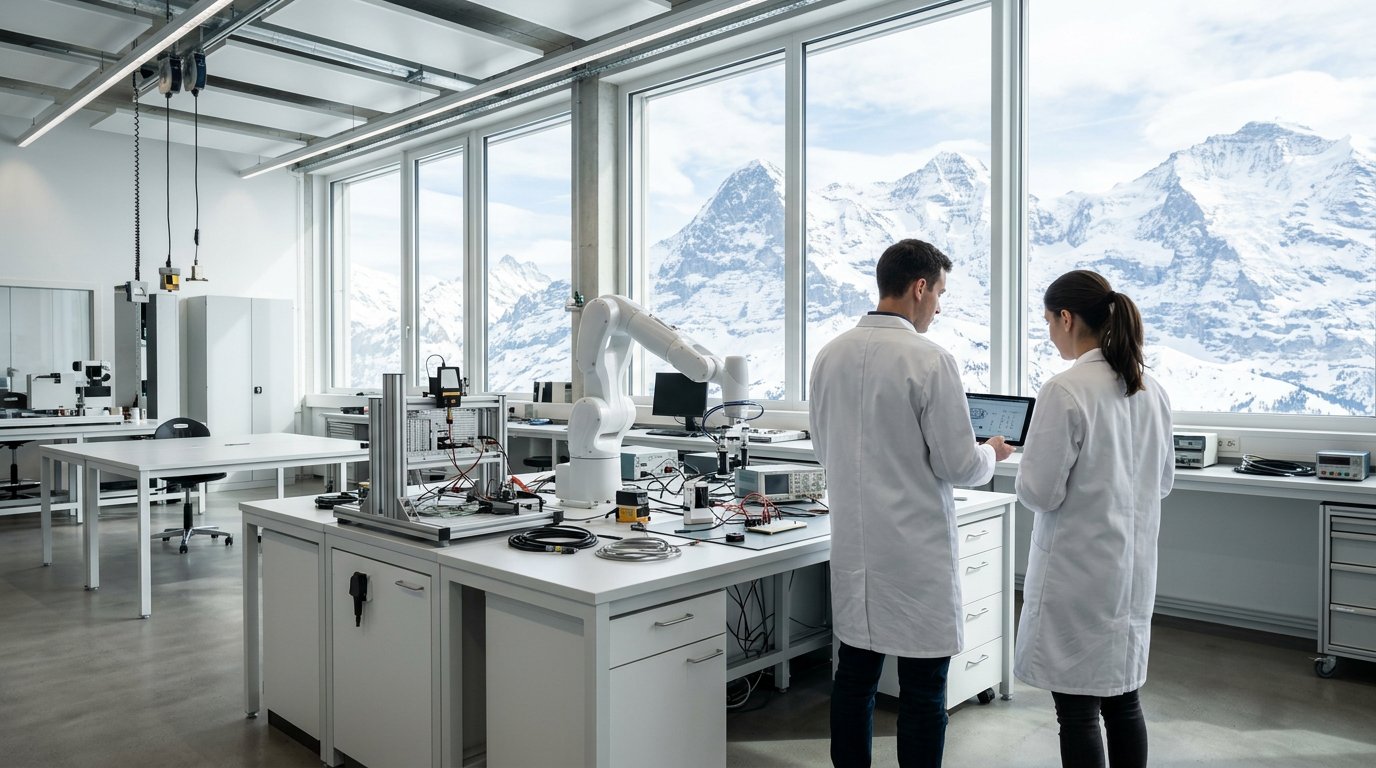
The Orbe site has dedicated facilities for prototyping and pilot-scale testing. New applications are validated there before they are rolled out across Nestlé. A hub in Shenzhen, China, will complement the Center by connecting Nestlé teams with China’s local technology ecosystem, helping them identify promising technologies and speed up their use.
Three places the technology will show up
Nestlé describes the first area as consumer experiences. Connected technologies can enable more personalized experiences, from customized coffee menus to insights that help pet owners support their pets’ health and nutrition. The company did not name specific products or launch dates in the release.
In research and development, the company says AI, sensors and rapid prototyping help teams develop and test ideas faster. In manufacturing, sensors and robotics are meant to help maintain consistent quality, improve efficiency and take over routine or physically demanding tasks, freeing people to focus on work where their expertise and creativity matter most.
What leaders said
CEO Philipp Navratil framed the move around the consumer. “Innovation at Nestlé starts with the consumer,” he said in the release. “For us, technology is an enabler.” He added that technology will change, but the starting point will always be the consumer.
Chief Technology Officer Stefan Palzer described the Center’s method: combining smart sensors, AI and intelligent robotics to turn high-quality data from labs and manufacturing lines into insights and applications. He said that over time these capabilities will transform how Nestlé innovates and manufactures, and that AI-powered solutions will help deliver personalized nutrition at scale. He also said the technologies are developed together with leading tech partners.
What it means
The announcement is a useful example of a trend across consumer goods: technology teams are being pulled out of scattered projects and placed into a shared pilot site. A single place to prototype, test and validate lowers the cost of trying an idea and gives plant managers a proven pattern before they adopt it. That is the practical value of a pilot-scale facility.
It also shows where the data advantage sits. Labs and production lines already generate large volumes of measurements. Nestlé’s language suggests the aim is to turn that data into decisions, whether that means faster formulation tests or steadier quality on a line. The release gives no figures for savings, throughput or timelines, so the impact remains to be shown.
Finally, the Shenzhen hub signals that the company wants to scout technology in more than one ecosystem rather than build everything at home.
Conclusion
Nestlé’s Deep Tech Center is an organizational move more than a product launch, but it points to how a large manufacturer plans to bring AI, sensors and robotics into everyday work: test close to the lab, validate at pilot scale, then roll out. The next thing to watch is which applications leave Orbe first.