
On 19 December 2016 the resident population of Australia is projected to be: 24,302,302
This projection is based on the estimated resident population at 30 June 2016 and assumes growth since then of:
one birth every 1 minute and 40 seconds,
one death every 3 minutes and 17 seconds,
a net gain of one international migration every 2 minutes and 25 seconds, leading to
an overall total population increase of one person every 1 minute and 24 seconds.
According to the estimated population ...
More
BioNeMo
Earth sciences have defined a new human age – now social scientists are calling for broader and more interdisciplinary discussion

The earth sciences have defined a new human age - now social scientists are calling for broader and more interdisciplinary discussion.
The Anthropocene is a proposed epoch dating from when human activities started to have a significant global impact on Earth's geology and ecosystems. The Anthropocence concept thus includes, but also transcends, the idea of anthropogenic climate change.
The Early Anthropocene Hypothesis (sometimes called Early Anthropogenic) was proposed by William ...
More
Michigan State University is perfecting new technology that not only warns of a problem with indoor air, but also identifies the source of the pollution and offers suggestions on how to remedy the situation
Air in the home can be heavily polluted just by daily household activities. Unfortunately, since many indoor air pollutants are colorless and odorless, people often fail to detect them.
A team of engineers at Michigan State University is perfecting new technology that not only warns of a problem with indoor air, but also identifies the source of the pollution and offers suggestions on how to remedy the situation.
Mi Zhang, an assistant professor of electrical and computer engineering, is h...
More
NIST’s research team has come up with a way to build safe, nontoxic gold wires onto flexible thin plastic film for wearable electronic devices that monitor our health
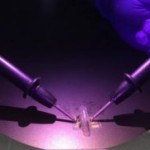
In science, sometimes the best discoveries come when you’re exploring something else entirely. That’s the case with recent findings from the National Institute of Standards and Technology (NIST), where a research team has come up with a way to build safe, nontoxic gold wires onto flexible, thin plastic film. Their demonstration potentially clears the path for a host of wearable electronic devices that monitor our health.
The finding might overcome a basic issue confronting medical engineers: ...
More
Scientists at Trinity College Dublin have uncovered a marvel molecule that blocks a key driver of inflammatory diseases
Scientists at Trinity College Dublin have uncovered a marvel molecule that blocks a key driver of inflammatory diseases. The finding could meet a major unmet clinical need by inspiring new non-invasive treatments for arthritis, multiple sclerosis and Muckle-Wells syndrome, among a myriad of other inflammatory diseases.
The molecule ‘blocks’ a key biological driver of inflammatory diseases. Marvel Molecule Could Lead to Treatments for Inflammatory Diseases and it could inspire non-invasive tre...
More
Universities of Liverpool and Bristol – Stem cell ‘living bandage’ for knee injuries
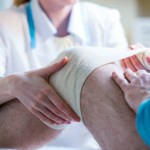
A ‘living bandage’ made from stem cells, which could revolutionise the treatment and prognosis of a common sporting knee injury, has been trialled in humans for the first time by scientists at the Universities of Liverpool and Bristol.
Meniscal tears are suffered by over one million people a year in the US and Europe alone and are particularly common in contact sports like football and rugby. 90% or more of tears occur in the white zone of meniscus which lacks a blood supply, making them diff...
More
U.S. Food and Drug Administration today approved Maci (autologous cultured chondrocytes on porcine collagen membrane) for the repair of symptomatic, full-thickness cartilage defects of the knee in adult patients
The U.S. Food and Drug Administration today approved Maci (autologous cultured chondrocytes on porcine collagen membrane) for the repair of symptomatic, full-thickness cartilage defects of the knee in adult patients. Maci is the first FDA-approved product that applies the process of tissue engineering to grow cells on scaffolds using healthy cartilage tissue from the patient’s own knee.
Knee problems are common, and occur in people of all ages. Cartilage defects in the knee can result from an i...
More
Berkeley-Stanford team creates a system that can help us see Electrical Signaling in heart and nerve Cells
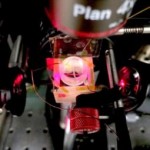
Scientists have enlisted the exotic properties of graphene, a one-atom-thick layer of carbon, to function like the film of an incredibly sensitive camera system in visually mapping tiny electric fields in a liquid. Researchers hope the new method will allow more extensive and precise imaging of the electrical signaling networks in our hearts and brains.
The ability to visually depict the strength and motion of very faint electrical fields could also aid in the development of so-called lab-on-...
More
SISSA Trieste, Italy research on sense of smell during infancy and adolescence

Psychologists and neuroscientists have thoroughly investigated olfactory behaviours in newborns
and adults, but relatively little is known about the characteristics of the sense of smell during
infancy and adolescence.
SISSA - Scuola Internazionale Superiore di Studi Avanzati - International School for Advanced Studies
In a study carried out by SISSA in collaboration with the Please Touch Museum of Philadelphia (an interactive science museum for children), over 150 children aged 3 to 11...
More
Cyber Valley Germany-Science and industry form one of Europe’s largest research partnerships in artificial intelligence
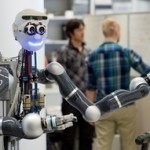
Intelligent systems will shape our future: they could drive us as autonomous cars, help us out in the home on a daily basis or perform medical services as tiny robots. An initiative by the Max Planck Society and the Max Planck Institute for Intelligent Systems in the Stuttgart-Tübingen area is bringing together partners from science and industry to establish Cyber Valley where systems can be developed that will be capable of performing such feats. Winfried Kretschmann, Minister-President of Bade...
More
UCLA team makes step toward long-lasting, fast-charging and high-powered energy storage
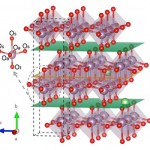
UCLA research team has made a major advance toward developing oxide supercapacitors, energy-storage devices that would combine the longevity of a battery with the fast-charge times and high-power property of capacitors.
To resolve the trade-off between batteries, which last longer, and capacitors, which charge faster and hold more power, the researchers altered the atomic structure of a long-lasting energy storage material, opening up atomic “lanes” for more energy-carrying ions and electrons...
More
IBM Multi-Purpose Elder Care Robot Assistant (IBM MERA)
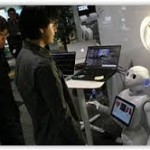
IBM (NYSE: IBM) Research today announced the creation of the prototype IBM Multi-Purpose Eldercare Robot Assistant (IBM MERA) done in collaboration with Rice University. IBM MERA is a first of a kind Watson-enabled application designed to help assist the elderly and their caregivers. IBM Research also has plans to work with Sole Cooperativa, an independent healthcare provider in Italy, to instrument senior housing with sensors to monitor day-to-day activities of its residents.
Accor...
More
University of Minnesota has developed a prototype that allows people to control a robotic arm using only their brain.
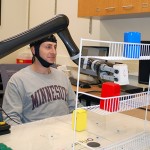
Researchers at the University of Minnesota have made a major breakthrough that allows people to control a robotic arm using only their minds. The research has the potential to help millions of people who are paralyzed or have neurodegenerative diseases.
The study is published online today in Scientific Reports, a Nature research journal.
View a University of Minnesota video of the research subjects in action.
“This is the first time in the world that people can operate a robotic arm t...
More
What sets us apart from other species
Earlier this year, the Royal Institution invited the philosopher AC Grayling, along with Igor Aleksander, professor of neural systems engineering at Imperial College, London, and the historian Felipe Fernandez Armesto, to discuss the question 'What makes us human?' Igor Aleksander claims to have built a robot that has consciousness - he was there to address the ways in which human intelligence differs from artificial intelligence. Fernandez Armesto has written a book called So You Think You're H...
More
MIT’s Study On – Tuning Social Networks to Gain the Wisdom of the Crowd

eToro OpenBook enables investors to view, follow and copy the network's top traders automatically.
As we engage more with social networking sites, there is always the danger of a “group think” mentality–when people follow a group consensus rather than critically evaluate information; make decisions without guidance from the social network; or follow “gurus” who provide them with bad information. So how do we avoid these errors and maximize the “wisdom of the crowd”?
Part of the answer may ...
More
Key Findings Of Trinity College Dublin Study On Ageing
The Irish Longitudinal Study on Ageing (TILDA) is a large-scale, nationally representative study of people aged 50 and over in Ireland. It is the most ambitious study of ageing ever carried out in Ireland and represents a step-change in terms of data, knowledge and understanding of ageing with which to inform policy and novel research. TILDA is designed to maximise comparability with other well-established international longitudinal studies.
More than 8,000 people aged 50 and over accepted th...
More
Diabetes patients can now draw blood without discomfort using ‘Genteel Lancing ‘ device which uses a combination of depth control, vibration & vacuum.
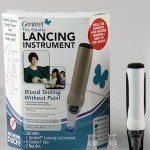
Testing blood glucose levels 5-10 times daily is a daily requirement for those living with Type 1 Diabetes. There is no way around it. With Genteel Lancing Instrument, you can test painlessly anywhere on your body, giving your fingertips a break!
By using a combination of depth control, vibration, vacuum, people with diabetes, can now get test blood without fear or the pain of the dreaded finger-stick.
Genteel® Lancing Device allows diabetics to draw the perfect drop of test blood without ...
More
MIT’s research on ‘glasses-free 3-D TV’ technology.
Currently, all 3D TV viewing available for consumers has to be done by wearing 3D glasses. However, there are technologies in various stages of development that can enable you to see a 3D image on a TV or other type of video display device without glasses.
The main issue with regards to viewing 3D on a TV (or video projection screen) is that humans have two eyes, each separated by a couple of inches.
This physical state is the reason we are able to see 3D in the real world as each eye sees a...
More
Key Findings Of National Eye Institute (NEI) and the Department of Defense (DoD) Limited 2009 LASIK ‘Quality Of Life’ Study
In October 2009, the National Eye Institute (NEI), and the Department of Defense (DoD) launched the LASIK Quality of Life Collaboration Project (LQOLCP) to help better understand the potential risk of severe problems that can result from LASIK. The project aimed to develop a tool to determine the percent of patients who develop difficulties performing their usual activities following LASIK, and to identify predictors for those patients.
At the time FDA developed our project, there was a limi...
More
SISSA RESEARCH STUDY SUGGEST THAT FOOD KNOWLEDGE IS RESILIENT EVEN IN ALZHEIMER’S, IT IS A COGNITIVE CATEGORY THAT “RESISTS”

A SISSA research study published in a special issue of the journal Brain and Cognition, completely
dedicated to the cognitive neuroscience of food, analyzes the lexical-semantic deficits of the food
category in patients suffering from neurodegenerative diseases like Alzheimer's.
The study shows that knowledge about food is preserved more than other categories of stimuli, even in the case of severe syndromes. Further, perception of caloric intake affects a person’s ability to remember the na...
More
H&T Presspart, Cohero Health launch connected metered-dose inhaler
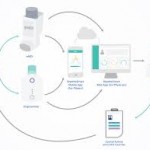
H&T Presspart and Cohero Health said today that the companies have launched a connected metered-dose inhaler designed to improve adherence and optimize care for patients with asthma and COPD. It is the 1st connected inhaler integrated with Cohero Health’s BreatheSmart comprehensive respiratory disease management platform.
The 2 companies developed the metered-dose inhaler over the course of a multi-year agreement. Improving patient adherence is vital, the companies said, as less than half...
More
Max Planck’s reserach discribes, how eyes form pictures at a cellular level by arranging neurons into distinct layers
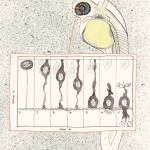
How cells set the stage for the visual world
Researchers reveal the crucial first step that forms the different layers of the retina
The retina consists of different layers of neurons. Emerging neurons have to migrate to find the right position in the appropriate layer. However, how these migration events are executed and orchestrated is poorly understood. Researchers at the Max Planck Institute of Molecular Cell Biology and Genetics (MPI-CBG) in Dresden now studied how the first layer of neur...
More
Berkeley National Laboratory researchers have new understanding of metastability clears path for next-generation materials
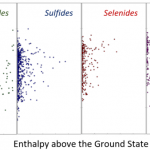
They say diamonds are forever, but diamonds in fact are a metastable form of carbon that will slowly but eventually transform into graphite, another form of carbon. Being able to design and synthesize other long-lived, thermodynamically metastable materials could be a potential gold mine for materials designers, but until now, scientists lacked a rational understanding of them.
Now researchers at the Department of Energy’s Lawrence Berkeley National Laboratory (Berkeley Lab) have published a ...
More
Michigan State University researchers have created a new way to harvest energy from human motion. Soon you will be able to charge cellphones with finger swipes and power Bluetooth headsets simply by walking.
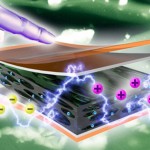
Michigan State University engineering researchers have created a new way to harvest energy from human motion, using a film-like device that actually can be folded to create more power.
The research, funded by the National Science Foundation, suggests "we're on the path toward wearable devices powered by human motion," said Nelson Sepulveda, associate professor of electrical and computer engineering and lead investigator of the project.
The completed device is called a biocompatible ferroel...
More
What have scientists learned in five years of studying cosmic rays with the Alpha Magnetic Spectrometer experiment
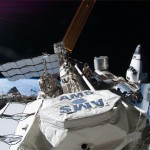
Astronauts used a remote-controlled robotic arm to attach a nearly 17,000-pound payload to the side of the International Space Station. That payload was the Alpha Magnetic Spectrometer, or AMS-02, an international experiment sponsored by the US Department of Energy and NASA.
AMS was designed to detect cosmic rays, highly energetic particles and nuclei that bombard the Earth from space. Since its installation, AMS has collected data from more than 90 billion cosmic ray events, experiment lead ...
More
Researchers at the University of Tokyo found that a protein called parafibromin acts like a computer logic board within the cell by integrating and converting multiple disparate signals from the outside into appropriate responses.
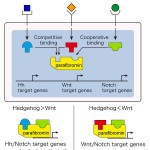
Newly discovered protein converts multiple signal inputs into appropriate cellular outputs
Study finds molecule that functions as cellular “logic board”
Researchers at the University of Tokyo found that a protein called parafibromin acts like a computer logic board within the cell by integrating and converting multiple disparate signals from the outside into appropriate responses. This finding paves the way for the development of innovative therapeutics and preventive measures against cancer...
More
Germany’s algae-based renewable energy house
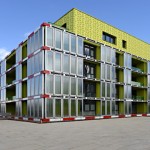
The BIQ House in Hamburg, Germany, is the first building in the world with a dynamic, algae-based, bio-reactive façade. With 200 square meters of integrated photo-bioreactors (PBRs), this passive-energy house generates high-value biomass and solar thermal heat as renewable energy resources. At the same time, the innovative façade system also integrates additional functionalities, such as adaptive shading and noise reduction. In total, 129 SolarLeaf bioreactors have been installed on the southwes...
More
Imperial College London and the Norwegian University of Science and Technology Research suggest handful of nut consumption each day linked to reduced risk for wide range of diseases
A large analysis of current research shows that people who eat at least 20g of nuts a day have a lower risk of heart disease, cancer and other diseases.
The analysis of all current studies on nut consumption and disease risk has revealed that 20g a day - equivalent to a handful - can cut people's risk of coronary heart disease by nearly 30 percent, their risk of cancer by 15 percent, and their risk of premature death by 22 percent.
An average of at least 20g of nut consumption was also ass...
More
TSRI scientists discover sub-region in the brain that works to form contextual fear memory
While the romantic poets' idea of memories being akin to spirits may have poetic merit, the scientists' perspective is that memories are concrete, physical entities that can be visualized within various regions of the brain.
Sathyanarayanan V. Puthanveettil is an associate professor on the Florida campus of The Scripps Research Institute. (Photo by James McEntee.)
Scientists from the Florida campus of The Scripps Research Institute (TSRI) have now for the first time identified a sub-region...
More
PENN STATE University Research – Oxygen can wake up dormant bacteria for antibiotic attacks
Bacterial resistance does not come just through adaptation to antibiotics, sometimes the bacteria simply go to sleep. An international team of researchers is looking at compounds that attack bacteria's ability to go dormant and have found the first oxygen-sensitive toxin antitoxin system.
"Antibiotics can only kill bacteria when they are actively growing and dividing," said Thomas K. Wood, professor of chemical engineering and holder of the Biotechnology Endowed Chair, Penn State. "But, envir...
More