
For most of gaming history, the people you met inside a game could say only what a writer had scripted for them. Ask a guard something off-script and you got silence or a canned line. NVIDIA wants to change that, and its latest developer update shows how close the company thinks we are. In an October 27 post on the NVIDIA Technical Blog, the company laid out a bundle of AI tools for its new RTX Spark PC platform: a small language model built to run game characters on the device itself, a faster...
More
AI in gaming
AI / ML Resources – Labeling Tools

SuperAnnotateis an end-to-end image and video annotation platform that streamlines and automates computer vision workflows.Backed by renowned professors Pieter Abbeel and Trevor Darrell, SuperAnnotate is helping companies build and boost their computer vision pipelines.The tool offers both vector annotations (boxes, polygons, lines, ellipses, keypoints with templates and cuboids) and pixel-wise annotation with a brush. It provides both image and video annotations.
SuperAnnotate also provides...
More
‘Khan Lab’ a hub of multiple innovation in field of sensor development and systems for precision health and psychiatry
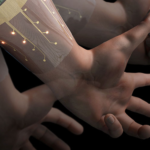
The Khan Lab at the University of Southern California focuses on sensors and systems for precision health and psychiatry. We are part of the USC Institute for Technology and Medical Systems (ITEMS), a joint Keck-Viterbi initiative on medical devices, with presence in both USC Viterbi School of Engineering and Keck School of Medicine of USC.
2022
A flexible electronic strain sensor for the real-time monitoring of tumor progressionAlex Abramson, Carmel Chan, Yasser Khan, Al...
More
Yasir Khan & Naoji Matsuhisa at Stanford University have created a small, autonomous device that can monitor Cancer Tumor growth in real-time
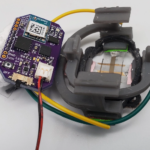
Stanford engineers develop new wearable device to monitor tumor size
Electronically sensitive, skin-like membrane can measure changes in tumor size to the hundredth of a millimeter. It represents a new, faster, and more accurate approach to screen cancer drugs.
BY ANDREW MYERS
Engineers at Stanford University have created a small, autonomous device with a stretchable and flexible sensor that can be adhered to the skin to measure the changing size of tumors below. The non-invasive, ...
More
Yunnan Observatories of the Chinese Academy of Sciences Scientists observed a quasi-periodic fast-propagating (QFP) wave train in corona

Quasi-periodic fast-mode propagating (QFP) wave trains in the corona have been studied intensively in the past decade, thanks to the full-disk, high spatiotemporal resolution, and widetemperature coverage observations taken by the Atmospheric Imaging Assembly (AIA) onboard the Solar Dynamics Observatory (SDO). In AIA observations, QFP wave trains are seen to consist of multiple coherent and concentric wavefronts emanating successively near the epicenter of the accompanying flares; they propagat...
More
Cognitive Health and Older Adults

Cognitive health — the ability to clearly think, learn, and remember — is an important component of performing everyday activities. Cognitive health is just one aspect of overall brain health.
What Is Brain Health?Brain health refers to how well a person’s brain functions across several areas. Aspects of brain health include:
Cognitive health — how well you think, learn, and rememberMotor function — how well you make and control movements, including balanceEmotional function — how well yo...
More
University of Cambridge researchers successfully were able to demonstrate changing blood type of donor kidneys
Researchers at the University of Cambridge have successfully altered the blood type on three deceased donor kidneys in a ground-breaking discovery that could have major implications for kidney patients.The project, funded by charity Kidney Research UK, could increase the supply of kidneys available for transplant, particularly within ethnic minority groups who are less likely to be a match for the majority of donated kidneys.
Professor Mike Nicholson and PhD student Serena MacMillan used a n...
More
Scientists at Steady High Magnetic Field Facility (SHMFF) in Hefei, China have developed a steady field of 45.22 Tesla, the highest steady magnetic field by a working magnet in the world.
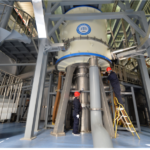
The hybrid magnet at the Steady High Magnetic Field Facility (SHMFF) in Hefei, China set a world record for the highest steady magnetic field by a working magnet when it produced a steady field of 45.22 tesla (T) on Aug. 12.
It broke the previous world record of 45 tesla set in 1999 by a hybrid magnet at the National High Magnetic Field Laboratory of the United States.
This 45.22-tesla hybrid magnet is composed of a resistive insert nested in a superconducting outsert with a bore of 32 mm...
More
‘Grand-Challenge.org’ – A open source platform for end-to-end development of machine learning solutions in biomedical imaging.
Grand Challenge is open source. It was largely written by research software engineers from the Diagnostic Image Analysis Group at Radboud University Medical Center. Radboud University Medical Center is also the responsible entity for the website https://grand-challenge.org.
Grand Challenge was developed in 2010 to make it easy for organizers of challenges to set up a website for a particular challenge and to bring all information on challenges in the domain of biomedical image analysis avail...
More
Ali Khademhosseini and Team of Researchers at Terasaki Institute for Biomedical Innovation (TIBI) in California have developed smart contact lenses that can diagnose cancer from tears
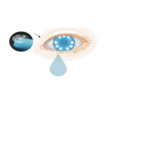
Scientists from the Terasaki Institute for Biomedical Innovation (TIBI) have developed a contact lens that can capture and detect exosomes, nanometer-sized vesicles found in bodily secretions which have the potential for being diagnostic cancer biomarkers. The lens was designed with microchambers bound to antibodies that can capture exosomes found in tears. This antibody- conjugated signaling microchamber contact lens (ABSM-CL) can be stained for detection with nanoparticle-tagged specific anti...
More
UNIVERSITY OF CALIFORNIA, RIVERSIDE – Research suggest ‘TGF-beta’ chemical controlling life and death in hair follicles
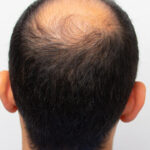
Single chemical is key to controlling when hair follicle cells divide, and when they die. This discovery could not only treat baldness, but ultimately speed wound healing because follicles are a source of stem cells.
Most cells in the human body have a specific form and function determined during embryonic development that does not change. For example, a blood cell cannot turn into a nerve cell, or vice versa. Stem cells, however, are like the blank tiles in a game of Scrabble; they can ...
More
Biogenic (algae-grown) limestone-based cement promises carbon-zero buildings.

Cement is an important construction ingredient around the world, and as a result, cement production is a significant source of global carbon dioxide (CO2) emissions, making up approximately seven percent of annual greenhouse gas emissions.
Cities of the future may be built with algae-grown limestone
Global cement production accounts for 7% of annual greenhouse gas emissions in large part through the burning of quarried limestone. Now, a CU Boulder-led research team has figured out a way t...
More
Tencent’s Ethereal Audio Lab – open-source technology
Tencent’s Ethereal Audio Lab (TEALab) believe that the open-source technology and has made many solutions available as open-source.
These include -
Tencent Meeting provides an easy-to-use, smooth, secure and reliable cloud-based high-definition video conferencing solution that enables customers and users to host or join meetings anytime, anywhere. During the coronavirus outbreak, Tencent Meeting is providing free services and connecting users all over.
https://tencent-meeting.updatest...
More
Nagoya Institute of Technology scientists in Japan have devised a method to transfor Fish Scales Into Carbon Nano-onions

Carbon Nano-onions - The development of nanoscale materials is an important area of research as it provides access to materials with unique properties that can be applied to improve quality of life. Multi-layer fullerenes, also known as carbon nano-onions (CNOs) are an exciting class of nanostructures which show great versatility and applicability. They find applications in several fields of technology and biomedicine.
Nagoya Institute of Technology scientists in Japan have devised a method...
More
Linköping University – Researcher Mehrdad Rafat, Neil Lagali and team have developed Bioengineered cornea that can restore sight to the blind and visually impaired

Researchers and entrepreneurs have developed an implant made of collagen protein from pig’s skin, which resembles the human cornea. In a pilot study, the implant restored vision to 20 people with diseased corneas, most of whom were blind prior to receiving the implant.
The study jointly led by researchers at Linköping University (LiU) and LinkoCare Life Sciences AB has been published in Nature Biotechnology. The promising results bring hope to those suffering from corneal blindness and low v...
More
Professor Amir Zarrinpar at the University of California–San Diego’s research shows Diabetes could be cured by using bacteria from healthy person’s Fecal Microbiota Transplantation

New research has found that diabetes could be cured using healthy people's poop. Professor Amir Zarrinpar, of the University of California–San Diego's research show promsing resuts.
Scientists have long tried to introduce genetically engineered bacteria into the gut to treat diseases.
Experiments found microscopic organisms transplanted into mice stopped the progression of diabetes—and the technique could end the need for painful insulin injections for human patients in the future.
I...
More
MIT engineers develop stickers that can see inside the body. New stamp-sized ultrasound adhesives produce clear images of heart, lungs, and other internal organs.

Ultrasound imaging is a safe and noninvasive window into the body’s workings, providing clinicians with live images of a patient’s internal organs. To capture these images, trained technicians manipulate ultrasound wands and probes to direct sound waves into the body. These waves reflect back out to produce high-resolution images of a patient’s heart, lungs, and other deep organs.
Currently, ultrasound imaging requires bulky and specialized equipment available only in hospitals and doctor’s ...
More
‘University of Bristol’ is in process of developing soundproof wallpaper

Scientists at University of Bristol are developing soundproof wallpaper inspired by moths wings. Experts at the University of Bristol have discovered that the scales on moth wings act as excellent sound absorbers even when placed on an artificial surface.
The University of Bristol team found the phenomenon holds the key to better sound-absorbing panels. It will revolutionize noise-canceling technology, they say.
Co-author Professor Marc Holderied explained: "This research has shown one da...
More
Students at American University in Cairo Egypt have developed cement capable of absorbing energy from the sun and lighting up in the dark
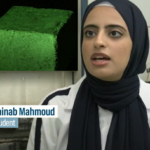
Egyptian students invented glow-in-the-dark concrete
Four undergraduate construction engineering students at The American University in Cairo (AUC) developed self-luminous concrete, which can absorb sunlight and emit light after dark. With sustainability in mind, the students embarked on their thesis graduation project to save energy by using concrete to light up roadways and pavements without much need for conventional energy-intensive sources.
“Sustainability is a main theme in this...
More
University of Manchester working with British Heart Foundation (BHF) have devloped injectable gel to repair damage after a heart attack
University of Manchester researchers have developed a gel that allows doctors to introduce new cells into damaged hearts as a way to repair it and reduce the risk of progression to heart failure.
Experts from the University of Manchester, with the help of the British Heart Foundation (BHF), have created this substance that can be injected directly into the heart while it is beating.
Researchers have developed a new biodegradable gel that can help to improve the delivery of cells direc...
More
‘Virtual Operative Assistant’- Artificial Intelligence tool for simulation-based training in surgery and medicine
Simulation-based training is increasingly being used for assessment and training of psychomotor skills involved in medicine.
The application of artificial intelligence and machine learning technologies has provided new methodologies to utilize large amounts of data for educational purposes.
Virtual Operative Assistant is an platform which exploits machine learning to create automated and individualized feedback for simulation-based training in medicine and surgery.
Advances in te...
More
Southmead Hospital in Bristol are implementing a tiny deep brain stimulation (DBS) device into the skull to reverse the symptoms of Parkinson’s
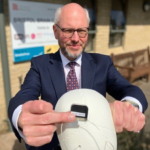
A British hospital is the first in the world to implant a brain device to reverse the symptoms of Parkinson's - and its test patient says it is amazing.
It overrides the abnormal brain-cell firing patterns caused by Parkinson's.
Parkinson’s disease leads to parts of the brain becoming progressively damaged over years and currently has no cure. Symptoms include involuntary tremoring, slow movement, loss of automatic movement and stiff and inflexible muscles.
Most people develop sym...
More
‘ZoundDream’ – can Interpret baby cry sound using AI

'ZoundDream' - AI based Acoustic MultiStage Interpreter for Baby cry sound.
Zoundream is able to identify and translate a human produced sound into its actual meaning, specifically for children pre-speech.
Crying as an universal languageBaby crying is the first language newborns use to communicate. A misunderstanding of the message can generate frustration on both sides (newborn and caregiver) compromising not only infant care but also the parental relationship. Even though cries soun...
More
LightMatter – photonic processor 10x faster with 90% less energy consumption
As artificial intelligence (AI) grows, researchers are exploring ways to push beyond electrons and into the world of photons. Technology is now available that is replacing electronic processors with photonic designs that incorporate lasers and other light components.
Through the combination of electronics, photonics, and new algorithms, lightmatter has built a next-generation computing platform purpose-built for artificial intelligence.
Photonic computing and especially the area of integr...
More
‘Altos Labs’ – focused on cellular rejuvenation to reverse disease

Altos Labs is a new biotechnology company focused on cellular rejuvenation programming to restore cell health and resilience, with the goal of reversing disease to transform medicine.
Altos Labs is an American biotechnology research company. Altos Labs' goal is to develop life extension therapies that can halt or reverse the human aging process. Specialized cell therapies based on induced pluripotent stem cells are to be developed for this purpose.
Altos is dedicated to unraveling the...
More
Saliva glucose biosensor – World-first needle-free diabetes test
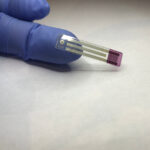
Professor Alex Zelinsky AO from University of Newcastle has developed Saliva glucose biosensor that can test for type 1 and type 2 diabetes without using needle.
Saliva glucose biosensor is similar in size to a stick of chewing gum and considerably thinner, was incredibly powerful, detecting substances that exist in saliva in minute concentrations.
One of the key challenges the team had was the sheer unavailability of glucose in saliva (With saliva glucose concentrations 100 times low...
More
‘AI Prosecutor’ China – model that can reportedly identify crimes and file charges against criminals with more than 97 per cent accuracy.
Shanghai Pudong People's Procuratorat China has developed an artificial intelligence model that can reportedly identify crimes and file charges against criminals with more than 97 per cent accuracy.
The AI model was built and tested by the Shanghai Pudong People’s Procuratorate, the country’s largest and busiest district prosecution office. It was developed by a team led by Professor Shi Yong, director of the Chinese Academy of Sciences' big data and knowledge management laboratory.
Machi...
More
‘Frozen Zoo’ – resurrecting the extinct
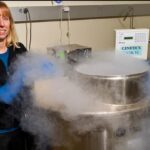
A frozen zoo is a storage facility in which genetic materials taken from animals are stored at very low temperatures in tanks of liquid nitrogen. Material preserved in this way can be stored indefinitely and used for artificial insemination, in vitro fertilisation, embryo transfer, and cloning. Some facilities also collect and cryopreserve plant material.
Frozen Zoo® is the largest and most diverse collection of its kind in the world. It contains over 10,000 living cell cultures, oocytes...
More
‘Seegene’ – leading developer of multiplex molecular assays and automated solutions.
Seegene, Inc is a Korean manufacturer of in vitro diagnostic (IVD) products, particularly molecular diagnostics. Its portfolio includes a range of assays and screening products for sepsis, respiratory diseases such as influenza and respiratory syncytial virus, as well as sexually transmitted infections (STIs).
Seegene Rapidly Introduces New PCR Test that Identifies the Omicron Variant, its Stealth Version, and all VOCs in a single tube.
https://youtu.be/nCgq5Tlq_Ic
Seegene’s ...
More
Intel Labs’ Nabil Imam Develop Computer Chip that can smell without a Nose
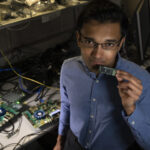
Nabil Imam, a senior research scientist in Intel Labs’ neuromorphic computing group, works with olfactory neurophysiologists at Cornell University and derived a set of algorithms and configured them on neuromorphic silicon, specifically called "Loihi" chip that can detect a smell without a nose.
” Loihi is Intel’s neuromorphic computing chip that applies the principles of computation found in biological brains to computer architectures.
“My friends at Cornell study the biological ...
More