
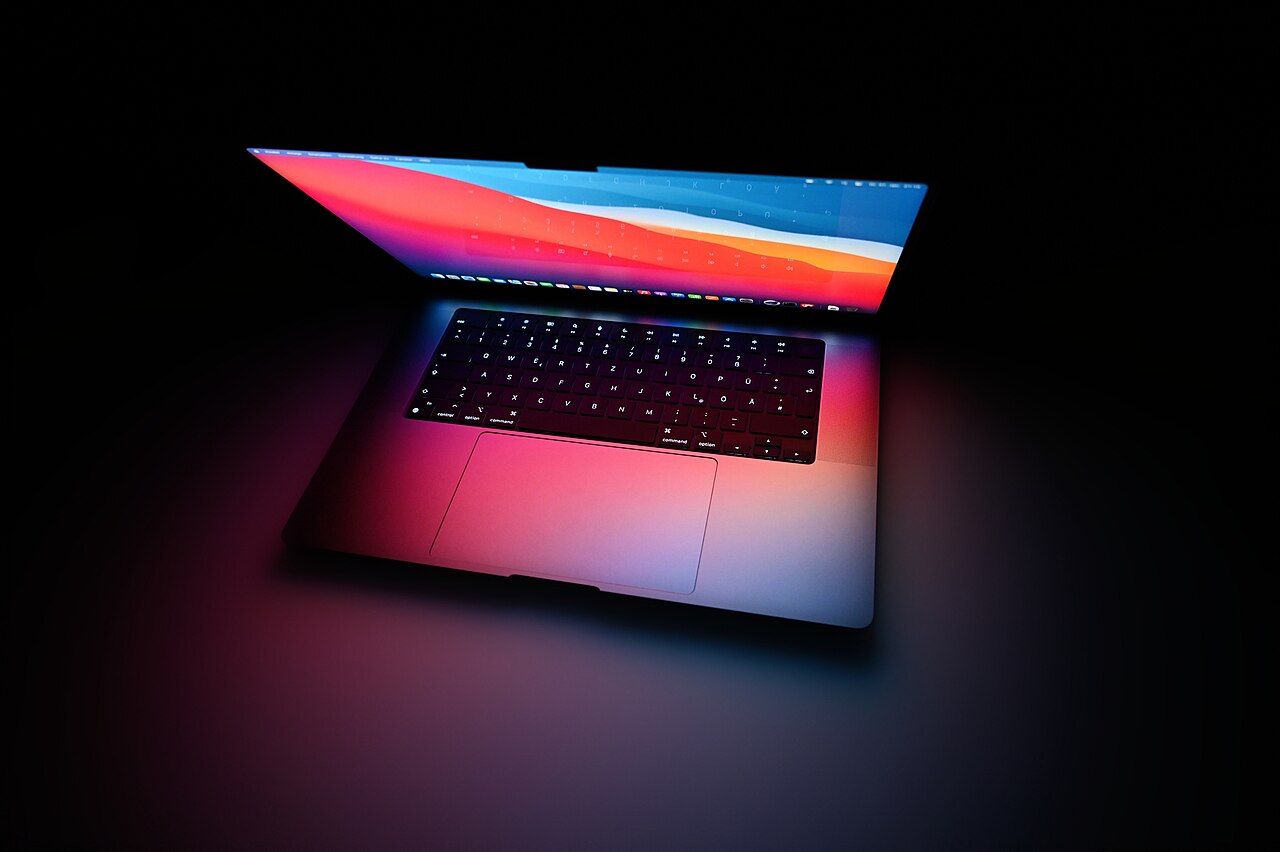
For more than a decade, Apple resisted putting a touchscreen on the Mac. On October 28, 2026, it changed course. The new MacBook Pro with PROLED XDR Display brings two firsts to Apple’s pro laptop: a tandem OLED screen and touch input. It is one of the biggest redesigns of the MacBook Pro in years, and it reflects how display technology and on-device AI are reshaping what a “pro” computer is.
What tandem OLED changes
Most laptop OLED screens use a single layer of self-lit pixels. Tandem OLED stacks two emitting layers, which lets a panel get brighter and last longer without driving each layer as hard. Apple’s press release says its PROLED XDR display uses “two self-illuminating pixel layers” to deliver deep blacks and bright highlights “without blooming or halos,” a common complaint with backlit mini-LED screens.
Apple’s headline specifications:
- Up to 2,000 nits peak brightness for both HDR and SDR content.
- A 10,000,000:1 contrast ratio.
- ProMotion variable refresh from 10Hz to 120Hz.
- A color gamut covering both P3 and Adobe RGB, with more than 80% coverage of Rec. 2020 for HDR video work.
- Factory calibration of every panel, plus reference modes for film, photography and print.
Apple also says a display engine controls the color and luminance of every pixel “at the sub-millisecond level,” compensating for content, temperature and pixel wear to keep brightness uniform over time, an important point because uneven aging has long been a concern with OLED.
Touch arrives on the Mac
The touch sensor is built directly into the display panel rather than layered on top, which Apple says reduces latency. Everyday gestures include swiping to scroll, pinching to zoom and double-tapping a window to fill the screen. For professionals, Apple highlights designers drawing across the whole display, musicians playing software instruments on screen, and developers testing iPhone and iPad apps directly on the laptop. Many existing apps work immediately because macOS translates touches into clicks, and a redesigned hinge adds stability when the screen is tapped.
The Dynamic Island, familiar from iPhone, also comes to the Mac as a home for Spotlight search, Live Activities and Siri AI.
Lighter, thinner, more capable
OLED’s slimmer display stack helped Apple cut weight: the 14-inch model now weighs 3 pounds, half a pound less than before, and the 16-inch model weighs 4 pounds, 0.7 pounds lighter. Screens grow slightly to 14.2 and 16.3 inches thanks to thinner borders. Inside are M5 Pro and M5 Max chips with up to 128GB of unified memory and up to 16TB of storage. Apple says M5 Max can run large language models with hundreds of billions of parameters entirely on device, and quotes up to 24 hours of battery life.
Apple also notes the laptop uses 55% recycled content overall, including 100% recycled aluminum in the enclosure and 100% recycled cobalt in the battery.
Price and availability
Pre-orders opened October 28 in 30 countries and regions, with deliveries starting Friday, November 6. In the U.S., the 14-inch model with M5 Pro starts at $2,899 and the 16-inch at $3,399; M5 Max configurations start at $4,499 (14-inch) and $4,799 (16-inch). Apple’s separate 14-inch MacBook Pro with M6, announced a day earlier, keeps the Liquid Retina XDR display for buyers who don’t need OLED or touch.
Who should care
- Color-critical creators: Photographers, colorists and video editors get a portable reference-grade display with P3 and Adobe RGB in one preset.
- Designers and musicians: Touch and full-screen drawing add a new input method alongside the trackpad.
- AI developers: Large unified memory makes it practical to run sizable models locally and privately.
- Everyone else: The M6 MacBook Pro may offer better value if you don’t need the new display.
The bottom line
The PROLED XDR MacBook Pro is a bet that the line between laptop and creative tablet is worth blurring, and that OLED has matured enough for professional color work. Independent reviews will reveal how the touch experience and OLED longevity hold up, but the direction is clear: the pro laptop is becoming brighter, lighter and more hands-on.