University in China researcher is employing HFIR to explore the mysterious world of quantum spin

Jie Ma, a professor from Shanghai Jiao Tong University in China, is using neutrons at Oak Ridge National Laboratory’s High Flux Isotope Reactor to discover a three-dimensional image of the magnetic lattice of an oxide material (Ba2CoTeO6) containing quantum properties that could provide new insight into how electron “spins” can improve data processing and storage in computers. In condensed matter physics, quantum spin liquid is a state that can be achieved in a system of interacting quantum s...
More


Scientists at Stanford University and University of California, Berkeley have now developed a wearable sensor that stays on the skin, stimulates it and measuring the chloride concentration while the person can move around freely.

Scientists at Stanford University and University of California, Berkeley have now developed a wearable sensor that stays on the skin, stimulates it and measuring the chloride concentration while the person can move around freely. A wearable sensor developed by Stanford researchers can diagnose diseases by measuring molecular constituents of sweat, such as chloride ions and glucose. A wearable device that extracts sweat and analyzes its constituents to monitor health and d...
More

DARPA’s Tactical Technology Office (TTO) is looking for concepts for designing, developing, and testing advanced technology platforms that provide U.S. forces with overwhelming tactical and strategic advantage on – Virtual Proposers Day on Wednesday and Thursday, May 3-4, 2017

DARPA’s Tactical Technology Office (TTO) focuses on conceiving, designing, developing, and testing advanced technology platforms that provide U.S. forces with overwhelming tactical and strategic advantage, including vehicles, weapons, and other full-scale, potentially field-deployable systems. Whether designed to operate on the ground, at sea, in the air, in space or across domains, TTO platforms and supporting technologies have a common origin: as innovative ideas generated by program managers ...
More

Duke University and Howard Hughes Medical Institute have created a new technique called DART, that stands for Drugs Acutely Restricted by Tethering

Biomedical engineers have developed a way to deliver drugs to specific types of neurons in the brain, providing an unprecedented ability to study neurological diseases while also promising a more targeted way to treat them. Drugs are the tool of choice for studying the connections between neurons, and continue to be the mainstream treatment for neurological disease. But a major drawback in both endeavors is that the drugs affect all types of neurons, complicating the study of how cell recepto...
More

Purdue University researchers have designed hybrid systems that combine solar photovoltaic cells and thermoelectric devices to capture sunlight as efficiently as possible

Researchers have shown how to modify commercially available silicon wafers into a structure that efficiently absorbs solar energy and withstands the high temperatures needed for “concentrated solar power” plants that might run up to 24 hours a day. The research advances global efforts to design hybrid systems that combine solar photovoltaic cells, which convert visible and ultraviolet light into electricity, thermoelectric devices that convert heat into electricity, and steam turbines to genera...
More

Mabu Personal Healthcare Companion is an intelligent, socially interactive robot tailored to each patient.

Mabu the personal healthcare companion is the face of Catalia Health’s platform for patient engagement.  We’ll be talking more about the backend software algorithms and medical best practices that drive her conversations with patients in the future.  She’s designed to help patients with the myriad challenges of chronic disease management and will be first rolled out this year to help a particular group of patients manage the medication portion of their treatment.  The video that is part of this...
More

University of Utah Department of Bioengineering is developing device (Electrode Array) that will allow amputee’s arm to read signals from the brain and then tell the prosthetic hand how to move.

University of Utah Department of Bioengineering is developing device (Electrode Array) that will allow amputee’s arm to read signals from the brain and then tell the prosthetic hand how to move. Researchers, led by Clark, are further developing the Utah Slanted Electrode Array, a neural interface that uses 100 electrodes which connect with nerves in an amputee’s arm to read signals from the brain - telling the hand how to move. The Utah Slanted Electrode Array was first developed by Departmen...
More

The Virtual Surgeon – Medical Realities is a healthcare company using virtual reality, augmented reality and serious games to change the way people look at medical training.

Medical Realities is an innovative group offering medical training products, specializing in virtual reality, augmented reality and serious games. By using consumer-level virtual reality devices such as the Oculus Rift, Medical Realities can reduce the cost of training, reach a wider audience & provide a completely safe learning environment for medical students. Combining 360 video, 3D and interactive content, The Virtual Surgeon™ puts you inside the operating theatre overseeing an op...
More

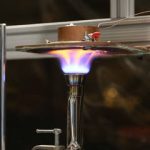
George Mason University has developed fire extinguisher that uses sound waves to extinguish fire

Engineering students Seth Robertson and Viet Tran of George Mason University in Virginia have invented a revolutionary device that uses low-frequency sound waves to extinguish fire instead of water, gas or foam. The young engineers used $600 worth of equipment, including a speaker, amps and a collimeter, to starve the flame of oxygen, thus putting it out. The fire extinguisher uses low frequencies between 30 and 60 hertz ranges to blast the fire, separating oxygen from the fuel. New typ...
More

Levo System is a FDA approved personal nightly sound therapy designed to improve the quality of life for patient with Tinnitus

As many as 50 million Americans suffer from tinnitus, a debilitating health condition commonly known as "ringing in the ears." Musicians, factory workers, military veterans and many others endure its effects, which include problems with concentration, sleep, anxiety and depression. Many who experience chronic tinnitus turn to sound devices or machines that mask their ringing with white noise. But masking typically offers only short-term relief to those who struggle with the perception of buzz...
More

Mayo Clinic is close to developing ‘Epidural Neurostimulator’ that can help Paralyzed person from Spinal Cord Injury to move legs on his own

It is well accepted that severe spinal cord injury (SCI) leads to functional disconnection of ascending and descending spinal pathways, impairing neural circuitry through and below the SCI. However, in clinically complete SCI, defined as American Spinal Injury Association Impairment Scale (AIS) level A, a portion of neural tissue commonly remains intact across the injury site1 and may provide nonspecific supraspinal influence on sublesional spinal circuitry.2, 3, 4, 5 This injury profile is defi...
More

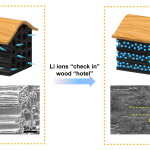
University of Maryland have used modified wood as a unique architecture for the negative electrode of a lithium metal battery, seeking to prevent some of the key factors that lead to battery failur

Inspired by the structure of wood, engineers at the University of Maryland have used modified wood as a unique architecture for the negative electrode of a lithium metal battery, seeking to prevent some of the key factors that lead to battery failure. Lithium ion shuttling in rechargeable batteries provides energy to power phones, laptops, and even light bulbs. When the battery is charged, the lithium metal expands; and when it is discharged, the lithium metal deflates. This rapid c...
More

DARPA explores approaches to store and process vast amounts of data using encoded molecules

As the complexity and volume of global digital data grows, so too does the need for more capable and compact means of processing and storing data. To address this challenge, DARPA has announced its Molecular Informatics program, which seeks a new paradigm for data storage, retrieval, and processing. Instead of relying on the binary digital logic of computers based on the Von Neumann architecture, Molecular Informatics aims to investigate and exploit the wide range of structural characteristics a...
More

University of Strathclyde, UK, has developed technique to be able to perform nanoscale transfer printing that can be leveraged for visible light communications, flexible optoelectronics, and photonic integrated circuits

  Semiconductor nanowires, with lasing emission at room temperature, can be transferred in a controlled way to specific locations on diverse substrates and organized into bespoke spatial patterns. Semiconductor nanowire (NW) lasers provide coherent light sources with highly localized emission and extremely small footprints. Such lasers may thus have the potential to revolutionize the field of photonics. Indeed, NW lasers are expected to play a key role in future optoelectronic sys...
More

University of Alabama is developing new peptide to combat a disorder that causes heart attacks at early age

Researchers at the University of Alabama at Birmingham are developing and testing a new peptide that they hope will lead to better treatment options for familial hypercholesterolemia. FH is a genetic condition that results from the body’s inability to clear low-density lipoprotein (LDL), or bad cholesterol, from the blood. This results in startlingly high cholesterol levels. There are two forms of FH: heterozygous FH (HeFH) and homozygous HoFH, which is the most serious type of FH. If untreat...
More

NASA has developed a Carbon Nanotube Sensors for Gas Detection

A nanosensor technology has been developed using nanostructures: single walled carbon nanotubes (SWNTs), combined with a silicon-based microfabrication and micromachining process. This technology provides a sensor array that can accommodate different nanostructures for specific applications with the advantages of high sensitivity, low power consumption, compactness, high yield and low cost. BenefitNanotechnology based chemical sensors can provide high sensitivity, low power and low cost p...
More

Stanford electrical engineer has invented a way to wirelessly transfer power deep inside the body, and then use this power to run tiny electronic medical gadgets such as pacemakers, nerve stimulators or new sensors and devices

A Stanford electrical engineer has invented a way to wirelessly transfer power deep inside the body, and then use this power to run tiny electronic medical gadgets such as pacemakers, nerve stimulators or new sensors and devices yet to be developed. The discoveries reported May 19 in the Proceedings of the National Academy of Sciences culminate years of efforts by Ada Poon, assistant professor of electrical engineering, to eliminate the bulky batteries and clumsy recharging systems that preve...
More

Purdue University researchers are developing software in a “haptic device” that could give people with visual impairments the ability to identify scientific images on a computer screen using their other senses.

Purdue University researchers are developing software in a “haptic device” that could give people with visual impairments the ability to identify scientific images on a computer screen using their other senses. Ting Zhang, a graduate student in the Purdue School of Industrial Engineering, is developing a system that involves a specially designed joystick attached to a computer. The joystick controls a cursor. When the cursor moves across an object on the screen, force feedback, vibrations and...
More

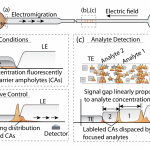
Stanford University has developed novel method to Label-Free Detection of Chemical Toxins in Tap Water by leveraging Fluorescent Carrier Ampholytes Assay.

New novel method for fluorescence-based indirect detection of analytes and demonstrate its use for label-free detection of chemical toxins in a hand-held device. Environmental monitoring efforts, and water quality assessment in particular, would benefit from widely available and inexpensive chemical assays and sensor technologies.1 Gas and liquid chromatography methods, and their coupling to mass spectrometry, currently are standard methods suggested by the United States Environmental Protect...
More

Defense Advanced Research Projects Agency (DARPA) is instituting new Lifelong Learning Machines (L2M) program that seeks to develop the foundations for systems that might someday “learn” in much the way biological organisms do

The Defense Advanced Research Projects Agency (DARPA) is an agency of the U.S. Department of Defense responsible for the development of emerging technologies for use by the military. DARPA was created in February 1958 as the Advanced Research Projects Agency (ARPA) by President Dwight D. Eisenhower. Its purpose was to formulate and execute research and development projects to expand the frontiers of technology and science, with the aim to reach beyond immediate military requirements. DARPA...
More

IOT -Internet Of Things, training courses

Courses for Beginning With Internet of Things 1Build Your Own Internet of Things Created by UC San Diego and Qualcomm In this course included are the concepts behind Internet of Things services and products. You will be working with sensors, actuators, processors and communication protocols to understand and develop skills that will help you in deploying real life IoT applications. There are both theory and lab sections included in this course. Courses Included are: Internet o...
More

Eindhoven University of Technology have developed wireless network based on harmless infrared rays that is 100 times faster and it never overloads

Eindhoven University of Technology have developed a wireless network based on harmless infrared rays. Slow wi-fi is a source of irritation that nearly everyone experiences. Wireless devices in the home consume ever more data, and it’s only growing, and congesting the wi-fi network. Researchers at Eindhoven University of Technology have come up with a surprising solution: a wireless network based on harmless infrared rays. The capacity is not only huge (more than 40Gbit/s per ray) but also the...
More

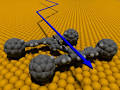
‘NanoCar’ is a molecule design with the idea that it can transport themselves through the bloodstream in order to deliver drugs to previously unreachable locations in the human body with a high degree of accuracy

The nanocar is a molecule designed in 2005 at Rice University by a group headed by Professor James Tour. The molecule consists of an H-shaped 'chassis' with fullerene groups attached at the four corners to act as wheels. According to Professor Tour - Rice University, this development is a watershed in so far as constructing successfully a nanocar represents the first step toward molecular manufacturing. Professor Tour avers: “It’s the beginning of learning how to manipulate things at the nano...
More

Researchers at North Carolina State University have created a “nano-accordion” material that conducts electricity and is transparent, flexible, and stretchable

Researchers from North Carolina State University have created stretchable, transparent conductors that work because of the structures’ “nano-accordion” design. The conductors could be used in a wide variety of applications, such as flexible electronics, stretchable displays or wearable sensors. Multifunctional nano-accordion structures exhibiting a unique combination of conductivity, stretchability, and transparency are fabricated through a combination of nanolithography and atomic layer depo...
More

NASA high-temp materials for spacecraft may help save firefighters

NASA research into flexible, high-temperature space materials may some day improve personal fire shelter systems and help wildland firefighters better survive dangerous wildfires. NASA's Langley Research Center in Hampton, Virginia, is working with the U.S. Department of Agriculture's Forest Service to see if flexible thermal protection system technology being developed for space entry vehicles could also work to protect firefighters caught in a raging forest fire. The material the NASA re...
More

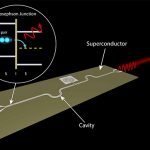
Netherlands Delft University of Technology researchers have developed on-chip microwave laser based on a fundamental property of superconductivity

Lasers are everywhere nowadays: doctors use them to correct eyesight, cashiers to scan your groceries, and quantum scientist to control qubits in the future quantum computer. For most applications, the current bulky, energy inefficient lasers are fine, but quantum scientist work at extremely low temperatures and on very small scales. For over 40 years, they have been searching for efficient and precise microwave lasers that will not disturb the very cold environment in which quantum technolo...
More

MIT researchers have developed low-cost wireless chemical sensors that can be worn by soldiers to detect hazardous chemical agents

MIT researchers have developed low-cost chemical sensors, made from chemically altered carbon nanotubes, that enable smartphones or other wireless devices to detect trace amounts of toxic gases. Using the sensors, the researchers hope to design lightweight, inexpensive radio-frequency identification (RFID) badges to be used for personal safety and security. Such badges could be worn by soldiers on the battlefield to rapidly detect the presence of chemical weapons — such as nerve gas or chokin...
More

Scientists From Columbia University have developed light bulb thinner than paper

Imagine a light bulb made from something thinner than paper, but stronger than any other material known to man. Seems impossible — except it isn't. A group of scientists from Columbia University, Seoul National University and the Korea Research Institute of Standards and Science announced that they successfully developed a light bulb made out of graphene — material that's only as thick as an atom, but strong as a diamond. Indeed, graphene is considered the world's strongest material. While th...
More

Stanford University researchers have developed a brain-to-computer hookup that can enable people with paralysis to type via direct brain control at the highest speeds and accuracy levels reported to date.

A clinical research paper led by Stanford University investigators has demonstrated that a brain-to-computer hookup can enable people with paralysis to type via direct brain control at the highest speeds and accuracy levels reported to date. The report involved three study participants with severe limb weakness — two from amyotrophic lateral sclerosis, also called Lou Gehrig’s disease, and one from a spinal cord injury. They each had one or two baby-aspirin-sized electrode arrays placed...
More

‘Sonoporation’ Gene transfer using ultrasound

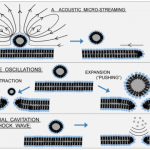
Sonoporation, or cellular sonication, is the use of sound (typically ultrasonic frequencies) for modifying the permeability of the cell plasma membrane. This technique is usually used in molecular biology and non-viral gene therapy in order to allow uptake of large molecules such as DNA into the cell, in a cell disruption process called transfection or transformation. Sonoporation employs the acoustic cavitation of microbubbles to enhance delivery of these large molecules. The bioactivity of ...
More