

Texas A&M’s PertReason Aims to Explain How Cells Change

A glowing 3D virtual cell with luminous network pathways on a dark blue background
AI-generated illustration Most AI models in biology are good at one kind of question: given this genetic change, will a disease appear? Far fewer can say why it happened or what to do about it. Researchers at Texas A&M University are working on that gap with a model called PertReason, which has now been accepted to the Conference on Neural Information Processing Systems (NeurIPS). The problem PertReason targets As described in the Texas A&M Engineering news story, today's AI m...
More
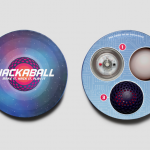
‘Hackaball’ turns programming into play.

A smart and responsive ball that children can program to invent and play games has been created. A team of industrial designers is aiming to turn "programming into play" with a hackable ball that lets kids invent their own games. "Hackaball is a tough, responsive, programmable ball that pairs with an iPad app," explains William Owen, from innovation consultants Inside it is a gyro, an accelerometer, a vibration motor, nine LEDs, a rechargeable battery, some memory and a speaker. That...
More