KIMM Etches 6-Inch WS2 Wafers One Atomic Layer at a Time

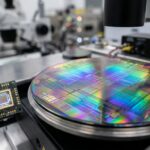
Macro view of a thin circular semiconductor wafer with shimmering layered coatings and a tiny glowing light sensor chip beside it
AI-generated illustration The next generation of chips may be built from materials only a few atoms thick, but making them uniform across a full wafer has been a stubborn problem. On November 25, 2026, the Korea Institute of Machinery and Materials (KIMM) said it has developed what it calls the world's first technology for controlling the thickness of a next-generation semiconductor material one atomic layer at a time across an entire 15 cm (6-inch) wafer. What the team did According ...
More

DeepMind Agents Find Cheaper Quantum Algorithms, Proof-Checked

DeepMind Agents Find Cheaper Quantum Algorithms, Proof-Checked (AI-generated illustration)
AI-generated illustration Quantum computers keep getting better, yet many of the problems people most want them to solve still demand more hardware than anyone can build today. Google DeepMind and Google Quantum AI now report a different lever: instead of waiting for bigger machines, use teams of AI agents to make the algorithms themselves cheaper to run. In a November 23, 2026 post and an accompanying paper, the researchers describe how teams of Gemini 4 agents improved several well-kno...
More

Texas A&M’s PertReason Aims to Explain How Cells Change

A glowing 3D virtual cell with luminous network pathways on a dark blue background
AI-generated illustration Most AI models in biology are good at one kind of question: given this genetic change, will a disease appear? Far fewer can say why it happened or what to do about it. Researchers at Texas A&M University are working on that gap with a model called PertReason, which has now been accepted to the Conference on Neural Information Processing Systems (NeurIPS). The problem PertReason targets As described in the Texas A&M Engineering news story, today's AI m...
More

CSUN’s ELFNet AI Maps Electron Bonding 350x Faster

Glowing crystal lattice of atoms between a layered neural network and a colorful electron density map
AI-generated illustration Finding a new material is often a story of waiting for computers. When chemists hunt for compounds that could superconduct or store energy in unusual ways, they may need to screen millions of candidates, and each one can demand heavy quantum-mechanical calculations. A team at California State University, Northridge (CSUN) says it has found a way to skip much of that wait. Their AI model, ELFNet, predicts a key chemical-bonding map 350 times faster than tradition...
More

NVIDIA Nemotron for Science Gives Labs an Open Agent Toolkit

A compact AI computer beside glowing molecule graphics and a robotic arm handling lab glassware
AI-generated illustration Scientific work is full of tasks that are tedious for people and awkward for general chatbots: reading reaction diagrams, planning lab protocols, repairing a broken simulation setup. On November 16, 2026, NVIDIA introduced Nemotron for Science, a bundle of an open model, a new chemistry dataset and post-training recipes aimed at helping researchers build agents for those jobs. What is in the package As described in NVIDIA's announcement, Nemotron for Science ...
More

PAN 2: An Open World Model That Simulates What Happens Next

PAN 2: An Open World Model That Simulates What Happens Next editorial illustration
AI-generated illustration A language model predicts the next word. A world model tries to predict the next moment of the world itself. On November 10, 2026, the Institute of Foundation Models (IFM), established by Mohamed bin Zayed University of Artificial Intelligence (MBZUAI), released PAN 2, an open, general-purpose world model aimed at physical intelligence. The pitch is simple to state: give PAN 2 a starting scene and an action described in words, and it simulates a video of what ha...
More

MIT Trains Faster Climate Emulators With Synthetic Scenarios

Climate projections drive decisions about power grids, public health and farming, yet the physics-based models behind them can take months on a supercomputer to simulate a single future. A new technique from MIT aims to shrink that bottleneck by changing what AI models learn from. In research announced by MIT News on November 12, 2026 and published in the Proceedings of the National Academy of Sciences, a team describes a way to train climate emulators with a fraction of the usual data whil...
More

DuPont, Microsoft and NobleAI Team Up on AI-Driven R&D

Holographic molecular structures floating above a materials science lab bench
AI-generated illustration Materials science is slow because every promising idea eventually needs a lab test, and labs are expensive. On November 12, 2026, DuPont said it is working with Microsoft and NobleAI to move more of that exploration into software, in a collaboration it says is designed to reduce cycle times for delivering customer solutions, per the company's press release. Three partners, three roles DuPont (NYSE: DD) describes the collaboration as combining its application exp...
More

AI-Designed Quantum Circuits Cut Resources Up to 39x, QuEra Says

Quantum computers will only become useful when two curves meet: the hardware gets bigger and more reliable, and the algorithms that run on it get cheaper. A new collaboration between QuEra Computing, Harvard University and Anthropic targets the second curve, and the numbers are eye-catching. According to QuEra's November 10, 2026 announcement, AI-designed circuits cut a combined gate-and-qubit resource metric by as much as 39 times. What the researchers actually did The work is described...
More

CUHK’s Physics-Guided AI Designs Tough Materials From Disorder

Engineers have long designed tough materials from tidy grids, because order is easy to predict. Nature often does the opposite: bone and spider silk owe part of their resilience to irregular, messy structure. A team led by The Chinese University of Hong Kong has now used physics-guided AI to design lightweight materials that borrow that lesson, and the printed results were tougher than the team had targeted. According to CUHK's press release, the study appeared in Physical Review X and was ...
More

MIT’s WorldParticle Simulates Sand, Fluids and Proteins in One Model

Ask a scientist to simulate a splash of water, a collapsing sand dune and a folding protein, and the honest answer is that those are three different software projects. Each phenomenon has its own governing equations, and each simulator is hand-built around them. A team from MIT and the University of British Columbia (UBC) now says one AI system can handle all three. According to MIT News, the system is called WorldParticle, and its authors describe their goal as a "GPT moment for simulation...
More

AURORA Puts AI Co-Scientists in Cancer Grand Challenges Labs

Science has a bottleneck that has little to do with lab benches: there is simply too much published evidence and too much data for any research team to read, compare and connect by hand. On November 6, 2026, Cancer Research UK announced that three of its Cancer Grand Challenges teams will begin a rigorous test of whether AI "co-scientists" can help close that gap. The test is the next stage of Project AURORA, an initiative the charity describes as an £8 million project. A team at Harvard Un...
More

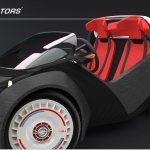
World’s first 3D-printed electric car

Order and pick up your customized personal car. That's the vision of Arizona-based company Local Motors. Local Motors plans to transform the traditional automotive world with the launch of a three dimensional (3D) printed car next year. Strati is an electric car developed by Local Motors and manufactured in collaboration with Cincinnati Incorporated and Oak Ridge National Laboratory. It is made from ABS plastic that has been enforced with carbon fibre. The car was manufactured using a Larg...
More