
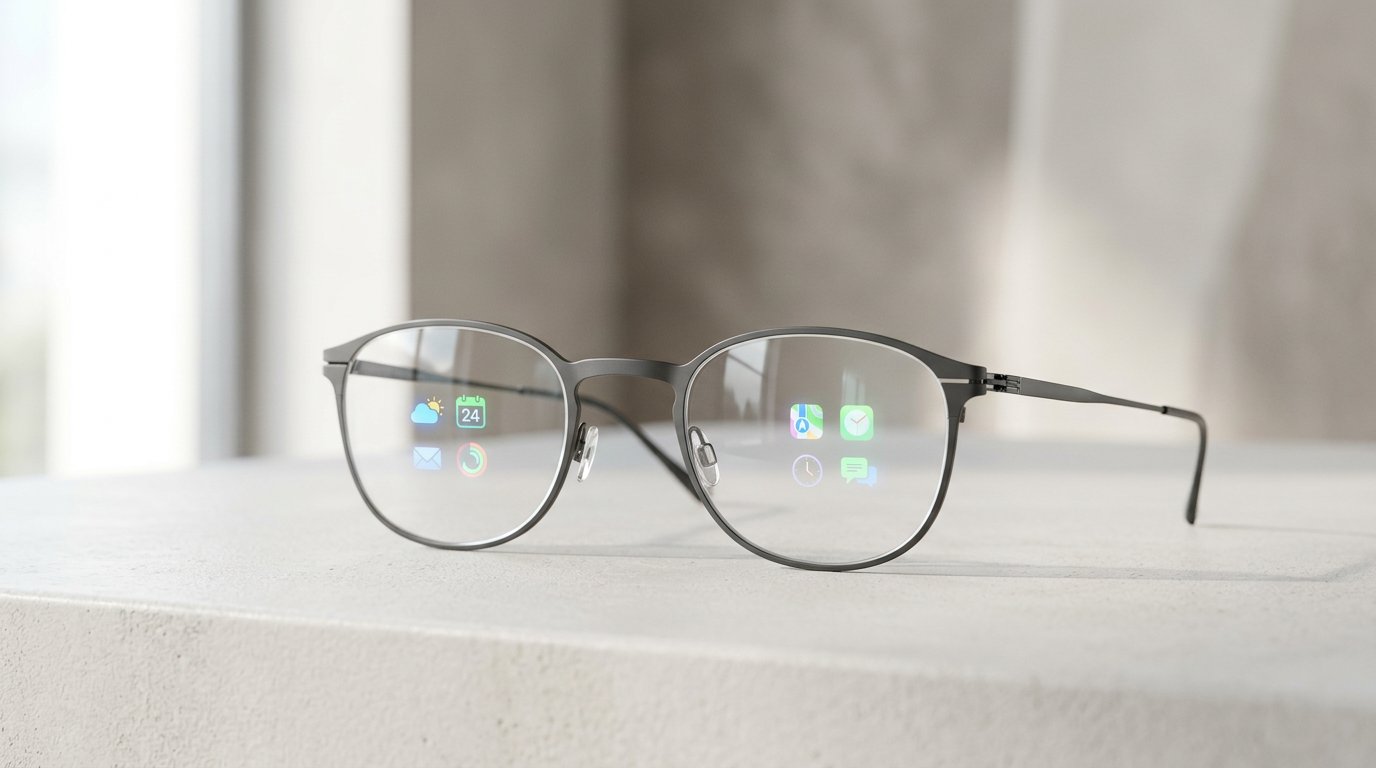
Smart glasses have a stubborn problem: the more they can do, the less they look like glasses. On November 18, 2026, Vuzix introduced a reference design that tries to flip that trade-off, a full-color, binocular display in a frame that weighs less than 40 grams. It is not a product you can buy, though. It is a starting point for other brands.
What Vuzix introduced
In its press release, Vuzix describes Ultralite Color as an OEM reference platform meant to help eyewear brands and technology partners develop their own full-color, AI-powered smart glasses. The company says the sub-40-gram design has been named a CES 2027 Innovation Awards Honoree in the Fashion Tech category.
The platform combines full-color binocular microLED-driven waveguide displays with transparent optics that keep the wearer aware of their surroundings. The design is intended for all-day use.
How the design handles discretion and light
Two features target everyday wearability. Vuzix Incognito technology is described as reducing forward light leakage, which helps keep displayed content discreet to people looking at the wearer. Electrochromic tinting supports viewing across changing lighting conditions, a practical need for glasses that move between indoors and bright outdoors.
Vuzix CEO Paul Travers said the next generation of AI eyewear has to deliver useful information without asking people to compromise on how their glasses look or feel. The release frames appearance, comfort, weight and discretion as commercial requirements rather than finishing touches.
What is, and is not, in the frame
The current reference configuration leaves out cameras and speakers to keep the form factor streamlined, though the company says partners may explore different feature sets. It does include microphones for voice interaction with AI applications. Processing and apps run on a wirelessly connected smartphone or other computing device, which keeps weight and heat out of the frame.
Vuzix lists potential uses including AI assistance, translation, navigation and messaging for consumers, plus hands-free guidance and notifications for professional users.
An OEM-first business model
Unlike consumer devices sold in one fixed configuration, Ultralite Color is available only to OEM partners building branded, purpose-built AI smart glasses. Partners can tailor styling, applications and selected hardware features while drawing on Vuzix optics, waveguide technology and integration expertise.
The company says it may pursue customer-funded product development, supply of waveguides and optical components, and manufacturing support. It is explicit that no specific customer contracts or production commitments are being announced. Vuzix plans to show the platform at CES 2027, January 6 to 9, in Las Vegas.
What it means
For eyewear brands, a ready optical and integration foundation could shorten the path to a differentiated product without building waveguide expertise in-house. For shoppers, the practical signal is that lighter, more normal-looking AI glasses with color displays are being designed now, even if they will reach stores under other brand names and on uncertain timelines.
The caution is straightforward: this is a reference design with company-reported specifications, no announced customers, and no cameras or speakers in the baseline. Whether it becomes real products will depend on partners and on how the glasses perform in daily wear.
Conclusion
Ultralite Color is less a gadget launch than a bet that the winning AI glasses will be the ones people forget they are wearing. CES 2027 should show whether OEM partners agree.