
NU Scientists Advance Efforts in the Early Detection of Alzheimer’s

One minute. The Alzheimer’s Association estimates that in just that small period of time, almost every minute, a person in the United States will develop one of the top-10 killers in America: Alzheimer’s. 2015 was the first year in which Alzheimer scientists were able to see some real, substantial success in clinical trials. Bill Klein, in neurobiology and neurology at Northwestern, and his team have turned their focus away from what was once considered the cause of Alzheimer’s, plaques an...
More
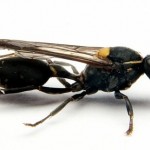
Wasp’s Venom could be a powerful weapon against Cancer

A toxin in Polybia paulista's sting reportedly kills tumor cells without harming healthy ones. It seems like an oxymoron, but scientists say the venom of Polybia paulista, a wasp native to Brazil, fits that description. According to a study published in the Biophysical Journal this week, the wasp’s venom contains a toxin, named MP1, that selectively destroys tumor cells without harming normal ones. The BBC called the venom a potentially powerful “weapon against cancer.” In lab tests, MP1 was ...
More

Sponge-like “Swelling Glass” absorbs toxins in contaminated water

A new glass has been developed that swells up like a sponge to clean contaminated groundwater. A company called Absorbent Materials has used nanotechnology to create a nanobot particle made from glass that can absorb pollutants from dirty water. The glass particles act like sponges by attracting and binding contaminants to themselves and expanding eight times in size during the process. However, unlike a sponge, these nanobots are hydrophobic, meaning they don't absorb water. This new s...
More