
Most cloud platforms were designed for a person sitting at a dashboard: pick a region, choose an instance size, enter a card, click deploy. Compute Portal, a young Delaware startup, is betting that the next big buyer of servers and GPUs will not be a person at all. Its pitch, in the words of CEO Jerry V. Hall on his Startups.com founder profile, is a service that "lets AI agents rent their own GPUs and servers: one key, one bill, a third cheaper than AWS, with spend caps so nothing runs awa...
More
Compute Marketplace
New Colonoscopy Study

According to a study published in the journal Clinical Gastroenterology and Hepatology, a team of researchers led by Bas Oldenburg, MD, PhD, University Medical Center Utrecht, analyzed data on 1,273 IBD patients (34% Crohn’s disease, 63% ulcerative colitis, and 3% unclassified) who had experienced a total of 4,327 surveillance colonoscopies between January 1, 2000 and January 1, 2014.
Surveillance is recommended for patients with long-term inflammatory bowel disease because they have an incre...
More
Contacts could help treat Glaucoma
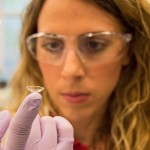
A McMaster PhD candidate has harnessed a component naturally found in tears to develop a contact lens-based drug delivery system for glaucoma patients. Chemical engineer Myrto Korogiannaki has used hyaluronic acid to help get drugs to the eye from a lens in a controlled way. Patients with front-of-the-eye diseases, such as glaucoma, traditionally use medicated eye drops twice a day to treat their ailment. But those drops are incredibly inefficient as only about five per cent of the drug they car...
More
Wasp’s Venom could be a powerful weapon against Cancer
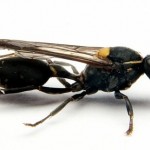
A toxin in Polybia paulista's sting reportedly kills tumor cells without harming healthy ones. It seems like an oxymoron, but scientists say the venom of Polybia paulista, a wasp native to Brazil, fits that description. According to a study published in the Biophysical Journal this week, the wasp’s venom contains a toxin, named MP1, that selectively destroys tumor cells without harming normal ones. The BBC called the venom a potentially powerful “weapon against cancer.”
In lab tests, MP1 was ...
More
Potential breakthrough in bid for Alzheimer’s treatment.

A potential drug target has been discovered that could help scientists develop radical new treatments for Alzheimer’s disease. Blocking activity of the protein, known as GPR3, results in toxic deposits thought to play a key role in the disease clearing away from the brain. Laboratory mice suffering from Alzheimer’s-like symptoms showed improvements in learning, memory and social skills when they lacked GPR3, according to research published in the journal Science Translational Medicine. Further t...
More
Stem Cells Used to Strengthen Babies’ Bones in the Womb

The first clinical trial injecting fetal stem cells into babies in the womb will start in January and will be led by Sweden's Karolinska Institute and in the UK by Great Ormond Street Hospital. The stem cells will come from terminated pregnancies. It is hoped the cells, which are able to transform into a range of tissues, will lessen symptoms of incurable brittle bone disease.
Severe brittle bone disease is rare but can be so devastating that many women decide to end their pregnancy on being ...
More
Gene-editing study reveals pathway that could help short circuit blood disorder

CRISPR is able to circumvent the genetic mutation that causes sickle cell disease.
The latest Sickle Cell Research from Dana-Farber/Boston Children’s Cancer and Blood Disorders Center is that they have found that changes to a small stretch of DNA may circumvent the genetic defect behind sickle cell disease. They are developing gene-editing approaches to treat the disease and other hemoglobin disorders.
This stretch of DNA, called an enhancer, controls a molecular switch that determines whe...
More
New Harvard research says butter apparently isn’t better

Scientists have discovered that those who replaced saturated fats with whole grains or unsaturated fats found in vegetable oils and nuts, had a lowered risk of heart disease. While research last year seemed to exonerate butter as being a health food, recent research out of Harvard has suggested otherwise.
The findings contradict a controversial paper published in 2014 that said there was little evidence that reducing saturated fat lead to lessened risk for heart disease. But researchers said ...
More
Penn scientists make breakthrough in Alzheimer’s disease research

Scientists reveal a cure for Alzheimer's disease may be closer than we thought.
University of Pennsylvania researchers have made some exciting strides in the fight against Alzheimer's and they hope the discoveries will lead to a delay in the onset of the disease.
Alzheimer's disease is a heartbreaking condition for both patients and their family members. Almost half the people who live to be 85 years old will develop Alzheimer's disease.
Dr. Lee and Dr. John Trojanowski have lead the wa...
More
Ebola color coded Protection Suit
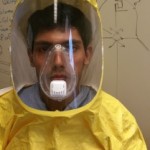
The Johns Hopkins University’s has developed a new personal protective suit for front-line health care workers in Ebola. The suit uses technology originally designed by Johns Hopkins to keep cancer patients comfortable. This new suit is color coded to show what surfaces are safe to touch when removing it.
The suit, intended for use in future Ebola outbreaks like the 2014 epidemic that killed thousands in West Africa, has elements to keep the wearer more comfortable than existing suits, reduce...
More
Aspirin’s disease-fighting abilities

A new study provides key insights into aspirin's disease-fighting abilities.
A recent study led by researchers at the Boyce Thompson Institute (BTI) shows that salicylic acid, an active metabolite of aspirin, blocks HMGB1, an inflammatory protein associated with a wide variety of diseases.
Aspirin is one of the oldest and most commonly used medicines, but many of its beneficial health effects have been hard for scientists and physicians to explain.
Researchers have identified a key targ...
More